Okay, fellow tapeheads, let's rewind to the summer of '83. The multiplexes were buzzing, 3D was making another one of its periodic comebacks, and the most feared fish in cinema history was about to breach the surface... again. Grab your flimsy red-and-blue glasses (mentally, at least, because they sure didn't come with the rental box!) as we dive into the murky waters of Jaws 3-D.
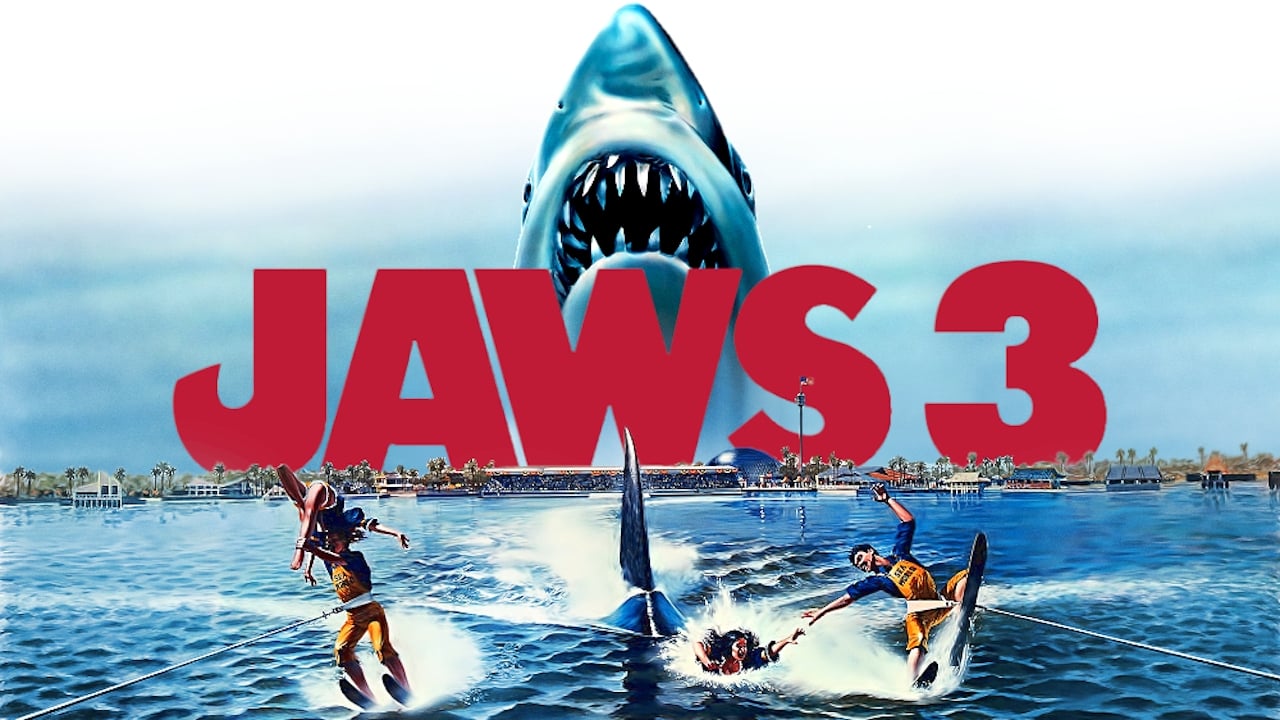
This wasn't just another sequel; it was an event, plastered right there in the title. The promise? To put you inside SeaWorld Orlando (yes, that SeaWorld) as a Great White decides the tourist buffet looks particularly appetizing. Forget Amity Island; the Brody legacy has gone corporate! We follow a grown-up Mike Brody (Dennis Quaid, bringing his signature grin even when facing down cartilaginous death) working as the chief engineer for the park's underwater habitat, alongside his marine biologist girlfriend, Kay Morgan (Bess Armstrong). Naturally, his younger brother Sean (John Putch) also shows up for a visit, conveniently just as things are about to get toothy.
### Welcome to SeaWorld, Have a Bite!
The premise shifts the familiar coastal dread of the original Jaws (1975) into the controlled, commercialized environment of a marine park. It’s an intriguing idea on paper, ripe for commentary perhaps, but mostly it serves as a playground for the film’s main raison d'être: the 3D effects. Directed by Joe Alves, who crucially served as the production designer on the first two Jaws films and even directed second unit on Jaws 2 (1978), the film lives for moments where things lunge at the screen. Severed arms, hypodermic needles, abstract opening credits fish – you name it, it’s probably floating towards your popcorn.
Alves, stepping into the director's chair for the first time on a feature, clearly understood the visual language of Jaws, but translating that terror into the third dimension proved a Herculean task. Remember how groundbreaking those shots felt, even if they look a bit... well, flat now on our trusty CRT screens? The ambition was palpable. They used the Arrivision 3D system, which required bulky camera rigs and faced enormous challenges, particularly with the underwater sequences. Getting clear, effective 3D shots beneath the surface, through aquarium glass, and within the park's lagoons was a constant battle. A fascinating "Retro Fun Fact": Legendary sci-fi and horror author Richard Matheson (I Am Legend, countless Twilight Zone episodes) penned an early draft, though much of his work was reportedly altered, leading to his eventual dissatisfaction with the final product. You can almost feel the tension between wanting a serious creature feature and needing to deliver those 3D jump-scare moments.
### That Infamous Shark Effect
Let's talk about the shark. Or rather, sharks. The initial capture of a "baby" Great White (a mere 10-footer) leads to the arrival of its very angry, 35-foot mother. The effects work on Mama Jaws is... memorable. While the original film wisely kept its mechanical shark, "Bruce," hidden for much of the runtime, Jaws 3-D puts its star front and center, often to unintentionally amusing effect. The composite shots, particularly the infamous sequence where the shark slowly drifts towards the underwater control room window before shattering it, became legendary for their lack of convincing movement and scale. It looks less like a terrifying predator and more like a rigid fiberglass model being pushed towards the camera.


Yet, there's a certain charm to the practical approach, isn't there? Knowing that was a physical model, however unconvincing, feels different than today's seamless (and sometimes weightless) CGI creatures. There are moments, brief flashes, where the physical presence works, especially in the underwater tunnels. And hey, at least the human element involved real stunt performers dealing with real water and physical sets. Give some credit to Louis Gossett Jr., fresh off his Oscar win for An Officer and a Gentleman (1982), who brings some much-needed gravitas as park owner Calvin Bouchard. His exasperation feels genuine, especially opposite the swaggering British bravado of Simon MacCorkindale's wildlife photographer/hunter Philip FitzRoyce.
### More Gimmick Than Bite?
The film made bank, pulling in around $88 million worldwide against a $20.5 million budget (that's like $270 million against $63 million today – a solid hit!). Audiences turned up for the Jaws name and the 3D spectacle, even if critics savaged it. Watching it now on VHS (or your format of choice), stripped of its primary visual gimmick, lays bare the film's weaknesses: a thinner plot, less compelling characters than the original trilogy (sorry, Mike!), and those aforementioned wonky effects. The dialogue occasionally dips into pure cheese, and the logic of a giant shark navigating SeaWorld's plumbing strains credulity even for a popcorn flick.
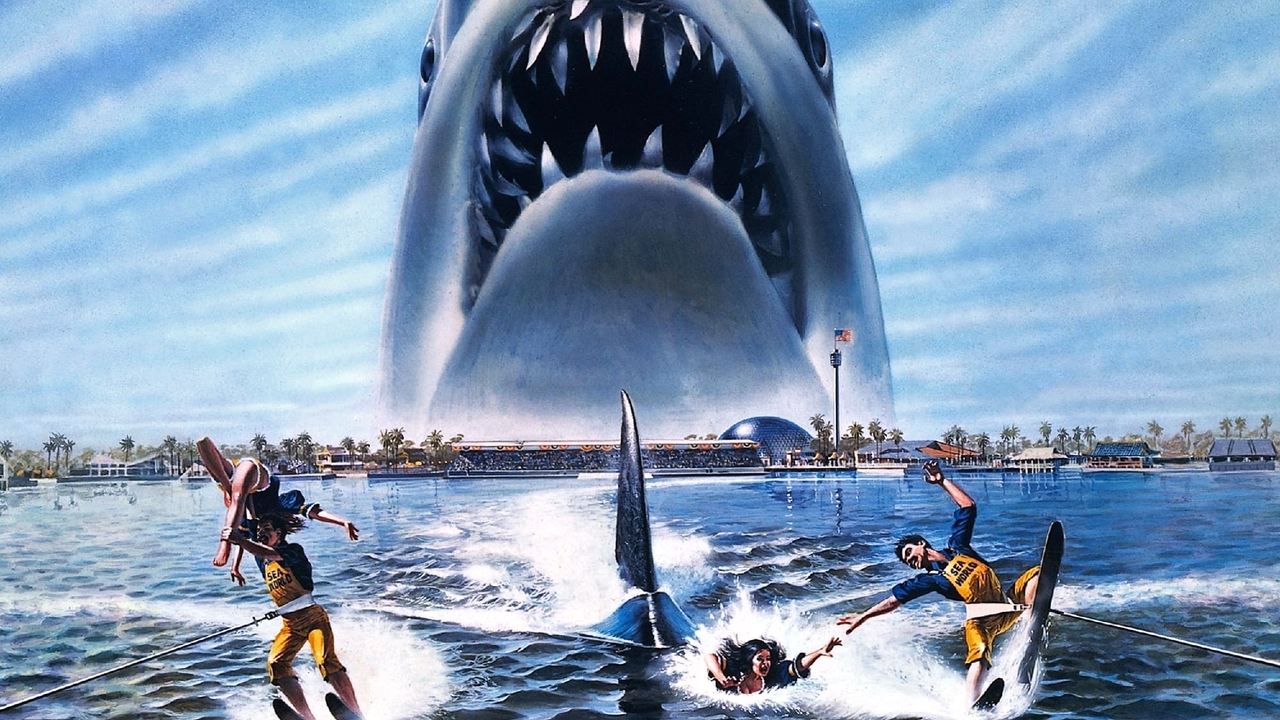
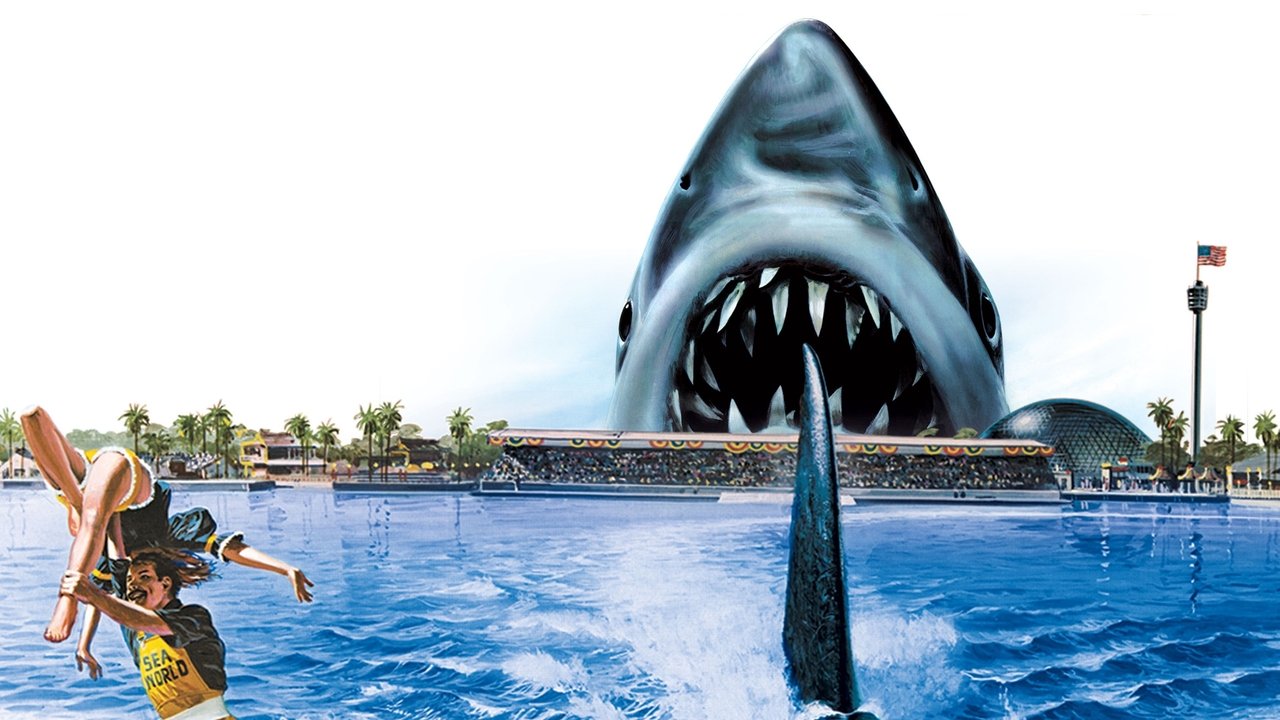
But is it fun? In a nostalgic, slightly goofy way, absolutely. It’s a fascinating time capsule of early 80s blockbuster filmmaking attempting to harness a technology that wasn't quite ready for prime time, especially underwater. Dennis Quaid and Bess Armstrong have a decent chemistry, and Gossett Jr. elevates every scene he’s in. The finale, involving a grenade and some questionable shark anatomy, has to be seen to be believed. I distinctly remember renting this tape, probably on a weekend, drawn in by that menacing cover art, hoping for the same primal fear the original delivered. It wasn't that, but it was... something else.
VHS Heaven Rating: 4/10
The Score Explained: While a technical and narrative step down for the franchise, Jaws 3-D earns points for its sheer 80s audacity, the nostalgic charm of its flawed practical effects and 3D ambition, and a couple of decent performances. It's undeniably silly and often looks cheap, especially without the 3D, but its status as a curious, gimmick-driven sequel gives it a weird rewatchability.
Final Thought: It tried to add a new dimension to terror, but mostly just proved that some fears are best left lurking just beneath the surface (and maybe in 2D). A fascinating, flawed artifact from the deep end of the VHS rental shelf.