Dust motes dance in the shafts of light piercing the gloom of an ancient oratory, a space echoing with forgotten prayers now repurposed for a very different kind of devotion: music. But as the unseen documentary crew begins interviewing the assembling orchestra members for Federico Fellini's Orchestra Rehearsal (original title: Prova d'orchestra, 1978), the harmony feels fragile, the air thick not just with dust, but with unspoken grievances and simmering discontent. This isn't your typical feel-good story about the power of music; it's something far stranger, more unsettling, and ultimately, more resonant, especially when unearthed from the dusty shelves of the video store's foreign film section back in the day.
A Symphony of Discontent
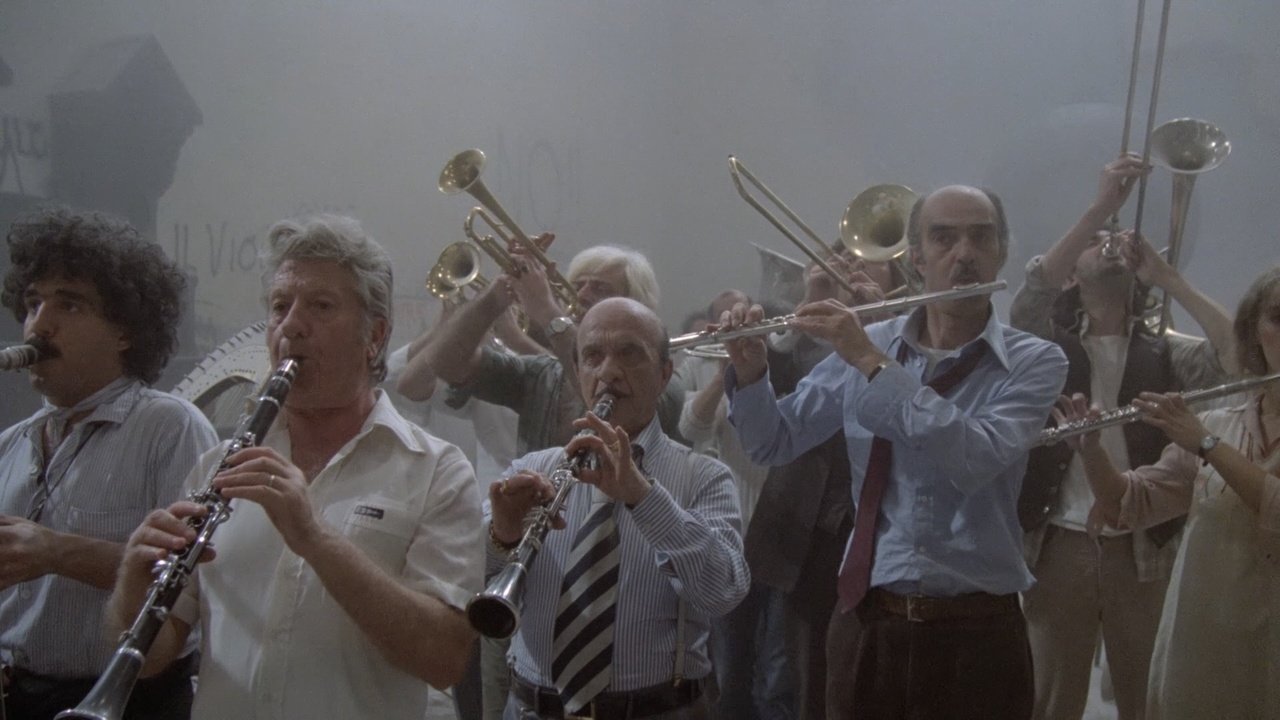
What begins as a seemingly straightforward television documentary – indeed, the film was initially produced for Italian broadcaster RAI – quickly spirals into a microcosm of societal breakdown. We meet the musicians, not as a unified whole, but as individuals nursing petty jealousies, union disputes, philosophical disagreements, and personal eccentricities. The tuba player complains about his instrument's marginalised role, the violinist laments the lack of artistic appreciation, the harpist drifts in her own world. Their interviews, delivered directly to the camera, feel raw, sometimes comical, often poignant, capturing the messy reality of any collective human endeavor. There's a palpable sense of authenticity here, even amidst the heightened Felliniesque atmosphere; these aren't just musicians, they are archetypes of human complaint and aspiration.
The German Maestro and the Italian Chaos
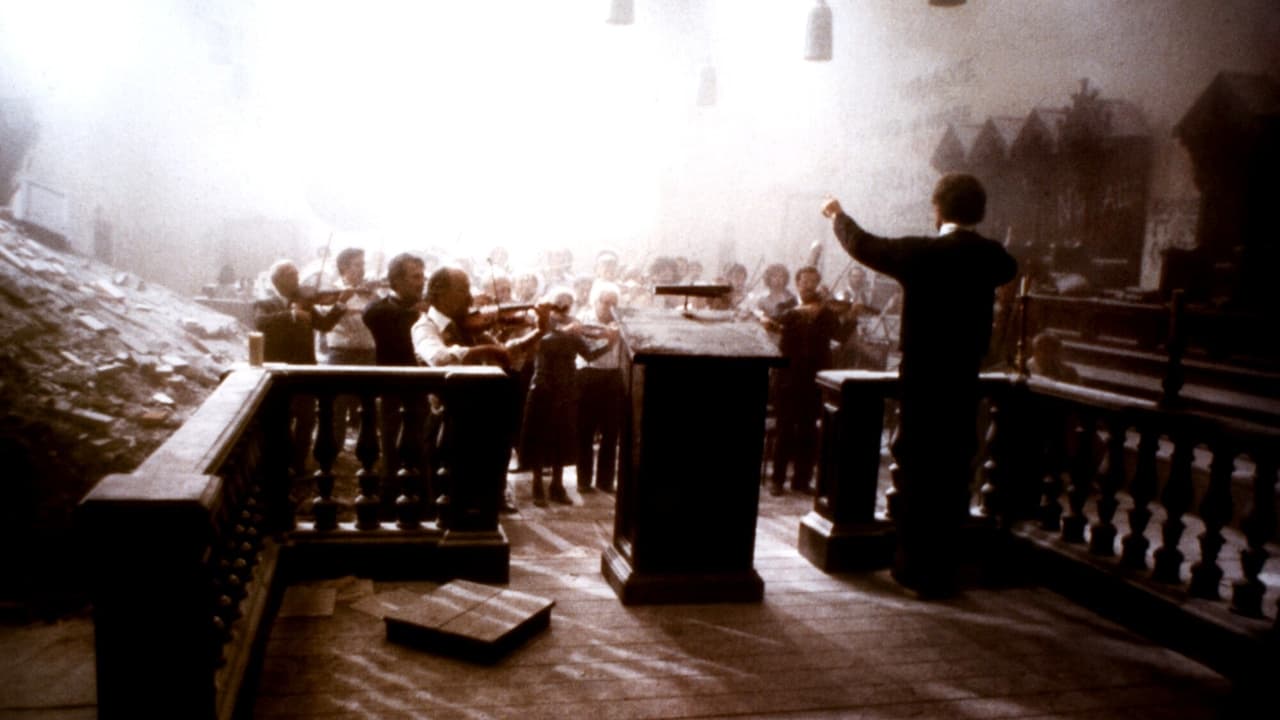
Into this simmering pot steps the conductor, played with authoritarian bluster by German actor Balduin Baas. His presence immediately sharpens the conflict. He’s the outsider, the taskmaster demanding discipline and precision from a group increasingly resistant to yielding their individuality for the collective sound. His pronouncements on music and order clash with the orchestra's burgeoning anarchy. Watching their dynamic unfold is like observing a tense social experiment: can harmony be imposed, or must it arise organically? And what happens when the forces of order and chaos collide head-on? Fellini, ever the ringmaster of cinematic circuses (think 8½ (1963) or Amarcord (1973)), orchestrates this escalating tension with masterful control, even as the events depicted spiral out of control.
From Rehearsal Room to Allegory
It’s impossible to watch Orchestra Rehearsal without sensing the powerful allegorical currents running beneath the surface. Released during Italy's turbulent "Years of Lead" (Anni di piombo), a period marked by political extremism, terrorism, and social upheaval, the film feels like a direct, if veiled, commentary. The orchestra becomes a stand-in for Italian society itself – fractious, resistant to authority, prone to internal squabbles, yet possessing a deep, albeit chaotic, vitality. The conductor could represent the struggling state, or perhaps any figure attempting to impose order on an increasingly fragmented world. Fellini himself was characteristically elusive about precise interpretations, preferring to let the images and situations speak for themselves, suggesting it was less about specific politics and more about the eternal struggle between individual desires and collective needs, freedom and structure. Doesn't this tension still resonate profoundly today, in workplaces, communities, even nations?
The single setting – that decaying, claustrophobic oratory – amplifies the pressure-cooker atmosphere. It becomes a character in itself, its crumbling walls seemingly absorbing the musicians' frustrations until they manifest in startling, almost surreal ways. The mockumentary format, while seemingly objective, allows Fellini to inject moments of pure cinematic poetry and bizarre imagery, blurring the line between observation and nightmare. The camera doesn't just record; it probes, it reveals, it sometimes feels complicit in the unfolding chaos.
The Crescendo and the Silence
Spoiler Alert! The film famously culminates in an explosion of literal and figurative destruction. The rehearsal descends into outright rebellion, graffiti defaces the ancient walls, and ultimately, a giant wrecking ball smashes through the building, a shocking intrusion of external brute force. It’s a visceral, terrifying sequence that leaves the viewer reeling. Yet, even amidst the rubble, the conductor attempts to rally the surviving musicians, to find a single, pure note. The ending is deliberately ambiguous, offering no easy answers. Is there hope for harmony after the collapse? Or is the attempt itself futile? What lingers most is the unsettling quiet after the cacophony.
Orchestra Rehearsal might not have been the tape you reached for every Friday night, nestled perhaps between blockbuster action flicks and comforting comedies on the rental shelf. I distinctly remember finding it tucked away, its stark cover art hinting at something different, something challenging. It wasn't an easy watch then, and it remains a potent, sometimes difficult film today. It lacks the sprawling visual feasts of some of Fellini's other works, yet its focused intensity and allegorical depth make it uniquely powerful. It's a film that burrows under your skin, forcing you to confront uncomfortable questions about authority, rebellion, and the fragile nature of civilization itself.
Rating: 8/10
This rating reflects the film's undeniable artistic vision, its potent allegorical weight, and its masterful control of tone and atmosphere within its confined setting. While perhaps less accessible or visually extravagant than some Fellini masterpieces, its focused critique and unsettling portrayal of societal breakdown are brilliantly executed. It’s a challenging, thought-provoking piece of cinema that perfectly encapsulates the anxieties of its time while remaining disturbingly relevant. It’s a testament to Fellini's genius that a simple orchestra rehearsal could contain such profound and troubling truths about the human condition. What sound truly emerges when the music stops and the walls come down?