Okay, grab your favourite armchair, maybe pour yourself something comforting, and let’s slide a tape into the VCR – figuratively speaking, of course. Tonight, we’re revisiting a film that often lurks in the shadows of its more bombastic early 80s contemporaries: Robert Benton’s Still of the Night (1982). It arrived carrying the weight of expectation, reuniting Benton with his Kramer vs. Kramer star Meryl Streep, and pairing her with the ever-reliable Roy Scheider. What unfurls is less a pulse-pounding chase and more a slow, deliberate descent into suspicion, wrapped in the elegant, chilly aesthetic of classic Hollywood suspense.
Whispers in the Consulting Room
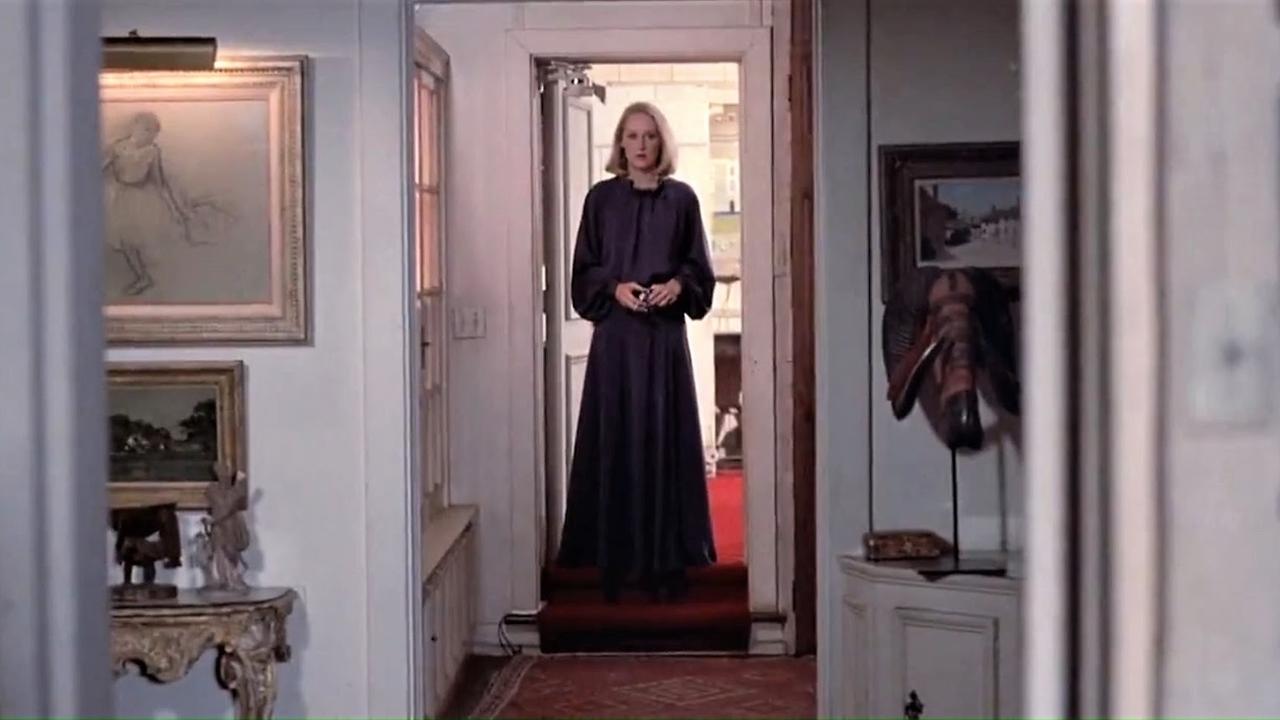
The premise immediately draws you into a world of hushed secrets and professional boundaries blurring into personal danger. Roy Scheider, embodying a certain weary intelligence perfectly suited to the role, plays Dr. Sam Rice, a Manhattan psychiatrist whose patient is brutally murdered. Shortly after, the patient's enigmatic colleague and lover, Brooke Reynolds (Meryl Streep), enters his office, returning the deceased man's watch. From this seemingly simple act, a complex web begins to spin. Rice finds himself irresistibly drawn to Brooke, even as clues mount suggesting she might be the very person responsible for the killing. It’s a setup ripe for psychological tension, deliberately echoing the masters of the genre.
Dancing with the Ghost of Hitchcock
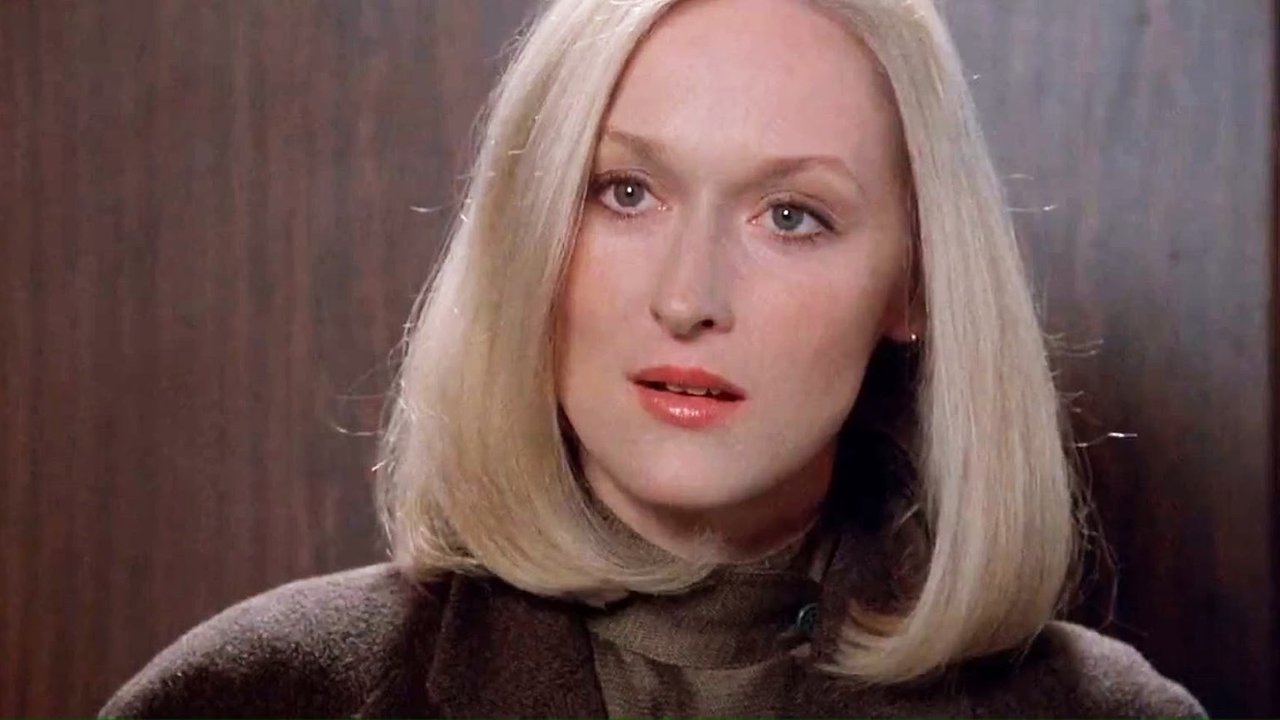
Let's address the omnipresent influence: Alfred Hitchcock. Director Robert Benton, fresh off his Oscar win for Kramer vs. Kramer (1979) and working again with his Bonnie and Clyde (1967) writing partner David Newman, makes no secret of his admiration. Still of the Night feels like a carefully constructed homage, borrowing liberally from the mood, themes, and even specific shot compositions of films like Vertigo (1958) and Spellbound (1945). The elegant Upper East Side settings, the focus on psychoanalysis (personified nicely by Jessica Tandy as Rice's insightful mother, also a psychiatrist), the blonde ice queen hiding dark secrets – the ingredients are all there.
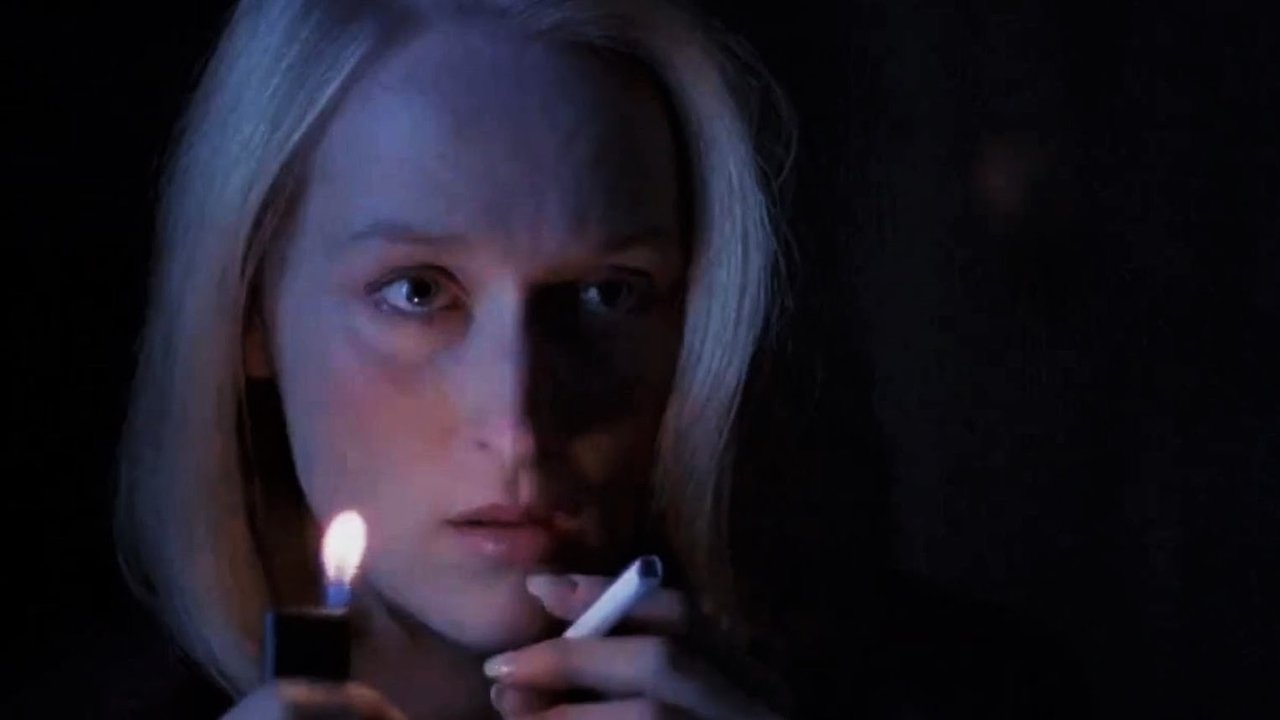
This reverence is both the film's strength and its Achilles' heel. On one hand, the masterful cinematography by Nestor Almendros (who also shot Kramer and Terrence Malick's visually stunning Days of Heaven from 1978) bathes New York in a cool, detached beauty that perfectly complements the simmering anxiety. Benton orchestrates moments of genuine suspense, particularly in a tense sequence at an auction house and the carefully staged dream sequences that attempt to unlock the killer's identity. The craft is undeniable. On the other hand, the shadow of Hitchcock looms so large that the film sometimes struggles to forge its own distinct identity. The plot machinations can feel a little too familiar, the twists perhaps not quite as shocking as intended when viewed through the lens of Hitch's established genius.
A Study in Performance: Enigma and Empathy
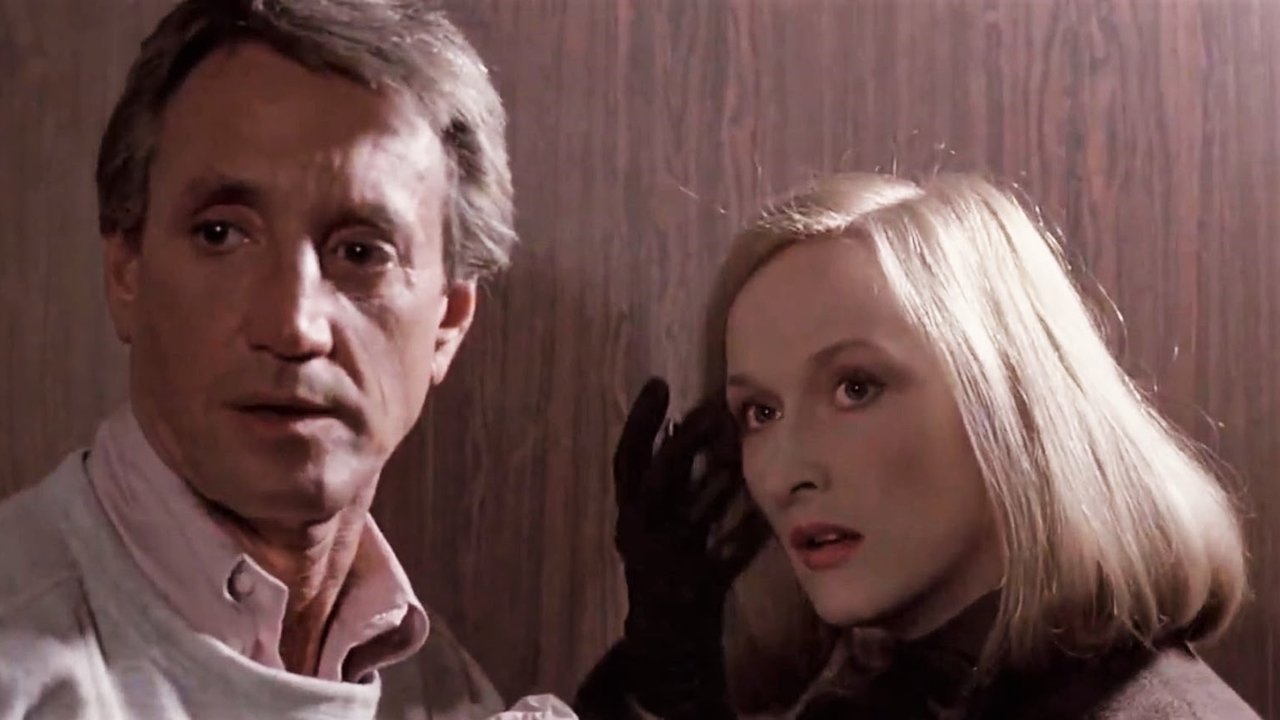
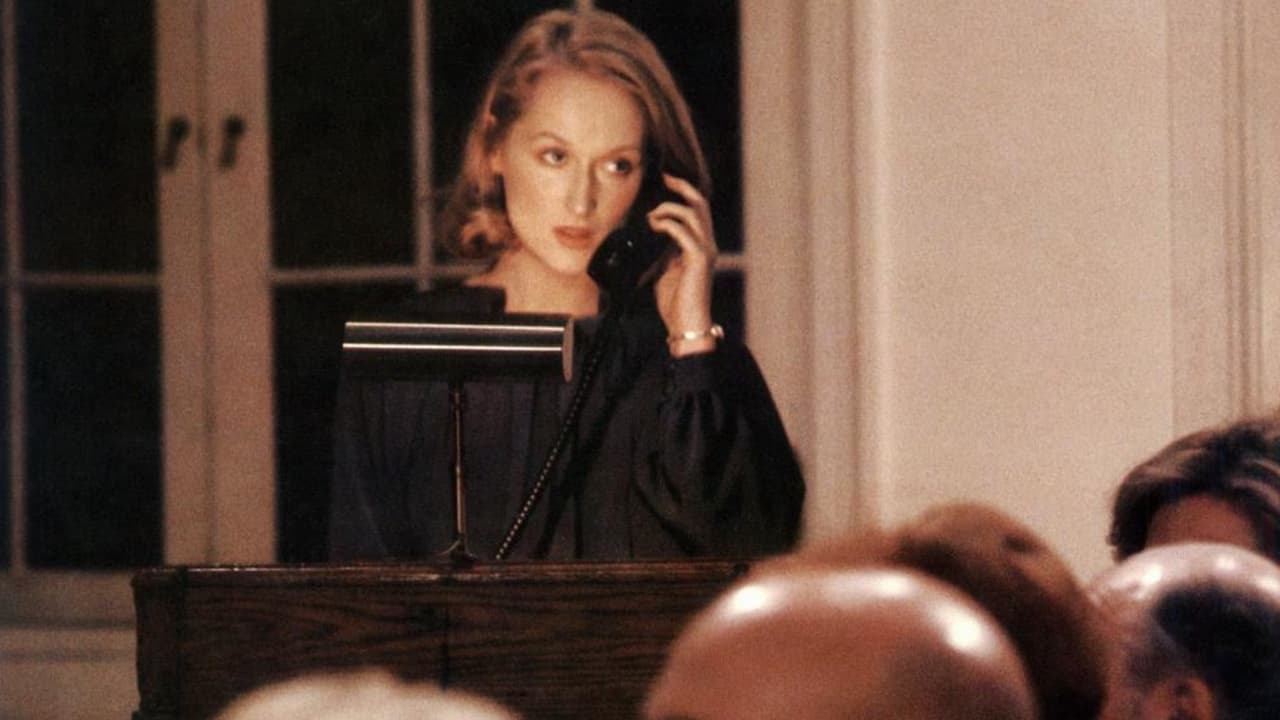
Where Still of the Night truly holds its ground is in its central performances. Roy Scheider, an actor who could convey deep thought and simmering frustration with subtle shifts in his gaze (think Jaws (1975) or his brilliant turn in All That Jazz from 1979), is compelling as Sam Rice. He makes Rice's descent into obsession feel psychologically grounded. You understand his fascination and his fear, the dangerous tightrope walk between professional duty and personal desire. His quiet intensity anchors the film.
Then there's Meryl Streep. Arriving the same year as her monumental performance in Sophie's Choice (1982), her portrayal of Brooke Reynolds is fascinatingly ambiguous. Benton reportedly wrote the part specifically for her, wanting to capture a different facet of her talent. Streep plays Brooke with an alluring mix of vulnerability and cool calculation. Is she a damsel in distress, caught in something beyond her control? Or is she a manipulative femme fatale, playing Rice for a fool? Streep keeps you guessing, her performance layered with micro-expressions and hesitant gestures that suggest hidden depths. While some critics at the time felt the character was underdeveloped or that Streep was perhaps too intelligent, too knowingly enigmatic for the role, watching it now, her performance feels like a deliberate choice – a performance within a performance, essential to the film's central mystery. Doesn't that uncertainty make the suspense all the more potent?
Retro Fun Facts: Unspooling the Tape
- A Deliberate Choice: Benton and Newman consciously set out to create a Hitchcockian thriller, a genre they both loved. It was a departure from their previous, more character-driven work.
- Star Power Pull: Roy Scheider was keen to work with both Benton and Streep, making it an attractive project for him despite the film's less action-oriented nature compared to some of his bigger hits.
- NYC Authenticity: Shot on location in New York City, the film captures that specific early 80s Manhattan vibe – the architecture, the fashion, the slightly gritty elegance – adding a layer of authenticity that grounds the suspense. Remember those cavernous auction house scenes? Pure NYC atmosphere.
- Critical Divide: Upon release, the film divided critics. Some praised its style and performances, while others found it too derivative and slow. The famous duo Siskel & Ebert, for instance, gave it conflicting reviews, highlighting its polarizing nature.
- Box Office Chill: Despite the star power and directorial pedigree, Still of the Night didn't exactly set the box office alight. With a budget around $10 million, it pulled in roughly $6 million domestically. Perhaps its more cerebral, slow-burn approach wasn't quite what mainstream audiences were craving in the era of burgeoning blockbusters. This likely contributed to its status as more of a 'discovery' title on VHS for many of us.
Lingering Questions in the Dark
Does Still of the Night fully escape the shadow of its influences? Perhaps not entirely. The narrative mechanics occasionally feel a bit creaky compared to the seamless precision of Hitchcock's best work. Yet, there's an undeniable mood here, a sophisticated chill that gets under your skin. It’s a film less about shocking twists (though it has them) and more about the unnerving intimacy of suspicion. It explores how easily fascination can curdle into fear, how readily we project our own desires and anxieties onto those who remain deliberately opaque. What lingers most after the credits roll isn't necessarily the plot resolution, but the unsettling feeling of ambiguity embodied so effectively by Streep, and the quiet desperation conveyed by Scheider. It makes you wonder: how well can we ever truly know another person, especially when desire clouds our judgment?
Rating: 7/10
This score reflects a film that is undeniably stylish, exceptionally well-acted by its leads, and dripping with atmospheric tension. Nestor Almendros's cinematography is gorgeous, and Robert Benton's direction shows a clear love for the genre. However, its overt Hitchcock homages sometimes prevent it from feeling truly original, and the pacing might test the patience of viewers seeking constant thrills. It doesn't quite reach the heights of the masterpieces it emulates, but as a sophisticated, adult-oriented psychological thriller from the early 80s – the kind they genuinely don't make anymore – it’s a rewarding watch. It’s a film that feels like curling up with a well-worn paperback mystery on a rainy night – familiar, perhaps, but deeply satisfying in its construction and mood.
For fans of moody thrillers, or those simply wanting to see Scheider and Streep spar intellectually and emotionally, Still of the Night remains a compelling slice of early 80s cinema, a quiet hum of suspense in the often-loud landscape of the VHS era. It's a reminder that sometimes the deepest chills come not from a sudden shock, but from the slow dawning of a terrible possibility.