What if a lifetime of love, change, and shared history could be condensed into just one weekend a year? That’s the beautifully simple, yet emotionally complex, premise anchoring Robert Mulligan's 1978 adaptation of Bernard Slade's beloved stage play, Same Time, Next Year. While it arrived just shy of our usual 80s focus here at VHS Heaven, this film was a staple on video store shelves throughout the decade and into the 90s, often nestled between louder blockbusters. For many of us, discovering it on tape felt like finding a quiet, intimate treasure – a deeply human story captured with remarkable warmth and honesty. It’s a film that stays with you, prompting reflection on the nature of connection and the passage of time itself.
### More Than Just an Affair
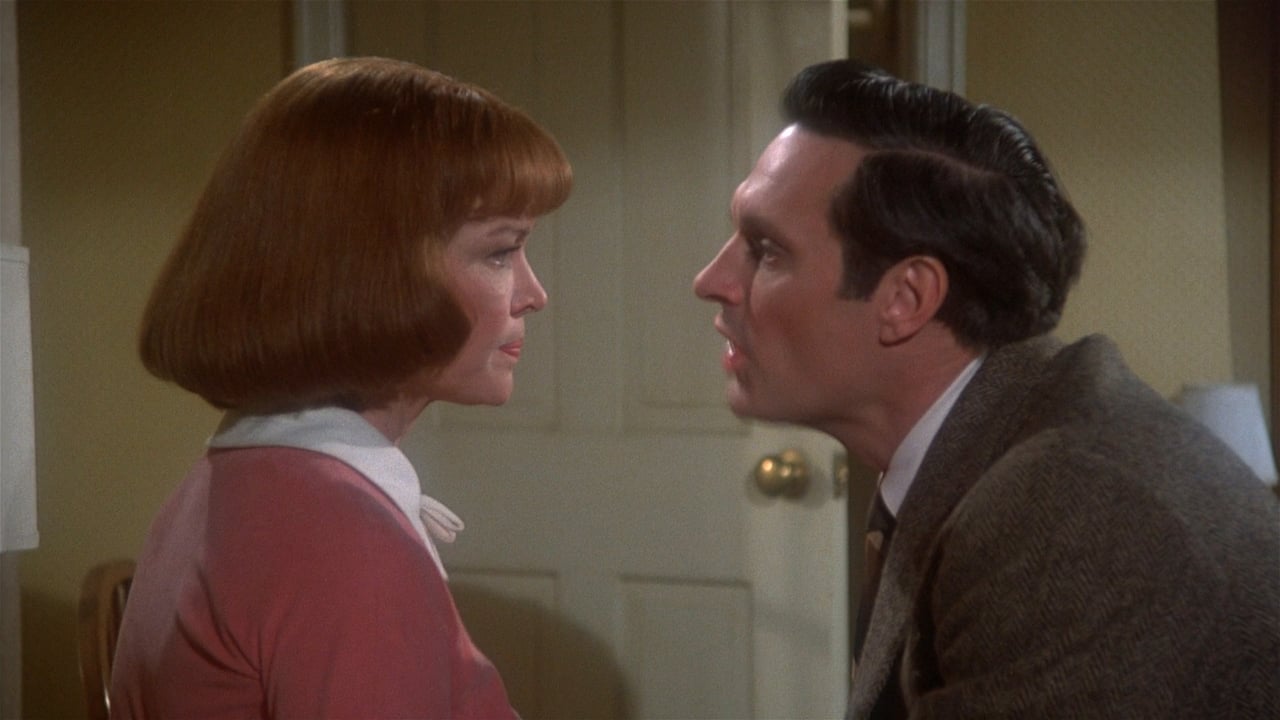
The setup is deceptively straightforward: In 1951, Doris (Ellen Burstyn), a housewife from Oakland, and George (Alan Alda), an accountant from New Jersey, meet by chance at a Northern California coastal inn. Despite both being happily married with children, they share an intense connection and end up spending the night together. Wracked with guilt but undeniably drawn to each other, they make a pact: to meet at the same inn, on the same weekend, every year. The film then revisits them every five years (or so) over the next quarter-century, charting not only the evolution of their clandestine relationship but also the seismic shifts happening in their personal lives and the world outside their secluded haven.
It’s a risky conceit, essentially a two-person play confined mostly to a single location. But under the sensitive direction of Robert Mulligan – a filmmaker perhaps best known for the very different, but equally masterful, To Kill a Mockingbird (1962) – the potential staginess melts away. Mulligan uses the camera not just to observe, but to capture the subtle shifts in intimacy, the unspoken anxieties, and the comfortable familiarity that grows between Doris and George. The Mendocino inn becomes less a set and more a vessel holding twenty-five years of shared secrets, laughter, tears, and transformation.
### A Masterclass in Chemistry
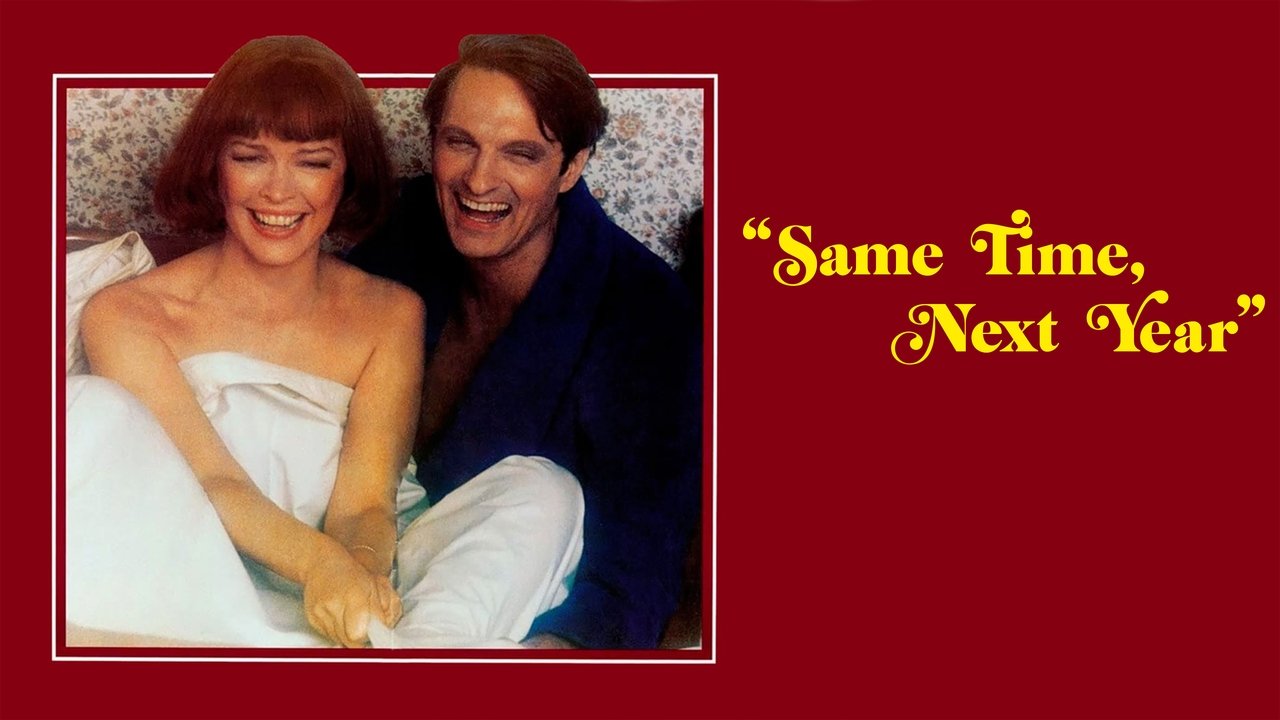
What truly elevates Same Time, Next Year beyond its clever premise is the extraordinary work of its two leads. Ellen Burstyn, fresh off her searing performance in The Exorcist (1973) and her Oscar-winning turn in Alice Doesn't Live Here Anymore (1974), is luminous as Doris. She masterfully navigates Doris's journey from a somewhat naive young housewife to a determined, independent businesswoman, reflecting the changing roles of women through the decades. Her performance earned her another Oscar nomination and a Golden Globe win, and watching her subtle transformations in posture, attitude, and worldview across the years is simply captivating. You feel every doubt, every joy, every hard-won piece of self-discovery.
Matching her stride for stride is Alan Alda, stepping away momentarily from his beloved Hawkeye Pierce persona on MASH*. Alda brings a wonderfully layered portrayal to George, initially the more outwardly conventional of the two, grappling with anxieties, hypochondria, and shifting political views. His comedic timing is impeccable, providing moments of levity, but it’s his vulnerability and the quiet desperation that sometimes surfaces that truly resonate. The chemistry between Burstyn and Alda is electric – believable, comfortable, and deeply affecting. They make you believe in the improbable bond these two share, a connection sustained solely by these annual encounters.

### Echoes Through the Decades
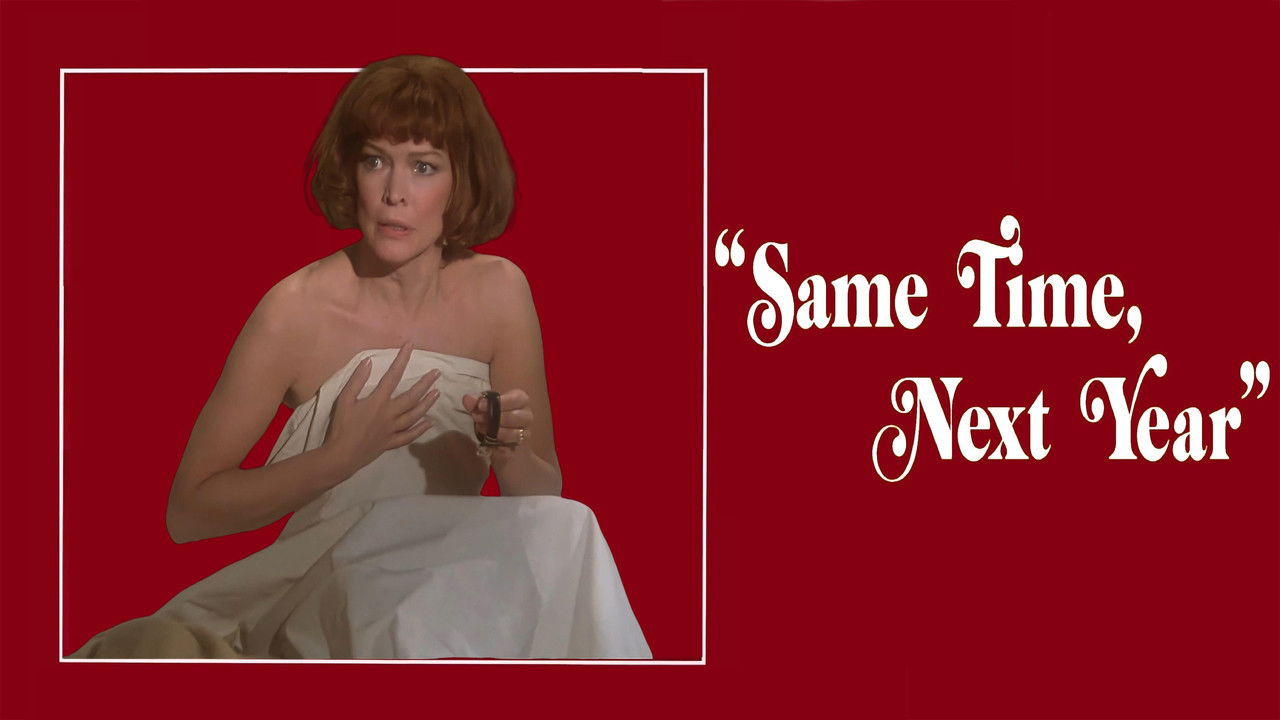
The film cleverly uses each five-year jump not just to update us on Doris and George, but to reflect the changing cultural landscape. We see shifts in fashion, politics (from Eisenhower conservatism through Vietnam War protests to the burgeoning self-awareness of the 70s), and social norms, all filtered through their conversations and personal evolutions. It’s a microcosm of American life unfolding within the walls of that single motel room. Playwright Bernard Slade, who also penned the screenplay (and interestingly, created The Partridge Family!), based the play partly on his own experiences and observations, giving the dialogue an authentic, lived-in feel. He apparently resisted numerous offers to update the play or film with different couples or settings, feeling the magic was specific to Doris, George, and their particular slice of time.
One fascinating production tidbit: while the play famously used just one set, the film subtly expands the world, showing brief glimpses of the inn's exterior and the surrounding scenic coast. However, the vast majority still unfolds within the room, maintaining the intimacy. It's said that both Burstyn and Alda drew heavily on their stage experience (Burstyn had won a Tony for the role on Broadway opposite Charles Grodin) to maintain the energy and emotional continuity required for filming the scenes, which weren't necessarily shot in chronological order. That dedication shines through in the seamlessness of their performances across the decades depicted.
### Why It Still Connects
Watching Same Time, Next Year today, perhaps on a format far removed from the trusty VHS tapes we first saw it on, its power hasn’t diminished. It asks profound questions without easy answers. Can a relationship built outside conventional boundaries still hold profound meaning? How do external societal changes shape our internal lives and deepest connections? What does loyalty truly mean? The film doesn't judge its characters; instead, it invites empathy and understanding. It reminds us that love and connection take myriad forms, and that shared history, even one condensed into annual snapshots, can forge an unbreakable bond. It captures that bittersweet feeling of time slipping away, marked by familiar rituals and the comfort of a shared past.
It’s a quieter film than many we celebrate from the era, lacking explosions or elaborate effects. Its spectacle lies entirely in the human heart, portrayed with grace and vulnerability. Finding this tape felt like a mature, thoughtful counterpoint to the louder fare often dominating the video store shelves – a reminder of cinema's power to simply show us ourselves, reflected in the lives of others.
Rating: 8.5/10
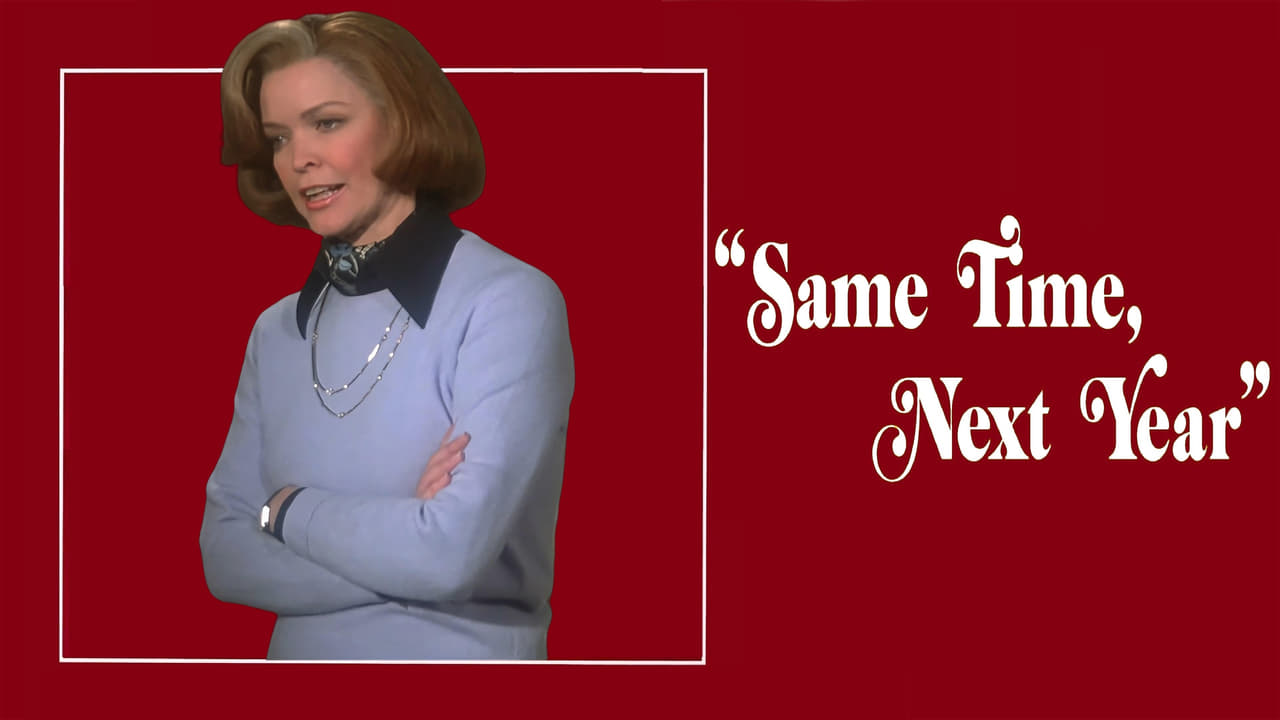
This score reflects the powerhouse performances from Burstyn and Alda, the intelligent script that beautifully captures decades of change within an intimate framework, and Mulligan's sensitive direction. It's a near-perfect execution of its concept, only slightly hindered by the inherent limitations of its stage origins, which occasionally peek through. It remains a deeply moving and insightful exploration of an unconventional love affair that feels remarkably timeless.
Final Thought: Decades later, the quiet intimacy and emotional honesty of Doris and George's annual rendezvous still linger, a testament to the enduring power of human connection, no matter how unconventional the circumstances.