It starts not with a bang, but with a flicker of doubt typed onto a screen in the dead of night. That infamous mission statement, "The Things We Think and Do Not Say," isn't just the catalyst for Jerry Maguire's spectacular fall from grace; it's the uneasy pulse beneath the entire film, a question about integrity in a world that often seems to reward the opposite. Watching Cameron Crowe's Jerry Maguire (1996) again, decades after pulling that familiar VHS tape from the shelf at Blockbuster, what strikes me isn't just the powerhouse performances or the endlessly quotable lines, but how profoundly it tapped into a certain late-90s yearning for authenticity amidst the encroaching cynicism of corporate life.

More Than Just the Money
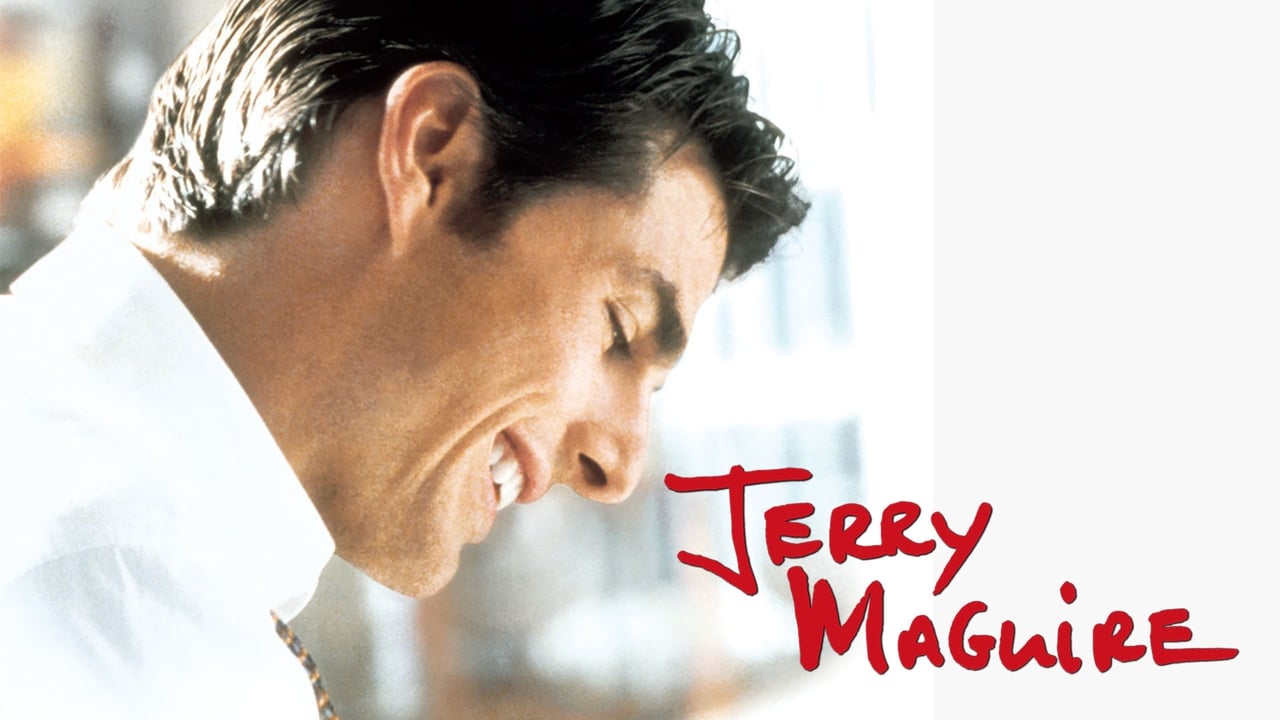
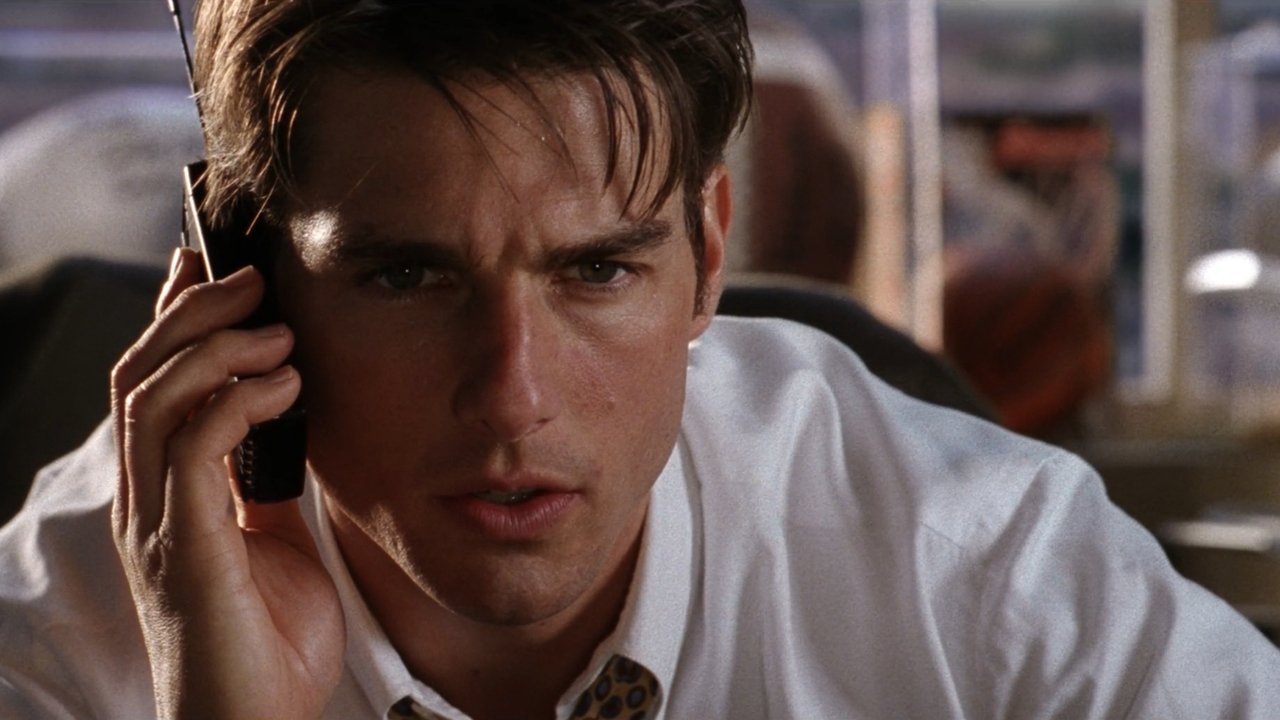
At its core, Jerry Maguire uses the high-stakes, high-gloss world of professional sports agency as a backdrop for a deeply personal story about connection, failure, and the messy business of finding oneself. Tom Cruise, shedding some of the action-hero veneer he'd cultivated, delivers a performance layered with frantic energy and surprising vulnerability. His Jerry isn't just a slick operator; he's a man suddenly adrift, grappling with the consequences of a single moment of impulsive honesty. We see the practiced charm crack, revealing the desperation and uncertainty underneath. It's easy to forget how nuanced Cruise could be, and this role, which Cameron Crowe reportedly spent years developing specifically for him after being impressed by his work ethic, remains a high point. Crowe felt Cruise had the intensity and underlying idealism needed for Jerry, a gamble that paid off handsomely.
Of course, you can't talk about Jerry Maguire without talking about "Show me the money!" Cuba Gooding Jr., in his Academy Award-winning role as Rod Tidwell, Arizona Cardinals wide receiver, bursts onto the screen with an electrifying charisma that practically demands attention. Tidwell is initially presented as pure ego, the embodiment of the transactional relationships Jerry is trying to escape. Yet, Gooding Jr. finds the heart within the swagger. His loyalty to his family, his own anxieties about his career, and his eventual, grudging respect for Jerry create a dynamic partnership that forms the film's emotional anchor. That famous line? It was apparently shouted with such infectious energy on set that extras spontaneously applauded after takes. Gooding Jr.'s Oscar acceptance speech, overflowing with joyous emotion, felt almost like a real-life extension of Rod Tidwell finally getting his due.
Finding the Kwan
And then there's Dorothy Boyd. Renée Zellweger, in a star-making turn, embodies the quiet hope and romantic idealism that contrasts so sharply with Jerry's world. Crowe auditioned many higher-profile actresses (reportedly including Winona Ryder and Marisa Tomei), but saw something special in Zellweger's audition – a genuine sincerity and intelligence that felt essential for Dorothy. She wasn't just a love interest; she was the one person who believed in Jerry's mission statement, the quiet force offering him a different definition of success – what Rod Tidwell might call "the kwan." Her tentative relationship with Jerry, filled with awkwardness, hope, and eventual heartbreak, feels remarkably grounded amidst the film's bigger moments. The chemistry between Cruise and Zellweger is palpable, a delicate dance of two people trying to figure out if their ideals can survive reality. I still remember renting this, perhaps on a whim after hearing the buzz, and being completely captivated by Zellweger's heartfelt portrayal – she felt like someone you knew.
Crowe's Signature Touch
Cameron Crowe, drawing from his experiences as a former Rolling Stone journalist and his fascination with character-driven stories (evident in earlier works like Say Anything... from 1989), crafts a film that feels both specific and universal. His dialogue crackles with memorable lines, but it's the quieter moments – Jerry struggling with a fax machine, Dorothy watching him across a room, Rod talking to his wife Marcee (Regina King, also fantastic) – that resonate most deeply. Crowe's background heavily influenced the film's legendary soundtrack, expertly weaving pop and rock songs (like Bruce Springsteen's evocative "Secret Garden") to amplify the emotional beats, a technique he'd perfect later in Almost Famous (2000). The film itself was partly inspired by the real-life sports agent Leigh Steinberg, who served as a technical consultant and even has a cameo role, adding a layer of authenticity to the sometimes-surreal world of professional sports. It took Crowe over three years to write the script, a testament to the personal nature of the story he wanted to tell.
The production wasn't without its challenges, navigating the complexities of filming with NFL teams and managing the expectations that came with a major Tom Cruise vehicle budgeted at around $50 million. Yet, the result was a critical and commercial smash, grossing over $273 million worldwide and embedding itself firmly in the pop culture landscape. Think about how many times you heard "You complete me" or "You had me at hello" (a line Zellweger reportedly improvised the reading of, adding to its spontaneous charm) in the years that followed.
The Verdict After All These Years
Does Jerry Maguire hold up? Absolutely. While some of the earnestness might feel very '90s', the core themes – the search for meaning in work, the importance of human connection, the courage it takes to risk failure for something real – remain potent. The performances are exceptional across the board, capturing a blend of comedy, drama, and romance that few films manage so successfully. It’s a movie that wears its heart on its sleeve, unafraid of sentiment but grounded in believable characters and relatable struggles. It asks us, ultimately, what truly constitutes a successful life. Is it the money, the fame, or something quieter, more personal, like loyalty and love? That question lingers long after the tape clicks off.
Rating: 9/10
This film earns its high score through its unforgettable performances, sharp writing, resonant themes, and Cameron Crowe's masterful blend of humor and heart. It perfectly captured a moment, yet its core message about integrity and connection transcends its era, reminding us why it became such an enduring favorite long after the video stores closed. It wasn't just a movie; for many of us, it felt like a conversation worth having.