Okay, pull up a comfy chair, maybe pour yourself something relaxing. Let's talk about a film that arrived just as the 90s were winding down, yet somehow felt both perfectly of its time and like something classic Hollywood might have made decades earlier: James L. Brooks' As Good as It Gets (1997). It's one of those tapes I distinctly remember seeing fill the "New Releases" wall at Blockbuster, its cover art – featuring that slightly perplexed trio – hinting at something more complex than your average romantic comedy. And complex it certainly is. How often does a film ask you to invest in, let alone root for, someone as profoundly abrasive as Melvin Udall?

Navigating the Sharp Edges
The film throws down the gauntlet immediately. We meet Melvin (Jack Nicholson), a successful romance novelist living in New York City who is also a misanthropic, homophobic, racist, obsessive-compulsive nightmare. He avoids cracks, uses plastic cutlery once, washes his hands with scalding water and a new bar of soap each time... and verbally assaults nearly everyone he encounters. It's a character designed, it seems, to repel. Yet, the genius of the script, co-written by Mark Andrus and director Brooks (who previously guided Nicholson to an Oscar in Terms of Endearment (1983)), is how it slowly, meticulously, chips away at Melvin's defenses without ever excusing his behavior. It forces us, the viewers, to confront our own capacity for empathy. Can we find the flicker of humanity buried deep within someone so deliberately unpleasant?
An Orbit of Necessity

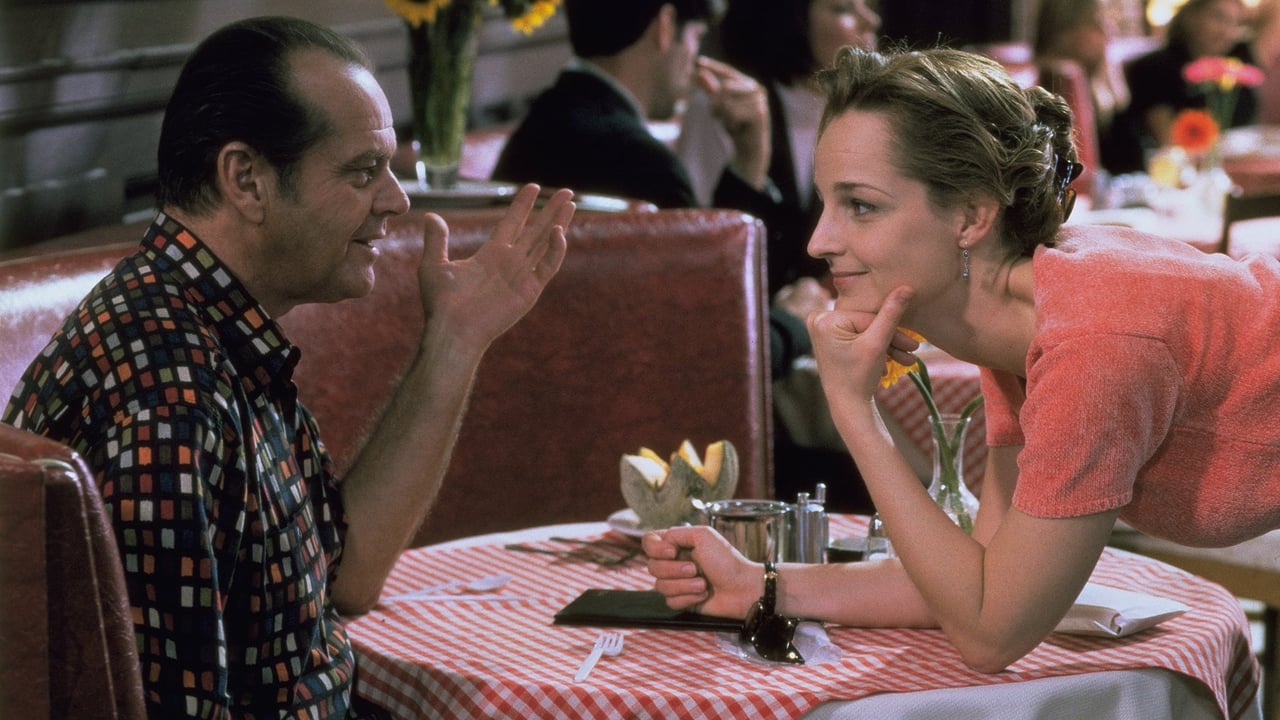
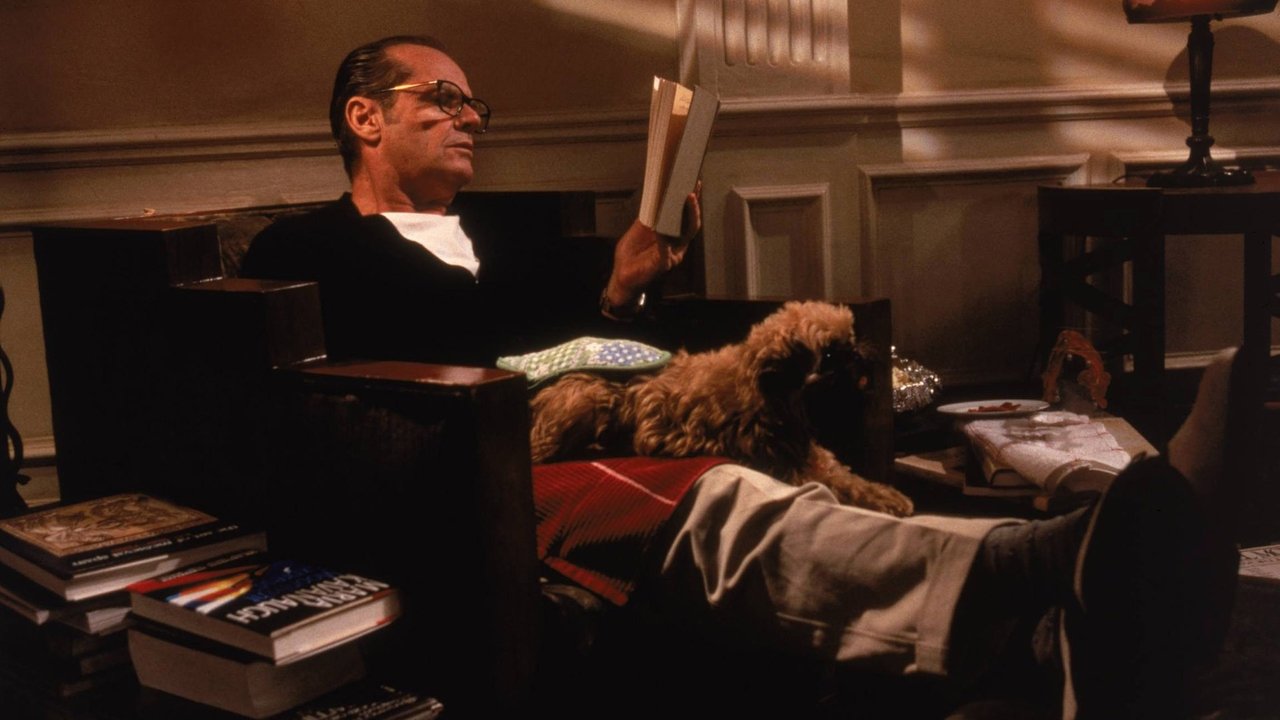
Melvin's hermetically sealed, ritualistic life is disrupted by two people who desperately need something from him, though not necessarily his company. First, there's his neighbour, Simon Bishop (Greg Kinnear), a gay artist who suffers a brutal assault and robbery, leaving him physically and financially broken. Suddenly, Simon's beloved Brussels Griffon, Verdell – a dog Melvin initially despises with theatrical venom – ends up in Melvin's unwilling care. Then there's Carol Connelly (Helen Hunt), the only waitress at Melvin's regular diner who can tolerate serving him. When her young son suffers a severe asthma attack, crippling medical bills threaten her stability, causing her to miss work and throwing Melvin’s rigid routine into chaos. These aren't meet-cutes; they are collisions born of desperation and circumstance. The film wisely avoids suggesting these people want to be together initially; rather, they need each other in pragmatic, often uncomfortable ways.
Nicholson: Beyond the Caricature
Let's be honest, Jack Nicholson playing an eccentric curmudgeon could easily veer into self-parody. We've seen variations before. But his portrayal of Melvin is something else entirely. It’s a performance layered with intricate physical details – the careful way he locks his door, the specific gait to avoid sidewalk lines, the barely contained panic when his rituals are threatened. Nicholson reportedly dove deep into researching Obsessive-Compulsive Disorder, and while some debate the clinical accuracy, the emotional truth rings clear. He doesn't just play the tics; he embodies the consuming anxiety beneath them. The insults are horrific, yes, but delivered with a strange lack of genuine malice, as if they are another compulsive defense mechanism. It’s a performance that walks a razor's edge, earning that Best Actor Oscar through sheer audacity and surprising vulnerability. Remember that moment he tries to give Carol a compliment? "You make me want to be a better man." It lands with such unexpected weight precisely because it comes from this man.

The Grounding Force: Hunt and Kinnear
If Nicholson is the volatile center, Helen Hunt and Greg Kinnear are the essential counterweights. Hunt, fresh off her long run on TV's Mad About You (winning both the Oscar for this film and an Emmy for the show in the same year – an incredible feat), brings an unvarnished, working-class resilience to Carol. She’s not merely a long-suffering love interest; she’s a single mother pushed to her limit, fiercely protective of her son, and unwilling to suffer fools gladly, even if one of those fools might hold the key to her son's health. Her weariness feels bone-deep, her moments of connection with Melvin tentative and hard-won. Her performance is the film’s sturdy, relatable heart.
Kinnear, too, is exceptional as Simon. He avoids making Simon simply a victim. There’s grace, wit, and profound sadness in his portrayal of an artist whose life and confidence have been shattered. The tentative, unlikely friendship that blossoms between Simon and Melvin becomes one of the film's most touching aspects. Simon's quiet dignity provides a crucial contrast to Melvin's loud dysfunction. Fun fact: the adorable Verdell was played primarily by a female Brussels Griffon named Jill, who apparently charmed everyone on set, even Nicholson.
Brooks' Balancing Act
Directing this material required a deft hand. James L. Brooks, known for finding humor and heartbreak in everyday life (Broadcast News (1987)), masterfully balances the film's shifting tones. The dialogue crackles with sharp, often uncomfortable wit, but it’s always rooted in character. The film doesn't shy away from the pain these characters carry – Carol's financial anxieties, Simon's trauma and artistic block, Melvin's isolating mental illness – but it finds moments of genuine warmth and unexpected humor without trivializing their struggles. It's a testament to Brooks and the performers that a film tackling such difficult themes could also be so broadly appealing, becoming a massive critical and commercial success (grossing over $314 million worldwide on a $50 million budget – that's nearly $600 million adjusted for today!).
A Late 90s Snapshot with Staying Power
Watching As Good as It Gets today, perhaps on a format far removed from the hefty VHS cassette it debuted on, it feels like a specific kind of adult-oriented studio picture that became rarer as the millennium approached. It relies entirely on character, dialogue, and performance, not spectacle. The New York City locations feel authentic, part of the characters' lives rather than just a scenic backdrop. It tackles mental illness, prejudice, and the difficulties of human connection with a frankness often missing from mainstream romantic comedies. Does it perfectly represent OCD? Perhaps not clinically, but it captures the feeling of being trapped by one's own mind in a way that resonated deeply.
Rating & Final Reflection
As Good as It Gets isn't a comfortable film, but it is a deeply human one. It earns its emotional payoffs through prickly honesty rather than easy sentimentality. The performances across the board are simply outstanding, anchoring the witty, insightful script. It makes you laugh, cringe, and ultimately, reflect on the messy, complicated ways people can find connection, even when they seem utterly incapable of it.
Rating: 9/10
The film remains a high-water mark for character-driven comedy-drama from the era, anchored by three unforgettable performances. It asks us to look beyond the surface, to find the potential for change and compassion in the unlikeliest of places – a question as relevant now as it was when we first slid that tape into the VCR.