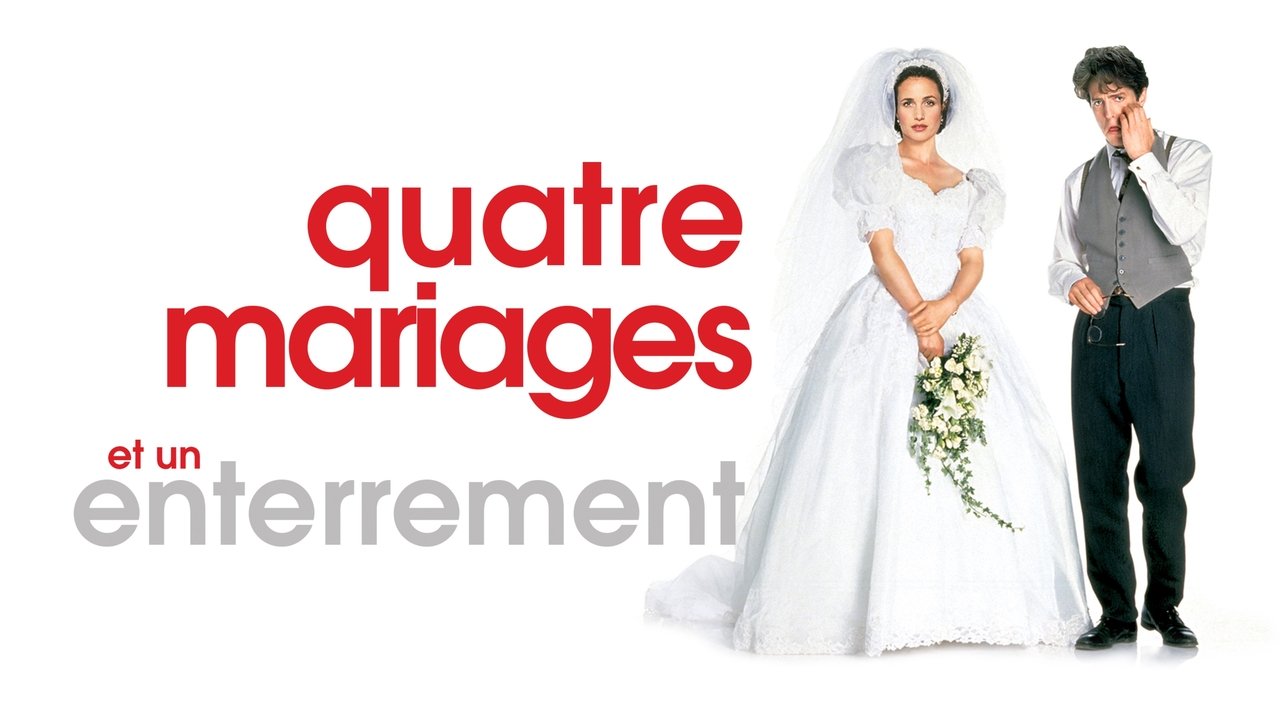
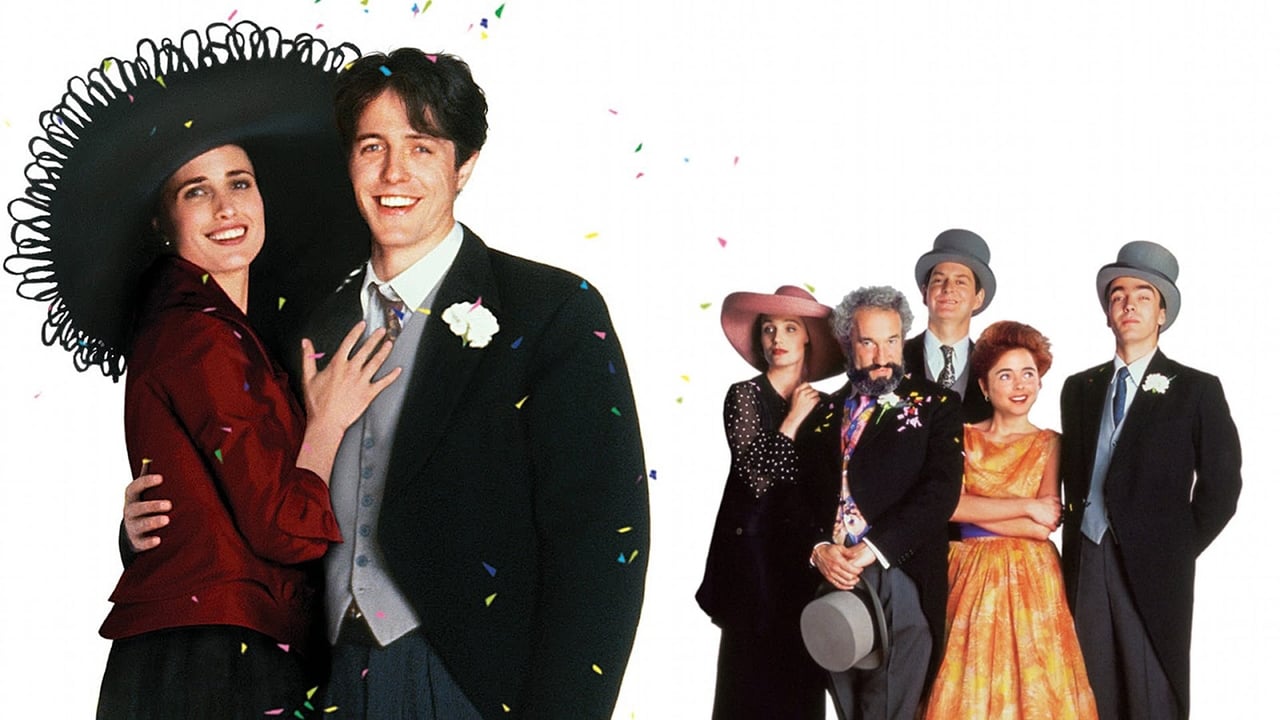
It arrived with relatively little fanfare, didn't it? A British film with a modest budget and a cast led by an actor primarily known, if at all, for smaller roles and a certain floppy-haired charm. Yet, Four Weddings and a Funeral (1994) somehow tapped into a global consciousness, becoming not just a hit, but a phenomenon. Watching it again now, decades after pulling that distinctive VHS tape from the shelf at the local rental store – you know the one, with that group shot hinting at both joy and complication – its enduring magic feels both surprising and utterly inevitable. It wasn't just a film; it felt like an event, a conversation starter, a sudden, shared understanding of a particular kind of awkward, heartfelt Britishness.
An Invitation You Can't Refuse
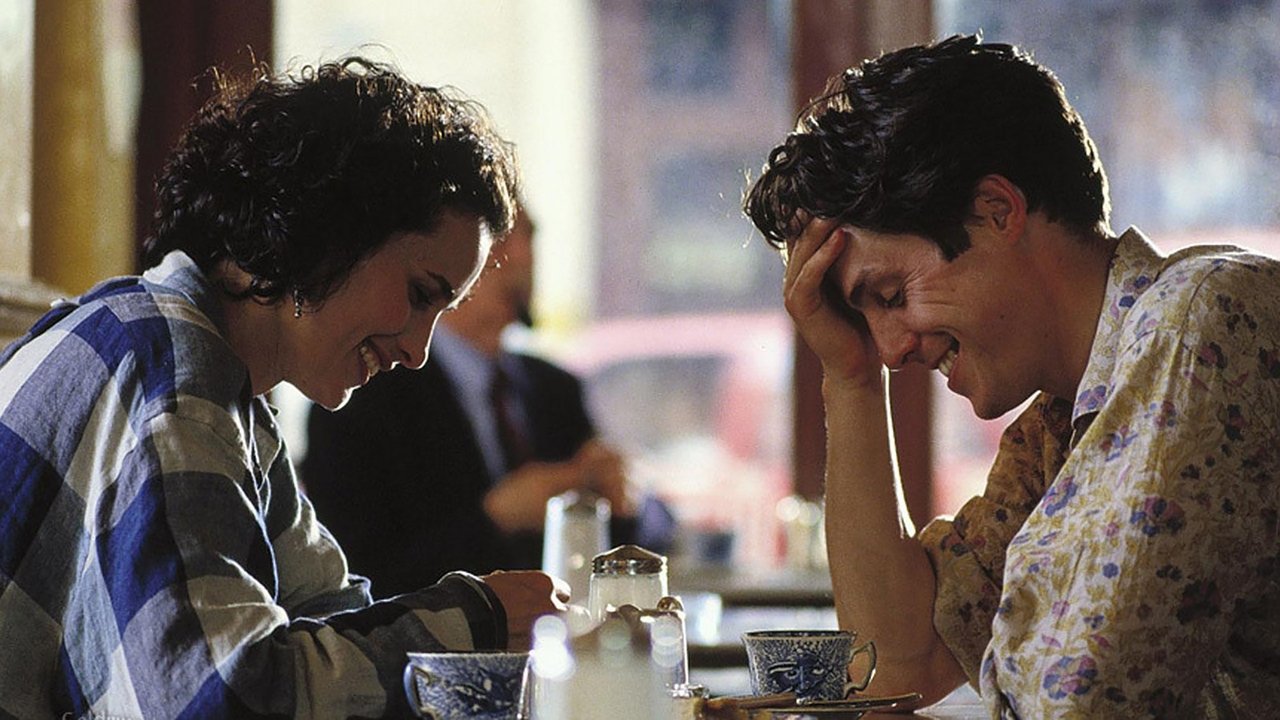
Directed by Mike Newell (who would later helm Donnie Brasco (1997) and Harry Potter and the Goblet of Fire (2005)), and penned by the soon-to-be king of British rom-coms, Richard Curtis (Notting Hill (1999), Love Actually (2003)), the film follows Charles (Hugh Grant), a perpetually late, commitment-phobic Englishman navigating the matrimonial minefield of his social circle. Over the course of, yes, four weddings and one funeral, he repeatedly encounters Carrie (Andie MacDowell), a captivating American who seems both perfect for him and perpetually out of reach. It’s a simple structure, almost episodic, but it provides a brilliant framework for exploring the messy realities of love, friendship, loss, and the sheer terror of choosing the right partner – or messing it all up spectacularly. Curtis reportedly drew heavily on his own experiences as a wedding guest, lending the cringe-inducing speeches and social gaffes an air of painful authenticity.
Beyond the Bumbling Charm
What truly elevates Four Weddings beyond standard romantic comedy fare is its surprising emotional depth. While Hugh Grant undeniably cemented his iconic, charmingly flustered persona here – a performance that almost didn't happen, as Curtis initially envisioned Alan Rickman for the role and found Grant 'too handsome' before being won over by his audition – the film isn't afraid to puncture the laughter with moments of genuine heartbreak. The titular funeral, featuring John Hannah's devastatingly poignant recitation of W.H. Auden's "Funeral Blues," remains one of the most affecting scenes in 90s cinema. It’s a sudden, stark reminder of mortality amidst the champagne and confetti, grounding the romantic escapades in something real and resonant. This blend of wit and sorrow is the film's secret weapon, reflecting the bittersweet chaos of life itself. Doesn't real life often feel like a clumsy dance between celebration and grief?
A Cast That Clicked
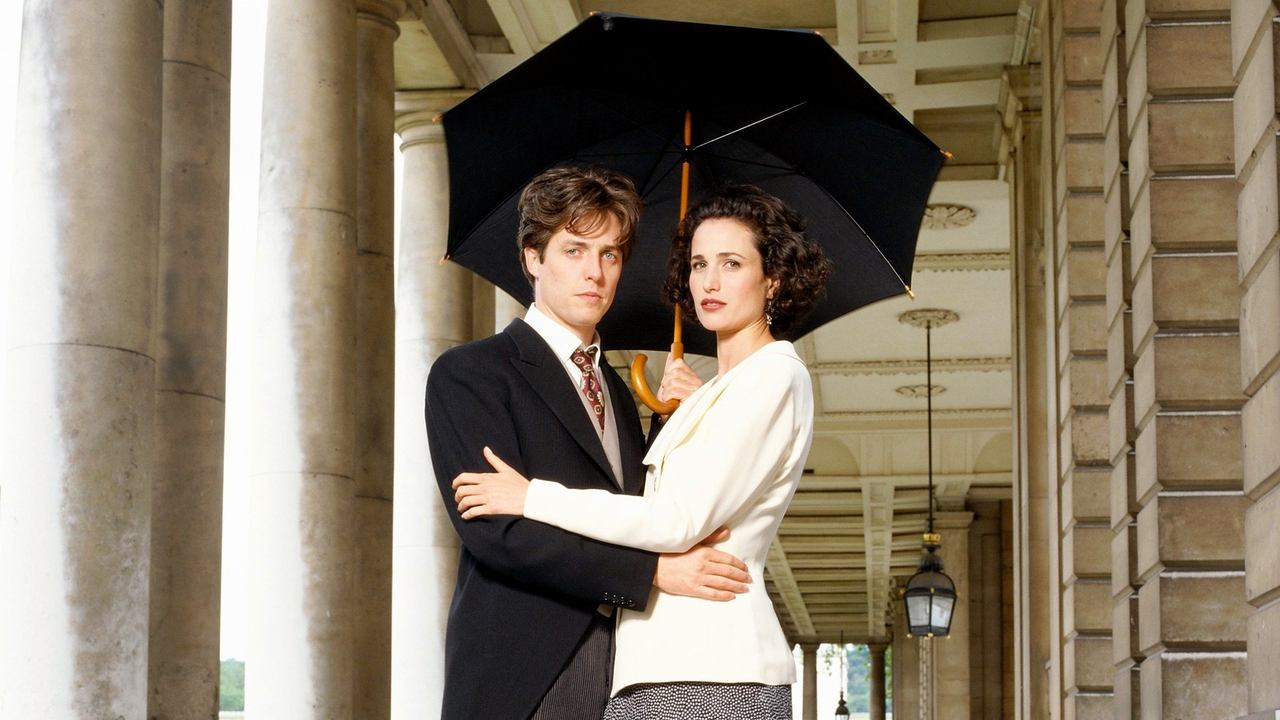
The ensemble cast is uniformly excellent, feeling less like actors playing roles and more like a genuine group of friends you wouldn't mind getting stuck at a terrible wedding reception with. Kristin Scott Thomas is simply luminous as Fiona, nursing a quiet, aching love for Charles. Her delivery of that line, confessing her feelings with a mixture of wry resignation and vulnerability, is a masterclass in understated emotion. Simon Callow brings infectious gusto as the life-loving Gareth, his booming presence making his absence later all the more palpable. And who could forget Rowan Atkinson's brief but unforgettable turn as the nervously meticulous Father Gerald? While some contemporary critics found Andie MacDowell's Carrie a slightly cooler, more elusive presence compared to the warm British ensemble, her performance provides the necessary catalyst for Charles's romantic anxieties, embodying an American confidence that both attracts and intimidates him. The chemistry, particularly in their rain-soaked declaration scene (prompting MacDowell's much-quoted line, "Is it raining? I hadn't noticed."), captures that dizzying, slightly unreal feeling of falling head over heels.
The Little Film That Could
It's almost impossible to overstate what a surprise success Four Weddings was. Made for a reported $4.4 million (around £3 million at the time), it went on to gross over $245 million worldwide, becoming a cultural touchstone. That's an astonishing return on investment, proving that audiences were hungry for something witty, character-driven, and emotionally intelligent. The film nabbed Oscar nominations for Best Picture and Best Original Screenplay, launching Grant into international stardom and solidifying Curtis's reputation. Adding to its cultural footprint was Wet Wet Wet's cover of "Love Is All Around," which dominated the charts (spending an incredible 15 weeks at number one in the UK) and became inextricably linked with the film's romantic sweep. Can you even think of the movie without that song instantly playing in your head?
Lasting Vows
Four Weddings and a Funeral didn’t just entertain; it revitalized the romantic comedy genre, proving that charm and intelligence could coexist, and that audiences responded to stories about flawed, relatable people fumbling towards connection. It showcased a specific slice of British life to the world, albeit a rather privileged one, but did so with warmth and self-deprecating humour. Watching it today, it still feels remarkably fresh, funny, and genuinely moving. The fashions might date it slightly (oh, those wedding hats!), but the core emotions – love, loss, friendship, the fear of getting it wrong – remain timeless. It’s a film that wears its heart on its sleeve, unafraid to be both silly and sincere.
Rating: 9/10
This rating reflects the film's near-perfect blend of sparkling wit, genuine emotional depth, brilliant ensemble performances (especially Grant and Scott Thomas), and its undeniable cultural impact. It masterfully balances laugh-out-loud comedy with moments of profound sadness, anchored by Curtis's sharp, humane script. While MacDowell's character sometimes feels slightly less fleshed out than the British cohort, the film's overall charm, intelligence, and enduring heart make it a standout classic of the 90s and a high point for the romantic comedy genre.
It leaves you not just with memorable lines or scenes, but with a feeling – a warm, slightly melancholic acknowledgment that life, like love, is rarely straightforward, often awkward, but ultimately worth navigating, preferably with good friends by your side.