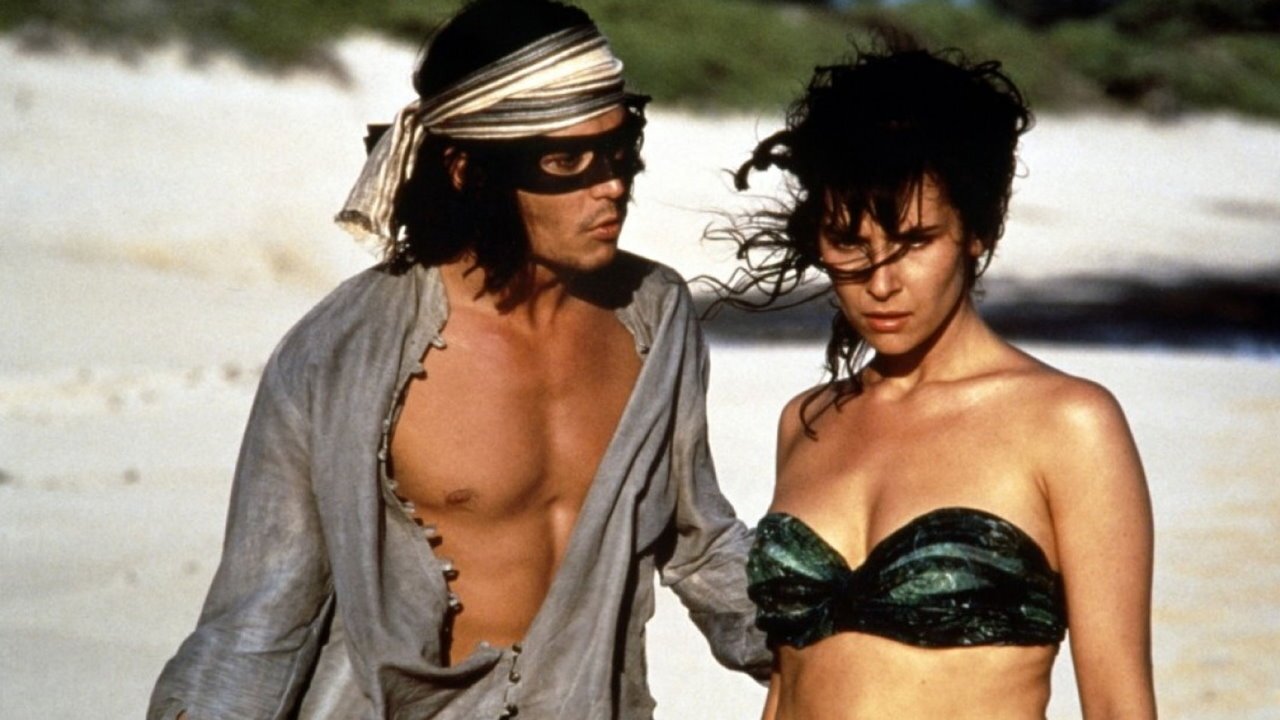
Okay, settle in, maybe pour yourself something comfortable. Let's talk about a film that, upon its release in 1994, felt like a gentle anomaly, a whisper of romantic fantasy amidst the growing cynicism of the decade: Don Juan DeMarco. Does the image of a Zorro-masked Johnny Depp perched precariously atop a billboard, claiming to be the world's greatest lover, instantly conjure a specific mid-90s cinematic feeling? For many of us who haunted the aisles of Blockbuster, it certainly does. This wasn't your typical blockbuster fare; it was something quieter, stranger, and unexpectedly touching.
Worlds Collide: Fantasy Meets Therapy
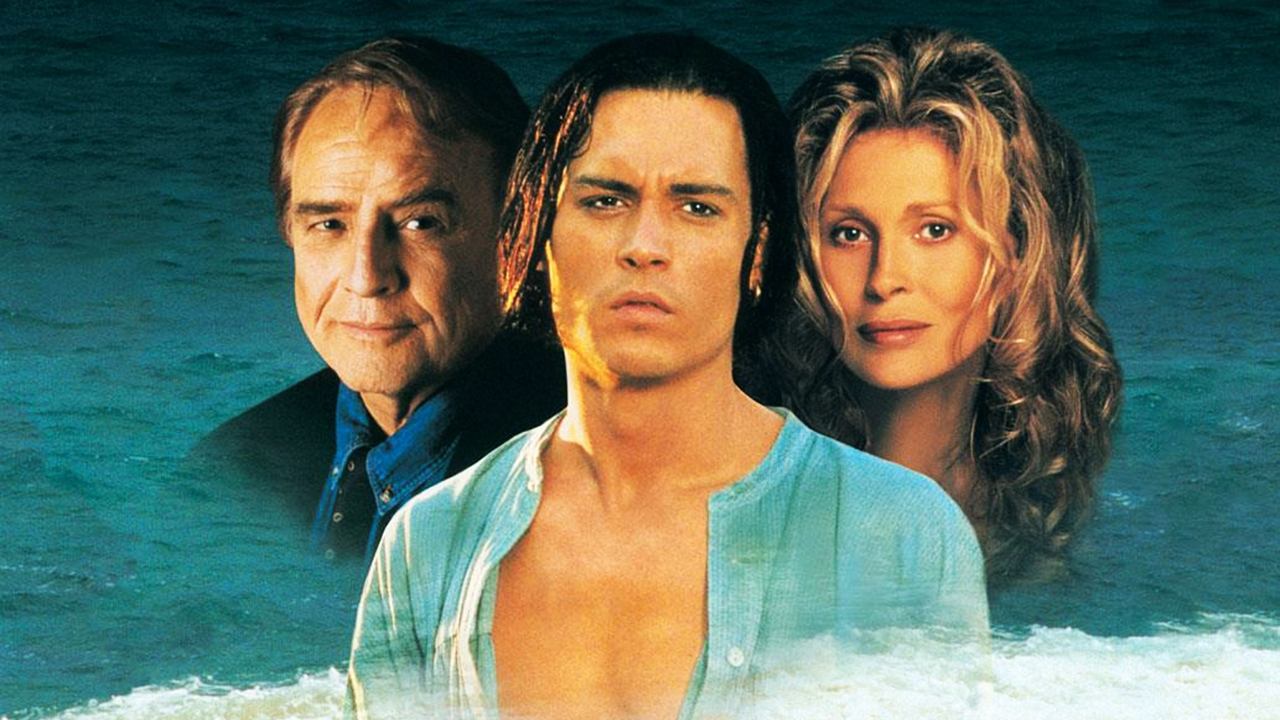
The premise itself holds a certain charm. Dr. Jack Mickler (Marlon Brando), a psychiatrist just days away from a beige retirement, is faced with a unique final case: a young man (Depp) swathed in velvet and wielding a sword, insisting he is Don Juan, the legendary seducer. The hospital gives Mickler ten days to cure the young man of his delusion before committing him. What unfolds, however, isn't a standard psychiatric procedural, but a seductive exchange of worldviews. As Depp's "Don Juan" recounts his impossibly romantic life – tales of lost loves, sword fights on sun-drenched shores, and profound connections – Mickler finds himself increasingly drawn into the narrative, questioning the grey reality of his own long-dormant marriage to the ever-patient Marilyn (Faye Dunaway).
A Tale of Two Legends (and One Rising Star)
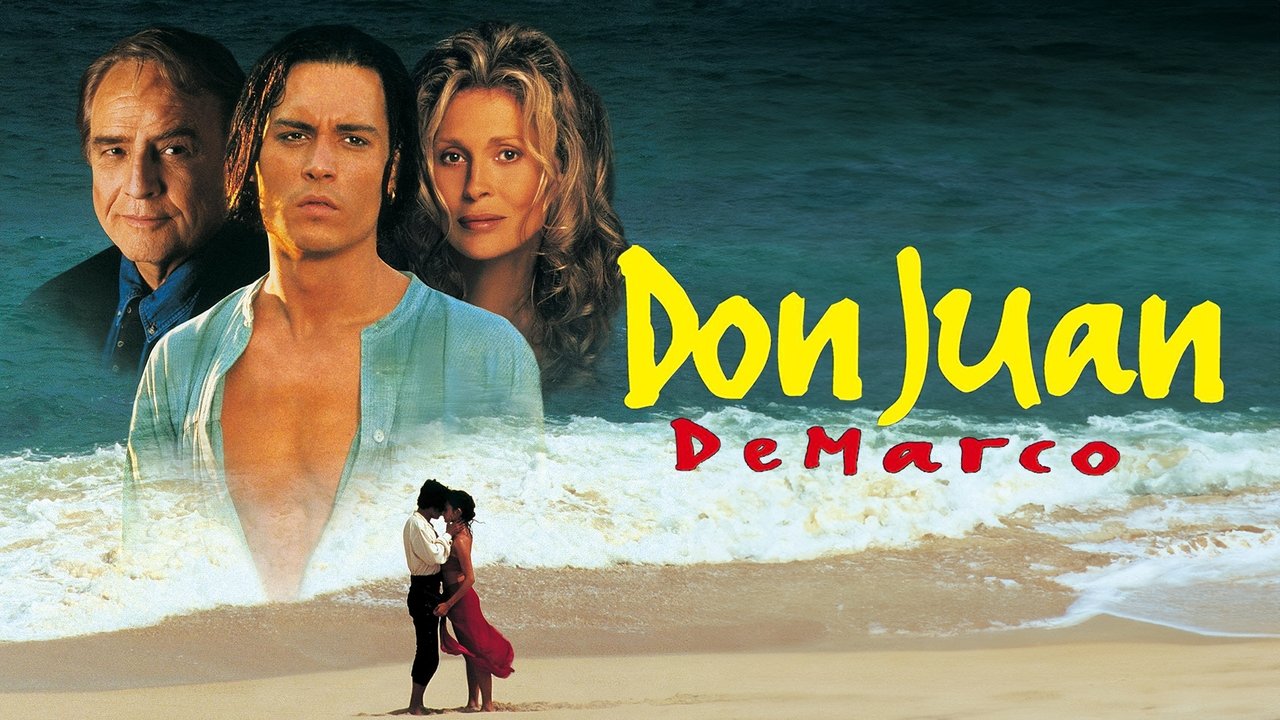
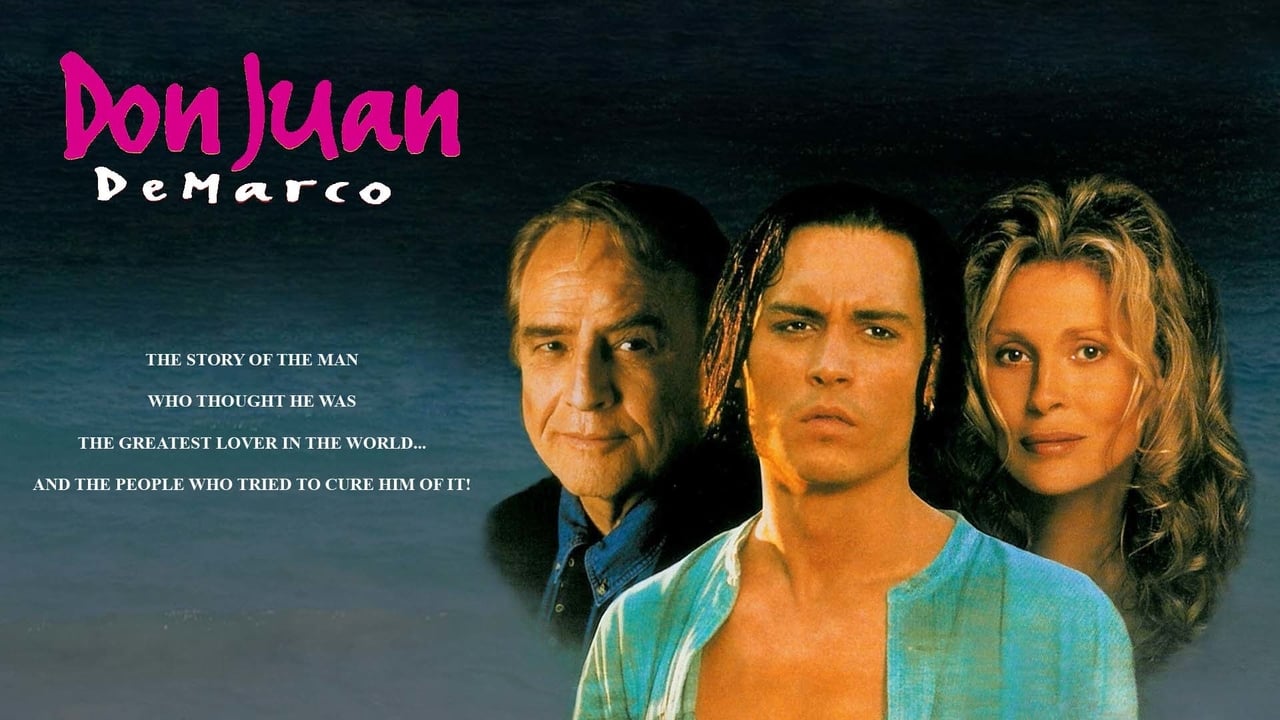
The casting is, frankly, half the magic here. Seeing Marlon Brando, a titan of cinema whose later career was often marked by eccentricity and rumour, opposite a Johnny Depp then solidifying his status as Hollywood's most captivating and sensitive leading man, felt like an event. Depp embodies the titular character with a hypnotic sincerity. He never winks at the audience; his Don Juan is utterly committed to his romantic ideals, delivering lines about love and beauty with a conviction that transcends potential absurdity. You believe he believes, and that's crucial.
Brando, meanwhile, delivers a performance far more nuanced than his reputation for on-set antics might suggest. Yes, stories abound about his use of earpieces for lines (reportedly suggested by Depp himself to ease Brando's anxieties about memorization), but watch closely. He uses his sheer physical presence and those world-weary eyes to convey Mickler's gradual awakening. It’s a performance built on listening, reacting, and letting the young man’s fantastical tales slowly erode his carefully constructed cynicism. The chemistry between Depp and Brando feels genuine, rooted perhaps in their documented off-screen friendship that blossomed on this set. Depp, a long-time admirer, specifically sought the role to work with the legend.
And let's not overlook Faye Dunaway. In a role that could have been thankless, she brings warmth and a quiet longing to Marilyn Mickler. Her journey mirrors her husband's, albeit more subtly, as she senses the shift in him prompted by his encounters with "Don Juan." Her scenes with Brando hold a lived-in tenderness that grounds the film's more fanciful elements.
Crafting the Romance
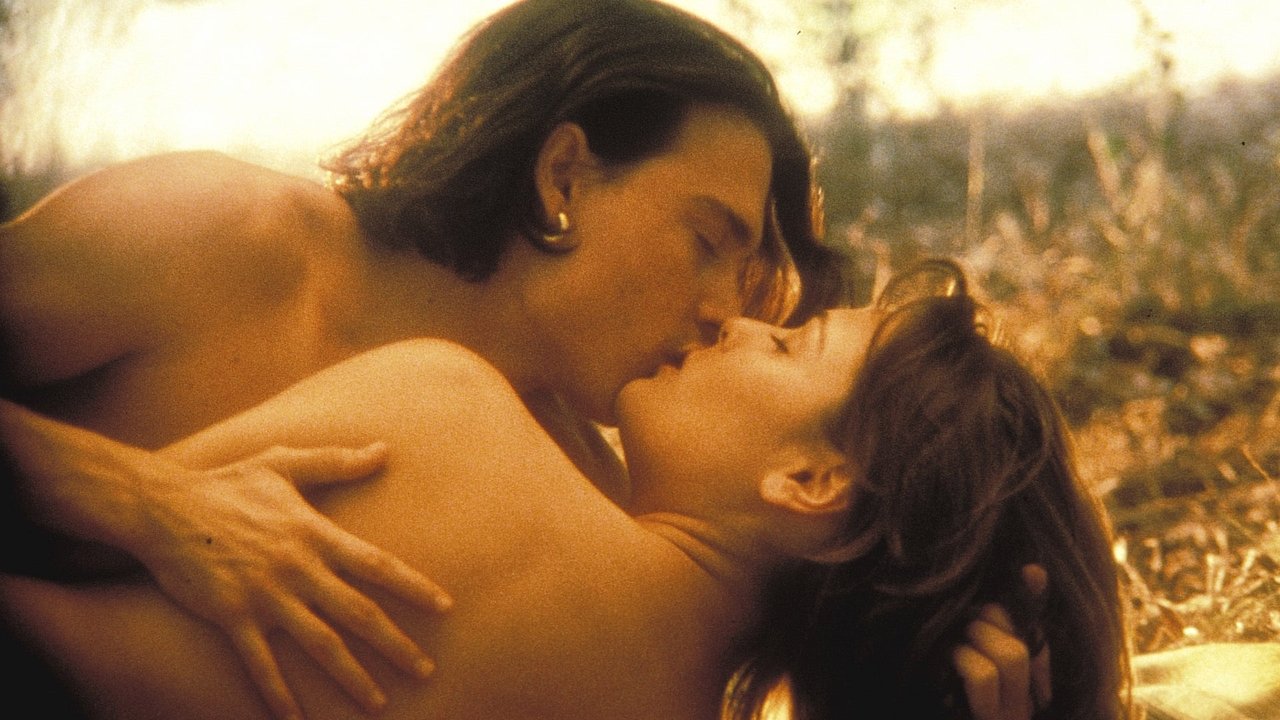
Making his directorial debut, writer-director Jeremy Leven (adapting his own short story) manages a delicate balancing act. He contrasts the sterile environment of the psychiatric hospital with the lush, vibrant hues of Don Juan's recounted memories. These flashbacks, reportedly filmed partially in Mexico to achieve that sun-drenched, storybook quality, are visually distinct, embracing the romanticism wholeheartedly. The film leans into its fantasy, aided immensely by Michael Kamen's evocative score, which swells and sighs with appropriate passion. And who could forget the ubiquitous theme song, Bryan Adams' "Have You Ever Really Loved a Woman?" – a power ballad so perfectly attuned to the film's earnest romanticism that it became a global phenomenon, netting Grammy and Oscar nominations. It’s pure, unadulterated 90s soundtrack gold.
Retro Fun Facts: Beyond the Mask
Beyond the Brando-Depp dynamic, there are other tidbits that place this film firmly in its era. Made on a budget of around $25 million, Don Juan DeMarco pulled in nearly $70 million worldwide – a respectable return that proved there was still an audience for sincere, character-driven romance. Leven, primarily known as a novelist and screenwriter (The Notebook), took a leap directing this personal project, and landing Brando was a considerable coup for a first-time filmmaker. The film's gentle pace and focus on dialogue over action set it apart from many contemporaries. Digging through old VHS tapes recently, finding my well-worn copy brought back that specific feeling – it was a movie you watched when you wanted to believe in grand gestures and timeless love, even if just for 97 minutes.
The Lingering Question
What Don Juan DeMarco explores so effectively is the power of narrative and the choice we have in perceiving our own lives. Is the young man truly Don Juan, or is he a deeply traumatized individual who has constructed an elaborate, beautiful defense mechanism? The film wisely leaves a degree of ambiguity. Mickler ultimately seems less concerned with a clinical diagnosis than with the effect the young man's worldview has – on himself, on his marriage, on the possibility of choosing a more romantic, engaged way of living. Doesn't that core question still resonate? How much of our reality is shaped by the stories we choose to believe?
The film isn't perfect. Some might find its earnestness bordering on naive, its romanticism a touch too sweet. But its gentle spirit and the compelling interplay between its leads give it a unique charm that endures. It invites us to consider whether a life lived through the lens of poetic fantasy might, in its own way, be more "real" than one mired in mundane routine.
Rating: 7.5/10
This score reflects the film's undeniable charm, strong central performances (especially the captivating dynamic between Depp and Brando), and its success in creating a distinct, romantically melancholic atmosphere. While perhaps slight in plot and occasionally leaning into sentimentality, its thematic questions about reality, fantasy, and the rejuvenating power of love are thoughtfully presented. It's a film whose gentle magic works best if you're willing to meet it halfway.
Don Juan DeMarco remains a lovely piece of 90s cinematic fantasy – a reminder that sometimes, the most profound truths can be found hidden within the most beautiful illusions. It lingers like the scent of roses on a warm evening, asking us if we've ever really loved.