What are the rules we live by? Those handed down, etched in stone or tradition, and those we carve out ourselves from the messy clay of experience? It’s a question that settles over Lasse Hallström’s 1999 adaptation of John Irving's own novel, The Cider House Rules, like the gentle but persistent Maine mist. This isn't a film that shouts its dilemmas; it whispers them, letting the weight of choice and circumstance seep into the viewer’s consciousness. Arriving at the cusp of a new millennium, after a decade often defined by flash and irony, its quiet contemplation felt like a deep, steadying breath.

An Orphan's Journey, Worlds Apart
The film anchors us in the weathered walls of St. Cloud's Orphanage, a place overseen with gruff tenderness by Dr. Wilbur Larch (Michael Caine). Here, amid the routines and the quiet heartbreaks of children waiting for families, grows Homer Wells (Tobey Maguire). Trained by Larch in obstetrics but never formally educated beyond the orphanage library, Homer is Larch’s protégé, his surrogate son, yet deeply conflicted. Larch, a man who performs illegal abortions alongside delivering babies, sees himself as providing a necessary service, "doing the Lord's work" or "the Devil's work," depending on the day. Homer, however, yearns for a life beyond St. Cloud's and struggles with the moral complexities of Larch's practice. His chance arrives with Candy Kendall (Charlize Theron) and her beau Wally Worthington (Paul Rudd), a young couple seeking Larch's discreet help. Homer leaves with them, trading the cloistered world of the orphanage for the sun-dappled expanse of the Worthington apple orchard and its cider house, a place governed by its own set of seemingly arbitrary, unread rules.
Portraits of Quiet Conviction
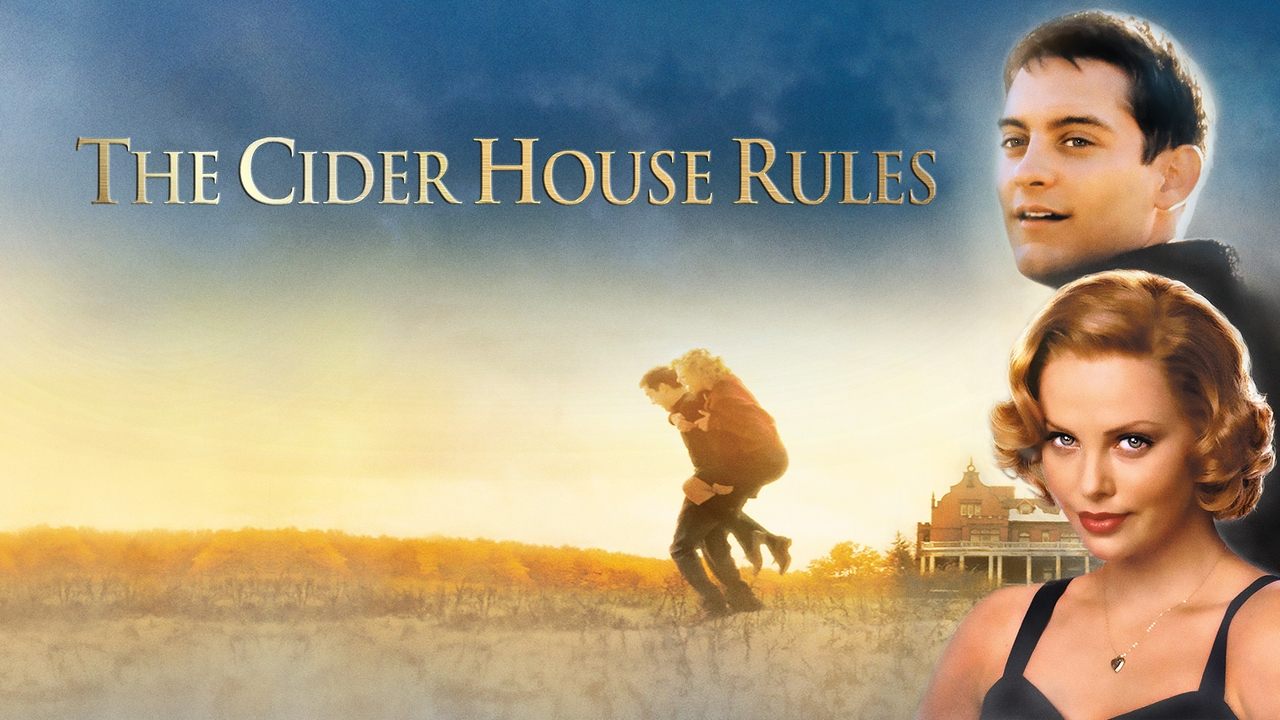
The performances here are uniformly strong, resonating with an understated authenticity. Tobey Maguire, pre-Spider-Man fame, perfectly embodies Homer’s gentle spirit and wide-eyed discovery of the world, tinged with an inherent melancholy. You feel his quiet grappling with the weight of knowledge Larch has imparted and the pull of a simpler, perhaps less morally fraught, existence. Charlize Theron imbues Candy with a luminous warmth but also a fragility born of circumstance and hidden desires. Her connection with Homer feels organic, built on shared glances and unspoken understandings.
But it’s Michael Caine who truly anchors the film's emotional core. His Dr. Larch is a figure of immense compassion and weary pragmatism, a man who has made peace with difficult choices. Caine won his second Best Supporting Actor Oscar for this, and it's easy to see why. He avoids saintliness, presenting Larch as flawed, sometimes manipulative in his affection for Homer, but fundamentally decent. His nightly sign-off to the orphans, "Goodnight you Princes of Maine, you Kings of New England," carries the weight of profound, protective love. Supporting turns from Delroy Lindo as Mr. Rose, the leader of the migrant orchard workers whose lives intersect tragically with Homer's, and Erykah Badu as his daughter Rose Rose, add further layers of complexity and quiet dignity.
Echoes of Choice and Belonging
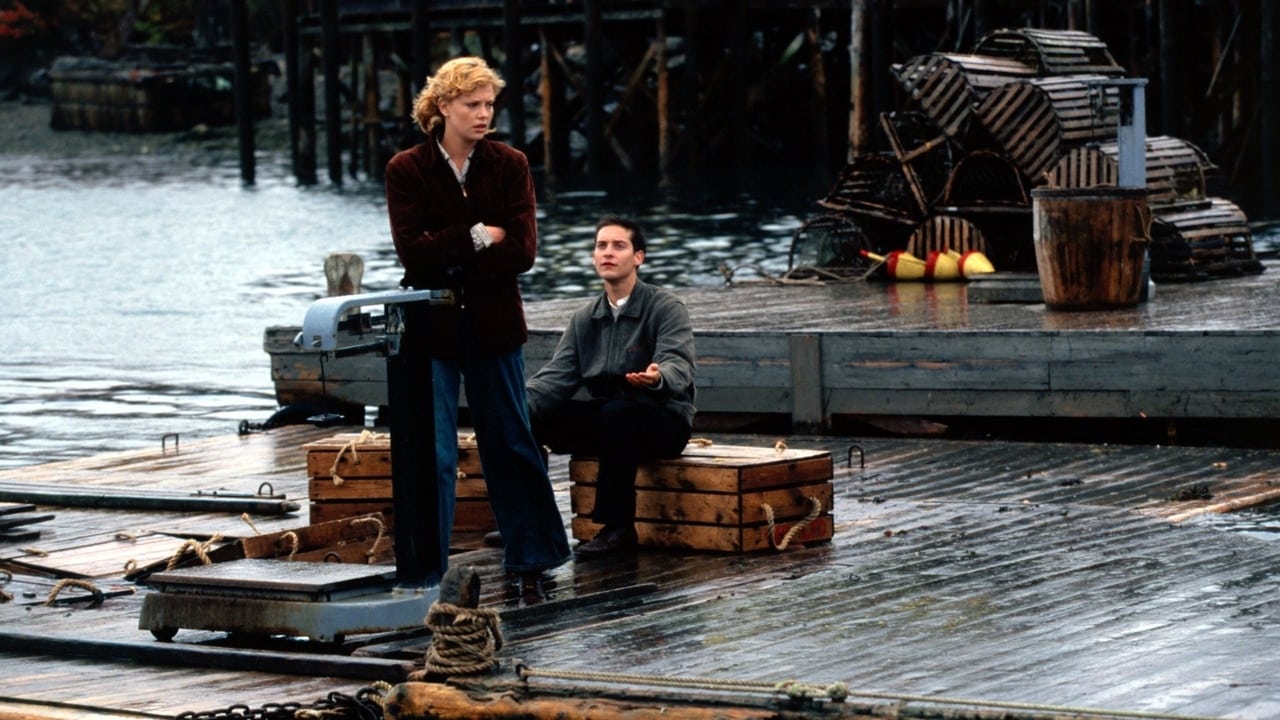

The Cider House Rules isn't afraid to wade into difficult waters, particularly its handling of abortion. It presents the issue not as a political football, but as a deeply personal, often agonizing reality faced by women in desperate situations. Larch's pragmatic view contrasts sharply with Homer's initial moral objections, forcing both the character and the viewer to consider the nuances. What does it mean to offer help? What rules govern compassion when the law offers none? The film doesn't provide easy answers, instead letting the human stories unfold and asking us to contemplate the weight of each choice. Beyond this central theme, it explores belonging – Homer’s search for a place to truly call home, the transient lives of the orchard workers, the found family within St. Cloud's. The titular cider house rules, posted but ignored by the illiterate workers, become a potent metaphor: whose rules matter? Those written down, or those lived?
From Page to Screen: An Author's Touch
> "Sometimes you have to break the rules to make things right." - Dr. Wilbur Larch (paraphrased sentiment reflecting his actions)
It’s worth pausing to appreciate the rare feat achieved here. John Irving himself adapted his sprawling novel, a process that reportedly took nearly a decade and saw several directors attached before Hallström. Winning the Oscar for Best Adapted Screenplay is a testament to his ability to distill the essence of his own complex work. Irving even makes a cameo as the stationmaster, a knowing nod from the story's creator. He had to make significant cuts, focusing the narrative primarily on Homer’s journey and the moral questions surrounding Larch's work, inevitably losing some subplots but retaining the novel’s heart. This direct authorial involvement likely contributes significantly to the film's thematic clarity and emotional resonance.
Retro Fun Facts
- Caine's Dedication: Michael Caine was deeply invested in the role, researching ether administration and drawing inspiration partly from his own father figure, an obstetrician. His heartfelt Oscar acceptance speech, acknowledging his fellow nominees, remains a memorable moment.
- Maguire's Method: To capture Homer's sheltered upbringing, Tobey Maguire reportedly tried to limit his exposure to external stimuli during filming, aiming for that authentic sense of naïveté when Homer encounters the wider world.
- Location Authenticity: The film wasn't shot on soundstages pretending to be New England. Real locations in Massachusetts and Vermont, like Ventfort Hall Mansion (St. Cloud's) and Scott Farm Orchard (Worthington's), lend a tangible sense of place and time that enhances the story's atmosphere.
- Budget to Box Office: Made for around $24 million, the film grossed over $88.5 million worldwide. That's a solid success for a character-driven drama tackling difficult themes, proving audiences were receptive to its thoughtful approach even at the close of the 90s blockbuster era.
Hallström's Gentle Guidance
Lasse Hallström’s direction is characterized by a gentle touch, prioritizing character and atmosphere over stylistic flourish. Working with cinematographer Oliver Stapleton, he captures the distinct moods of the two main settings – the austere, almost institutional feel of St. Cloud's, and the warmer, yet still melancholic, beauty of the orchard bathed in autumnal light. Rachel Portman's Oscar-nominated score is crucial, its wistful melodies perfectly complementing the film’s reflective tone without ever becoming overly sentimental. The pacing is deliberate, allowing moments to breathe and relationships to develop organically, though some viewers might find it slow compared to more plot-driven fare.
Why It Still Resonates
Watching The Cider House Rules today, its exploration of choice, responsibility, and the complexities of morality feels perhaps even more relevant. In an era of polarized debate, its quiet insistence on empathy and understanding the human stories behind difficult decisions offers a valuable perspective. It asks us to consider the rules we inherit and the ones we choose, and the often-unseen consequences that ripple outward from those choices. What feeling lingers most strongly after the credits roll? For me, it’s a profound sense of empathy, a quiet contemplation of the intricate, often messy ways we navigate life and try to do right by each other, even when the rules aren't clear.

Rating: 8/10
The justification for this score rests firmly on the film's powerful emotional core, its exceptional performances (especially Caine's Oscar-winning turn), and its thoughtful, nuanced handling of complex themes. Irving's successful adaptation and Hallström's sensitive direction create a deeply moving and atmospheric piece. While its deliberate pacing might test the patience of some, and the sheer scope of the novel means certain elements feel condensed, the film's strengths significantly outweigh these minor points. It achieves a rare balance of emotional depth and intellectual engagement without resorting to melodrama.
The Cider House Rules is a film that stays with you, a gentle but persistent meditation on the rules we make, the choices we face, and the search for where, and how, we belong in the world. It’s a reminder from the cusp of the 2000s that sometimes the quietest stories carry the most weight.