What lingers longest after the credits roll on Bicentennial Man isn't necessarily a single scene, but rather a persistent, quiet question: what truly defines our humanity? Released in the final moments of 1999, a year buzzing with Y2K anxieties and the sleek, sometimes cold, promises of the future depicted in films like The Matrix, this film offered a different kind of science fiction – one less concerned with dystopia and more with the slow, often aching, journey towards feeling. It arrived on VHS shelves feeling like a weighty proposition, both in its runtime and its themes, promising something thoughtful beneath its polished, futuristic veneer.
An Android's Odyssey
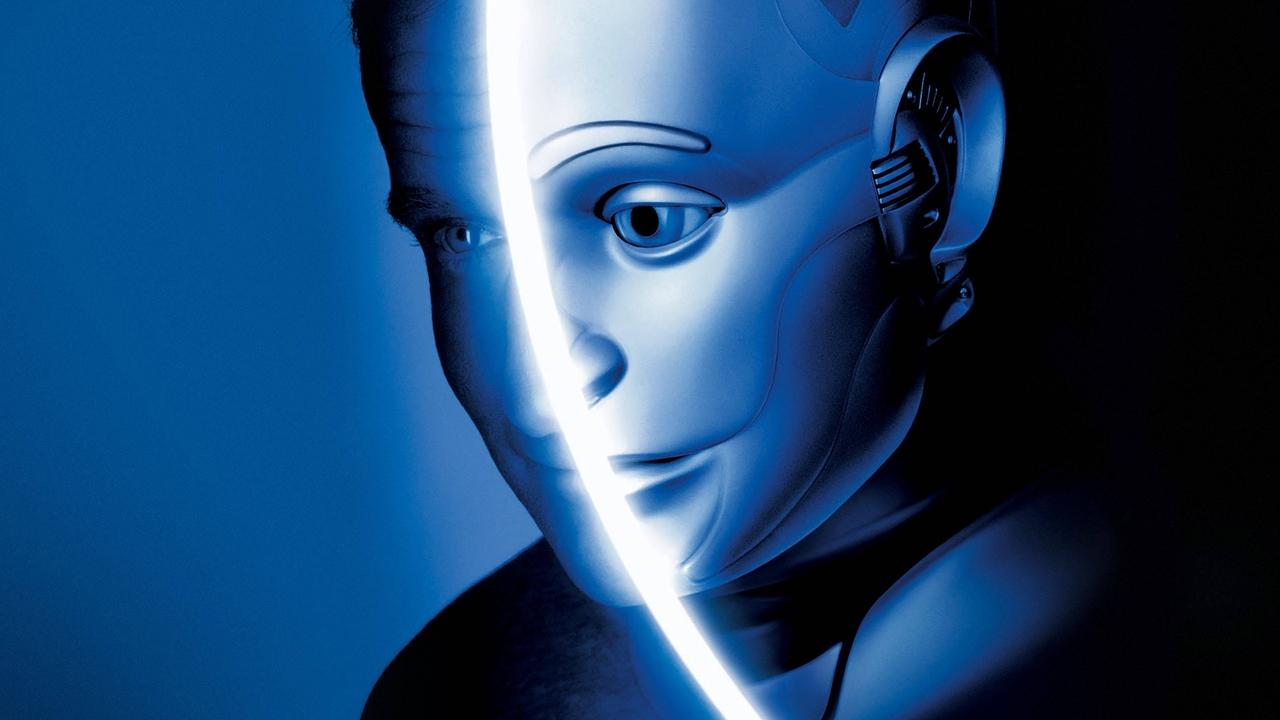
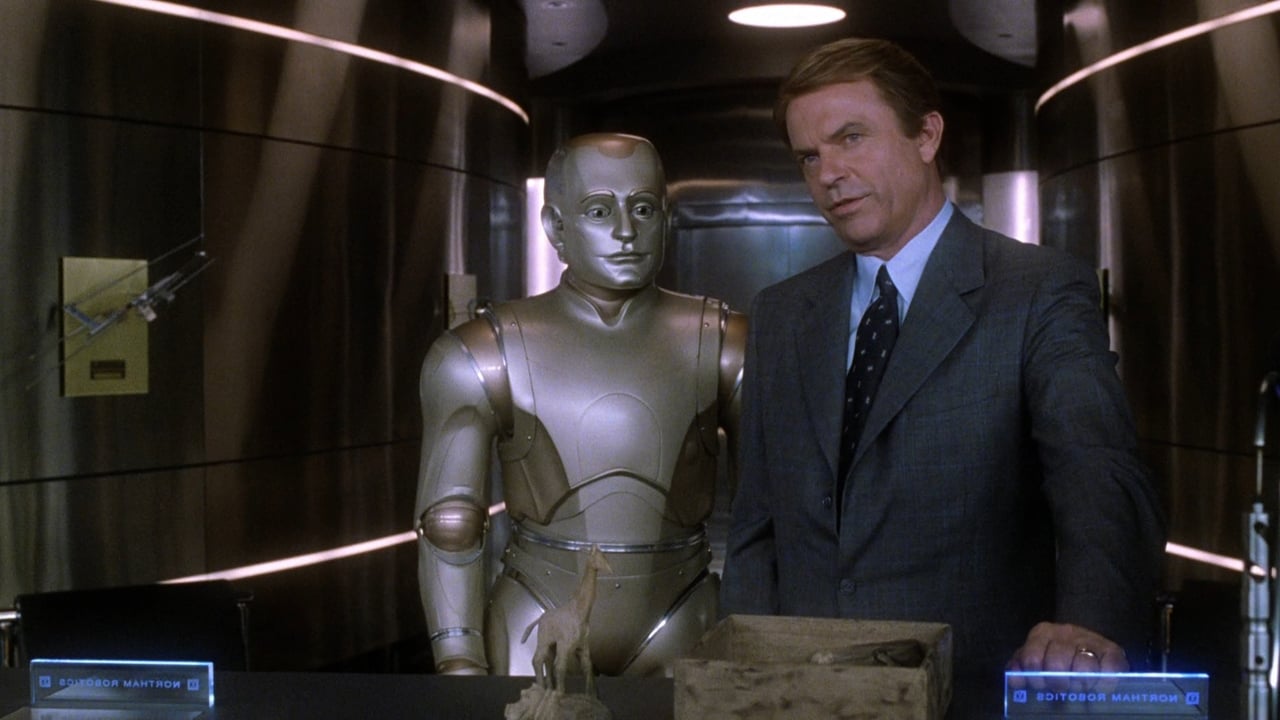
Based on the seminal work of Isaac Asimov (and Robert Silverberg's novel expansion), the film introduces us to NDR-114, later known as Andrew, a household android purchased by the Martin family in the not-too-distant future. Initially a subservient appliance, Andrew begins to display unexpected traits: creativity, curiosity, and eventually, a yearning for something more than programmed existence. This sets him on an unprecedented, two-century-long quest for self-discovery, freedom, and ultimately, acceptance as a human being.
The narrative unfolds across generations, charting Andrew's evolution alongside the lives and losses of the Martin family, particularly "Little Miss" Amanda Martin and later her granddaughter, Portia Charney (both portrayed with grace by Embeth Davidtz). Sam Neill, as patriarch "Sir" Richard Martin, provides the crucial early warmth and encouragement, recognizing the spark of something unique within Andrew's positronic brain. It’s this intergenerational scope that gives the film its emotional heft, contrasting Andrew’s near-immortality with the fleeting nature of human life.
The Heart in the Machine
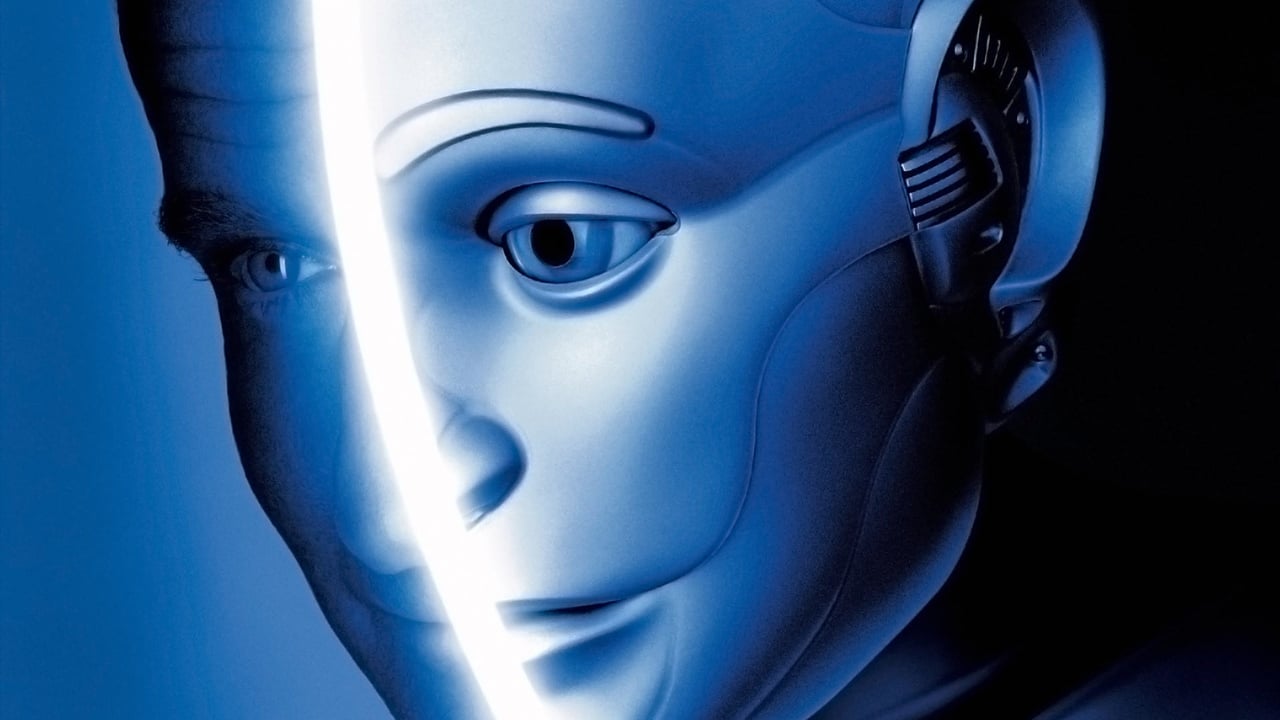
At the core of Bicentennial Man is, undeniably, Robin Williams. Stepping away from the manic energy many associated him with after films like Aladdin (1992) or Mrs. Doubtfire (1993) (also directed by Chris Columbus), Williams delivers a performance of remarkable restraint and nuance. Encased for much of the film in complex animatronics and makeup – a challenging process that reportedly involved hours of application and limited physical expression – he conveys Andrew’s burgeoning soul largely through subtle vocal modulations and carefully considered gestures. Watching him transition from a stiff, logically-bound machine to a being capable of profound love and sorrow is the film's most compelling aspect. It’s a performance that feels deeply considered, finding the humanity not in grand pronouncements, but in quiet moments of connection and vulnerability. Does his eventual physical transformation fully capture this inner journey? That remains a point of discussion for many viewers.
Polishing the Chrome, Feeling the Weight
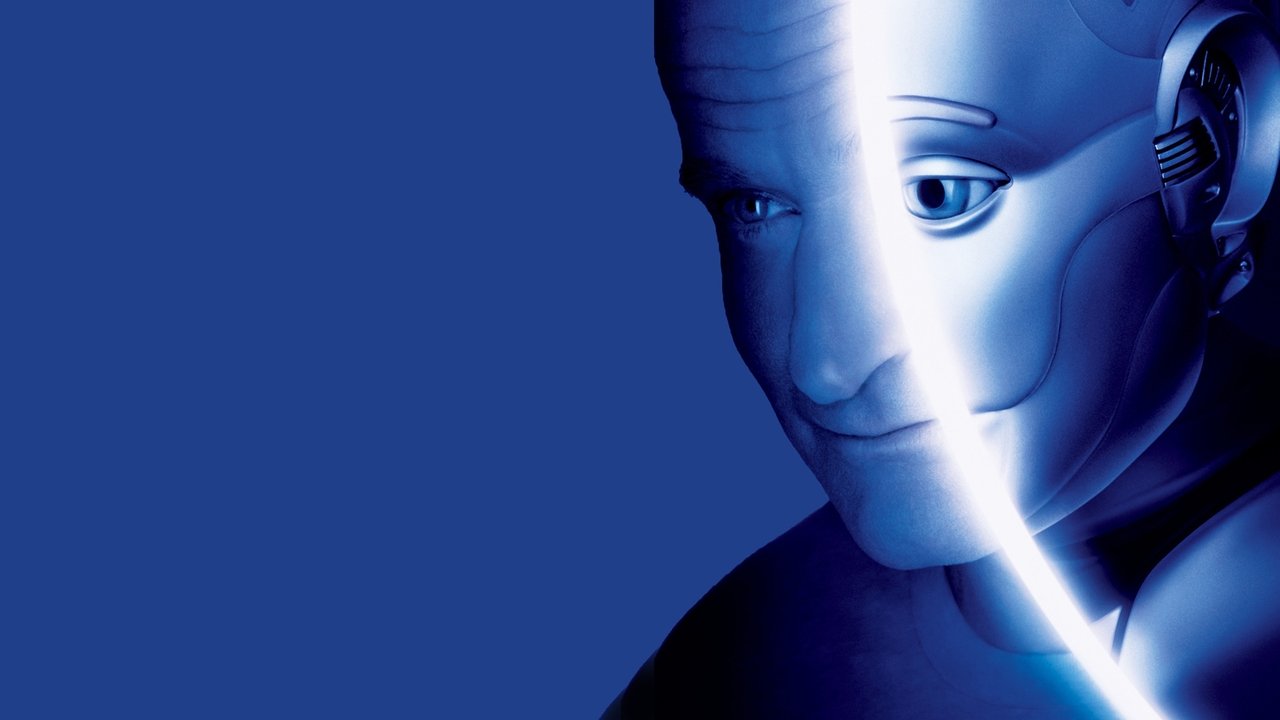
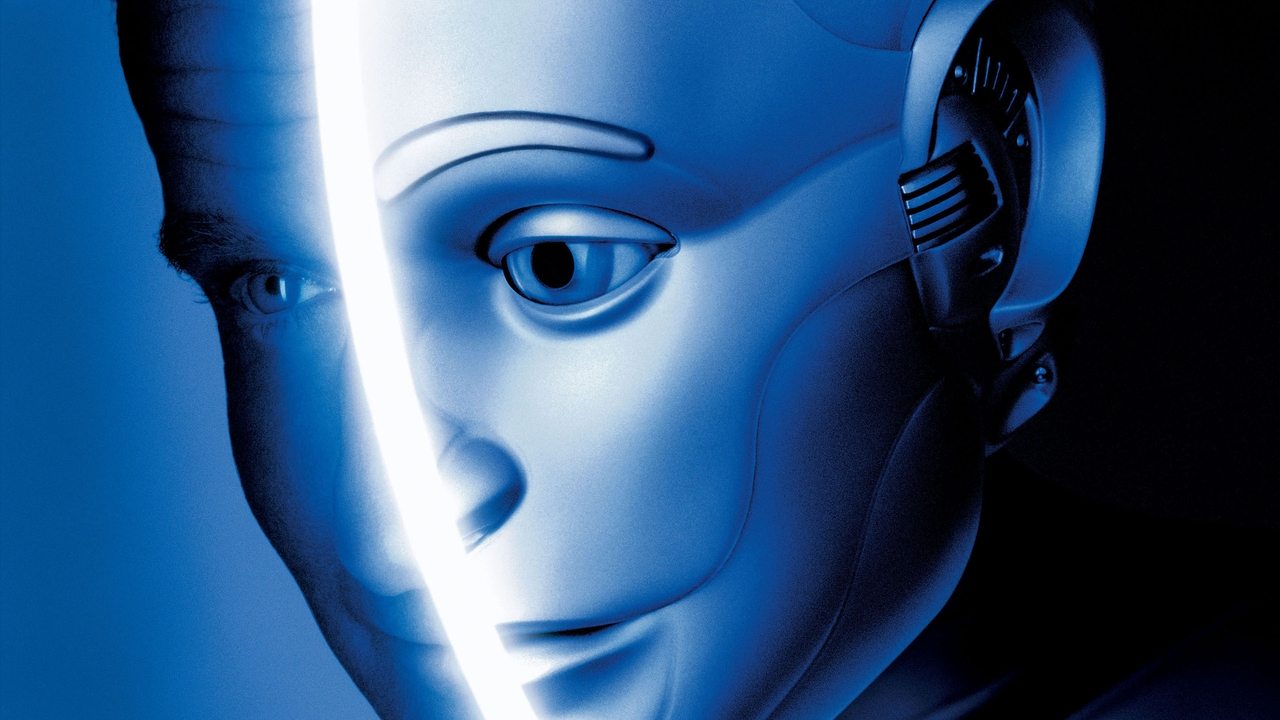
Chris Columbus, known for his ability to blend heart and humor, brings a certain visual warmth to the film's evolving future-scape. The production design effectively charts the passage of 200 years, moving from familiar contemporary aesthetics to sleek, advanced technological environments. Yet, Columbus’s trademark sentimentality, while often effective in his family films, sometimes feels overwhelming here. The film occasionally leans too heavily on emotional cues, risking schmaltz where subtlety might have resonated more deeply. This earnestness, coupled with a deliberate pace required to span two centuries, led to mixed critical reception upon release; it wasn't the runaway hit some might have expected given the talent involved, earning a respectable but not stellar $113 million globally against its significant $100 million budget (roughly $175 million today). It seems its true audience perhaps found it later, nestled on those video store shelves, ready for a slower, more contemplative experience.
Interestingly, the film’s journey mirrors Andrew’s own struggle for acceptance. While critics were divided (it still holds a low score on Rotten Tomatoes), audience appreciation seems to have grown over time. Perhaps removed from the expectations of a typical holiday blockbuster, its core questions about life, death, and love find more fertile ground. What does it mean to choose mortality? Is love enough to bridge the gap between silicon and flesh? These are not small questions, and the film deserves credit for tackling them head-on, even if the execution sometimes falters.
Retro Fun Facts: Beneath the Surface
Adapting Asimov is never simple. His 'Three Laws of Robotics', though not explicitly the film's focus, underpin Andrew's initial existence. The journey from novella to screen involved screenwriter Nicholas Kazan navigating the immense challenge of portraying 200 years of personal and technological evolution. Stan Winston Studio's incredible work on Andrew's various physical forms was central, but also incredibly demanding for Williams. Imagine conveying deep emotion while encased in mechanics! It’s also worth noting that the film's extensive shooting schedule across Northern California locations aimed to capture a sense of timelessness transitioning into the future.
Final Thoughts Across Time
Bicentennial Man isn't a perfect film. Its pacing can feel languid, and its sentimentality sometimes borders on saccharine. Yet, there's an undeniable sincerity to its exploration of what it means to be human. Williams gives a performance that stays with you, full of quiet dignity and yearning. It asks profound questions and, unlike much science fiction of the era, offers answers rooted not in spectacle, but in emotion and connection. It’s a film that invites reflection, a gentle giant on the shelf that might surprise you with its lingering emotional resonance long after the VCR has whirred to a stop.
Rating: 7/10
This score reflects the film's ambitious heart, Robin Williams' deeply affecting performance, and its willingness to tackle profound themes, balanced against its sometimes uneven pacing and occasional over-reliance on sentiment. It succeeds more often than it stumbles in its core mission.
It leaves you pondering not just the future of technology, but the very essence of the human spirit – a journey worth taking, especially with a comforting rewind button close at hand.