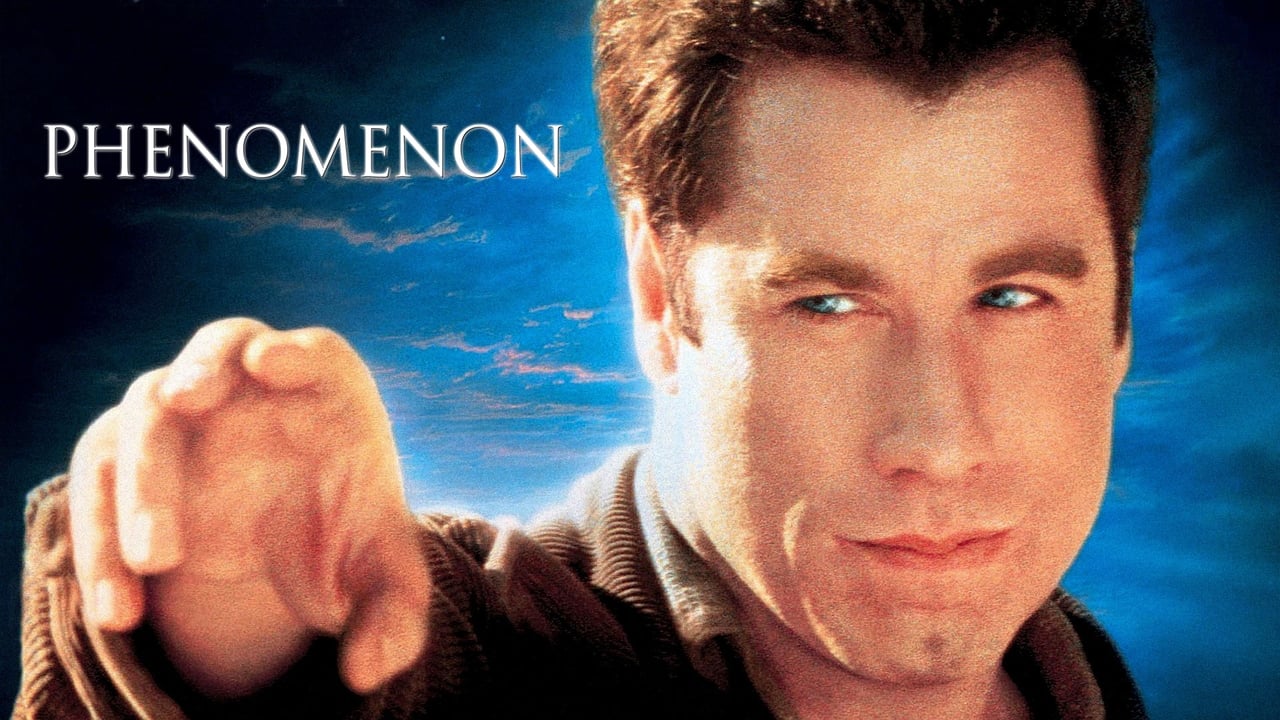
What if the extraordinary happened to someone utterly ordinary? Not an alien invasion or a superhero origin, but something quieter, more internal, yet just as world-altering. That’s the gentle tremor at the heart of Phenomenon (1996), a film that arrived riding the massive wave of John Travolta's mid-90s renaissance and offered something unexpectedly tender amidst the era's usual blockbuster noise. I remember finding this one on the 'New Releases' shelf at the video store, the cover intriguing, promising something… different. And different it was.

An Everyday Miracle
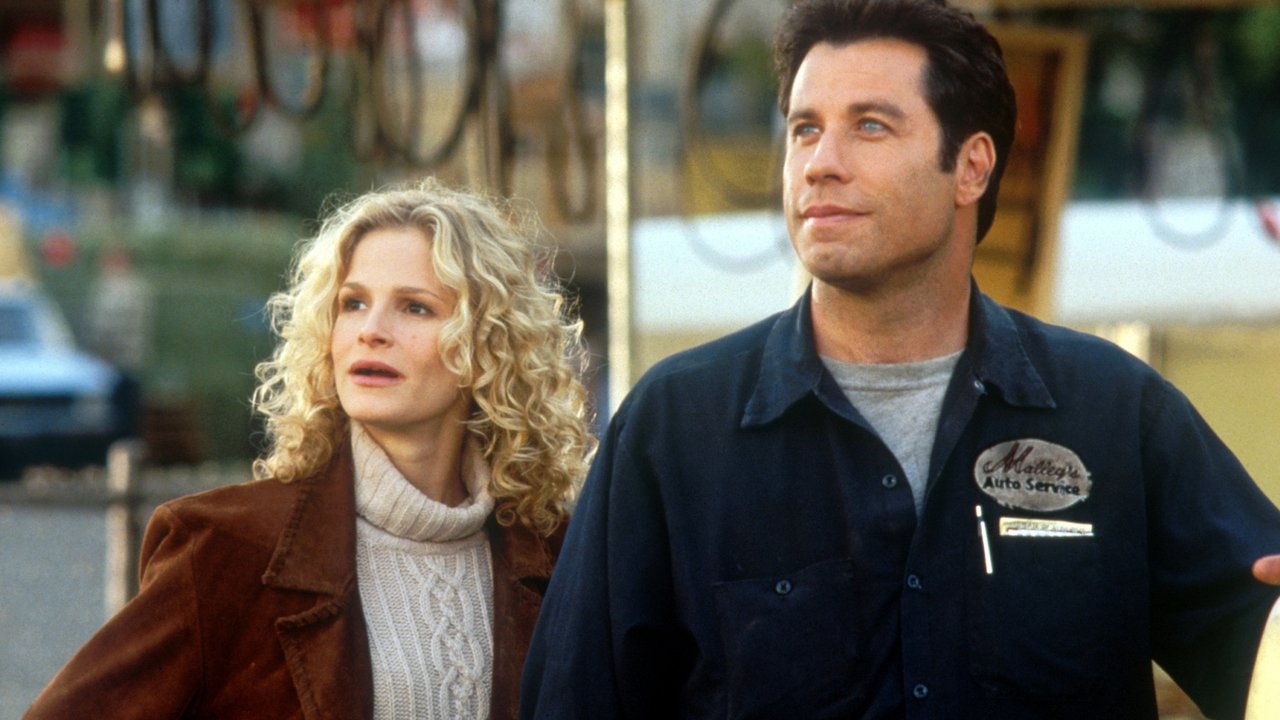
Directed by Jon Turteltaub, who had a real knack for warmth as seen in While You Were Sleeping (1995), Phenomenon grounds its fantastical premise in the utterly believable setting of a sleepy Northern California town. George Malley (John Travolta) is just a regular guy – a kind, unassuming auto mechanic celebrating his 37th birthday with friends at the local bar. Stepping outside, he sees a blinding flash of light in the sky, is knocked off his feet, and wakes up… changed. Suddenly, George finds himself absorbing information at an impossible rate, predicting earthquakes, and even developing telekinetic abilities.
It's a premise that could easily veer into sci-fi thriller territory, but Turteltaub and writer Gerald Di Pego steer it firmly towards character drama. The focus isn't on the how or why of George's transformation – the film wisely leaves that ambiguous, letting it feel almost like a folktale element – but on the impact it has on George himself and the community around him. This was a smart move, distinguishing it from more effects-driven fare and allowing Travolta the space to truly shine.

The Man Who Knew Too Much, Felt Too Deeply
Travolta's performance is the film's undeniable anchor. Fresh off the seismic career resurgence of Pulp Fiction (1994), audiences were fascinated to see his range, and Phenomenon gave him a role brimming with vulnerability and quiet wonder. He portrays George not as a superhero, but as a man grappling with gifts he never asked for, gifts that both exhilarate and isolate him. There’s a genuine gentleness in his interactions, particularly with Lace Pennamin (Kyra Sedgwick), a single mother understandably cautious about letting this suddenly brilliant, slightly strange man into her life. Their evolving relationship feels earned, built on tentative steps and quiet understanding. Sedgwick brings a grounded warmth that perfectly complements Travolta's almost ethereal transformation.
The supporting cast is equally strong. Forest Whitaker as Nate Pope, George’s initially bewildered but steadfastly loyal best friend, provides much of the film's heart and humor (used gently, of course). And Robert Duvall, as Doc Brunder, embodies the town's soul – pragmatic, caring, slightly skeptical, but ultimately accepting. His scenes with Travolta are quiet highlights, exploring the limits of science and the mysteries of the human mind with understated grace.
Beyond the Spectacle: Fear and Wonder
What makes Phenomenon linger long after the credits roll isn't the depiction of powers, but its exploration of human reactions. How does a tight-knit community respond when one of its own becomes fundamentally different? Some react with awe and curiosity, seeking George's help or knowledge. Others respond with fear and suspicion, ostracizing him, worried about what they can't understand. The government, inevitably, gets involved, seeing not a person but a potential weapon or scientific anomaly. Doesn't this pattern feel depressingly familiar, echoing how society often treats brilliance or difference that doesn't fit neat boxes?
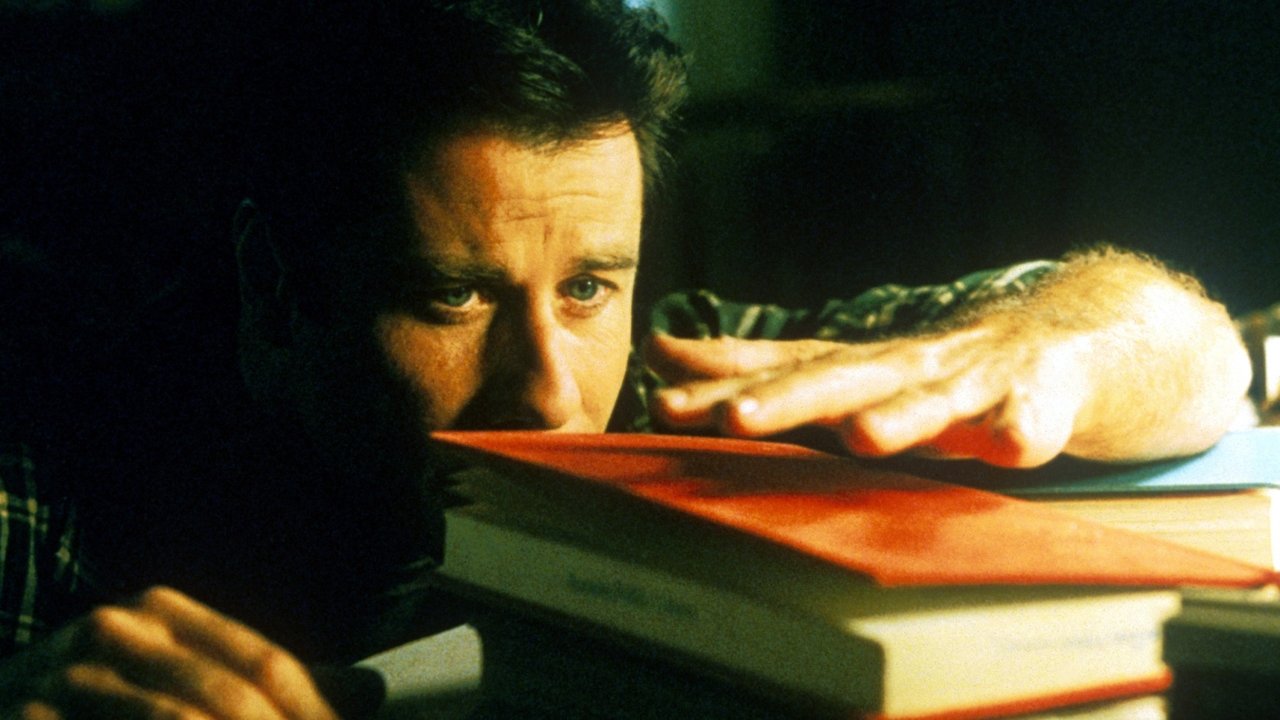
The film doesn't shy away from the loneliness that comes with George's gifts. He can learn languages overnight and move objects with his mind, but finds it increasingly difficult to connect on a simple human level. There’s a profound sadness underpinning the wonder, a sense of a man becoming disconnected from the very world he suddenly understands so much better.
Retro Reflections and Production Notes
Watching Phenomenon today certainly evokes that specific mid-90s feeling – earnest, hopeful, perhaps a touch sentimental by modern standards. It was filmed beautifully in Northern California towns like Auburn and Petaluma, giving it that authentic small-town Americana vibe. Interestingly, while some marketing might have hinted at a sci-fi angle, the film steadfastly remained a human drama, a choice that likely contributed to its significant success. Made on a relatively modest $32 million budget, it grossed over $104 million domestically (around $200 million adjusted for inflation), proving audiences were hungry for character-driven stories with a touch of magic.
And who could forget the soundtrack? Eric Clapton's "Change the World," written by Tommy Sims, Gordon Kennedy, and Wayne Kirkpatrick, became an absolute behemoth, winning Grammy Awards and perfectly capturing the film's hopeful, slightly melancholic mood. It was inescapable on the radio back then, wasn't it? A true audio time capsule. While a TV movie sequel, Phenomenon II, appeared in 2003, it lacked the heart and star power of the original and is largely forgotten, underscoring how much the 1996 film relied on its specific alchemy of cast and tone.
The Enduring Question
Phenomenon isn't a perfect film; some might find its pacing a little too gentle or its sentimentality laid on a bit thick. But its core strengths – Travolta's deeply felt performance, the exploration of complex human reactions to the extraordinary, and its ultimate focus on love and connection – remain remarkably effective. It dares to ask big questions about potential, understanding, and what truly matters in a limited lifespan, wrapping them in a package that feels both magical and deeply human.
Rating: 8/10
This score reflects the film's powerful emotional core, anchored by exceptional performances, particularly from Travolta. While its earnestness might feel slightly dated to some, its exploration of universal themes of love, fear, and connection remains resonant. It successfully blends gentle fantasy with grounded human drama, creating a memorable and moving experience that stood out in the mid-90s landscape and still holds up as a thoughtful piece of filmmaking.
What truly stays with you isn't the telekinesis or the instant genius, but the image of a man trying desperately to share the beauty he suddenly perceives, reminding us, perhaps, to look for the extraordinary within the ordinary connections we make every day.