Okay, let's dim the lights, maybe crack open a Tab if you've still got one stashed away, and slide this tape into the VCR. Remember the feeling? That satisfying clunk. Tonight, we're revisiting a film that doesn't quite fit neatly into the usual blockbuster or cult classic boxes, but certainly left an impression on those who stumbled upon it back in '98: James Toback's intimate, volatile chamber piece, Two Girls and a Guy.
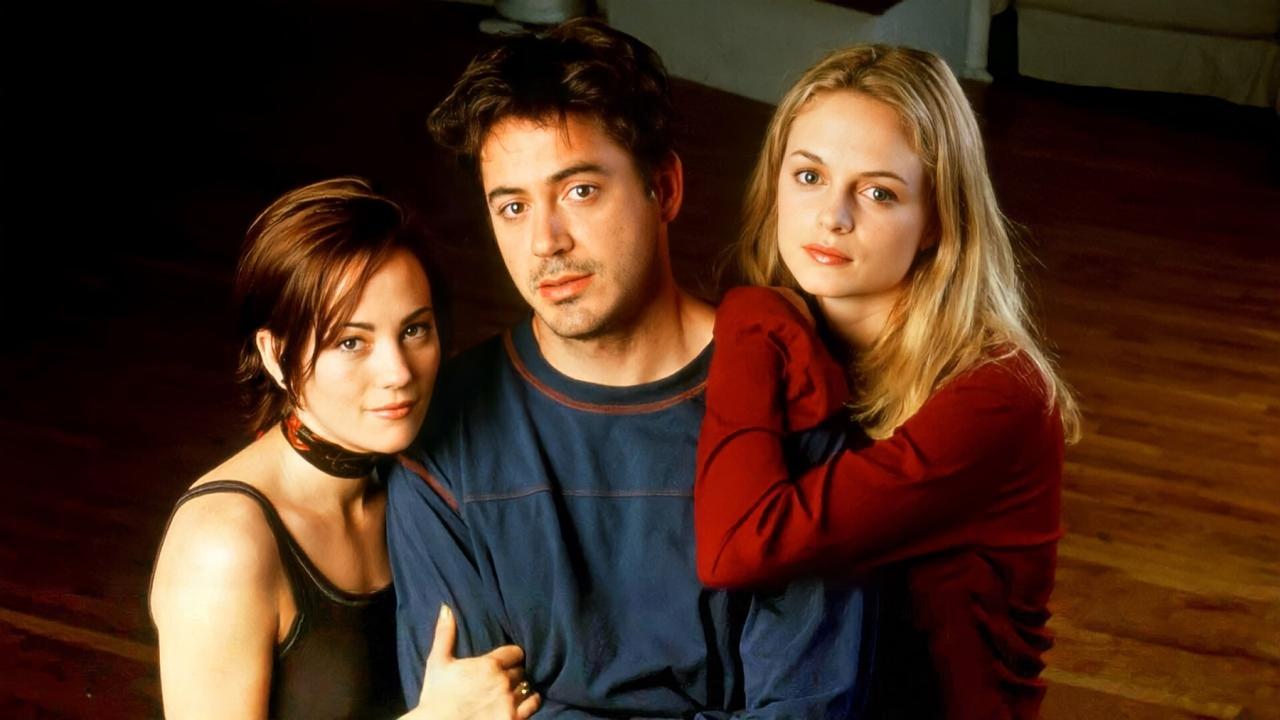
It opens not with a bang, but with a tense, almost unbearable quiet. Two women, Carla (Heather Graham) and Lou (Natasha Gregson Wagner), wait outside a trendy SoHo loft. They’ve never met, yet they share an unnerving suspicion – soon confirmed – that they are both involved with the same man, the charismatic but deeply flawed actor, Blake Allen (Robert Downey Jr.). What unfolds isn't an action sequence or a sprawling epic, but something far more claustrophobic and raw: a confrontation contained almost entirely within the four walls of Blake's apartment.
A Pressure Cooker of Emotions
The single location isn't just a budgetary constraint (though the film was famously shot in just 11 days); it becomes a crucible. Toback, known for his intense, often autobiographical explorations of obsession and transgression (think Fingers (1978) or later, Tyson (2008)), traps his characters together, forcing them to confront not just Blake's infidelity, but their own desires, vulnerabilities, and complicity. There's nowhere to run, literally or metaphorically. The air crackles with accusation, hurt, manipulation, and moments of startling, uncomfortable honesty. It feels less like watching a movie and more like eavesdropping on a devastatingly private meltdown.
The Downey Jr. Factor
Let's be frank: this film belongs to Robert Downey Jr. Watching it now, knowing the well-documented personal struggles he was navigating around this time, adds a layer of almost painful verisimilitude to his performance. Blake Allen is a whirlwind – charming, infuriating, vulnerable, narcissistic, and utterly captivating. Downey Jr. throws himself into the role with a chaotic energy that feels dangerously real. He shifts moods on a dime, deploying wit as a weapon, then collapsing into moments of seemingly genuine remorse, only to pivot again. Was it acting, or was it something closer to channeling? It’s a performance that walks a tightrope, fueled by what Toback reportedly encouraged: improvisation. Much of the dialogue, particularly Downey Jr.’s torrents of explanation and self-justification, feels spontaneous, ripped from the moment, which gives the film its unsettling immediacy but also occasionally threatens to derail it into rambling indulgence.
Graham and Wagner: Holding Their Ground
Facing off against this force of nature requires strength, and both Heather Graham (just before her breakout in Boogie Nights (1997) and Austin Powers: The Spy Who Shagged Me (1999)) and Natasha Gregson Wagner (daughter of Natalie Wood, bringing her own unique screen presence) deliver. Graham’s Carla initially seems more outwardly composed, perhaps naive, but reveals layers of hurt and simmering anger. Wagner’s Lou is sharper, more cynical from the outset, yet she too exposes unexpected vulnerabilities. Their dynamic, shifting between tentative alliance against Blake and flashes of rivalry for him, provides the film's core tension. They aren't just reacting to Blake; they are processing their own realities, their own choices, in real-time. It’s fascinating to watch them navigate this impossible situation.
Retro Fun Facts: Improv and Speed
The legend goes that Toback conceived of the film quickly and shot it even faster. Downey Jr. reportedly learned his lines (or perhaps, his character's situation) rapidly, leaning heavily into improvisation based on Toback's framework. This approach gives Two Girls and a Guy its raw, unpredictable edge. It doesn't feel polished or overly rehearsed; it feels messy, like life often is during moments of crisis. This wasn't a big studio picture; it carried the distinct feel of late-90s independent filmmaking – daring, personal, and sometimes rough around the edges. It landed with mixed reviews, understandably, given its confrontational nature and reliance on performance over plot pyrotechnics, but it certainly got people talking. Its $1.2 million budget yielded a modest $1.8 million at the box office – this was never destined for multiplex dominance, finding its audience more on home video and in arthouse circles.
Does It Hold Up?
Revisiting Two Girls and a Guy today is an interesting experience. The single-set structure and heavy reliance on dialogue can feel stagey at times. Toback's thematic preoccupations can feel intense, bordering on uncomfortable. Yet, the power of the central performances, especially Downey Jr.’s electrifying turn, remains undeniable. It captures a specific kind of toxic charisma and the emotional wreckage it leaves behind. It forces us to ask uncomfortable questions: What draws us to certain people? How do we rationalize betrayal? Can honesty, even brutal honesty, lead to connection, or just further fragmentation?
The film doesn't offer easy answers. It leaves you feeling wrung out, maybe a little voyeuristic, but certainly reflective. It’s a snapshot of its actors at specific points in their careers and a potent example of minimalist, character-driven drama that relies entirely on the volatile chemistry between its leads.
Rating: 7/10
This score reflects the film's undeniable strengths – primarily the powerhouse performances and the raw, confrontational energy – balanced against its sometimes stagey feel and the inherent discomfort of its premise. It’s not an easy watch, but it's a compelling one. Downey Jr.'s performance alone makes it worth seeking out for fans of intense acting, even if the film itself feels like an exposed nerve.
Final Thought: Two Girls and a Guy lingers not because of its plot, but because of the uncomfortable truths it excavates about connection, deception, and the messy human heart, all amplified by performances that feel dangerously close to the bone. A true artifact of intense '90s indie filmmaking.