Some mysteries aren't meant to be solved, just survived. Deep beneath the crushing weight of the Pacific, something ancient waited – not just an alien craft of impossible origin, but a reflection. That’s the chilling core of Sphere (1998), a film that beckons you down into the abyssal dark, promising wonders and delivering something far more unsettling: ourselves. Released in that late-90s sweet spot for high-concept sci-fi thrillers, this one landed on video store shelves with a heavyweight cast and a premise that practically hummed with paranoid potential, feeling like the kind of tape you’d grab on a Friday night, hoping for deep thoughts mixed with deep-sea terror.
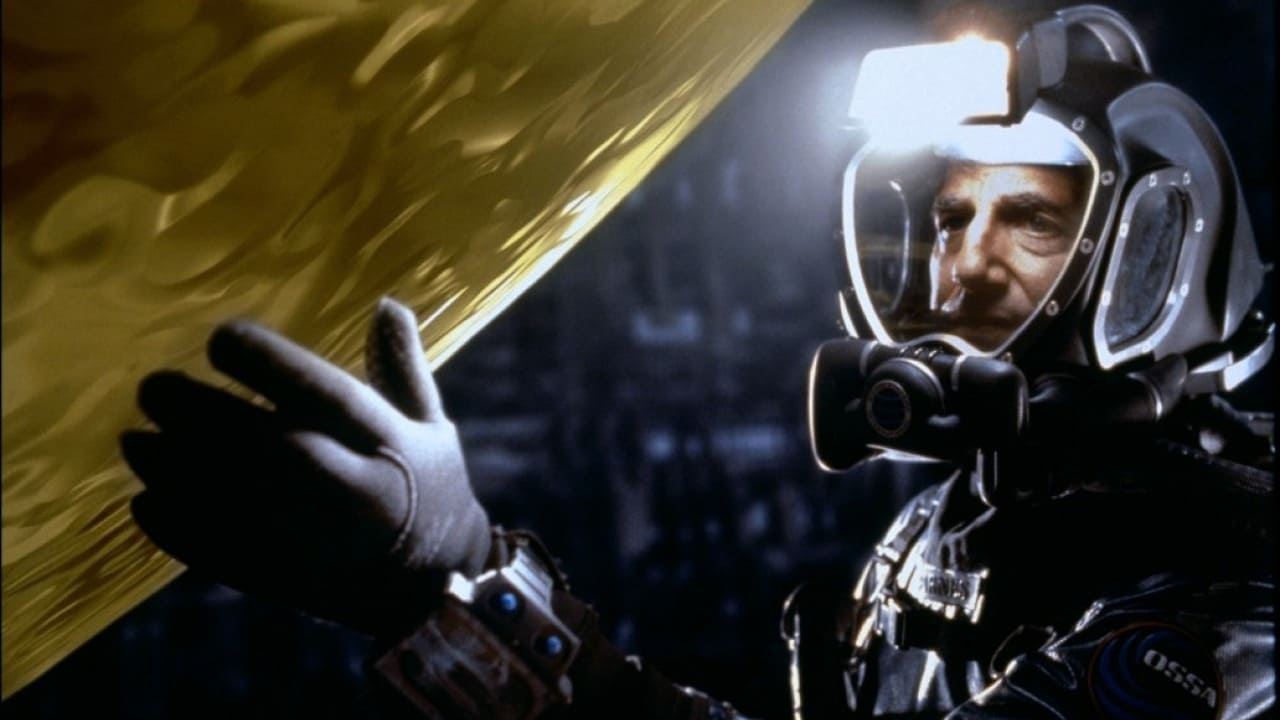
Into the Abyss
The setup is classic Michael Crichton (author of Jurassic Park), whose novel forms the basis: a massive, impossibly old spacecraft is discovered resting on the ocean floor. A specialized team – psychologist Dr. Norman Goodman (Dustin Hoffman), biochemist Dr. Beth Halperin (Sharon Stone), astrophysicist Dr. Ted Fielding (Liev Schreiber), and mathematician Dr. Harry Adams (Samuel L. Jackson) – is assembled in a cutting-edge underwater habitat, the DH-8, to investigate. Barry Levinson, fresh off the biting political satire Wag the Dog (1997) (which also starred Hoffman and featured a script co-written by Sphere's Paul Attanasio), takes the directorial helm, trading Beltway cynicism for crushing hydrostatic pressure and existential dread. The initial descent, the establishment of their claustrophobic home miles below the surface – it perfectly captures that sense of isolation, the feeling that help isn't just far away, it's practically on another planet.
Encounter with the Unknown
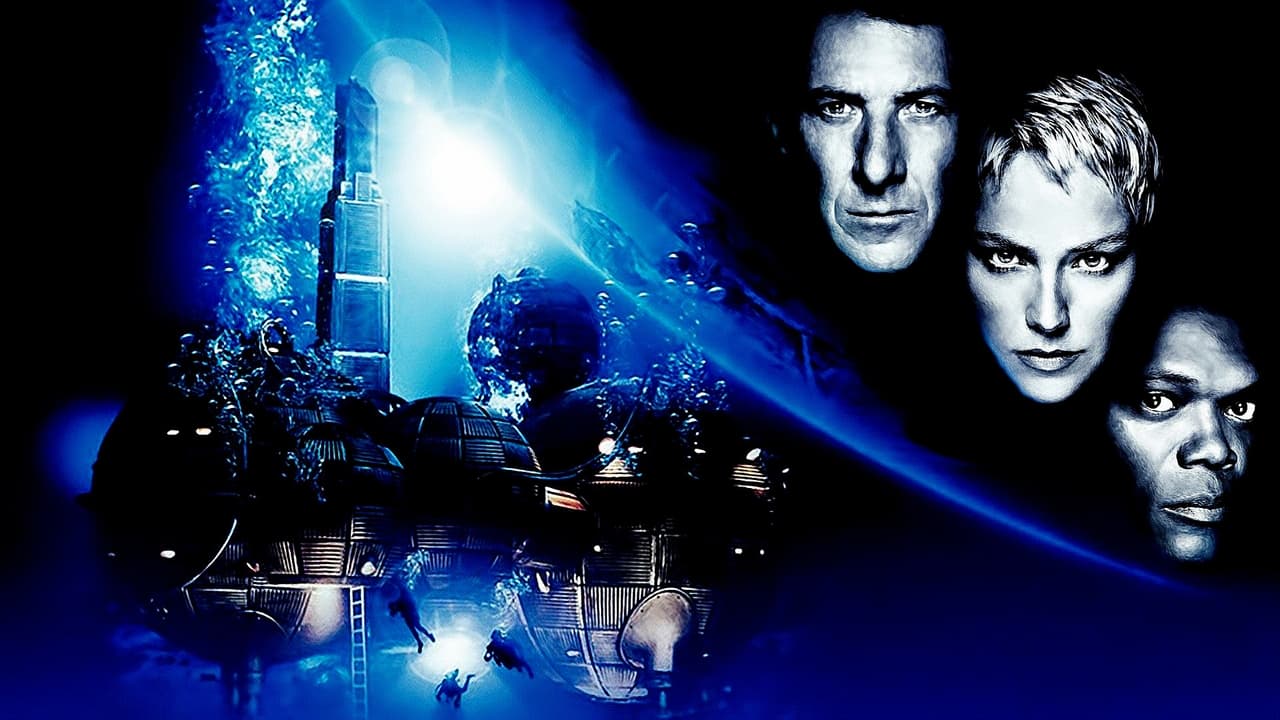
Inside the alien vessel waits the film's enigmatic centerpiece: a perfect, golden sphere. It’s mesmerizing, inscrutable, and undeniably other. The design itself is effectively simple, its featureless surface reflecting the characters (literally and metaphorically) back at themselves. What happens after they encounter it is where the film dives headfirst into psychological horror. The true terror isn't tentacles or teeth; it's the slow, insidious realization that the power they've potentially tapped into manifests their deepest fears and subconscious thoughts. Remember the sudden appearance of those aggressive sea snakes, or the swarm of jellyfish? Those moments work because they tap into primal anxieties amplified by their inescapable environment. The habitat, initially a symbol of human ingenuity, becomes a pressure cooker for frayed nerves and simmering resentments.
Interestingly, the journey to bring Sphere to the screen was almost as challenging as the characters' mission. Crichton's novel was a bestseller, but adapting its complex blend of hard sci-fi and internal psychological drama proved tricky. The production itself faced hurdles; simulating the deep-sea environment convincingly required immense technical effort, relying heavily on intricate sets and atmospheric lighting, rather than the CGI creatures that dominated other sci-fi of the era. The budget reportedly ballooned to around $80 million – a hefty sum back then – aiming for a thinking person's blockbuster that ultimately struggled to connect with wider audiences, perhaps finding its true home on VHS for late-night contemplation.
A Constellation of Talent Under Pressure
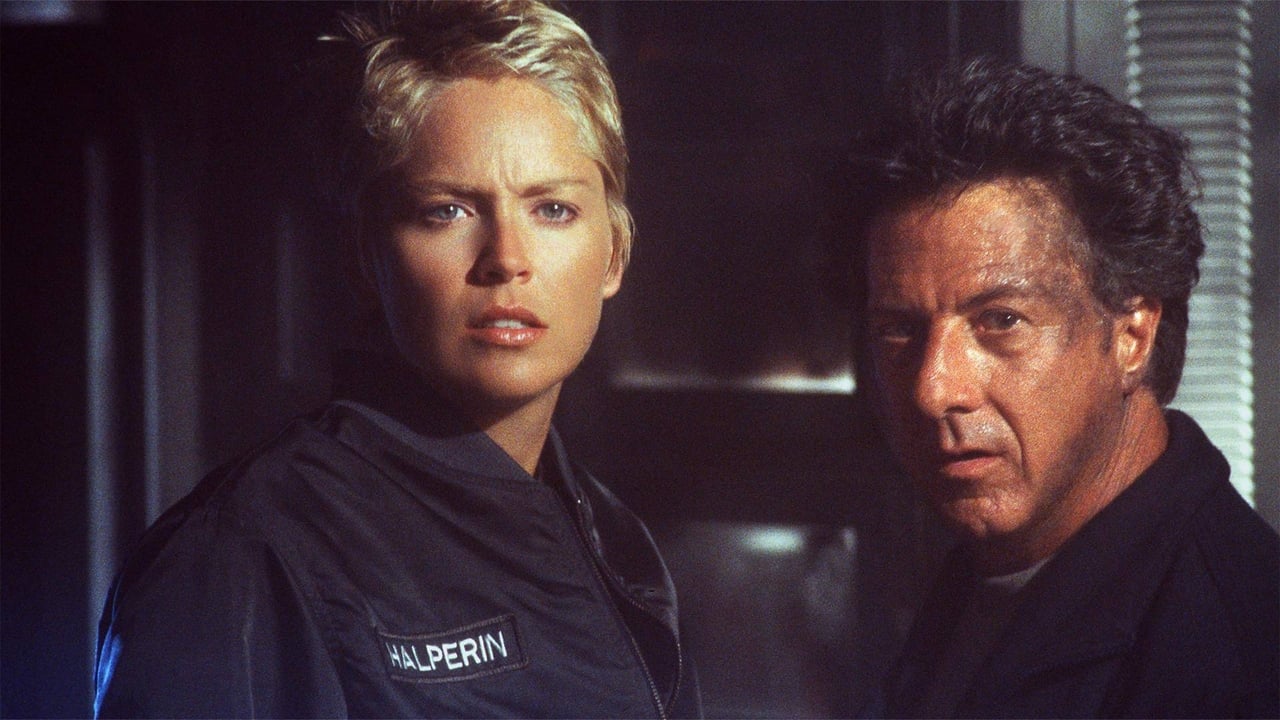
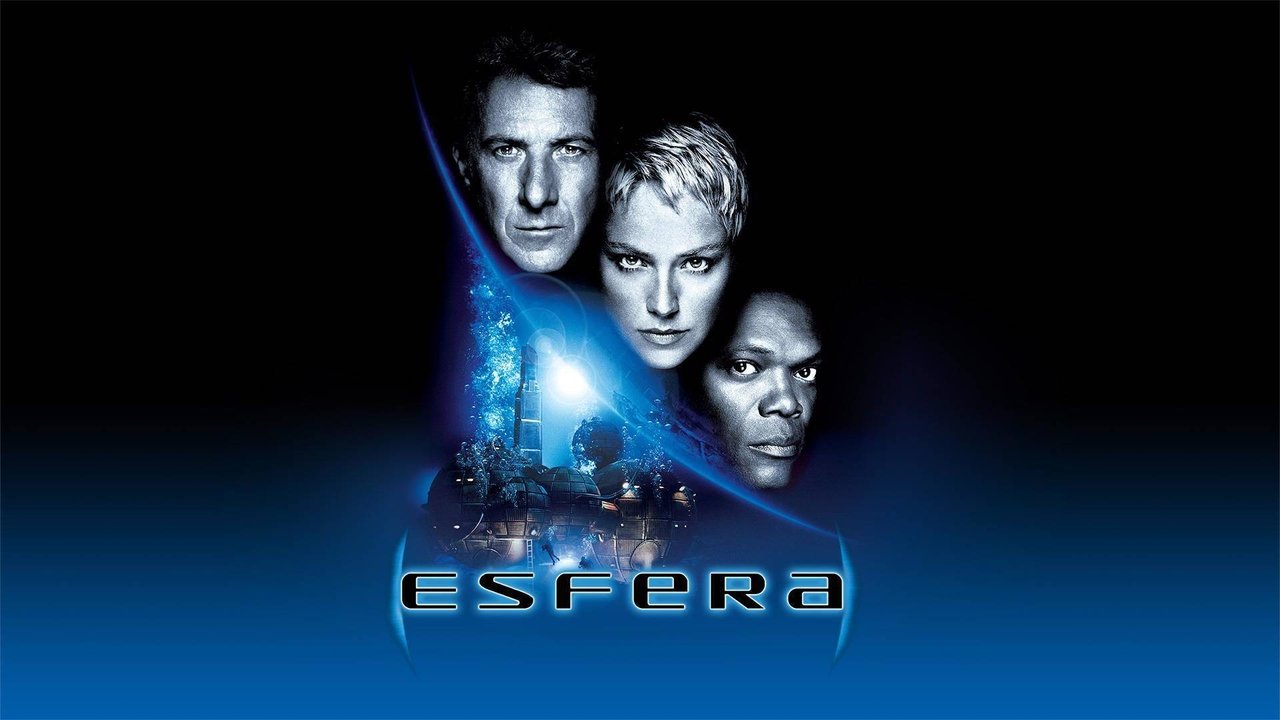
The star power is undeniable. Dustin Hoffman brings his trademark thoughtful unease to Goodman, the reluctant leader wrestling with his own past failures and the terrifying implications of the sphere's power. Sharon Stone, shedding her Basic Instinct (1992) persona, portrays Beth with a brittle intelligence that masks deep-seated vulnerabilities. And then there’s Samuel L. Jackson as Harry, the sharp, cynical mathematician whose intellectual rigor battles rising paranoia. His descent is perhaps the most striking, a study in how logic can fracture under unimaginable stress. Liev Schreiber also makes a strong impression as the astrophysicist whose initial wonder curdles into fear. Their interactions, the shifting alliances and suspicions, fuel much of the film's tension. You can almost feel the real-world pressure on these acclaimed actors to elevate the sometimes-dense material.
Echoes in the Deep
Where Sphere sometimes falters is in maintaining its chilling momentum. The central mystery is compelling, and the atmosphere, particularly in the first half, is thick with dread, enhanced by Elliot Goldenthal’s unsettling score. However, the script occasionally struggles to fully explore the philosophical implications it raises, sometimes opting for more conventional monster-movie beats (like the giant squid sequence) that, while visually impressive for their time, feel slightly disconnected from the core psychological horror. The ending, significantly altered from Crichton's novel, also proved divisive, aiming for a neat wrap-up that arguably lessens the story's lingering ambiguity. Did that final twist feel earned to you, or a bit too convenient?
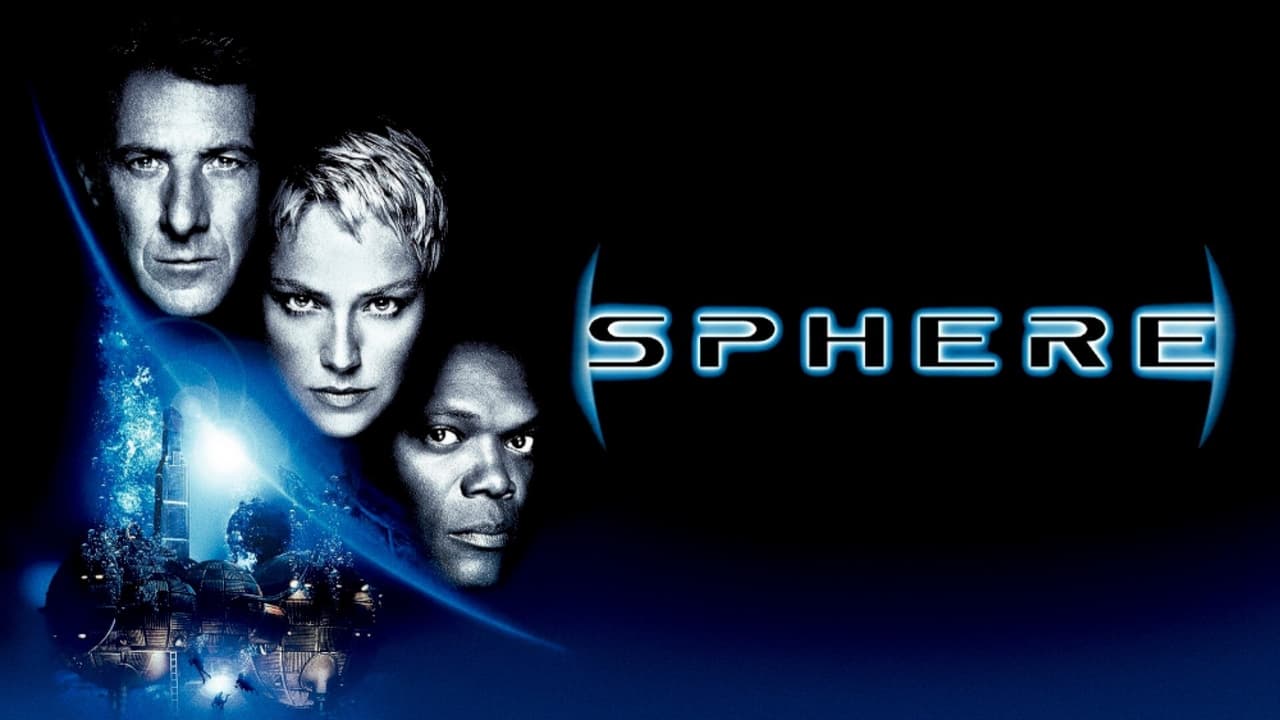
Despite these points, Sphere remains a fascinating artifact of late-90s sci-fi. It dared to be cerebral when many contemporaries were leaning purely into action or spectacle. The film's focus on internal fears manifesting externally feels prescient, tapping into anxieties that resonate even today. Watching it now, perhaps on a worn-out tape dug out from the back of a closet, evokes a specific kind of nostalgia – not just for the cast or the era's special effects, but for ambitious, adult-oriented sci-fi that wasn't afraid to explore the dark corners of the human psyche, even if it didn't always stick the landing perfectly. I recall renting this one, the heavy Warner Bros. clamshell promising something intelligent and scary, and being genuinely creeped out by the sheer isolation and the 'what if' possibilities.
Rating: 6/10
Sphere earns its 6 for a truly captivating premise, a top-tier cast giving their all, and moments of genuinely chilling atmosphere steeped in psychological dread. The underwater setting and the initial mystery are superbly handled. It loses points for inconsistent pacing in the latter half, some script choices that dilute the tension, and an ending that feels less impactful than the journey preceding it. However, it remains a worthwhile deep dive for fans of thoughtful 90s sci-fi, a film whose central, shimmering enigma still holds a certain power. It’s a reminder that sometimes the greatest monsters aren't from outer space, but from the uncharted depths within us.