What if you could truly walk in someone else’s shoes – or rather, swim through the murky currents of their final, fragmented memories? It’s a haunting question, the kind that science fiction loves to pose, and it sits right at the heart of John Dahl’s 1996 thriller, Unforgettable. Coming off the critical success of sharp neo-noirs like Red Rock West (1993) and especially the sizzling The Last Seduction (1994), hopes were high for Dahl’s next project. Yet, Unforgettable feels like a different beast altogether – a film wrestling with a high-concept premise, moody atmosphere, and perhaps, the weight of expectation. Slipping this tape into the VCR back in the day often came with a specific anticipation, didn't it? You were ready for another tightly wound Dahl ride, but this one took a detour into stranger territory.
A Desperate Measure
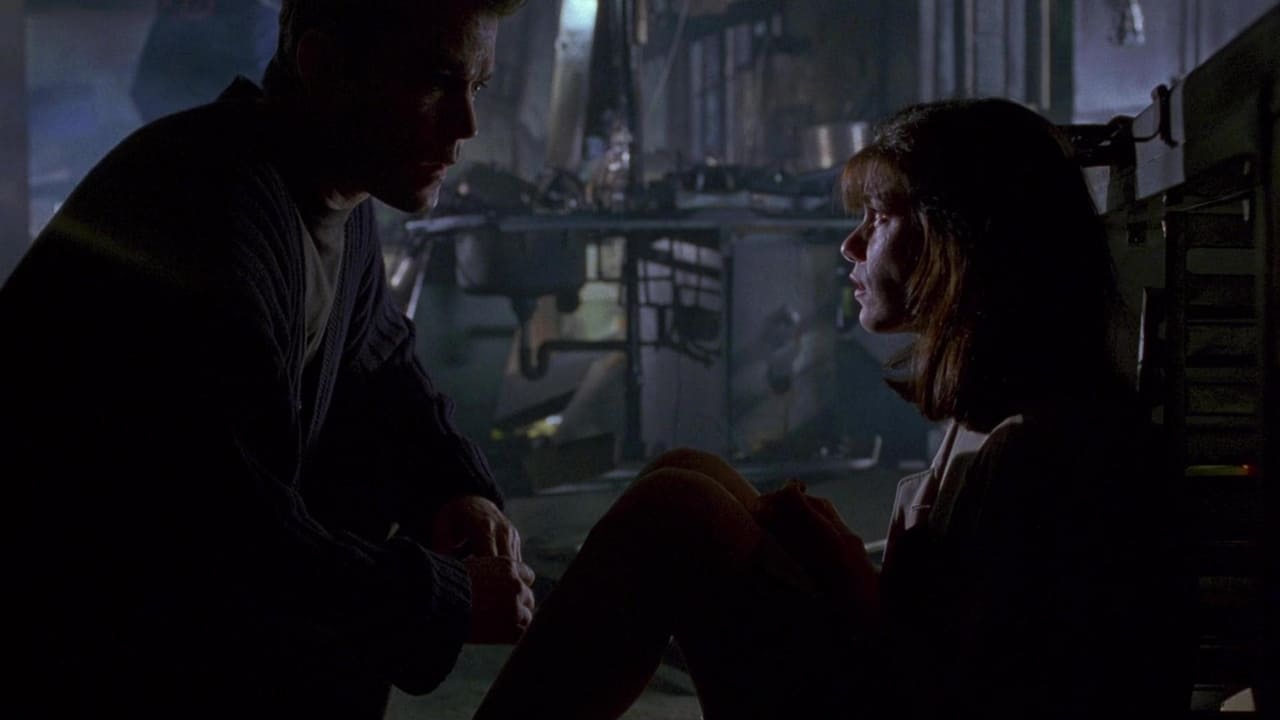
The setup hooks you instantly with its noir-ish despair. Ray Liotta, an actor who could practically trademark simmering intensity, plays Dr. David Krane, a medical examiner haunted by the unsolved murder of his wife. He was the prime suspect, the case went cold, but the suspicion lingers, poisoning his life. Then, a potential lifeline appears in the form of Dr. Martha Briggs, played by Linda Fiorentino, fresh off her iconic femme fatale turn in The Last Seduction. Briggs is working on a controversial, ethically dubious experiment: a serum derived from cerebrospinal fluid that allows temporary transference of memories from one subject (even a deceased one) to another. Seeing it as his only path to exoneration and finding the real killer, Krane volunteers, injecting himself with his late wife’s memories. It’s a premise brimming with potential, promising a blend of detective story grit and speculative fiction wonder.
Fractured Visions and 90s Sci-Fi Flair
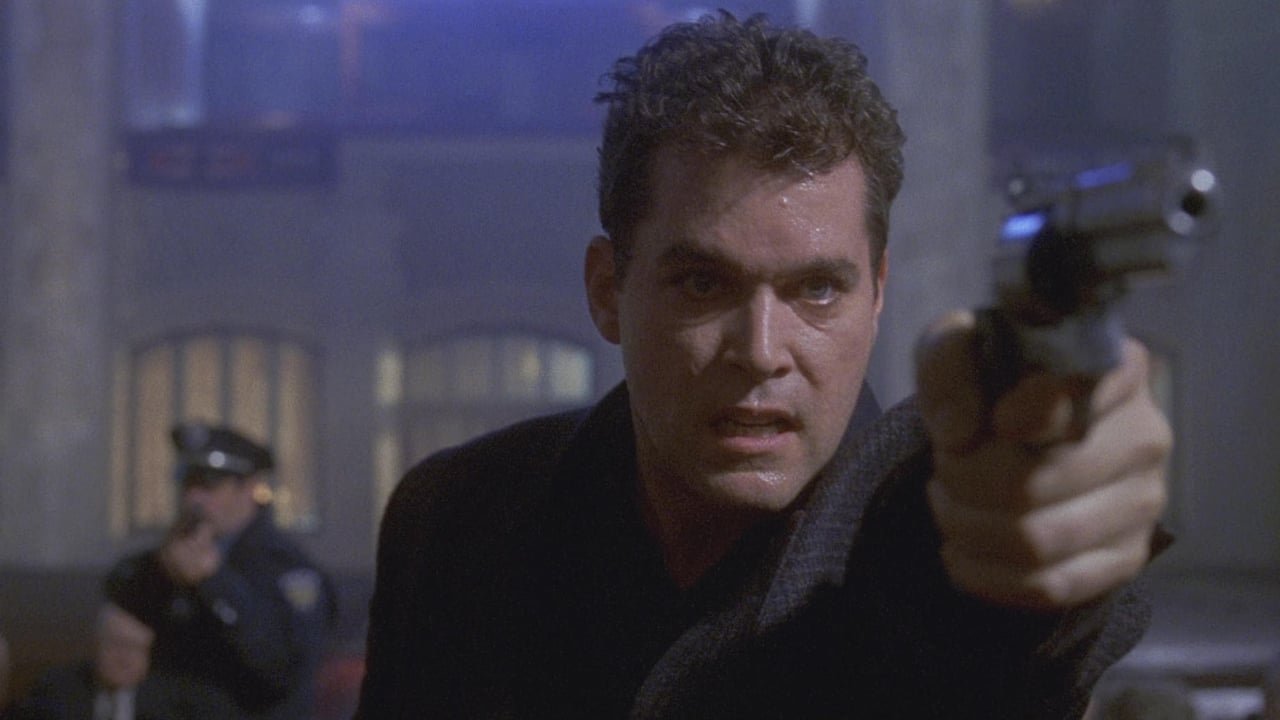
The memory sequences themselves are central to the film's identity. Dahl and his team opt for a distinct visual style here – fragmented, distorted, oversaturated images, often tinged with a sickly green or intense red, accompanied by jarring sound design. It’s an attempt to capture the subjective, unreliable nature of memory, especially traumatic memory recalled second-hand. Watching it now, the effect feels undeniably nineties – a product of its time, perhaps not as seamlessly integrated as modern CGI might allow, but possessing a certain tangible, almost analogue quality that resonates with the VHS era. Does it fully succeed in putting us inside Krane's borrowed consciousness? Maybe not entirely, but it effectively conveys the disorientation and psychological toll these mnemonic intrusions take on him. Each injection becomes a dangerous gamble, blurring the lines between observer and participant, past and present.
Intensity and Expectation
Ray Liotta carries the film's emotional weight convincingly. His portrayal of Krane is pure Liotta: volatile, grief-stricken, propelled by an obsessive need for truth that borders on self-destruction. You feel his desperation, the way each fragmented memory jolts him, the growing paranoia as clues lead him down a rabbit hole involving corrupt cops and dangerous secrets. Linda Fiorentino, however, feels somewhat underserved compared to her star-making role just two years prior. While she brings intelligence and a guarded quality to Dr. Briggs, the character lacks the complex edges and dangerous allure of Bridget Gregory. It’s a more reactive role, often relegated to expressing concern over Krane’s deteriorating state or explaining the pseudo-science. Supporting players like Peter Coyote as the weary, skeptical police lieutenant and Christopher McDonald as a smarmy colleague fill out the world effectively, adding layers to the mystery Krane navigates.


A Director's Troubled Waters?
Knowing that director John Dahl was reportedly unhappy with the studio's final cut adds another layer to watching Unforgettable. You can sense the DNA of his earlier work – the rain-slicked streets, the noir shadows, the protagonist caught in forces beyond his control. Yet, there's also a feeling that the high-concept sci-fi element never fully meshes with the grounded detective story. It occasionally feels like two different films vying for dominance. This struggle might explain its disappointing reception at the time; saddled with an $18 million budget (around $35 million today), its meager $3 million box office return (roughly $5.8 million adjusted) marked it as a significant financial misfire. It's a fascinating case study in how a talented director and compelling stars, working with an intriguing premise, could still fall short, perhaps due to external pressures or inherent script challenges. The original script, penned by Bill Geddie, had apparently been kicking around since the late 80s, undergoing changes before finally hitting screens.
Echoes in the Static
Despite its flaws, Unforgettable possesses a certain melancholic pull. It genuinely grapples with intriguing ideas about the nature of memory, trauma, and identity. How much of ourselves is contained within our experiences? Can experiencing someone else's life, even in fragments, fundamentally change who we are? The film doesn’t offer easy answers, and Krane's journey becomes less about solving a crime and more about confronting the ghosts within – both his own and those he's borrowed. Filmed primarily in Vancouver, that familiar stand-in for moody American cities in countless 90s productions, the setting contributes effectively to the film's overcast atmosphere. It's a reminder of an era where mid-budget, star-driven genre films with ambitious ideas were more common, even if they didn't always hit the mark. You could find gems, oddities, and noble failures like this lining the shelves of Blockbuster, each promising a unique escape.
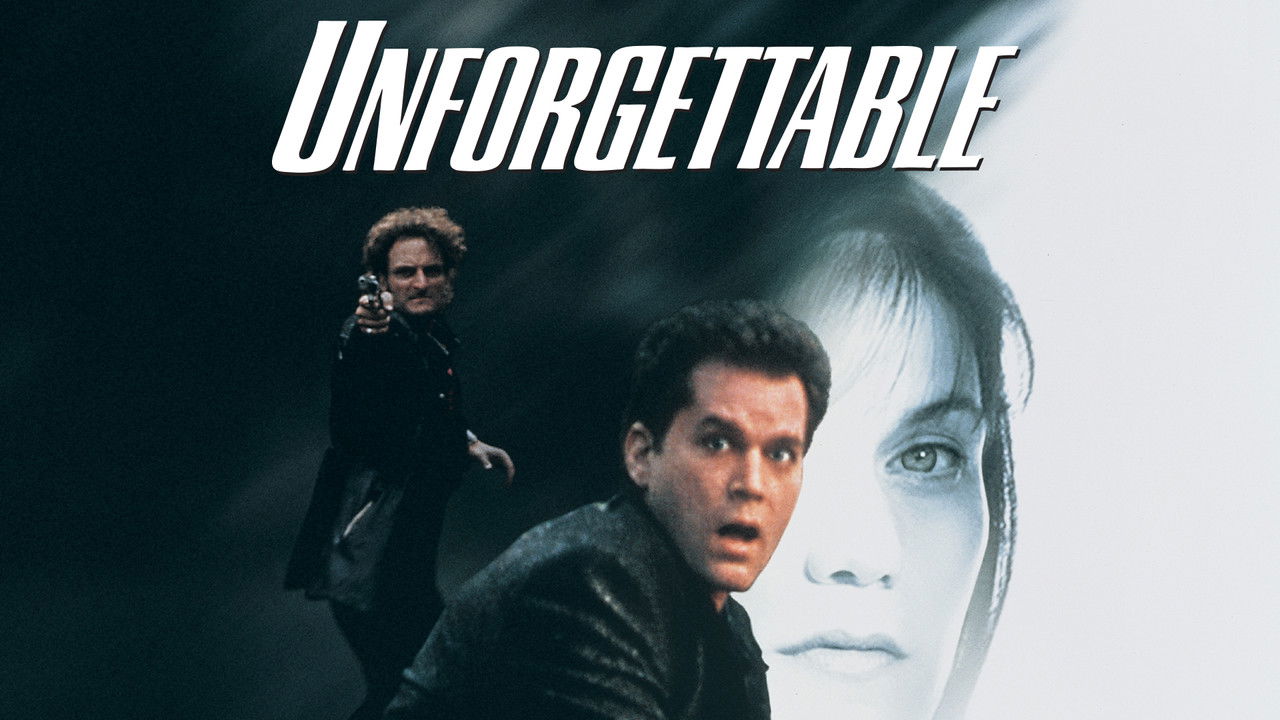
Rating: 6/10
This score reflects a film that is ultimately more interesting for its premise and lead performance than its execution. Ray Liotta is reliably intense, the core concept is thought-provoking, and John Dahl injects moments of moody style. However, the blend of sci-fi and noir feels uneven, Linda Fiorentino is underutilized, and the narrative doesn't quite capitalize on its potential, possibly hampered by production issues. It falls short of Dahl's best work and doesn't fully stick the landing.
Unforgettable remains a compelling artifact of 90s Hollywood ambition – a flawed experiment, perhaps, but one whose central question about inhabiting another's past lingers long after the tape clicks off. It's the kind of movie you might have rented on a rainy Tuesday, intrigued by the cover and the cast, and found yourself thinking about its 'what ifs' long after the credits rolled. Sometimes, the films that don't quite succeed are just as memorable as the classics, aren't they?