The hiss of the VCR fades, the blue screen flickers off, and you're left in the quiet dark, the silence amplifying the desolate chill that Soldier leaves behind. This isn't the flashy, triumphant sci-fi some might remember from the late 90s. No, this film plunges you into a future built on brutal efficiency and planned obsolescence, embodied by a man bred for nothing but war, only to be discarded like yesterday's refuse. It’s a film that arrived with a pedigree suggesting something more, only to crash and burn at the box office, leaving it stranded in the cinematic junkyard it so vividly portrays. But like its protagonist, Sergeant Todd 3465, there's more resilience and raw power here than first meets the eye.
### Bred for Battle, Dumped Like Trash
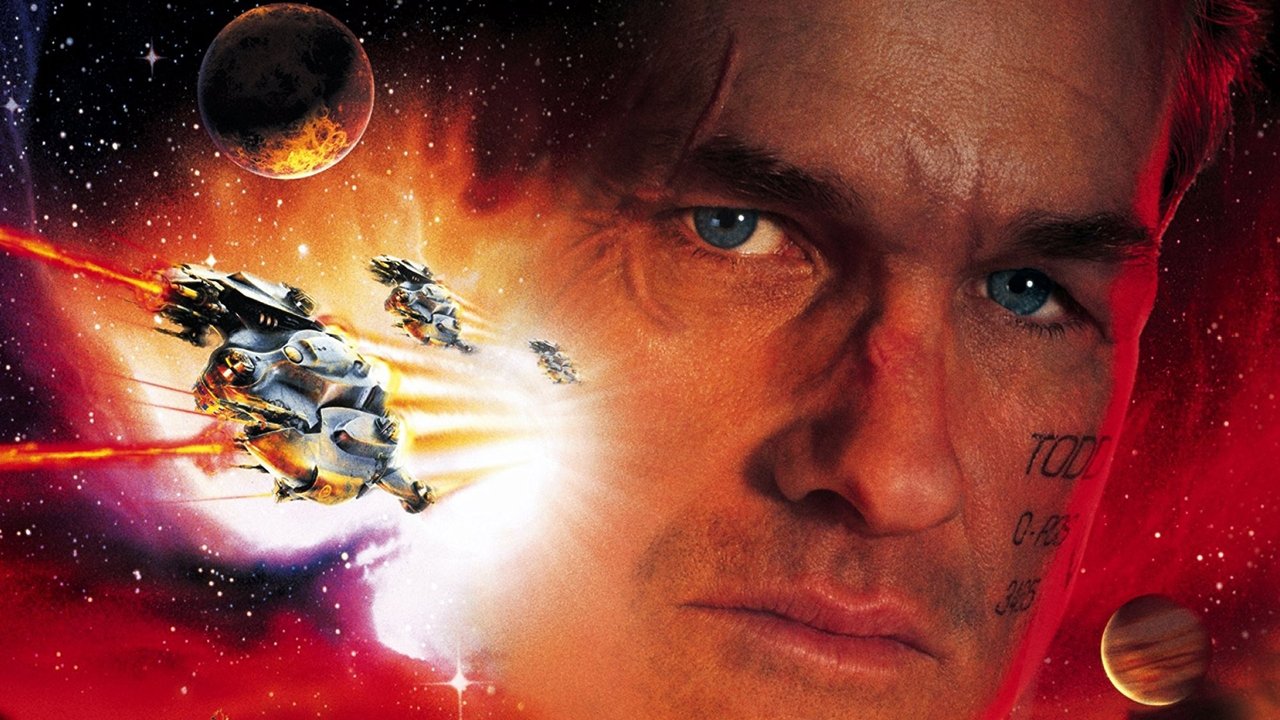
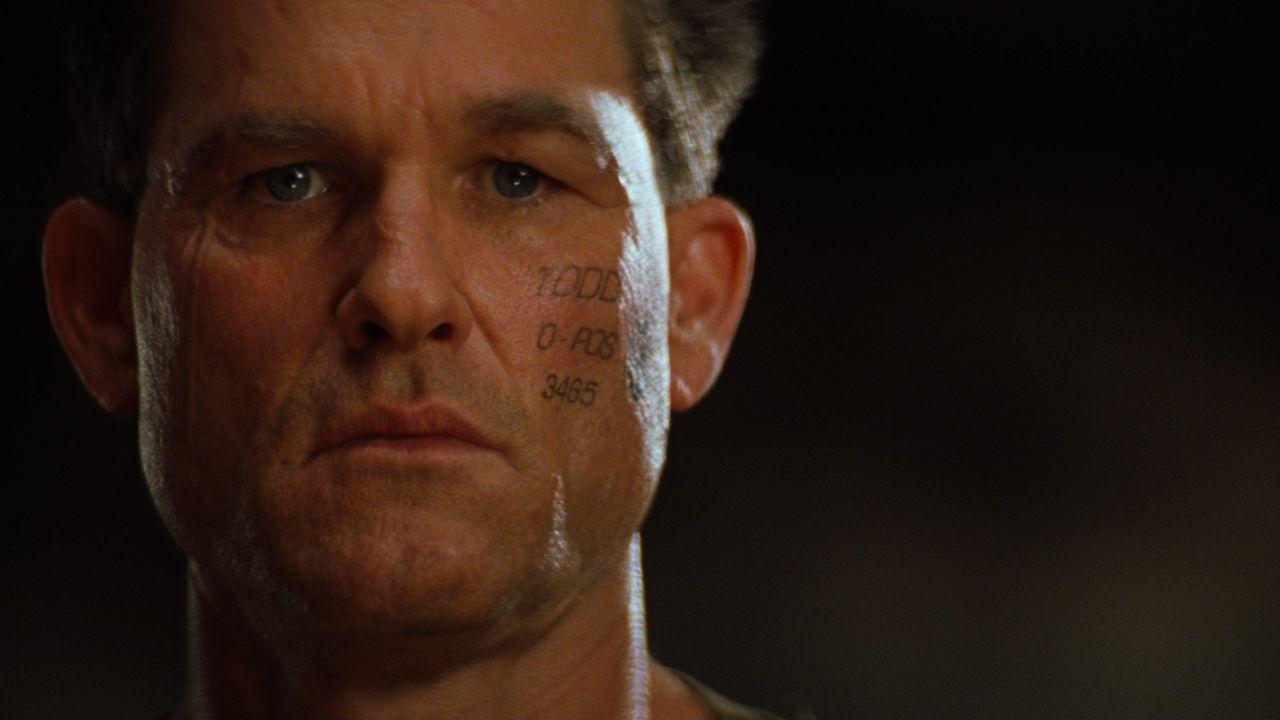
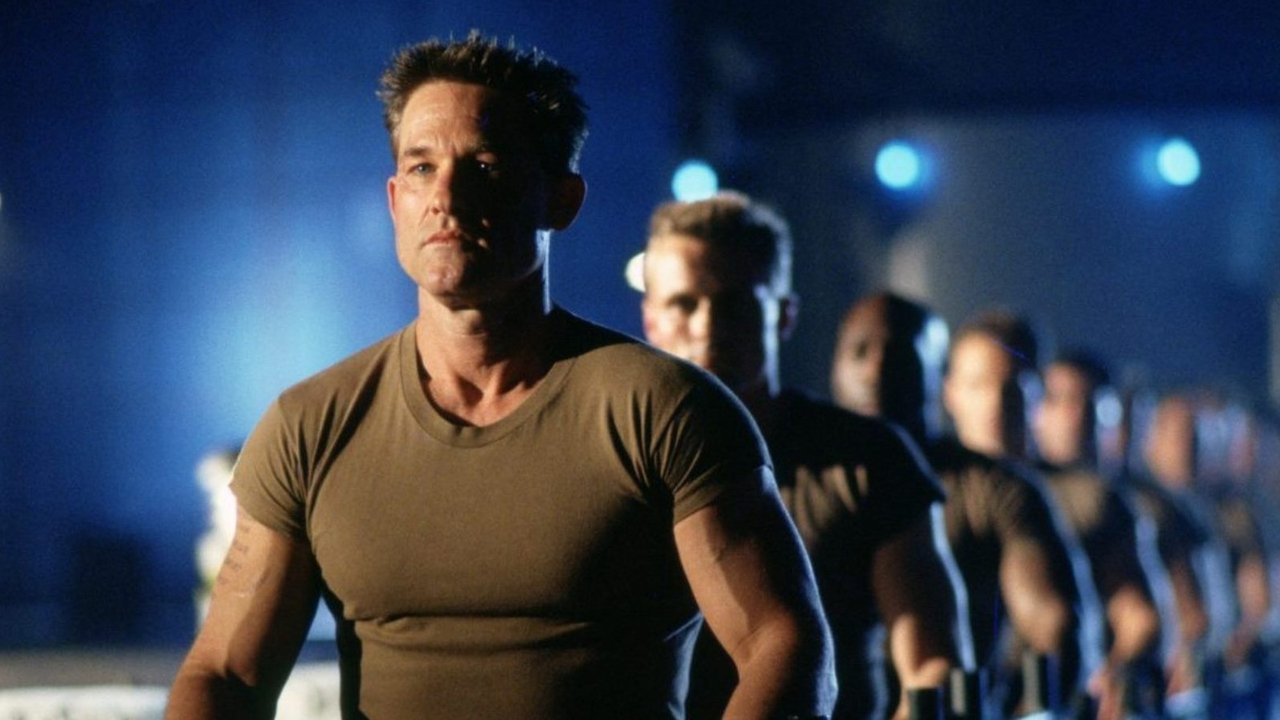
From its stark opening, chronicling Todd’s life from indoctrinated infancy to hardened battlefield veteran through a montage of brutal training and kill-or-be-killed scenarios, Soldier establishes a grim reality. We see a human being stripped of humanity, molded into a perfect weapon. Kurt Russell, in a performance of stunning physicality and restraint, embodies this perfectly. Todd is a monolith of trained reflexes and suppressed emotion, a spiritual cousin to Russell's own iconic Snake Plissken from Escape from New York (1981). His dialogue is famously sparse – reportedly just 104 words mumbled or grunted throughout the entire runtime – forcing Russell to convey everything through his posture, his haunted eyes, and the sheer coiled tension in his frame. It's a testament to his dedication that he pushed through filming even after breaking his ankle in the first few weeks – a grit that mirrors Todd's own unbelievable endurance.
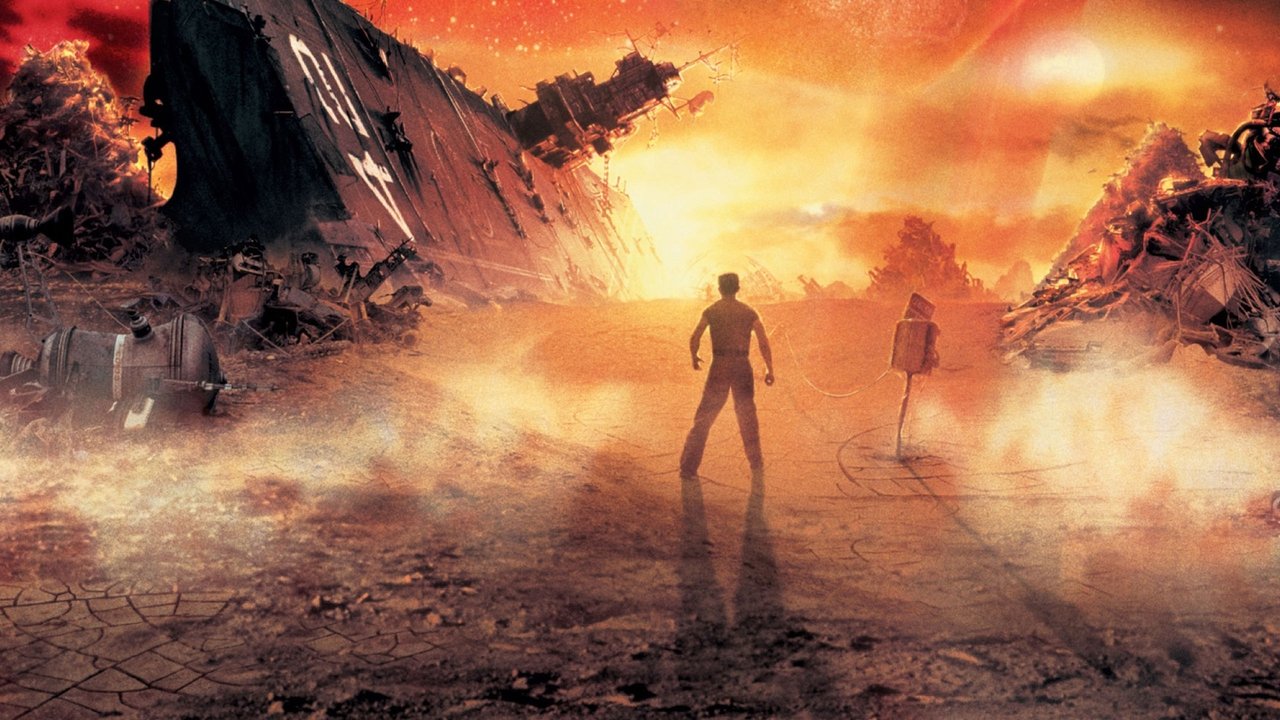
The plot kicks in when Todd and his generation of warriors are deemed obsolete, replaced by genetically engineered successors led by the ruthless Caine 607 (Jason Scott Lee, bringing a chillingly detached physicality). After a brutal demonstration where Todd is seemingly killed, his body is unceremoniously dumped onto Arcadia 234, a literal garbage planet, a repository for the galaxy's unwanted scrap. It's here, amongst the rusted hulks and wind-swept detritus, that the film truly finds its desolate heart.
### Arcadia: A Planet of Rust and Redemption
Director Paul W. S. Anderson, then riding high off the kinetic success of Mortal Kombat (1995), crafts a visually striking wasteland. Shot partly on the stark volcanic landscapes of the Canary Islands, Arcadia 234 feels tangible, a character in itself. The production design is a masterclass in decay, every frame filled with mountains of discarded technology and forgotten lives. It’s the perfect backdrop for Todd’s journey. He’s discovered by a community of peaceful castaways, crash survivors who’ve carved out a fragile existence. They represent everything Todd was trained to destroy or disregard: family, community, vulnerability. His slow, awkward integration into their society, learning basic human interaction from people who see the man beneath the soldier, forms the film’s emotional core.
Of course, this fragile peace can't last. The new soldiers, led by the sneering Colonel Mekum (Jason Isaacs, perfecting the bureaucratic villainy he’d later bring to roles like Lucius Malfoy), eventually arrive on Arcadia for a training exercise, viewing the inhabitants as mere "hostile indigenous life forms" – target practice. This sets the stage for Todd to unleash the lifetime of lethal skills he possesses, not for programmed objectives, but to protect the innocent.
### The Ghost in the Machine (and the Script)
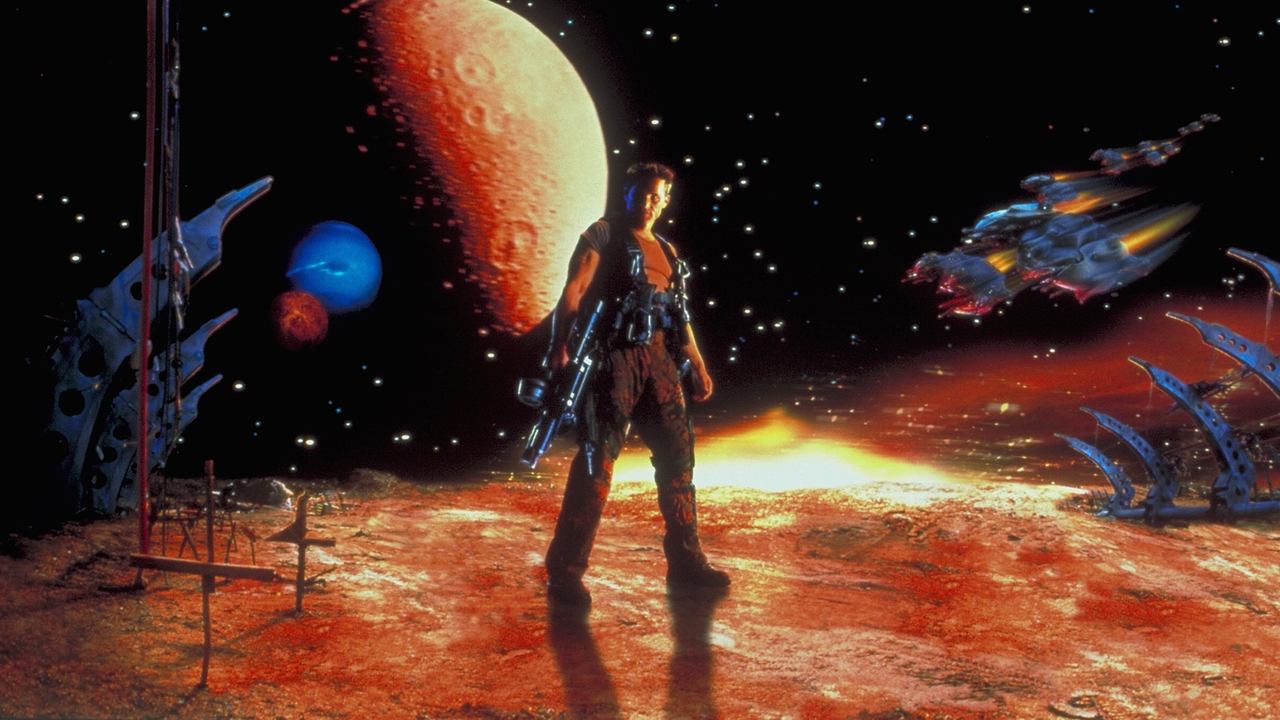
While Anderson delivers visceral, well-staged action sequences – Todd utilizing the junkyard environment as a weapon against technologically superior foes is pure underdog satisfaction – the film’s secret weapon is its script. Penned by David Webb Peoples, the acclaimed writer behind Unforgiven (1992) and, crucially, Blade Runner (1982), Soldier carries thematic weight often missing from straightforward action fare. Peoples considered this script a "sidequel"—a story taking place in the same universe as Blade Runner. Attentive viewers might even spot the wreckage of a Spinner vehicle amidst Arcadia's junk heaps, and references to battles near the Tannhäuser Gate and the Shoulder of Orion subtly thread the narrative tapestry.
This connection isn't just trivia; it informs the film's soul. Like Blade Runner's exploration of artificial life finding humanity, Soldier examines a human life stripped of humanity, only to rediscover it in the most unlikely of places. It’s about nature versus nurture, the programmed instinct versus the capacity for choice and empathy. Does Todd fight because he’s programmed to, or because he finally has something – someone – worth fighting for?
### A Diamond in the Rough?
Despite its pedigree, striking visuals, committed lead performance, and thematic depth, Soldier was a notorious box office bomb. Its hefty $60 million budget (a significant sum in 1998) resulted in a dismal worldwide gross of around $14.6 million. Critics were largely unkind, dismissing it as dumb action or dour sci-fi. Perhaps its bleak tone and minimalist protagonist were out of step with the times? Or maybe audiences just weren't ready for a sci-fi actioner that demanded patience and contemplation alongside the explosions.
Watching it now, especially on a format like VHS that feels appropriately weathered, Soldier feels like an artifact unearthed – flawed, perhaps, maybe a little slow in finding its rhythm amongst the scrapheap scenes, but possessing a core of surprising integrity. The pacing might test some, and the supporting castaway characters are somewhat thinly sketched, serving primarily as catalysts for Todd's transformation. But Russell's performance remains utterly compelling, the world-building is top-notch, and the underlying themes resonate powerfully. It’s a film that lingers, much like the metallic tang of rain on rust.
Rating: 7/10
Justification: Soldier earns its score through Kurt Russell's phenomenal physical performance, its incredibly realised desolate atmosphere, and the surprising thematic depth courtesy of David Webb Peoples' script. It overcomes its box office failure and initial critical dismissal to stand as a gritty, underrated slice of late-90s sci-fi action. While the pacing occasionally lags and supporting characters could be stronger, its core concept and execution feel distinct and memorable.
It remains a fascinating piece – a would-be blockbuster that became a cult curio, a testament to the quiet power found even amongst the discarded and forgotten. Doesn't that desolate landscape still feel hauntingly real?