It starts not with a meet-cute, but with a howling wind on a rain-lashed train platform. A sense of unease permeates the frame almost immediately. That’s the feeling that lingers long after the credits roll on Mani Ratnam’s 1998 film, Dil Se.. (meaning "From the Heart"). Watching it again, years after first encountering it probably on a slightly worn VHS tape from a specialist store tucked away in the city, the film's raw, almost dangerous energy feels undiminished. It wasn't your typical Bollywood romance, even then; it was something far more volatile, a collision between obsessive love and the harsh realities of political insurgency.
An Attraction Forged in Storms
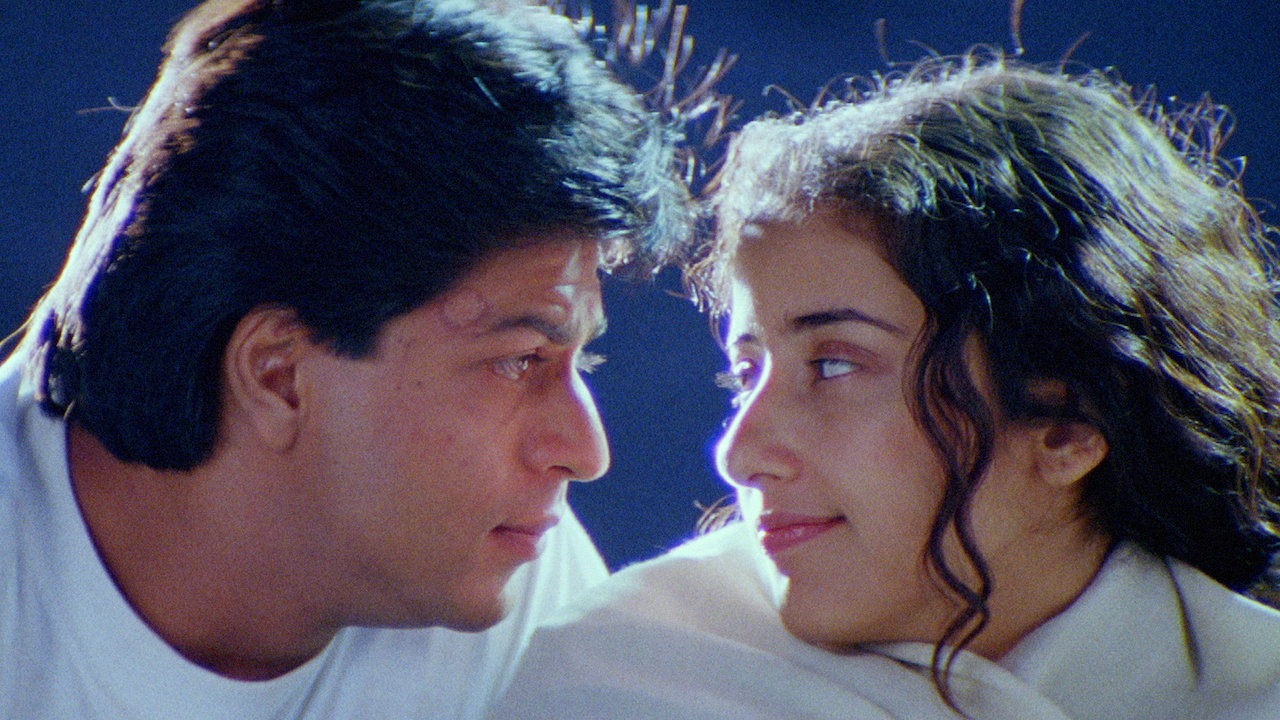
The narrative follows Amar (Shah Rukh Khan), a program executive for All India Radio, dispatched to cover festivities in India's northeast. It's there he encounters Meghna (Manisha Koirala), a mysterious woman whose fleeting appearances ignite an immediate, all-consuming fixation in him. Their interactions aren't romantic strolls in the park; they are charged encounters, often abrupt, tinged with fear and evasion on her part, and a near-reckless pursuit on his. What does Amar truly see in Meghna? Is it love at first sight, or the dangerous allure of the unknown, a moth drawn to a flame he doesn't comprehend? The film forces us to question the very nature of his passion – is it love, obsession, or something tangled tragically in between?
Where Landscapes Mirror the Soul
Mani Ratnam, already renowned for tackling sensitive political themes in films like Roja (1992) and Bombay (1995) – making Dil Se.. the final piece in this loose thematic trilogy – uses the physical landscape as a powerful mirror to the characters' inner turmoil. Santosh Sivan's cinematography is simply breathtaking, capturing the stark, imposing beauty of locations like Ladakh and Kerala, shifting from misty train stations to arid, mountainous terrains and lush backwaters. These aren't just pretty backdrops; they feel integral, emphasizing the isolation, the danger, and the vast, untamed forces – both political and emotional – at play. It’s worth remembering that filming extensively in regions like Assam and Ladakh presented significant logistical and political challenges back in the late 90s, making the visual poetry achieved even more remarkable.
Fire and Ice: The Central Performances
The film rests heavily on its central performances, and they are unforgettable. Shah Rukh Khan, arguably at the peak of his initial wave of romantic superstardom following hits like Dilwale Dulhania Le Jayenge (1995), takes a considerable risk here. Amar isn't always likable; his pursuit of Meghna borders on the stalker-ish, yet Khan infuses him with a desperate vulnerability, a raw yearning that makes his actions, however questionable, stem from a place of profound emotional upheaval. It’s a performance that crackles with an unsettling intensity, far removed from the charming Rahul/Raj personas he often embodied.
Opposite him, Manisha Koirala is extraordinary as Meghna. Her performance is largely internalised, conveying deep trauma, fear, and unwavering resolve through subtle shifts in expression, particularly through her haunting eyes. Meghna remains an enigma for much of the film, and Koirala navigates this ambiguity perfectly, making her both elusive and deeply sympathetic. And then there’s Preity Zinta in her effervescent debut role as Preeti, Amar’s bubbly, conventional fiancée. Zinta provides a vital counterpoint – the warmth and normality that Amar seemingly rejects. Her natural charm makes the impending tragedy all the more poignant.
Iconic Beats and Unforgettable Images
You simply cannot discuss Dil Se.. without mentioning the phenomenal soundtrack by A.R. Rahman. The music isn't just accompaniment; it's the film's lifeblood, expressing the turbulent emotions often left unspoken. Songs like the title track or "Satrangi Re" (visually representing the seven stages of love, derived from ancient Arabic literature – attraction, infatuation, love, reverence, worship, obsession, and death) are intricately woven into the narrative fabric.
And of course, there's "Chaiyya Chaiyya." Choreographed by Farah Khan, the sequence featuring Shah Rukh Khan and Malaika Arora dancing atop a moving train remains one of Indian cinema's most iconic moments. It’s a blast of pure kinetic energy and joy amidst the film's darker themes. The fact that it was filmed without safety harnesses or visual effects, on a real, moving train (the Nilgiri Mountain Railway Ooty train, specifically), is a piece of behind-the-scenes trivia that sounds utterly insane today, a testament to the daring – perhaps bordering on madness – of the production. It reportedly took four and a half days just to shoot this one song sequence.
Beyond the Surface: Retro Insights
Dil Se.. wasn't a massive blockbuster in India upon release; its challenging themes, ambiguous characters, and tragic ending likely proved difficult for mainstream audiences expecting a more conventional romance. However, it found significant success internationally, particularly in the UK, where it became the first Indian film to enter the Top 10 box office charts. This overseas appreciation perhaps hinted at its eventual cult classic status. The film tackled the sensitive issue of insurgency in Northeast India, a subject rarely explored in mainstream Hindi cinema at the time, adding another layer to its daring approach. Its reported budget was around ₹11 crore (approximately $2.5 million USD then), and while it didn't set the domestic box office alight, its legacy far outweighs its initial commercial returns.
The Echoes of the Heart
What stays with you after watching Dil Se..? It’s the haunting visuals, the unforgettable music, and the raw, unsettling power of its central relationship. It doesn't offer easy resolutions or simple moral judgments. It leaves you pondering the destructive power of obsession, the complexities of love in the face of trauma, and the devastating human cost when personal lives intersect with political violence. Does Amar’s journey represent a profound love that transcends circumstance, or a dangerous fixation that leads only to ruin? The film doesn't explicitly say, leaving the interpretation, unsettlingly, with the viewer.
Rating: 9/10
This score reflects the film's sheer artistic ambition, its stunning technical execution (especially the cinematography and music), the powerhouse performances, and its courage in tackling complex themes within a mainstream framework. It's not a comfortable watch, and the protagonist's actions are often deeply problematic, preventing a perfect score. Yet, its raw emotional power, visual splendor, and iconic soundtrack make it an essential, unforgettable piece of late 90s cinema that broke molds and continues to resonate deeply.
Dil Se.. remains a potent reminder that sometimes the most impactful stories are the ones that leave you with more questions than answers, echoing long after the screen fades to black. A true gem from the heart, indeed, even if that heart is bruised and conflicted.