It's hard to talk about late 90s Bollywood romance without a wistful sigh escaping, often followed by the title Dil To Pagal Hai. Released in 1997, this film arrived wrapped in the signature gloss of a Yash Chopra production, but felt somehow different – brighter, perhaps younger, yet still deeply rooted in that grand, cinematic idea of soulmates. It wasn't just a movie; it felt like an event, a musical declaration that somewhere, someone is waiting just for you. Does that declaration still echo, decades after the VHS tape has spun its last?
A World Painted in Music and Dance
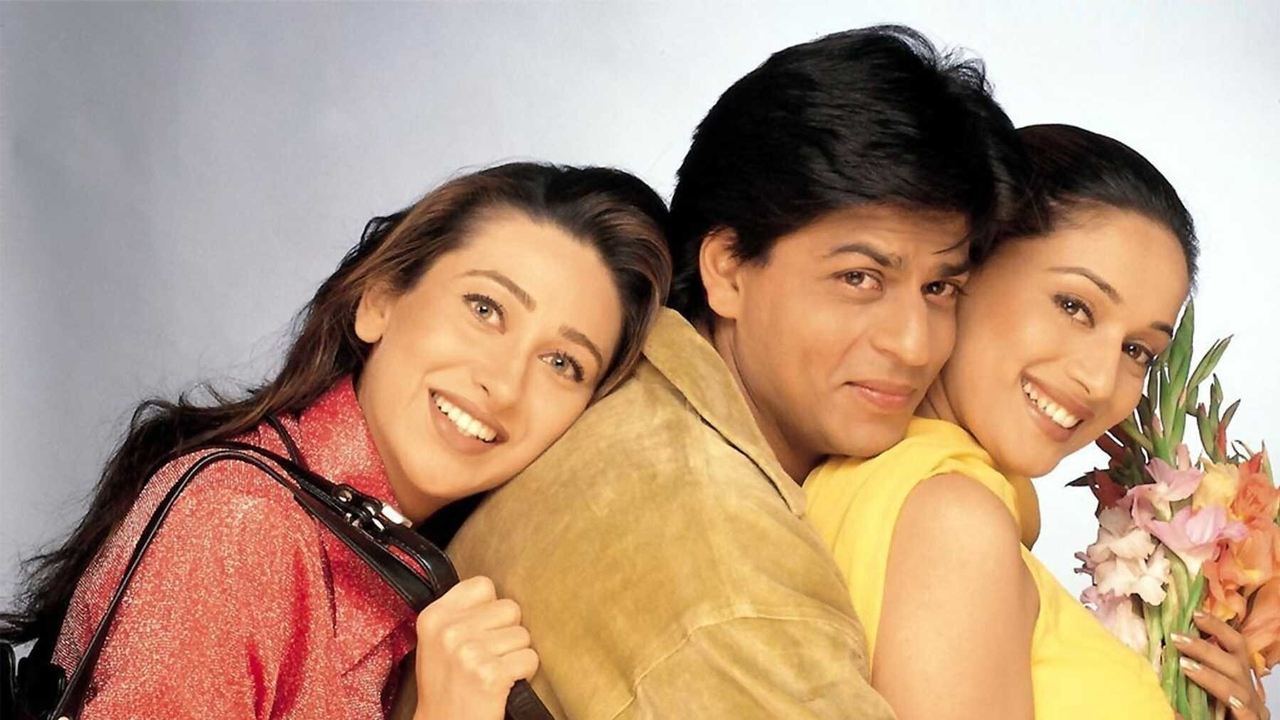
The story introduces us to Rahul (Shah Rukh Khan), a charismatic director whose life revolves around his dance troupe and his whimsical, almost cynical disbelief in love, despite weaving tales of it on stage. He clings to the idea of "Maya," a perfect, dreamlike woman he believes exists only in imagination. Opposite him are two starkly different dancers: Nisha (Karisma Kapoor), his best friend, fiercely talented and fiercely in love with him, unable to understand his idealistic quest; and Pooja (Madhuri Dixit), a classically trained dancer, embodying the very grace and quiet belief in fate that Rahul thinks he's only dreaming of. It’s a classic love triangle, but painted with the vibrant colours, elaborate sets, and infectious energy that defined mainstream Hindi cinema of the era.
The Trio That Defined an Emotion
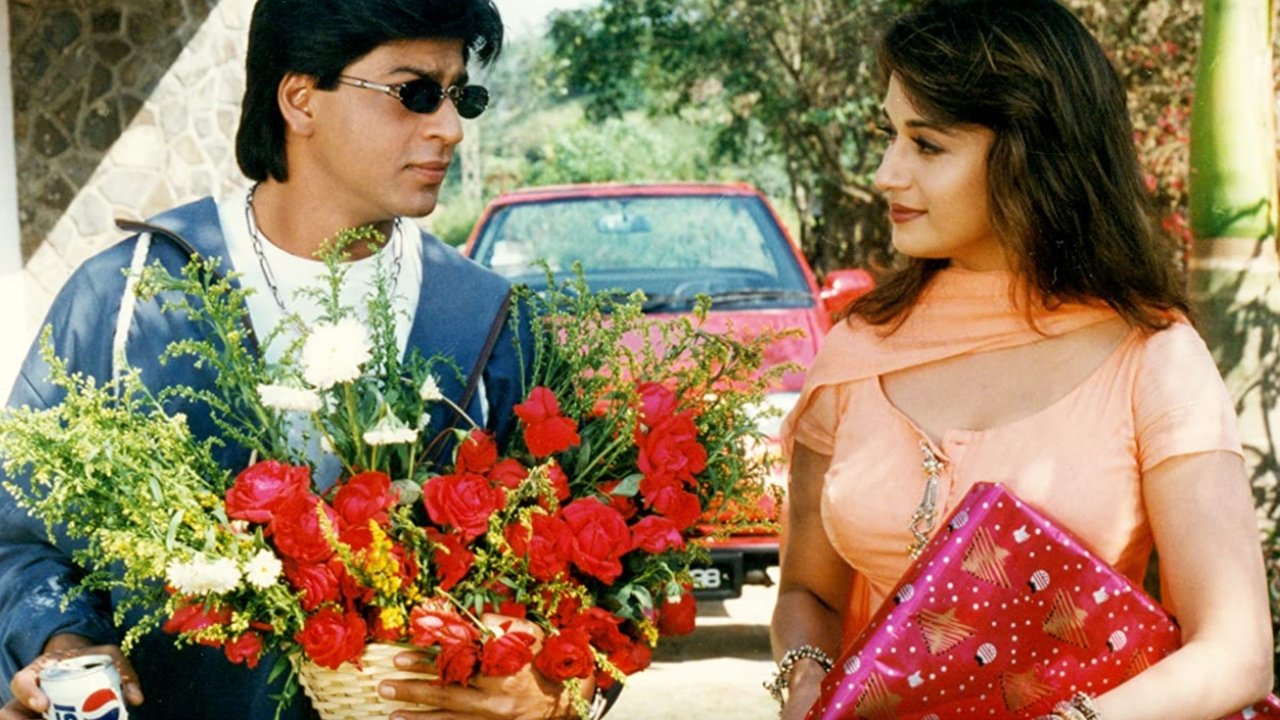
What truly elevates Dil To Pagal Hai beyond its familiar premise are the performances, particularly the central trio who breathe life into these archetypes. Shah Rukh Khan, already cementing his status as the King of Romance after Dilwale Dulhania Le Jayenge (1995), brings his trademark boundless energy to Rahul. He makes you believe in Rahul's artistic passion and, crucially, his internal conflict between playful cynicism and burgeoning sincerity. There's a vulnerability beneath the bravado that makes his eventual awakening feel earned.
Madhuri Dixit as Pooja is ethereal. She embodies the "Maya" concept – graceful, gentle, almost otherworldly in her belief in destiny and her connection to music. Her dancing, choreographed often by the legendary Saroj Khan, is poetry in motion, a stark contrast to the film's more modern aesthetic elsewhere. She conveys Pooja's quiet strength and romantic longing with subtle glances and a captivating screen presence.
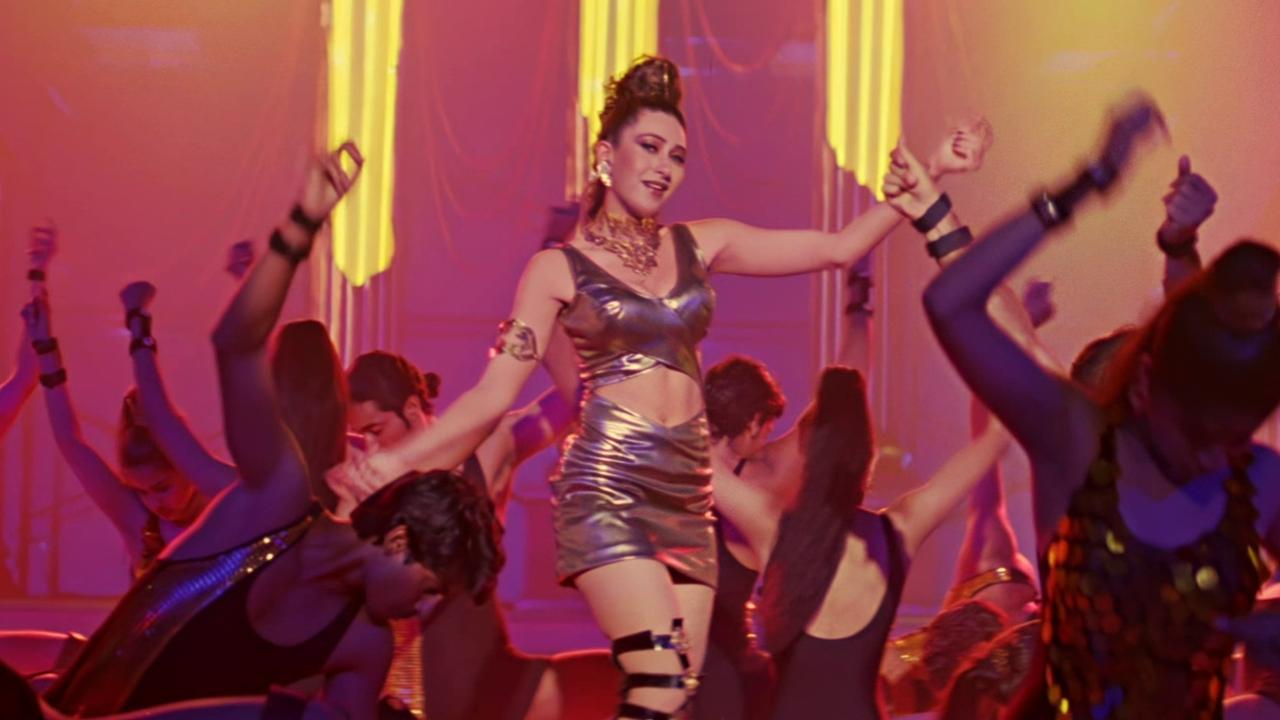
And then there's Karisma Kapoor as Nisha. It’s a performance that crackles with energy, hurt, and defiance. Nisha is the modern, pragmatic counterpoint to Pooja's idealism. Her unrequited love for Rahul is palpable, her frustration understandable. It’s a role that required immense physical commitment (especially in the more Westernised dance sequences) and emotional depth. Interestingly, this pivotal role was reportedly turned down by several leading actresses of the time, perhaps wary of playing the 'second lead' or the complexities of Nisha's character arc. Kapoor seized the opportunity, delivering a powerhouse performance that not only won her the National Film Award for Best Supporting Actress but arguably stole many scenes. Her confrontational "mohabbat" (love) speech remains iconic.

The Rhythm of the Heart
You simply cannot discuss Dil To Pagal Hai without dwelling on its soundtrack and choreography. Composer Uttam Singh, working with lyricist Javed Akhtar (stepping in after the unfortunate passing of Yash Chopra's regular collaborator Anand Bakshi), crafted an album that became an absolute sensation. From the title track's dreamy insistence to the infectious beats of "Le Gayi" and the playful energy of "Koi Ladki Hai," the music wasn't just background noise; it was the film's heartbeat. I distinctly remember the cassette tape being played endlessly, everywhere, even before the film hit screens.
Equally revolutionary was the choreography, particularly Shiamak Davar's introduction of contemporary, jazz-influenced dance styles to mainstream Bollywood on such a grand scale. The rehearsal scenes and stage performances pulse with a modern energy that felt fresh and aspirational. This blend of Davar's dynamism with Saroj Khan's classical grace created a unique visual tapestry that perfectly complemented the film's thematic contrasts. The film's visual richness was further amplified by its stunning international locations, including picturesque sequences shot in Germany (Baden-Baden) and Switzerland, lending it that signature Yash Raj Films' aspirational, larger-than-life feel.
Behind the Gloss: A Labour of Love (and Commerce)
Coming four years after his intense thriller Darr (1993), Dil To Pagal Hai marked a return to pure romance for director Yash Chopra. Made on a substantial budget for the time (around ₹9 crore, which is roughly equivalent to over ₹50 crore or $6 million USD today), the film was a massive commercial success, reportedly grossing over ₹70 crore worldwide (nearly ₹400 crore or $47 million USD today). It wasn't just a hit; it was a cultural phenomenon, influencing fashion (those sporty athleisure outfits!) and reinforcing the star power of its leads. Even Akshay Kumar's extended cameo as Pooja's childhood friend added significant emotional weight and star wattage. The film’s tagline, "Someone... Somewhere... Is Made For You," became a romantic mantra for a generation.
Still Crazy After All These Years?
Watching Dil To Pagal Hai today, through the lens of nostalgia, is a fascinating experience. Yes, the central conceit of Rahul conjuring his perfect woman who happens to exist exactly as imagined feels incredibly convenient, perhaps even naive by modern standards. The world it presents – full of grand pronouncements, coincidences orchestrated by fate, and dance-offs expressing existential angst – is undeniably heightened.
Yet, the film's emotional core remains surprisingly resonant. The pain of unrequited love embodied by Nisha, the quiet yearning of Pooja, and Rahul's journey from disbelief to profound love – these are universal themes handled with sincerity. The chemistry between the leads is undeniable, and the sheer spectacle of the song-and-dance sequences retains its power to enchant. It captures a specific flavour of late 90s optimism and cinematic romanticism that feels both comforting and slightly melancholic now. It reminds you of a time when mainstream cinema dared to be unapologetically earnest about love, destiny, and the idea that maybe, just maybe, the heart is a little bit crazy.

Rating: 8/10
This score reflects the film's undeniable impact, powerhouse performances (especially from Karisma Kapoor), iconic music and choreography, and its status as a landmark 90s Bollywood romance. While the plot leans heavily on romantic idealism that might feel dated to some, its emotional sincerity and technical brilliance shine through, making it a joy to revisit.
Dil To Pagal Hai remains a vibrant time capsule, a testament to Yash Chopra's vision and a film that still makes you want to believe, just a little, in the magic of 'someone, somewhere'.