It arrives not as a traditional film, weaving narrative through cuts and camera movements across realistic sets, but as something else entirely: a captured storm of music and emotion. The 1999 recording of the French musical phenomenon Notre Dame de Paris isn't a movie adaptation of Victor Hugo's novel in the way we usually think of it. Instead, it’s a time capsule, preserving the raw energy and operatic scale of the original Paris stage production, beamed directly into our living rooms via the magic of VHS (and later, DVD). Seeing it again, all these years later, isn't just about revisiting a story; it's about plugging back into a very specific, powerful theatrical current.
### A Cathedral Built of Song
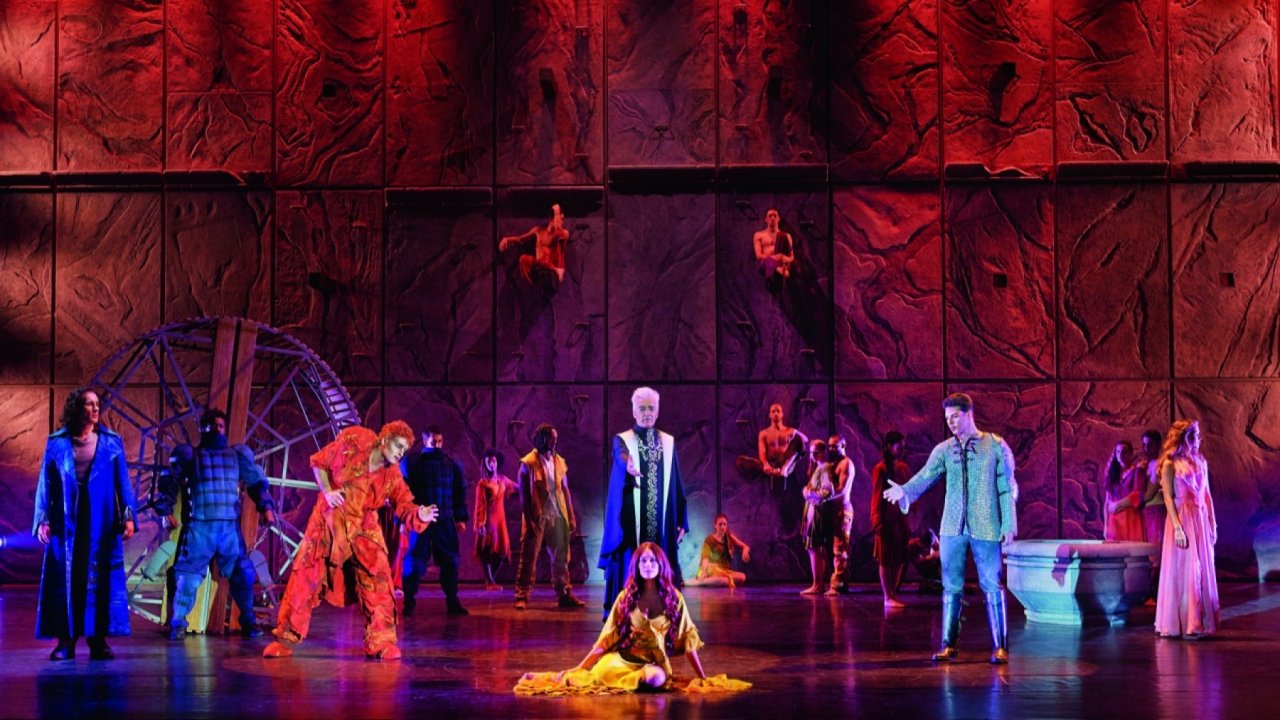
From the opening chords of "Le Temps des Cathédrales" (The Age of Cathedrals), sung with soaring power by Pierre Gringoire (played by Bruno Pelletier in this recording, though Patrick Fiori also famously held the role), the ambition is clear. Composers Riccardo Cocciante (music) and Luc Plamondon (lyrics) didn't just adapt Hugo's sprawling, tragic novel; they distilled its essence into a series of powerhouse musical numbers. The story is familiar: the tragic love quadrangle between the beautiful Romani dancer Esmeralda, the tormented bell-ringer Quasimodo, the conflicted Archdeacon Frollo, and the dashing Captain Phoebus. But here, the narrative unfolds almost entirely through song, more akin to a sung-through rock opera than a traditional book musical.
The genius lies in how Cocciante's melodies – blending rock, pop, and classical influences – perfectly capture the emotional core of each character. There's a visceral quality to the music, a direct line to the heart that bypasses intellectual analysis. It’s passionate, sometimes bordering on overwhelming, but undeniably effective. Remember hearing "Belle" for the first time? That haunting trio where Quasimodo, Frollo, and Phoebus each confess their tortured desire for Esmeralda became an absolute sensation, dominating French charts for an astonishing number of weeks. It’s a perfect example of the show’s formula: simple, direct lyrical concepts married to unforgettable, emotionally charged melodies.
### Faces in the Stained Glass Light
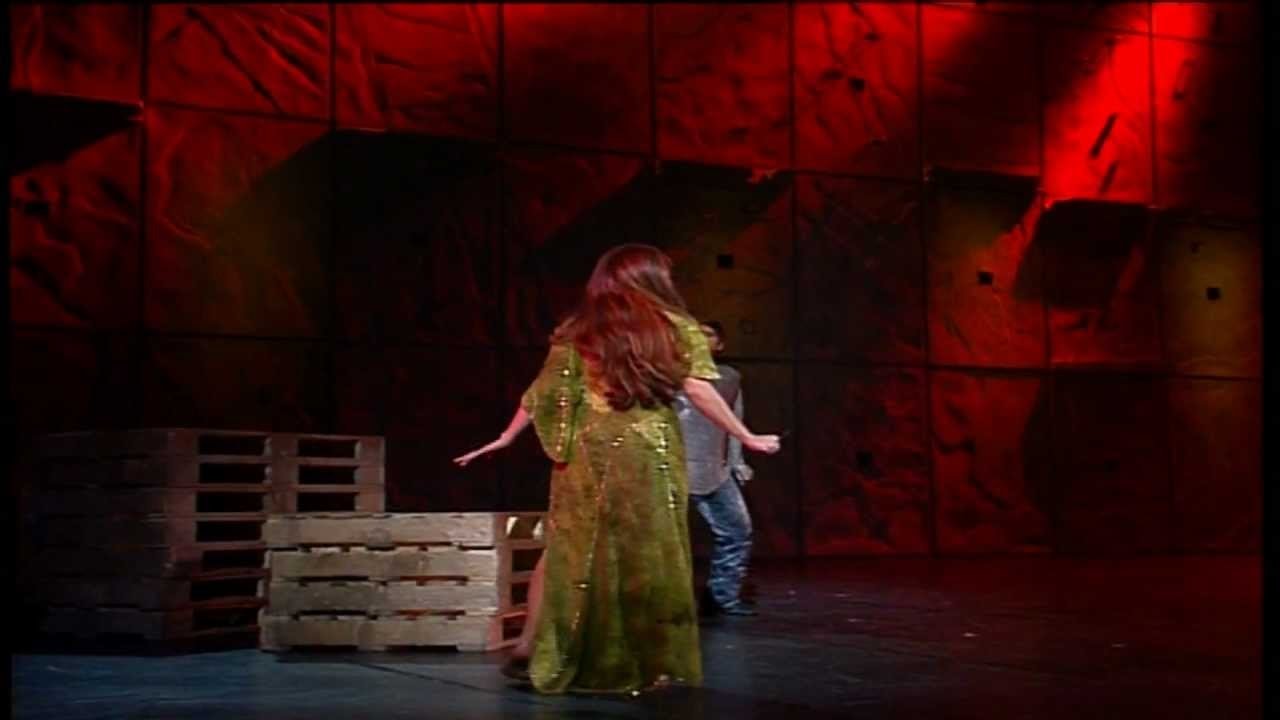
What truly elevates this recording beyond just a historical document are the performances, captured under the direction of Gilles Amado. Hélène Ségara embodies Esmeralda with a compelling blend of vulnerability and spirit. Her voice carries the character's plight beautifully, especially in numbers like "Ave Maria Païen" (Pagan Ave Maria). Then there's Daniel Lavoie as Frollo. His portrayal is chilling, finding the humanity within the monster, the terrifying conviction behind his destructive piety. His performance of "Tu vas me détruire" (You Will Destroy Me) remains a masterclass in conveying internal torment.
But for many, the magnetic centre of this production is Garou as Quasimodo. A relatively unknown Québécois rock singer at the time, his casting was inspired. With his naturally gravelly voice and imposing stage presence, he doesn't just play the deformed bell-ringer; he inhabits him. There’s a raw, almost primal quality to his singing, conveying Quasimodo's pain, loyalty, and capacity for love with heart-wrenching authenticity. Watching him perform "Dieu que le monde est injuste" (God, How Unjust the World Is) feels less like watching an actor and more like witnessing a soul laid bare. It's a performance that rightly launched his international career.

### Capturing Lightning in a Cassette
Filming a live stage show presents unique challenges. Gilles Amado's direction here aims for clarity and emotional focus. While it lacks the dynamic, cinematic language of a movie musical like Moulin Rouge! (which would arrive two years later), it effectively captures the scale of the original Palais des Congrès production in Paris. The stark, modern set design – relying heavily on lighting, moving platforms, and abstract structures rather than literal recreations of Paris – translates surprisingly well to the screen. The acrobatic dancers, integral to the show's physical energy, are given ample space to impress.
Sure, watching it on a CRT screen back in the day, maybe captured from a TV broadcast or on a slightly worn VHS tape rented from the corner store, some of the visual detail might have been lost. The focus wasn't on intricate camera work, but on preserving the experience – the grandeur, the voices, the sheer wall of sound. It cost a reported (for the stage show) 50 million francs (around €7.6 million) to mount initially, a huge sum back then, and became a global phenomenon, eventually translated into numerous languages. This recording was our way to access that spectacle without needing a plane ticket to Paris. It felt monumental, bringing Broadway and West End-style mega-musicals right onto our shelves.
### Lasting Echoes from the Bell Tower
Does Notre Dame de Paris (1999) hold up purely as a film? Perhaps not by traditional cinematic standards. Its power lies elsewhere – in the unforgettable music, the powerhouse vocal performances, and its success in bottling the lightning of a truly phenomenal stage production. It's a testament to the era when these large-scale musicals became globally accessible consumable media, shared and rewatched on trusty VHS tapes.
The themes – social injustice, hypocrisy, prejudice, the nature of love and obsession – remain potent, filtered through Cocciante and Plamondon's passionate, pop-opera lens. It might lack the nuanced character depth of Hugo’s novel or a more traditional film adaptation, but its emotional immediacy is undeniable. It aims for the gut, and largely succeeds.

Rating: 8/10
Justification: While not a conventional "film," this recording brilliantly captures the raw power and unforgettable score of a landmark stage musical. The vocal performances, particularly from Garou and Lavoie, are exceptional, and the direction effectively translates the stage energy for home viewing. It loses points for the inherent limitations of a stage capture versus cinematic storytelling, but its emotional impact and historical significance as a musical theatre phenomenon preserved on video earn it a high score.
Final Thought: Years later, the melodies still haunt, don't they? It’s a reminder that sometimes, the most powerful stories are the ones sung directly from the heart, even when viewed through the nostalgic glow of a television screen.