It wasn't unusual, browsing the towering shelves of Blockbuster back in '97, to find actors known primarily for being in front of the camera suddenly taking the director's chair. Sometimes it felt like a vanity project, other times a genuine attempt to stretch creative muscles. When Kiefer Sutherland, already cemented in our minds from The Lost Boys and Flatliners, released his directorial debut Truth or Consequences, N.M., it landed right in the slipstream of the gritty, talky, post-Reservoir Dogs crime wave. The distinctive yellow VHS box, often nestled near other neo-noir hopefuls, promised a certain kind of film: desperate characters, bad decisions, and the unforgiving landscape of the American Southwest. But does Sutherland’s first foray behind the camera deliver more than just genre familiarity?

Dust, Desperation, and a Deal Gone Wrong
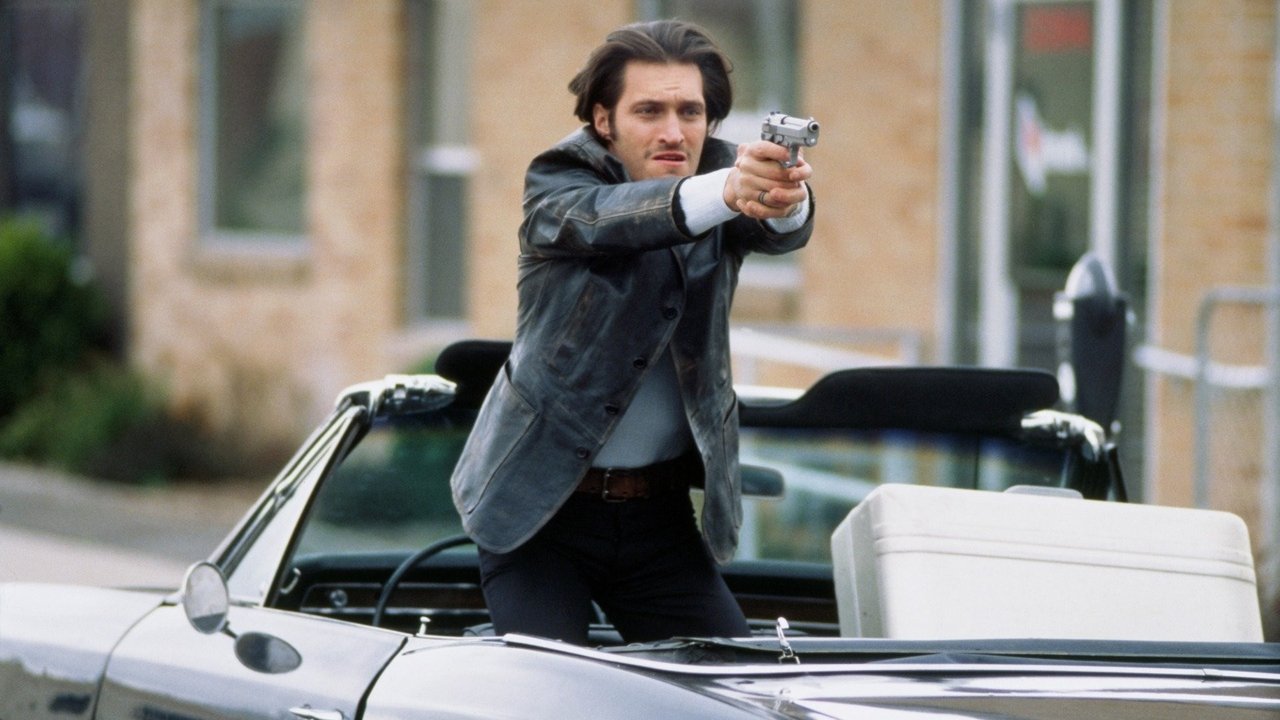
The setup, penned by Brad Mirman (who also gave us the infamous Madonna thriller Body of Evidence), feels familiar yet potent. Raymond Lembecke (Vincent Gallo) is fresh out of prison, determined to walk the straight and narrow. Gallo, even then cultivating his intense, slightly unnerving screen presence, perfectly embodies a man wrestling with his past, yearning for a simple life that feels perpetually out of reach. But trouble finds him in the form of his volatile former cellmate, Curtis Freley, played by Sutherland himself. Curtis is pure id – charismatic, dangerous, and utterly incapable of seeing beyond the next score. He pulls Raymond into one last, supposedly easy drug heist alongside the more level-headed Marcus (the ever-reliable Mykelti Williamson, bringing quiet gravity just a few years after his unforgettable turn as Bubba in Forrest Gump). Naturally, it all goes spectacularly wrong, resulting in dead undercover cops and forcing the trio to flee, taking a bewildered suburban couple (played with palpable fear by Kevin Pollak and Kim Dickens) as hostages. What follows is a tense, sun-baked road trip through a landscape as bleak and unforgiving as the characters' prospects.
A Cast Navigating Chaos

What elevates Truth or Consequences, N.M. beyond a standard crime-gone-wrong narrative is the interplay between its leads. Sutherland directs himself effectively, playing Curtis not as a simple villain, but as a tragically flawed individual whose loyalty is as fierce as his temper is short. There’s a coiled energy to his performance, a sense that violence is always just simmering beneath the surface. Gallo, as Raymond, is the film's reluctant moral center. His simmering frustration and quiet desperation are magnetic; you feel the weight of his choices, the pull of his past warring with his desire for redemption. Williamson provides the necessary anchor, the observer caught between two extremes, his weariness adding a layer of tragic inevitability to their journey. The dynamic between these three feels authentic, forged in the crucible of shared mistakes and diminishing options. Even the supporting roles, including memorable turns from legends like Rod Steiger as a menacing mob boss and Martin Sheen in a brief but impactful appearance, add texture to this dusty world.
Sutherland Behind the Camera
For a first-time feature director, Sutherland shows a surprisingly assured hand. He doesn't shy away from the ugliness inherent in the story, crafting a film that feels appropriately gritty and sun-bleached. The influence of Tarantino is undeniable – the non-linear flashbacks, the extended dialogue scenes exploring loyalty and betrayal, the bursts of sudden violence – but Sutherland manages to imbue the film with its own distinct flavor, leaning more into bleak neo-noir than playful pastiche. The vast, empty New Mexico landscape (the film makes evocative use of its titular town and surrounding areas) becomes almost another character, amplifying the sense of isolation and inescapable fate. He understands pacing, allowing moments of quiet tension to build before erupting. You can almost feel the heat radiating off the asphalt, the desperation clinging to the characters like desert dust.
Retro Fun Facts & Production Grit
Making a film like this in the mid-90s indie scene wasn't without its hurdles. Financed for a reported $8 million – a modest sum even then – Truth or Consequences, N.M. faced an uphill battle finding an audience in theaters, barely cracking $300,000 at the domestic box office. Like so many interesting, imperfect films of the era, its real life began on VHS and cable, where viewers like us could discover its rough charms. Sutherland reportedly took the directing gig seriously, wanting to prove he could handle the reins. There are stories of practical challenges filming in the harsh desert environment, mirroring the characters' own arduous journey. The film’s tagline, "Loyalty has its price," perfectly encapsulated the central theme explored in those tense roadside conversations and desperate standoffs. While it didn’t exactly set the critical world alight (garnering mixed reviews), it demonstrated Sutherland had a genuine feel for mood and character behind the camera, something he'd explore further in his television directing work later on.
A Forgotten Stop on the Neo-Noir Highway?
Watching Truth or Consequences, N.M. today evokes that specific mid-90s feeling – a time when independent cinema was grappling with the long shadow of Pulp Fiction, resulting in a slew of films exploring similar themes of crime, fate, and talkative anti-heroes. Sutherland's film doesn't reinvent the wheel, and some narrative turns feel preordained by the genre playbook. Yet, there's an earnestness here, a commitment to the bleak trajectory of its characters that resonates. The performances, particularly from Gallo and Sutherland himself, remain compelling. It captures a sense of desperation, of people running out of road, that feels honest. It might not be a masterpiece, but it's a solid, atmospheric piece of 90s crime cinema that deserves rediscovery, especially for fans of the key players or the genre itself. It feels like a film made by someone who loves movies, even if it wears its influences proudly on its sleeve.
Rating: 7/10
The film earns this score through its strong central performances, particularly the dynamic between Gallo, Sutherland, and Williamson, Sutherland's confident if derivative direction, and its effectively bleak, sun-scorched atmosphere. While the plot treads familiar ground within the 90s crime genre and it didn't make a huge initial splash, its execution is solid, and it holds up as a compelling, character-driven road movie to hell. It’s a film that feels authentically of its time, a worthy artifact from the shelves of VHS Heaven.
What lingers most isn't necessarily the plot twists, but the feeling – that oppressive heat, the weight of bad choices, and the haunting question of whether redemption is ever truly possible once you've taken certain turns.