Okay, fellow travellers on the magnetic tape highway, let's slide another well-worn cassette into the VCR of our collective memory. Tonight's feature? 1997's Mad City, a film that landed with the thud of unmet expectations back in the day, yet watching it now feels strangely… resonant. It prompts a question that perhaps didn't hit quite as hard on release: when does observing a crisis cross the line into shaping it?
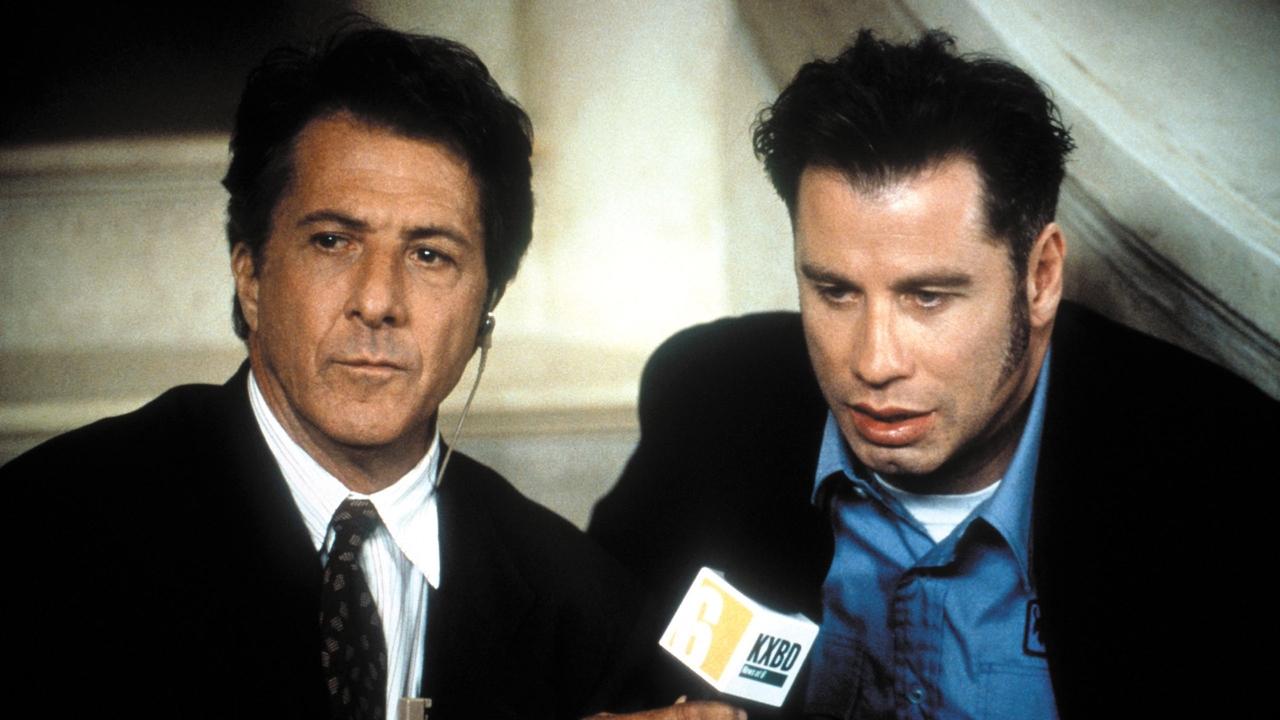
There's a palpable weight to Mad City, largely thanks to its director, the legendary Costa-Gavras. Known for searing political thrillers like Z (1969) and the gut-wrenching Missing (1982), his name alone signaled something more than your average hostage drama. And indeed, the film aims higher, trying to dissect the often parasitic relationship between media and tragedy, a theme foreshadowed brilliantly by 1976's Network and even earlier by Billy Wilder's cynical masterpiece, Ace in the Hole (1951).
An Accidental Crisis, An Opportunistic Lens
The setup is deceptively simple: Sam Baily (John Travolta), a sweet but simple museum security guard, gets fired. In a moment of desperation, armed with a shotgun and dynamite he didn't intend to use, he returns to plead for his job, accidentally wounds his former colleague, and suddenly finds himself holding a group of schoolchildren hostage. Enter Max Brackett (Dustin Hoffman), a once-prominent network news reporter relegated to local fluff pieces, who happens to be in the museum restroom when it all goes down. Brackett doesn't just see a story; he sees salvation. His path back to the big time.
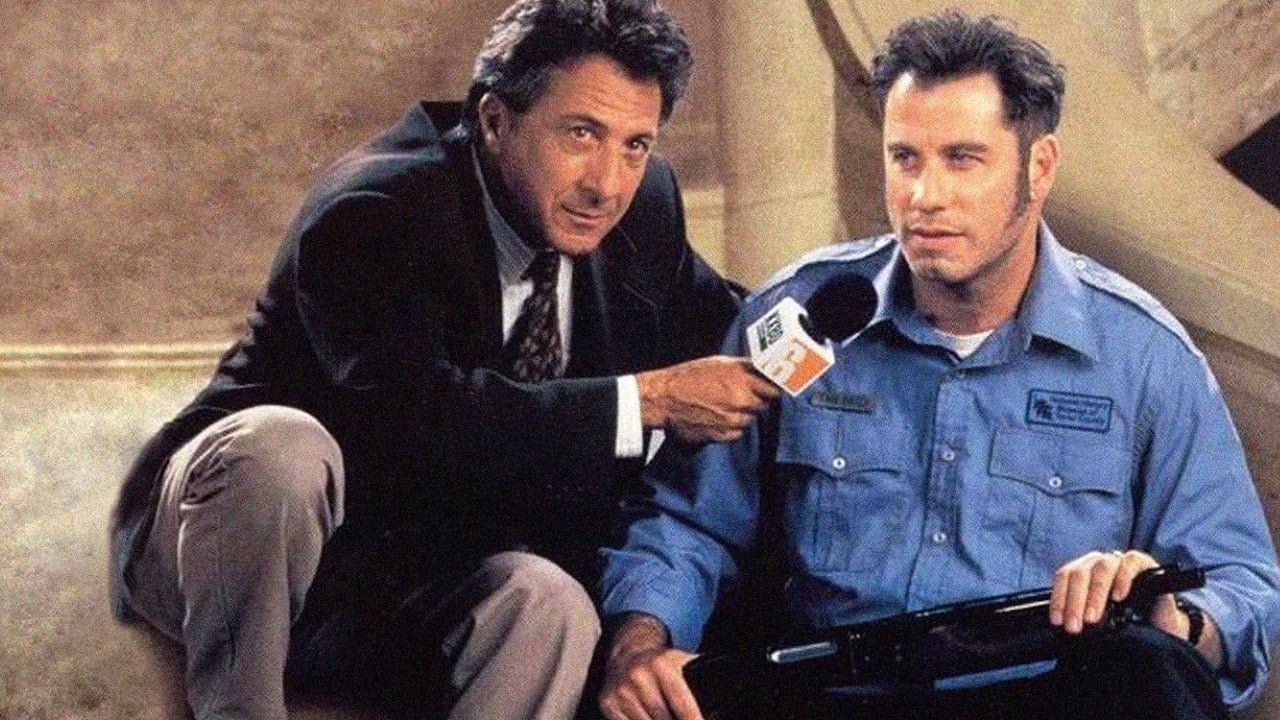
What unfolds is less a traditional thriller and more a claustrophobic character study set against the backdrop of a burgeoning media circus. The dynamic between Hoffman and Travolta forms the film's core. Travolta, then riding the massive wave of his Pulp Fiction (1994) renaissance, imbues Sam with a heartbreaking vulnerability. He's not a monster; he's a man utterly out of his depth, increasingly manipulated by the very forces supposedly reporting his story. His wide-eyed panic and genuine remorse feel authentic, making his plight sympathetic even as his actions endanger others.
Opposite him, Hoffman delivers a masterclass in weary cynicism. Max Brackett is slick, intelligent, and utterly ruthless in his pursuit of the narrative he wants to tell. He coaches Sam, spins the story for the cameras, and orchestrates events, all while convincing himself (and sometimes us) that he's somehow helping the situation. It's a performance layered with the ghosts of past failures and the intoxicating allure of relevance regained. Watching Hoffman work here is like observing a chess grandmaster playing a game where the pieces are real, fragile human lives.
Truth, Ratings, and the 24-Hour News Cycle
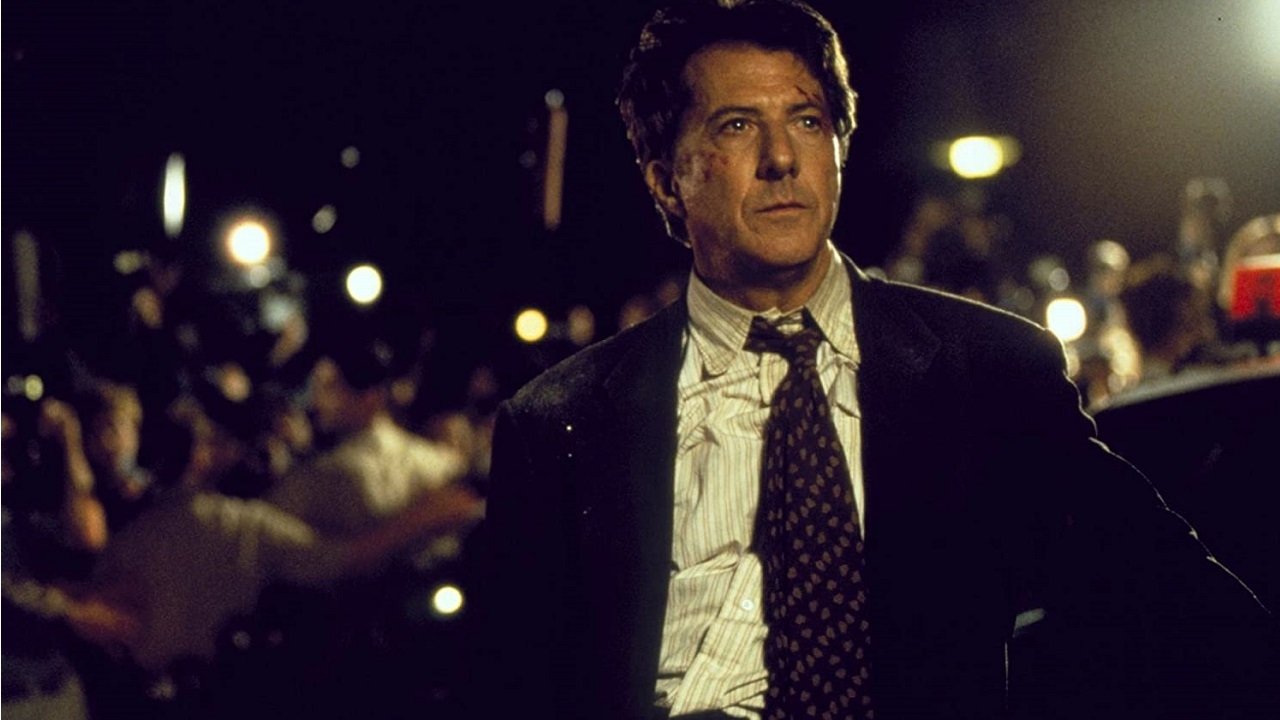
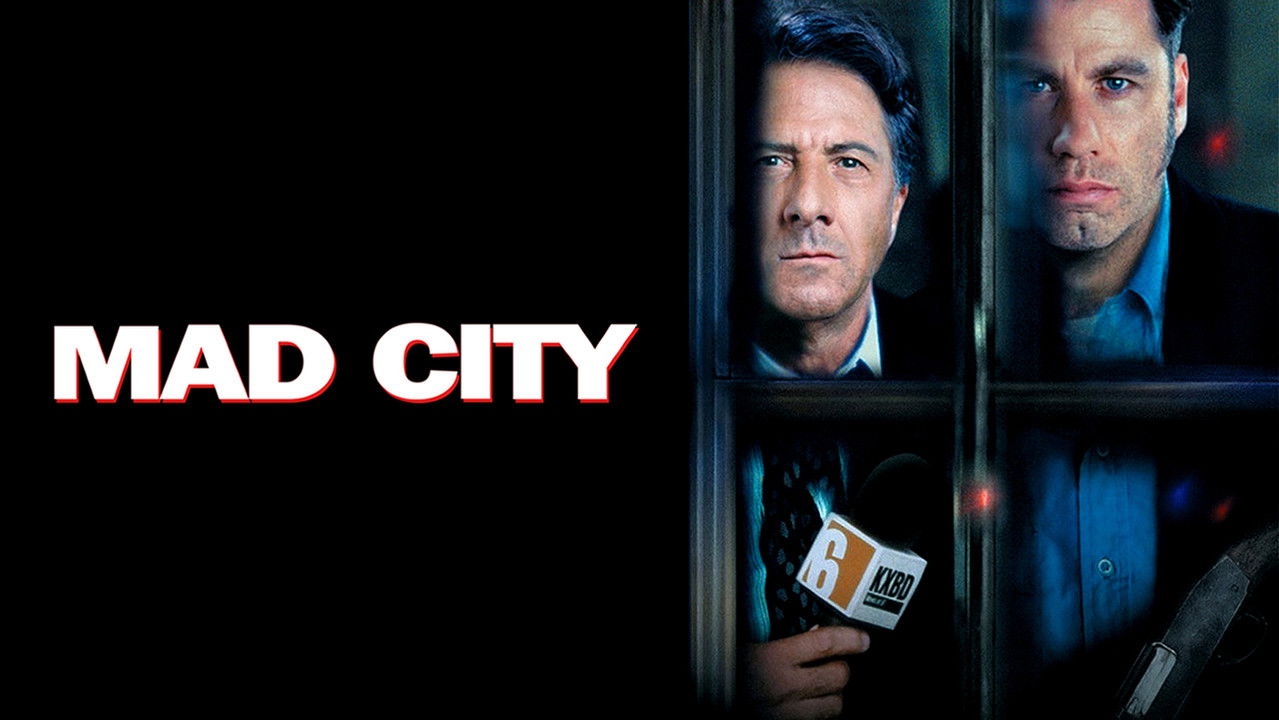
Mad City arrived just as the 24-hour news cycle was truly taking hold, transforming tragedies into ongoing entertainment spectacles. The film captures this shift with unnerving accuracy. We see the swarm of satellite trucks, the talking heads offering instant analysis, the public consuming the drama like popcorn. Mia Kirshner as Laurie, Brackett's ambitious intern, represents the next generation, perhaps even more detached, learning the manipulative ropes from her mentor. Alan Alda also turns in a typically solid performance as the veteran anchor trying to maintain a semblance of journalistic integrity from afar.
It's fascinating to learn that writer Tom Matthews drew inspiration from the media saturation surrounding the O.J. Simpson trial. That context is key; Mad City wasn't just inventing a scenario, it was reflecting a very real, and very troubling, emerging media landscape. The film asks uncomfortable questions: What responsibility does the media have beyond reporting facts? How does the mere presence of cameras alter behaviour? Where does the hunger for ratings eclipse human decency? These questions felt urgent in 1997; today, in our era of social media and instant, often unverified, information, they feel absolutely critical.
A Flawed Gem From the Video Store Shelf?
Despite its pedigree and potent themes, Mad City wasn't a hit. Made for a substantial $50 million, it recouped just over $10 million domestically. Critics were mixed, often unfavourably comparing it to the sharper satire of Network. Perhaps its tone, oscillating between tense drama and pointed media critique, felt uneven. It lacks the outright suspense of a typical thriller and the biting wit of a pure satire, occupying a somewhat uncomfortable middle ground. Some might argue Costa-Gavras's usually precise direction feels a touch heavy-handed here, occasionally spelling out its message when subtlety might have been more effective.
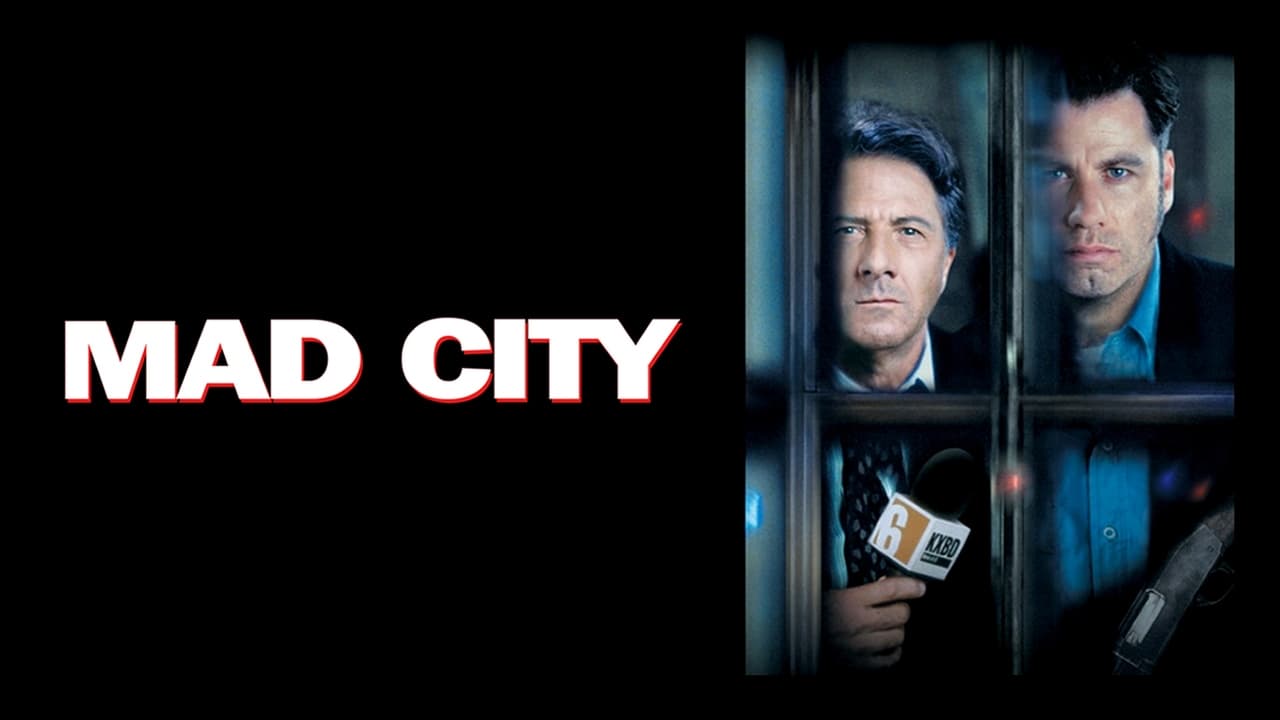
I remember renting this one, probably from a Hollywood Video or maybe a local mom-and-pop shop, drawn by the Hoffman/Travolta pairing. The box art, emphasizing the tense standoff, promised something perhaps more action-packed than the thoughtful, character-driven drama delivered. It wasn't quite the film I expected then, but revisiting it now, especially considering Costa-Gavras's body of work focused on institutional power and its consequences, adds layers of appreciation. The film's depiction of how quickly a narrative can be shaped and twisted by those holding the microphone feels startlingly relevant.
The production, primarily shot in San Jose, California, effectively creates the contained pressure-cooker environment of the museum. While not heavy on flashy practical effects, the technical craft lies in how Costa-Gavras stages the escalating media presence outside, contrasting it with the intimate, volatile drama unfolding inside. It’s a solid late-90s production that captures the look and feel of the era's broadcast news perfectly.
Final Reflection
Mad City isn't a perfect film. It can feel didactic at times, and its pacing occasionally lags. Yet, its central performances are magnetic, and its core message about media responsibility remains powerfully resonant. It functions less as a nail-biting thriller and more as a morality play unfolding under the glare of television lights. It’s a film that makes you think, makes you uncomfortable, and maybe makes you look a little differently at the next breaking news story flashing across your screen. It might have underwhelmed audiences seeking simple thrills in '97, but for those of us appreciating thoughtful drama tackling complex themes, it holds up as a significant, if somewhat overlooked, entry from the VHS era.
Rating: 7/10
Justification: While flawed in pacing and occasionally heavy-handed with its message, Mad City boasts exceptional performances from Hoffman and Travolta, raises still-relevant questions about media ethics, and benefits from the serious thematic weight brought by director Costa-Gavras. It underperformed commercially but offers more substance than many contemporary thrillers, making it a worthwhile revisit for its thoughtful exploration of a complex issue.
It leaves you pondering not just the events on screen, but the very nature of the screen itself, and the power it wields – a power that has only grown exponentially since this tape first hit the rental shelves.