Here’s a review for "VHS Heaven":
***
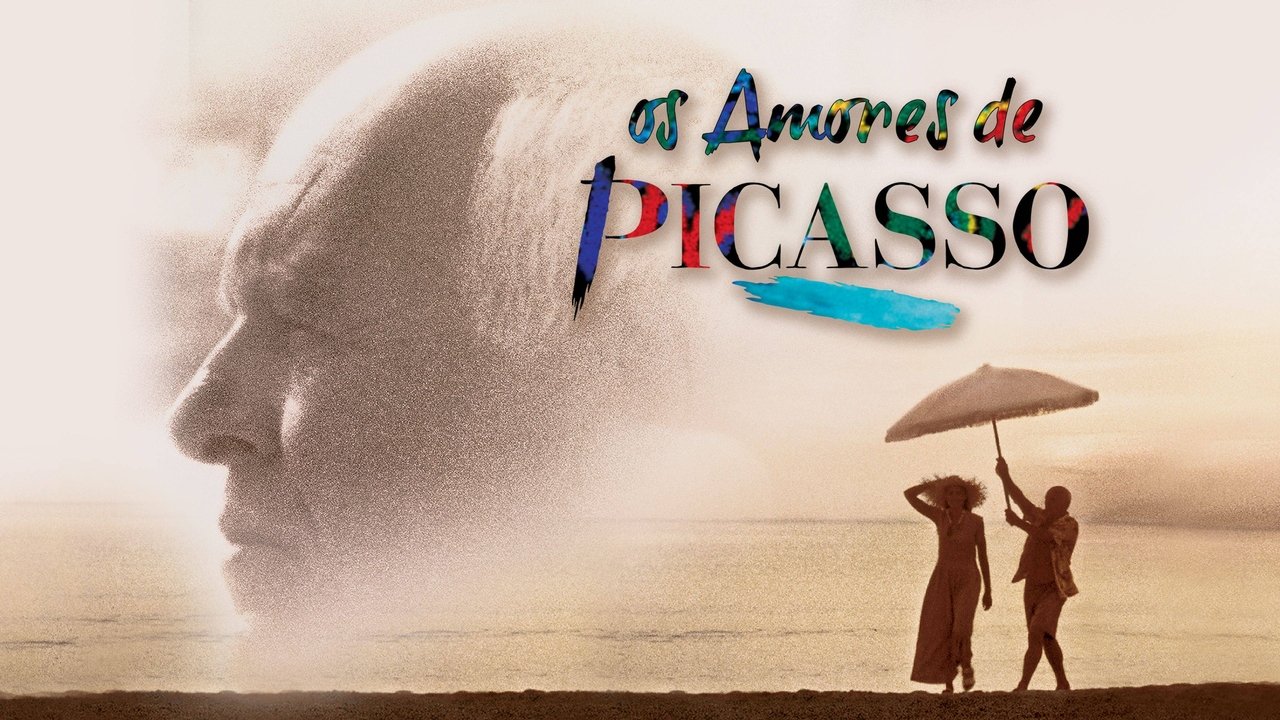
How do you paint a portrait of arguably the most influential artist of the 20th century without showing a single stroke of his most famous work? That was the intriguing, almost impossible challenge facing director James Ivory and his team with 1996’s Surviving Picasso. Watching it again, decades after first pulling that distinctive Merchant Ivory production VHS box from the shelf, the central question still hangs heavy: can you capture the essence of creation when the creations themselves are forbidden?
It's a constraint born from reality – the Picasso estate denied the filmmakers the rights to depict his actual artwork. This fascinating limitation forced Ivory, his long-time writing partner Ruth Prawer Jhabvala, and star Anthony Hopkins into a fascinating corner. Instead of a canvas splashed with Cubist masterpieces, the film focuses intensely on the man, specifically through the eyes of Françoise Gilot (Natascha McElhone), the young painter who became his lover and mother to two of his children during a tumultuous decade from 1943 onwards.

In the Shadow of the Minotaur
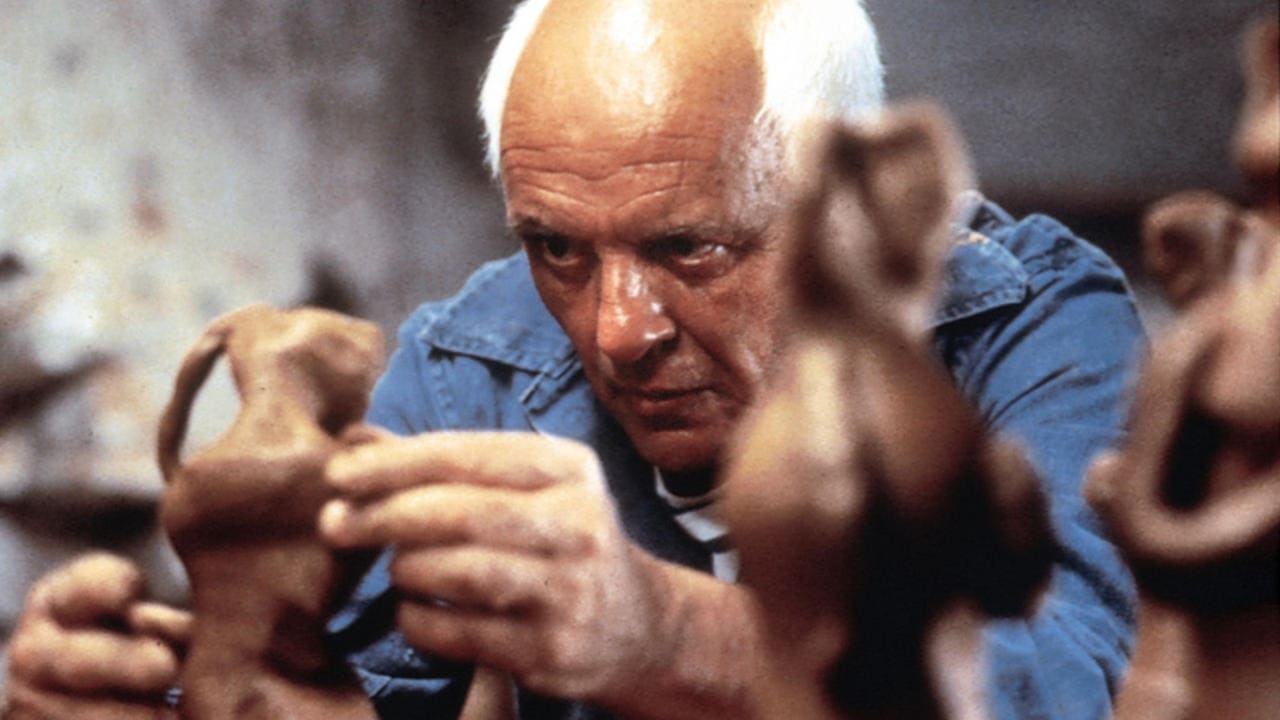
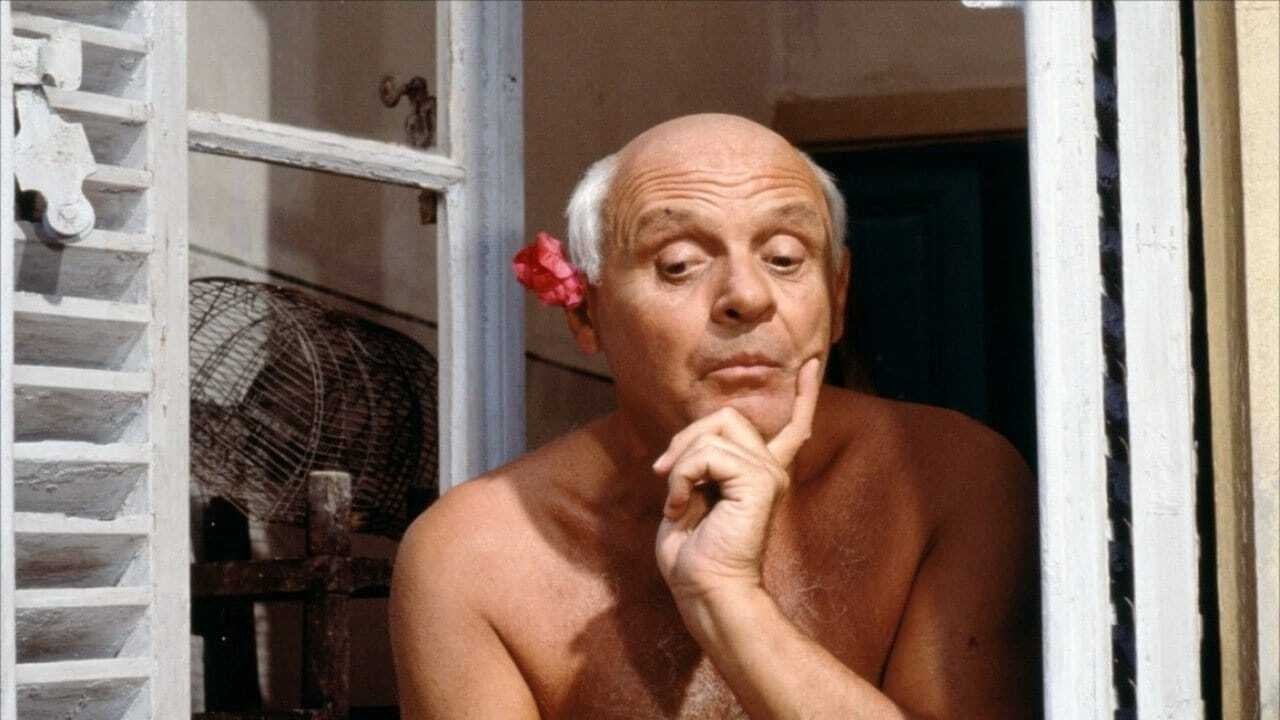
The film doesn't shy away from the complexities, or indeed the brutalities, of Pablo Picasso. Hopkins, fresh off solidifying his screen icon status with films like The Silence of the Lambs (1991) and Ivory's own The Remains of the Day (1993), dives headfirst into the role. He embodies Picasso not as a simple genius, but as a whirlwind of contradictions: charming and charismatic one moment, monstrously selfish and manipulative the next. There's a palpable energy to his performance, a sense of restless, consuming power. He captures the swagger, the piercing gaze, the sheer force of personality that could command attention and bend wills. We see him mimic the act of painting, the physical engagement with the canvas, which stands in for the unseen art. It's a testament to Hopkins' skill that even without the visual payoff of a finished Guernica or Les Demoiselles d'Avignon, we get a sense of the obsessive drive behind the legend.
But the film is titled Surviving Picasso, and its true heart lies with Françoise Gilot. Natascha McElhone, in one of her earliest major roles, is compelling as the intelligent, resilient woman who dared to enter the Minotaur's labyrinth. She isn't merely a victim; McElhone portrays Gilot's initial fascination, her artistic ambition, her gradual understanding of the price of proximity to Picasso's consuming fame, and ultimately, her strength in choosing to leave – a feat few others managed. Her performance provides the crucial emotional anchor, the perspective needed to ground Picasso's larger-than-life persona. We see the world of sun-drenched French villas and Parisian studios through her initially hopeful, then increasingly wary, eyes.
The Unseen Canvas
The classic Merchant Ivory touch is evident – the meticulous period detail, the sun-dappled cinematography capturing the beauty of Southern France, the literate dialogue courtesy of Jhabvala, adapted from Arianna Stassinopoulos Huffington's biography Picasso: Creator and Destroyer. Yet, that central absence of the art does leave a curious void. How does one convey world-changing artistic genius without showing the proof? Ivory attempts this by focusing on Picasso’s impact on others, the almost gravitational pull of his presence, and the obsessive nature of his work ethic. We see discarded sketches, hints of sculptures, the process rather than the product. It’s an admirable attempt, but sometimes feels like describing a feast without tasting the food.
The film also features a brief but searing appearance by Julianne Moore as Dora Maar, one of Picasso's previous lovers, whose haunted fragility serves as a stark warning to Françoise. It’s a potent reminder of the emotional wreckage Picasso often left in his wake. These supporting roles highlight the orbit of damage and devotion surrounding the artist.
Retro Reflections
Finding Surviving Picasso on the video store shelf back in the day felt like choosing something substantial, something 'adult'. Merchant Ivory productions had that reputation – quality dramas for grown-ups. This one, though, felt different from their more romantic E.M. Forster adaptations. It was pricklier, less comforting. The modest budget (reportedly around $16 million) is evident in the intimate focus, lacking the sweeping biographical scope some might expect. It performed quietly at the box office, perhaps hampered by its challenging subject and the unavoidable artistic compromise. Yet, its exploration of the dark side of genius felt very much a part of the 90s trend of deconstructing icons.
Does the film fully succeed in capturing Picasso? Perhaps not entirely. The inability to show his work undeniably hinders its ability to convey the sheer revolutionary force of his art. It leans heavily on the 'destroyer' aspect of Huffington's book title, making Picasso a compelling monster but perhaps shortchanging the 'creator'.
Rating: 6/10
Why a 6? The performances, particularly from Hopkins and McElhone, are strong and committed, anchoring the film effectively. James Ivory's direction crafts a convincing atmosphere, and the central challenge posed by the lack of artwork rights makes it a fascinating curio of biographical filmmaking. However, that same limitation ultimately prevents the film from fully grappling with Picasso's artistic significance, leaving it feeling somewhat incomplete. It’s a compelling character study of a toxic relationship set against a backdrop of implied genius, but struggles to bridge the gap between the man and his monumental work.
Surviving Picasso remains a thoughtful, well-acted drama that raises uncomfortable questions about separating the art from the artist. It might not show you the masterpieces, but it offers a potent, unsettling glimpse into the turbulent world of the man who made them, leaving you to ponder the human cost of living alongside such a consuming fire. What lingers most, perhaps, isn't the image of Picasso painting, but the quiet strength in Françoise Gilot's eyes as she finally chooses to walk away.