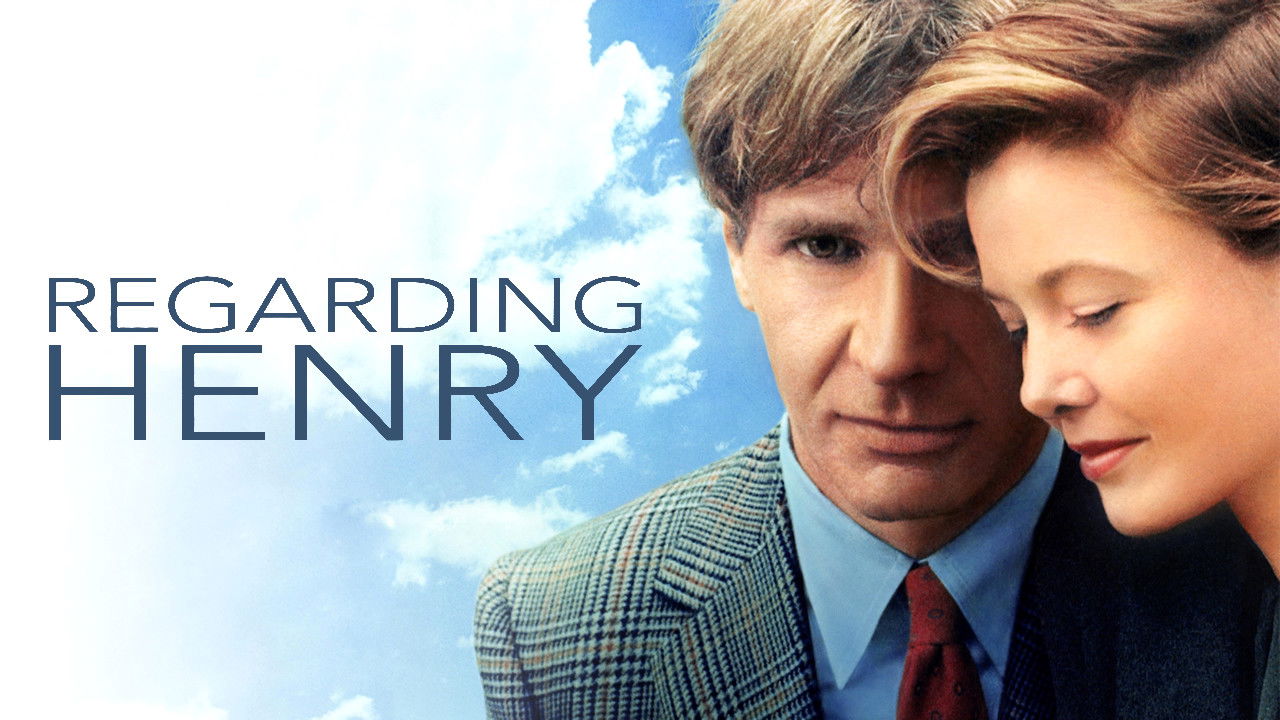
## Regarding Henry (1991): Finding the Man Behind the Suit
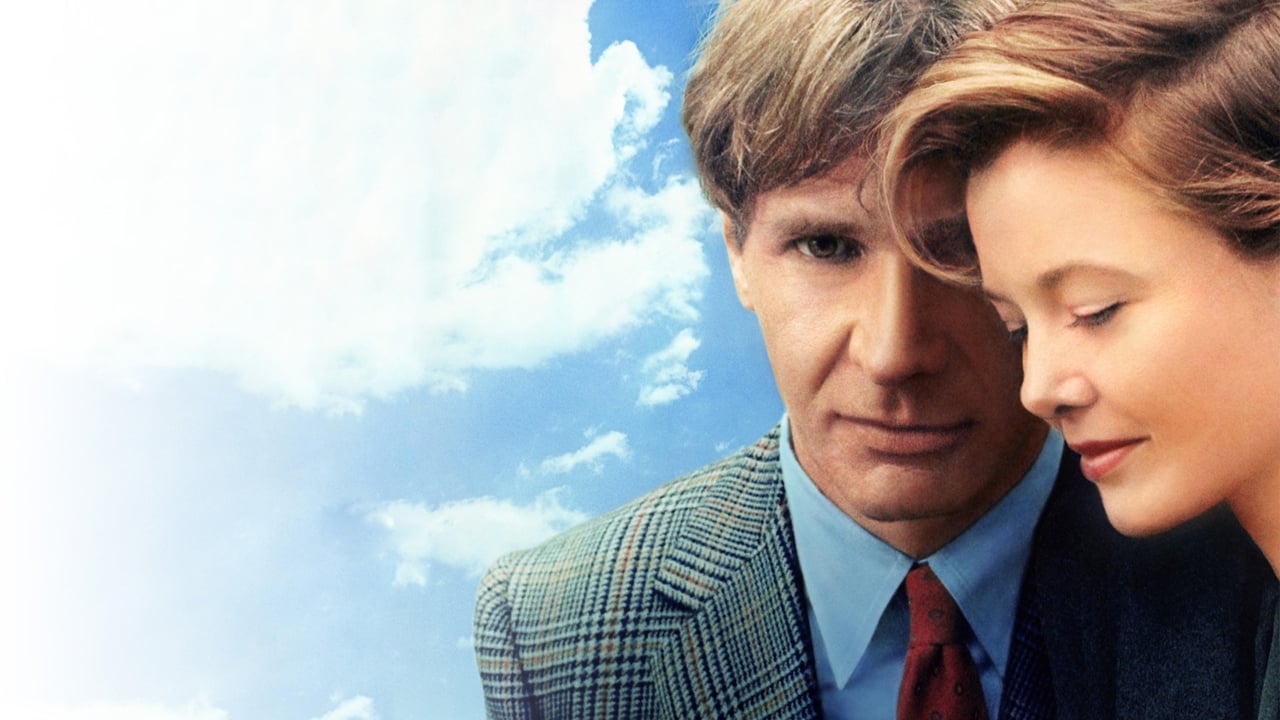
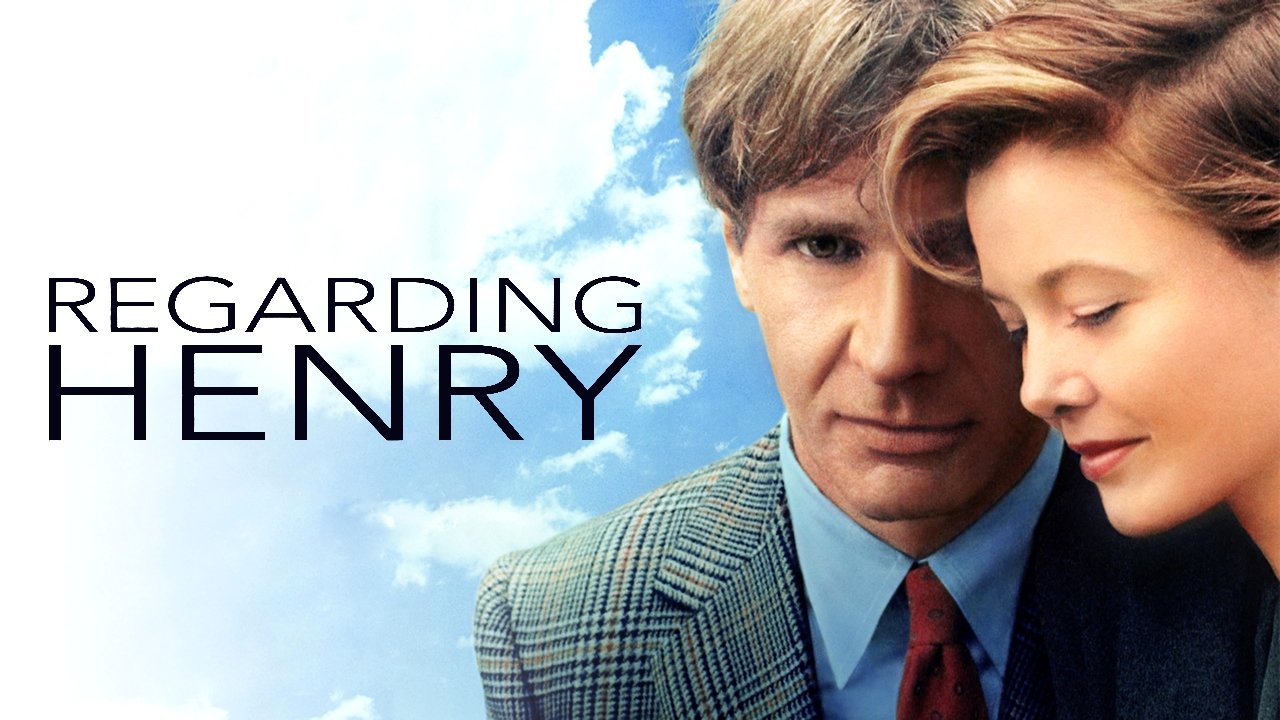
There's a particular kind of quiet vulnerability that feels almost radical when embodied by an actor known primarily for punching Nazis or outrunning smugglers in space. Seeing Harrison Ford in 1991's Regarding Henry was, for many of us browsing the video store shelves, just such a moment. Stripped of the confident swagger of Indy or Han Solo, Ford presents Henry Turner, a man hollowed out not by adventure, but by his own ruthless ambition – until fate intervenes with brutal abruptness. What lingers long after the tape clicks off isn't the plot's mechanics, but the unsettling, deeply human question it forces us to confront: If you lost everything that defined you, who would you become?
### A Life Interrupted
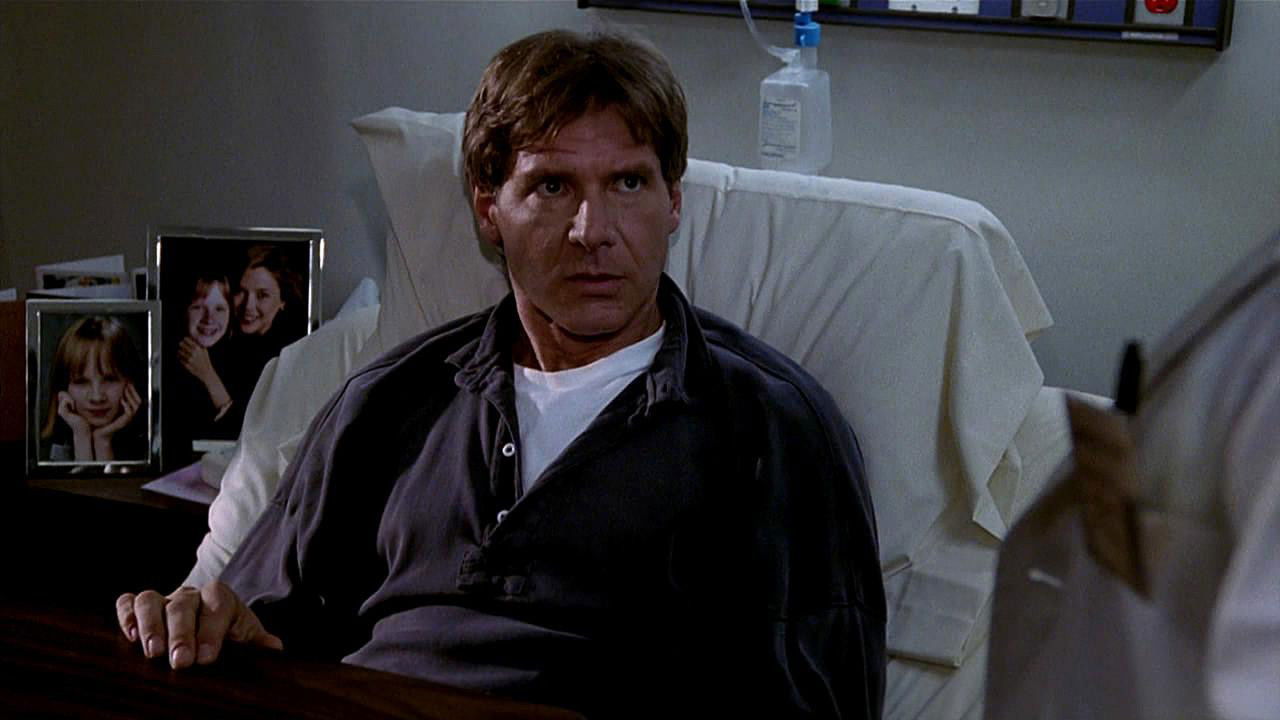
The film, directed with a gentle hand by the masterful Mike Nichols (The Graduate, Working Girl), introduces us to Henry Turner, a high-powered, morally ambiguous New York lawyer. He's cold, distant from his wife Sarah (Annette Bening) and daughter Rachel (Mikki Allen), and utterly consumed by winning. His life is one of sharp suits, sharper tactics, and emotional deserts. Then, one ordinary night, stepping out for cigarettes, Henry walks into a convenience store robbery and takes a bullet to the head. He survives, but with profound brain damage, amnesia, and significant physical impairment. The ruthless lawyer is gone, replaced by someone learning to walk, talk, and understand the world anew, with the innocence and frustration of a child.
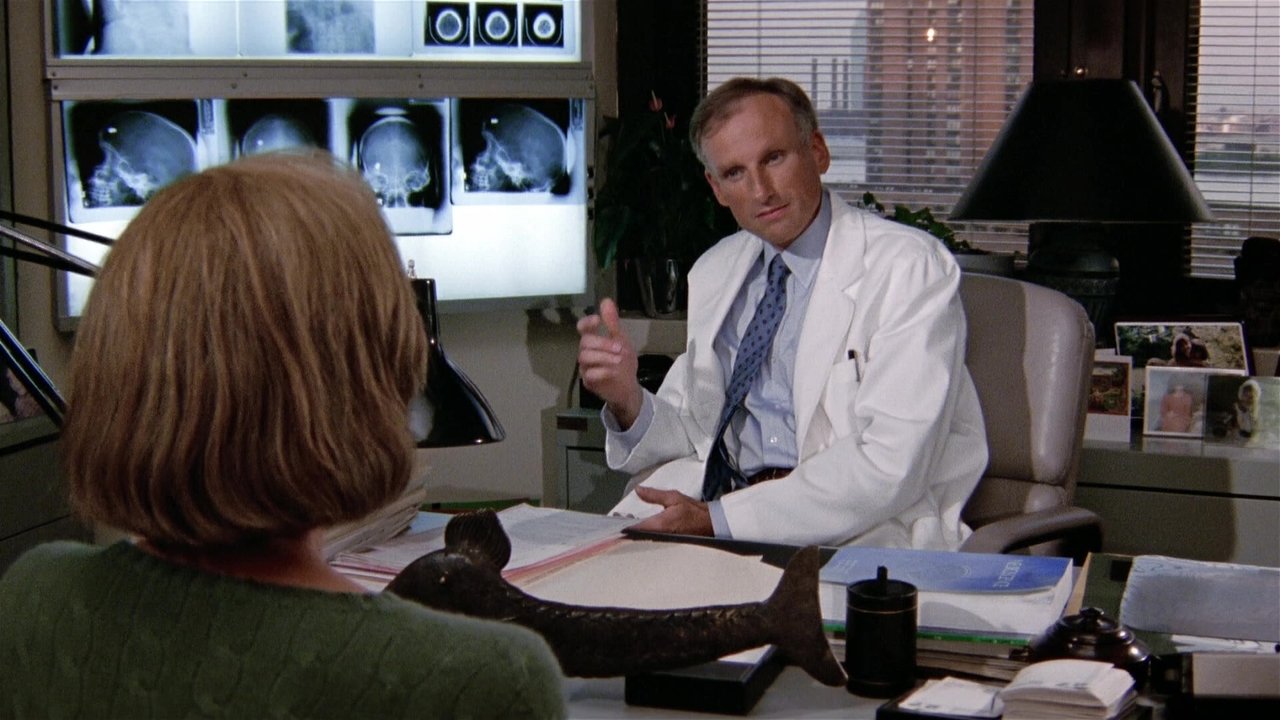
It's a premise that could easily slide into mawkish sentimentality, but Regarding Henry largely avoids this, anchored by the raw sincerity of its central performance and Nichols' nuanced direction. The film doesn't shy away from the difficulties – the painful physical therapy, the agonizing slowness of recovery, the sheer awkwardness of navigating relationships stripped bare.
### Ford's Quiet Revelation
This truly is Harrison Ford's film, and it remains one of the most fascinating departures in his career. We see the pre-injury Henry in brief, cutting strokes – enough to establish his unpleasantness. But the bulk of the performance is the post-injury Henry, a man grappling with a world made unfamiliar. Ford's portrayal is remarkably restrained. He conveys the physical struggles with convincing difficulty, but it’s the emotional landscape he charts that truly resonates. The confusion, the flashes of frustration, the dawning awareness of his former self’s cruelty, and the tentative rediscovery of simple joys – like the taste of Ritz crackers, a moment elevated by Ford's understated wonder – are conveyed with a vulnerability rarely seen from the actor before or since. He reportedly spent time observing patients recovering from similar traumas, and that dedication shows in the authenticity he brings. It's not just about relearning facts; it's about rebuilding a soul. Does this newfound innocence redeem the man he was, or simply create a different person altogether? The film leaves that satisfyingly open to interpretation.
### The Supporting Pillars
Annette Bening, fresh off her electrifying turn in The Grifters, provides the essential emotional anchor as Sarah. Her journey is arguably just as complex as Henry's. She's tending to a husband who is fundamentally not the man she married – a man who, frankly, wasn't always easy to love even before the injury. Bening navigates Sarah's mix of residual affection, exasperation, grief, and tentative hope with incredible grace. You feel the weight of her predicament, the impossible choices she faces daily. Bill Nunn (Do the Right Thing) also offers warm, grounded support as Bradley, Henry’s physical therapist. His character represents patience, encouragement, and a pragmatic kindness that Henry desperately needs, serving as a crucial bridge back to functionality and, in many ways, back to humanity.
### An Early Glimmer of Abrams
It's a piece of trivia that always brings a smile: the screenplay for Regarding Henry was penned by a young J.J. Abrams, years before he became the blockbuster architect behind Lost, Alias, and redefined Star Trek and Star Wars for a new generation. Reportedly written while he was still an undergraduate at Sarah Lawrence College, the script caught Mike Nichols' eye. It’s fascinating to see this early work, focused entirely on character drama and emotional stakes, showcasing a different facet of his storytelling talents. While perhaps lacking the intricate plotting of his later work, its focus on core human dilemmas gives the film its lasting power. Filmed primarily on location in New York City and White Plains, the film has a grounded feel, making Henry's extraordinary journey feel plausible within an ordinary world. Its modest $37.7 million budget yielded a respectable $43 million at the US box office – perhaps not a smash hit, but a solid performer that clearly found its audience on home video.
### Second Chances on Tape
Regarding Henry occupies a specific space in the landscape of 90s cinema, and certainly in the VHS collections of many. It was the kind of film you rented when you wanted something thoughtful, something character-driven, a palette cleanser between the action extravaganzas and genre flicks. It wasn't flashy, it didn't spawn sequels, but its central premise – the idea of getting a second chance, of being forced to re-evaluate what truly matters – struck a chord. Is it perfect? Perhaps not. Some find the ending a touch too neat, the journey occasionally leaning into feel-good territory. But the emotional core, carried so effectively by Ford and Bening, remains undeniably potent.
Rating: 7.5/10
Justification: Regarding Henry earns its score through the strength of its central performances, particularly Harrison Ford's brave departure from typecasting, and Annette Bening's nuanced portrayal. Mike Nichols' sensitive direction elevates a potentially sentimental script, focusing on genuine human emotion. While occasionally predictable, its exploration of identity, second chances, and the true meaning of connection offers resonant substance. The early J.J. Abrams script adds a fascinating layer of context. It's a solid, affecting drama that holds up well, even if it doesn't quite reach the heights of cinematic greatness.
Final Thought: In an era often defined by excess, Regarding Henry offered a quiet reminder: sometimes, losing everything is the only way to find yourself. It’s a film that prompts reflection not just on Henry’s journey, but on our own lives, long after the VCR has rewound.