Here's a review for "City of Angels" (1998) in the style of VHS Heaven:

***
There’s a certain stillness that hangs over City of Angels, a quiet observation that mirrors the unseen watchers at its heart. Remember renting this one? Maybe on a rainy weekend, the distinctive oversized clamshell case promising something profound, something deeply romantic? Released in 1998, it arrived near the tail end of the VHS era's peak, offering a blend of high-concept fantasy and earnest emotion that felt both grand and intimate on our fuzzy CRT screens. It asks a question as old as time, wrapped in late-90s aesthetics: What is it worth to truly feel?
More Than Just Wings
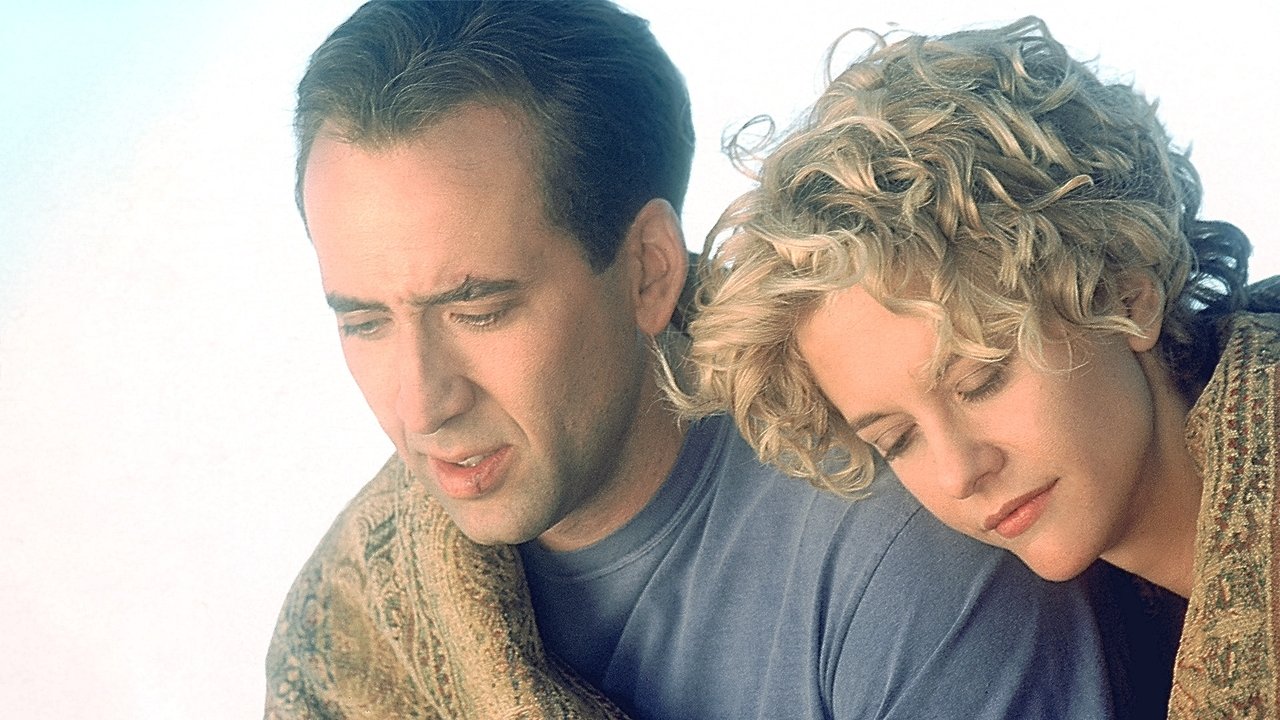
Based on Wim Wenders' poetic German masterpiece Wings of Desire (1987), this Hollywood adaptation, directed by Brad Silberling (who later gave us Lemony Snicket's A Series of Unfortunate Events), shifts the focus. Where Wenders crafted a philosophical meditation on Berlin and humanity, City of Angels zeroes in on the love story, making it more immediately accessible, if arguably less layered than its European predecessor. The premise remains captivating: Seth (Nicolas Cage), an angel who shepherds souls from life to the afterlife, finds himself drawn to Maggie Rice (Meg Ryan), a gifted heart surgeon grappling with the loss of a patient. He observes her, listens to her thoughts, and gradually falls profoundly in love, contemplating the ultimate sacrifice – giving up immortality for a finite, sensory human existence alongside her.
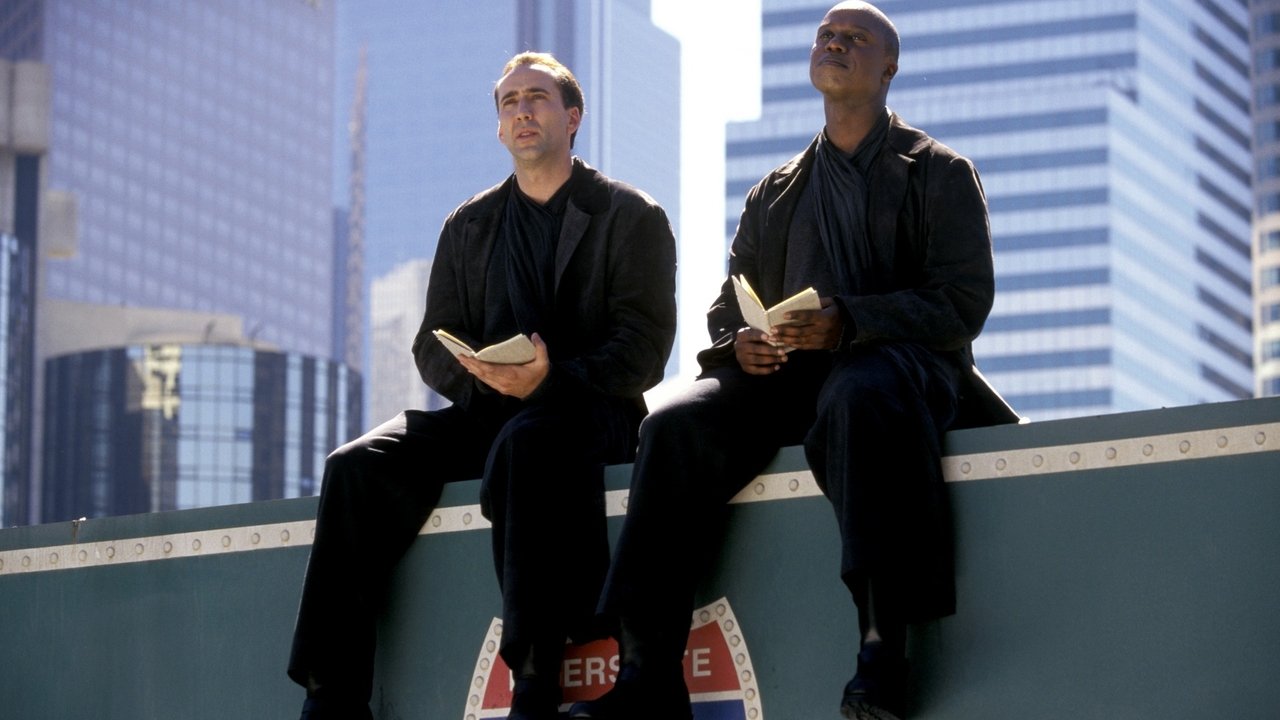
The film uses Los Angeles, the titular City of Angels, not just as a backdrop but as a character. We see it often from the ethereal perspective of Seth and his fellow angel Cassiel (Andre Braugher, radiating stoic empathy), perched atop skyscrapers or walking unseen through bustling hospitals and the stunning reading room of the Los Angeles Central Library – a key location used beautifully here. There's a distinct visual language: the muted tones and silent contemplation of the angels contrasted with the vibrant, messy, sometimes painful world of the humans they watch over.
A Different Kind of Cage Match
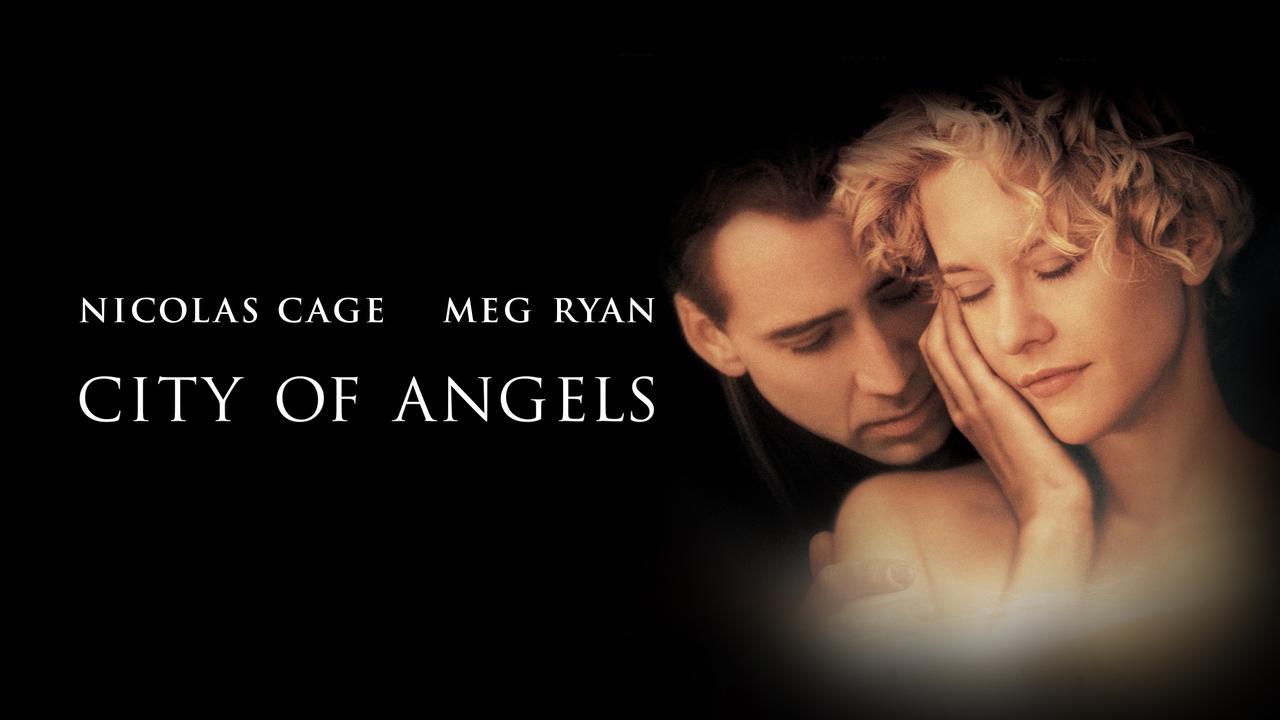
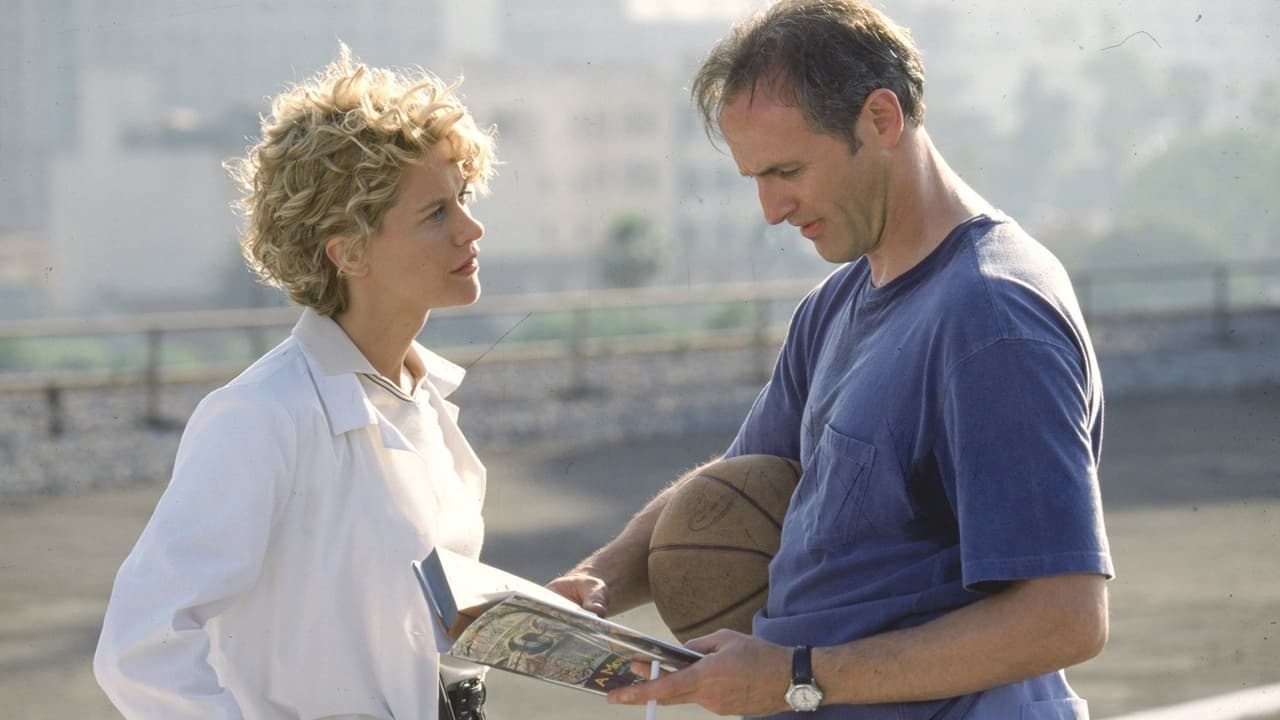
What truly anchors the film, preventing its high concept from floating away, are the central performances. This was a fascinating turn for Nicolas Cage. Known then, as now, for his often explosive and eccentric energy (think Face/Off or Con Air just the year before), here he channels something entirely different. His Seth is wide-eyed, intensely curious, almost childlike in his yearning fascination with human experience. There’s a quiet intensity, a soulful vulnerability in his gaze that sells the celestial being's impossible dilemma. It’s a performance of surprising restraint, making Seth’s eventual choice feel weighty and earned.
Opposite him, Meg Ryan, arguably at the height of her reign as America’s sweetheart after hits like Sleepless in Seattle (1993) and You've Got Mail (released the same year, 1998!), embodies the human heart Seth longs to understand. Her Maggie is intelligent, compassionate, yet deeply shaken by the limits of her own skill. Ryan brings a grounded warmth and relatability that makes Seth's fascination entirely believable. Their chemistry is palpable, built on shared moments of quiet connection rather than grand pronouncements – a look across a library table, a touch hesitantly offered. And let’s not forget Dennis Franz (NYPD Blue), whose warm, grounded performance as Nathaniel Messinger, a former angel who made the leap himself, provides crucial exposition and a comforting, knowing presence. His reveal feels like a gentle nudge rather than a shocking twist.
Sounds Like Teen Spirit... Almost
You simply cannot talk about City of Angels without mentioning its soundtrack. It was everywhere in 1998. The Goo Goo Dolls' "Iris," written specifically for the film, became a monumental hit, perfectly capturing Seth's longing and devotion ("And I'd give up forever to touch you..."). Equally impactful was Alanis Morissette's "Uninvited," another track penned for the movie, adding a layer of haunting mystery and intensity. These songs weren't just background music; they were integral to the film's emotional fabric and cultural moment, driving the soundtrack album to multi-platinum status and snagging Grammy nominations. Hearing those opening chords even now instantly transports you back, doesn't it?
Retro Fun Facts: Falling to Earth
- Wenders' Blessing? Not Quite: While Wim Wenders gave his permission for the remake, he was reportedly less than thrilled with the final product, feeling it sentimentalized his more existential original. The Hollywood version undeniably prioritizes romance over philosophy.
- Budgetary Faith: Made for around $55 million, City of Angels proved a solid hit, grossing nearly $200 million worldwide. Audiences clearly connected with its emotional core, even if some critics were divided.
- Angelic Attire: The angels' iconic long black coats weren't just a stylistic choice; they helped convey a sense of otherworldliness and detachment, allowing them to blend into the shadows of the city they observed.
- Musical Providence: Landing both "Iris" and "Uninvited" was a major coup. Reportedly, Danny Bramson, the music supervisor, had strong relationships that helped secure these original, career-defining songs for the film. U2 also contributed "If God Will Send His Angels," further boosting the soundtrack's prestige.
The Bittersweet Taste of Pears
[Spoiler Alert for the film's ending]
For all its romantic yearning, City of Angels makes a bold, perhaps even cruel, narrative choice in its final act. After Seth makes the leap, experiences the exhilarating rush of sensation (that first taste of a pear!), and finally connects with Maggie on a human level, tragedy strikes. Maggie's sudden death in a cycling accident is abrupt and heartbreaking. It polarized audiences then and likely still does. Some found it a devastating betrayal of the romance built up over the preceding two hours. Yet, arguably, it reinforces the film's central theme: life is precious because it's finite. Seth chose to experience everything, the joy and the pain, the love and the loss. The ending underscores the value of every moment, every sensation, precisely because none of it is guaranteed. It leaves you contemplating not just the nature of love, but the very essence of what it means to be alive.
[End Spoilers]
The Verdict
City of Angels isn't a perfect film. It simplifies its source material and leans heavily into romantic sentimentality that might feel a touch syrupy today. But viewed through the lens of late-90s mainstream cinema, it holds up remarkably well. It boasts genuine emotional weight, carried by committed performances from Cage and Ryan, stunning visuals of Los Angeles, and a soundtrack that became an indelible part of the era. The core questions it raises about love, sacrifice, and the richness of mortal experience still resonate. It aimed for the heart, and for many viewers who encountered it on a worn VHS tape back in the day, it hit the mark.
Rating: 7.5 / 10
Final Thought: It leaves you with a lingering sense of melancholy beauty, a reminder that even fleeting moments of connection, like finding that perfect rental on the shelf, hold a profound sweetness. What would you trade eternity for?