There's a certain kind of unease that permeates Tuff Turf, a feeling that sits just beneath the sun-bleached asphalt and neon glow of its mid-80s Los Angeles setting. It promises teen rebellion, maybe a few fistfights and a romance across the tracks, standard fare for the era. Yet, watching it again now, decades removed from pulling that distinctive VHS box off the rental shelf, what strikes hardest isn't the predictable plot points, but the unsettling energy coiled at its center, much of it emanating from a young James Spader.

Welcome to the Jungle, Preppy
The setup is classic fish-out-of-water: Morgan Hiller (Spader), an intelligent but displaced preppy from Connecticut, lands in the decidedly rougher Reseda neighborhood after his father's business goes bust. He’s immediately targeted by Nick Hauser (Paul Mones) and his leather-clad gang, territorial thugs who rule the local high school and, more importantly, claim Nick’s girlfriend, Frankie (Kim Richards), as property. Morgan, despite his clean-cut appearance, isn't one to back down, possessing a strange mix of vulnerability and volatile unpredictability. This tension – the outsider challenging the established, dangerous order – drives the narrative.
The Spader Anomaly
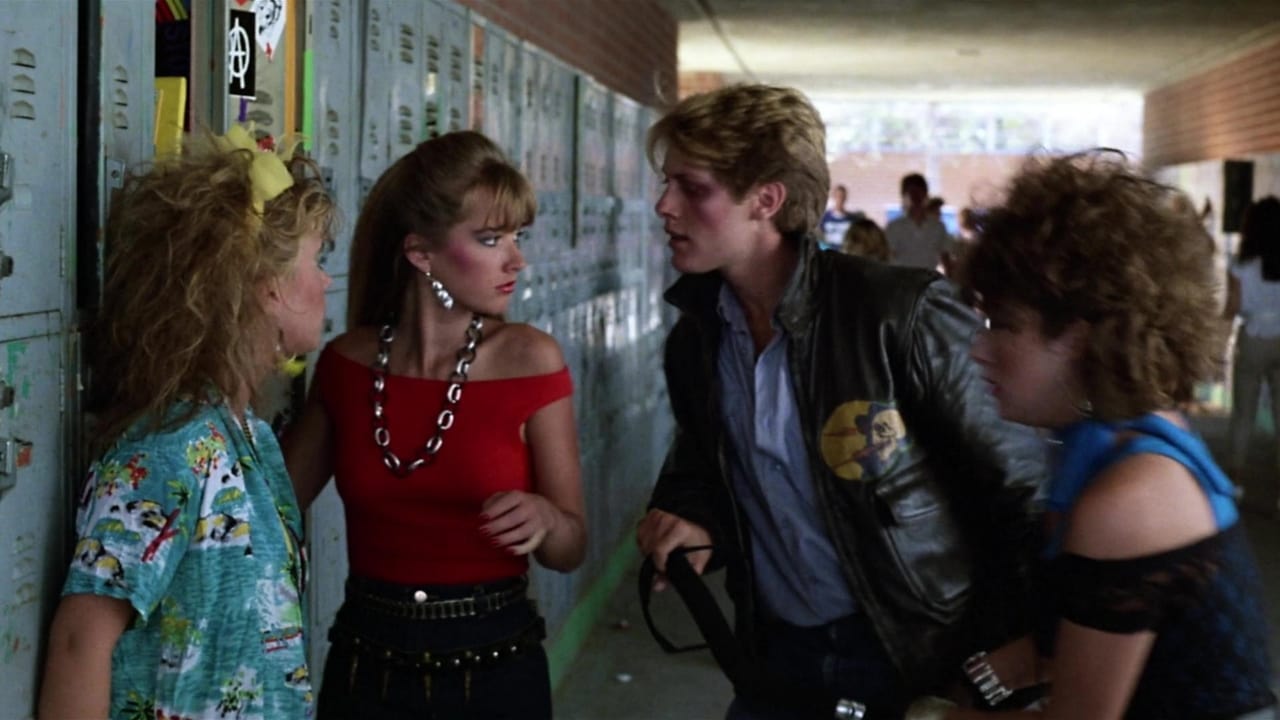
Let's be frank: the gravitational pull of Tuff Turf today is James Spader. This was years before his iconic turn in Steven Soderbergh's Sex, Lies, and Videotape (1989) cemented his peculiar brand of intellectual sensuality, but the seeds are undeniably here. Morgan Hiller isn't your typical charming 80s teen lead. Spader imbues him with an unnerving intensity, a quiet calculation behind the eyes that suggests something more complex, perhaps even damaged, than the script explicitly states. He moves with a coiled energy, whether he's awkwardly trying to woo Frankie or suddenly erupting in surprisingly brutal violence. There's a fascinating disconnect between his privileged background and his street-level survival instincts. Rumor has it Spader wasn't particularly fond of the film himself; perhaps some of that simmering discomfort we see on screen wasn't entirely manufactured for the role? It makes his performance captivating, even when the film around him occasionally stumbles. He feels less like he's acting the part of a troubled teen and more like he is a genuinely unsettling presence dropped into a teen movie.
Faces in the Crowd
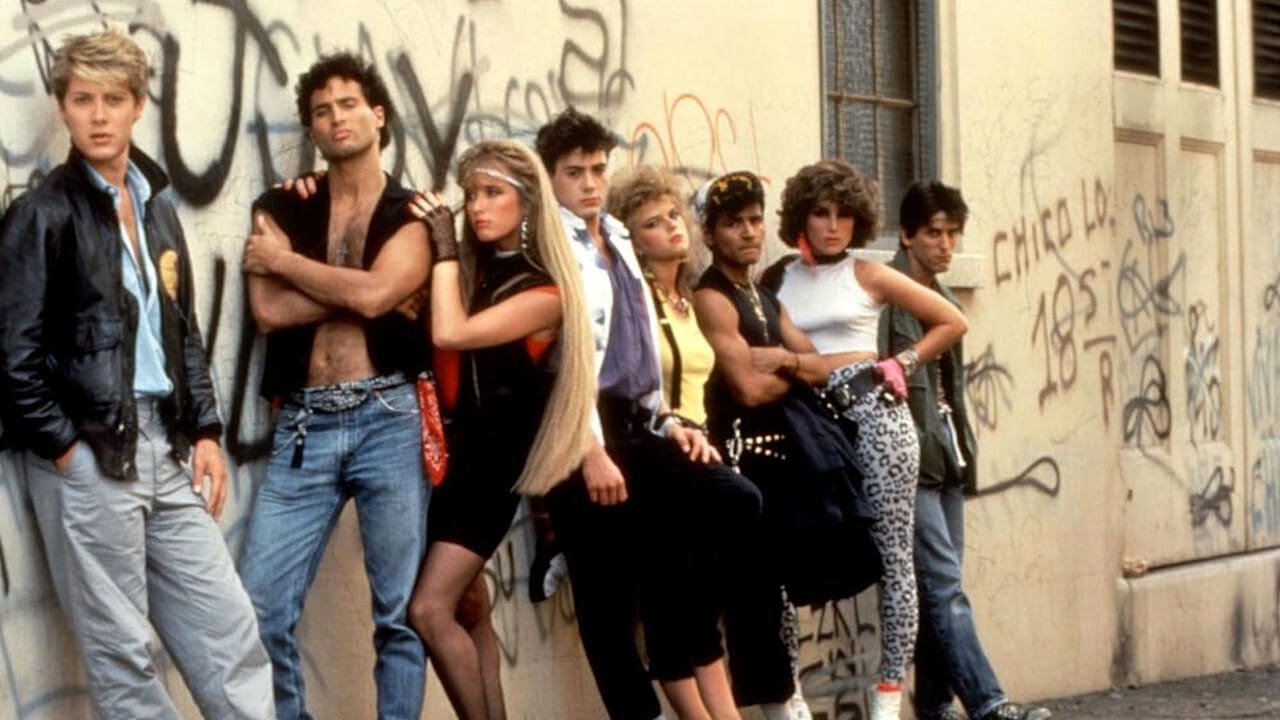
Kim Richards, transitioning from her Disney child star past (Escape to Witch Mountain), brings a necessary vulnerability to Frankie. She’s trapped between Nick's possessive grip and Morgan's persistent, if slightly odd, attention. You feel her conflict, even if the character sometimes feels underdeveloped. Paul Mones crafts a genuinely menacing villain in Nick Hauser. He’s not just a bully; there’s a real sense of danger about him, making the stakes feel higher than in many comparable films. And then there’s the delightful surprise of seeing a baby-faced Robert Downey Jr. as Jimmy Parker, Morgan's quick-witted drummer friend. It’s a small role, but RDJ already flashes the charisma and sharp comedic timing that would later make him a global superstar. Watching him wisecrack and play drums ( Downey Jr. did indeed learn basic drumming for the part!) alongside Spader is a fantastic slice of "before they were huge" Hollywood history.
Beneath the Surface Grit
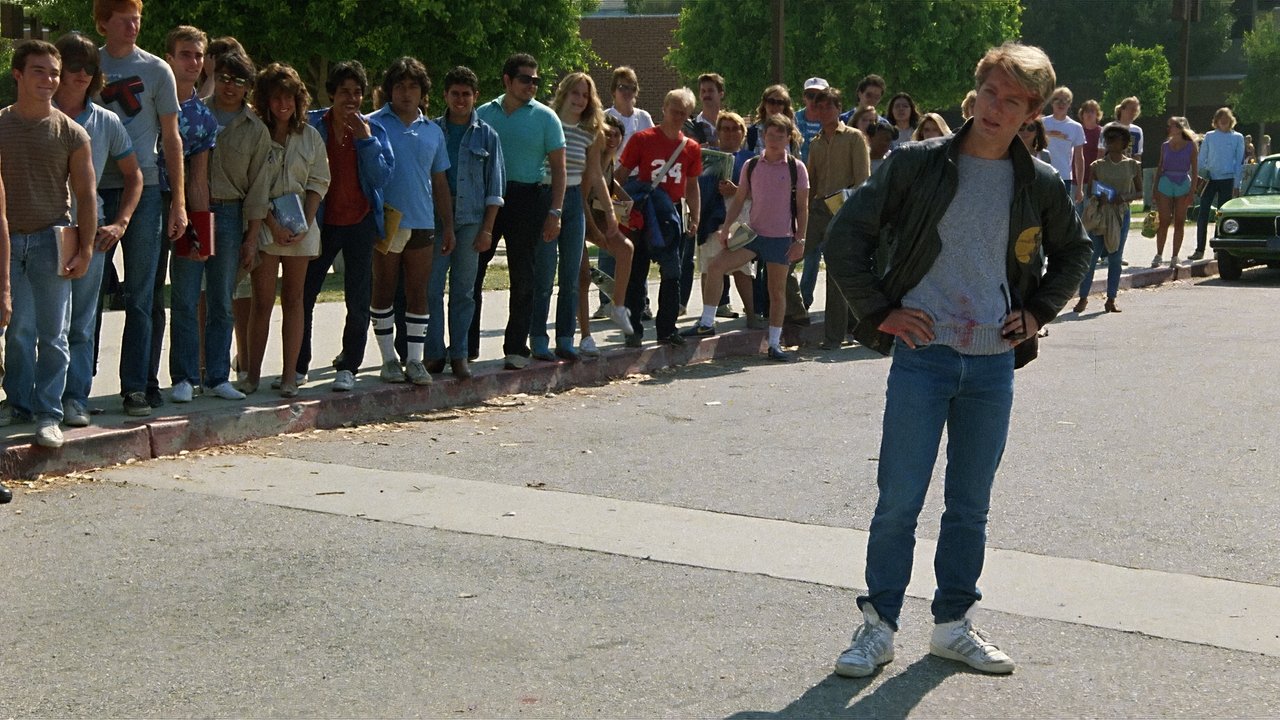
Directed by Fritz Kiersch, who had just terrified audiences with Children of the Corn (1984), Tuff Turf carries whispers of that darker sensibility. The violence, when it occurs, feels surprisingly impactful for a teen drama. The notorious bicycle chase sequence, where Morgan pursues a gang member who stole his bike, culminates in a confrontation that feels genuinely desperate and raw – reportedly featuring some challenging practical stunt work navigating LA traffic. The climactic warehouse fight scene avoids romanticized heroism, leaning instead into messy, dangerous brutality. This tonal friction – the clash between standard teen romance tropes, gritty street violence, and even sudden musical numbers featuring the house band Jack Mack and the Heart Attack – is perhaps the film's most defining characteristic. It doesn't always blend seamlessly. Was the script, credited to three writers (Jette Rinck, Greg Collins O'Neill, Murray Michaels), pulled in different directions? It sometimes feels that way.
One fun tidbit often shared among fans is about the film's title track, "Tuff Turf," performed by Southside Johnny. While fitting the movie's vibe, it wasn't quite the chart-topper the producers might have hoped for, unlike themes from other contemporary teen hits. The film itself, made on a modest budget (exact figures are hard to pin down, but typical for the genre/era), performed decently but wasn't a massive breakout, finding its longer life, like so many others, on home video.
An Oddly Enduring Artifact
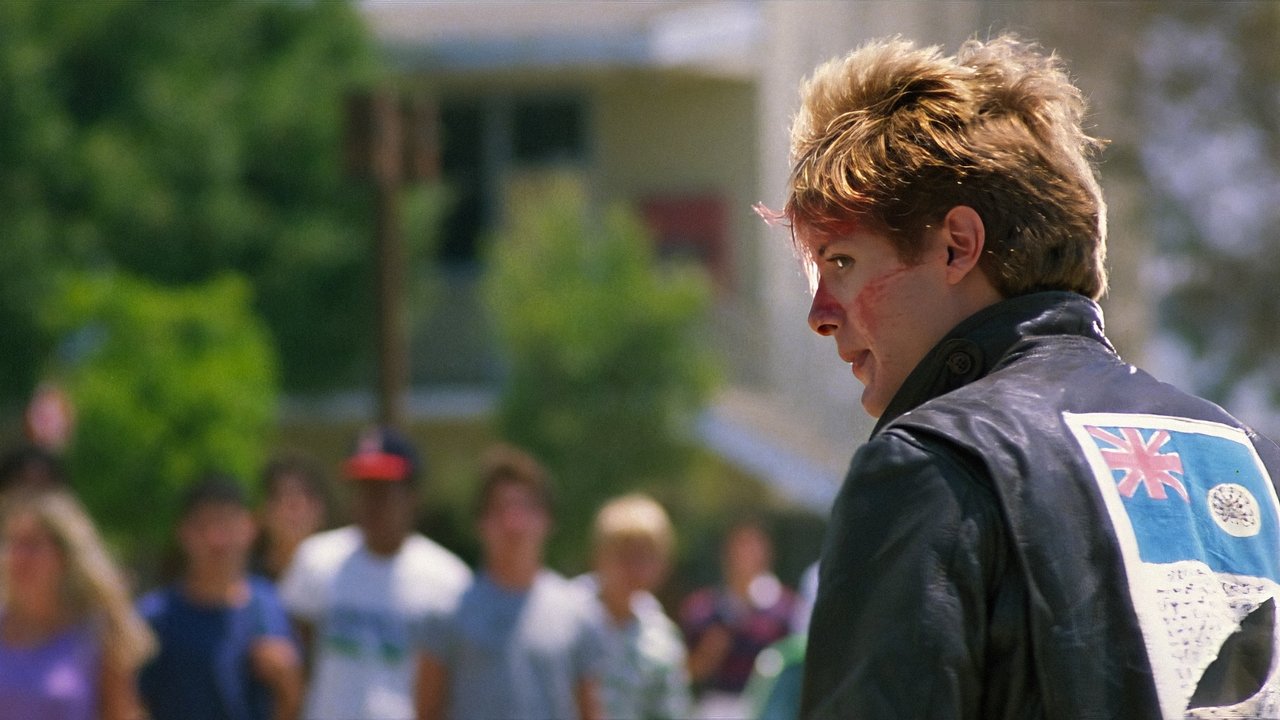
So, why does Tuff Turf still hold a place in the hearts of VHS collectors and 80s film buffs? It’s certainly not perfect. The plot meanders, the tone careens, and some of the dialogue lands with a thud. I remember renting this one, probably drawn in by the vaguely threatening cover art and the promise of some teen action. It delivered that, but also something… weirder. It lacks the polished charm of a John Hughes film or the triumphant underdog spirit of The Karate Kid (1984). Instead, it offers something moodier, more ambiguous. It captures a specific, slightly grimy corner of the 80s teen experience, filtered through Kiersch's darker lens and anchored by Spader's magnetic, off-kilter performance. It doesn't quite know what it wants to be – romance, thriller, musical, social commentary – but its earnest attempt to be all of them creates a unique, flawed energy.
Rating: 6/10
This rating reflects a film that's more interesting than it is conventionally "good." Its uneven tone and narrative bumps prevent it from reaching classic status, but James Spader's captivatingly weird early performance, the surprisingly gritty moments, the presence of a nascent Robert Downey Jr., and its overall status as a unique 80s time capsule make it a worthwhile watch for dedicated fans of the era. It captures a certain unease that feels strangely authentic.
It’s one of those tapes you might have rented on a whim, expecting one thing and getting something slightly stranger, slightly darker, and ultimately, more memorable for its imperfections. Doesn't that encapsulate so much of the joy of exploring the forgotten corners of the video store shelves?