Okay, settle in, grab a lukewarm soda maybe, and let's talk about a film that absolutely embodies the weird, wonderful, and sometimes downright baffling discoveries lurking on the shelves of the video rental store back in the day. Some films hit you with explosions, others with jump scares. Bigas Luna's The Tit & the Moon (1994) (Original title: La Teta y la Luna), well, it hits different. It arrived like a strange dream, a whispered secret from a corner of cinema far removed from Hollywood gloss, demanding attention with its provocative title alone. Remember pulling down a tape based purely on bizarre cover art and a title that made you do a double-take? This was peak that feeling.
A Child's Gaze, An Adult Longing
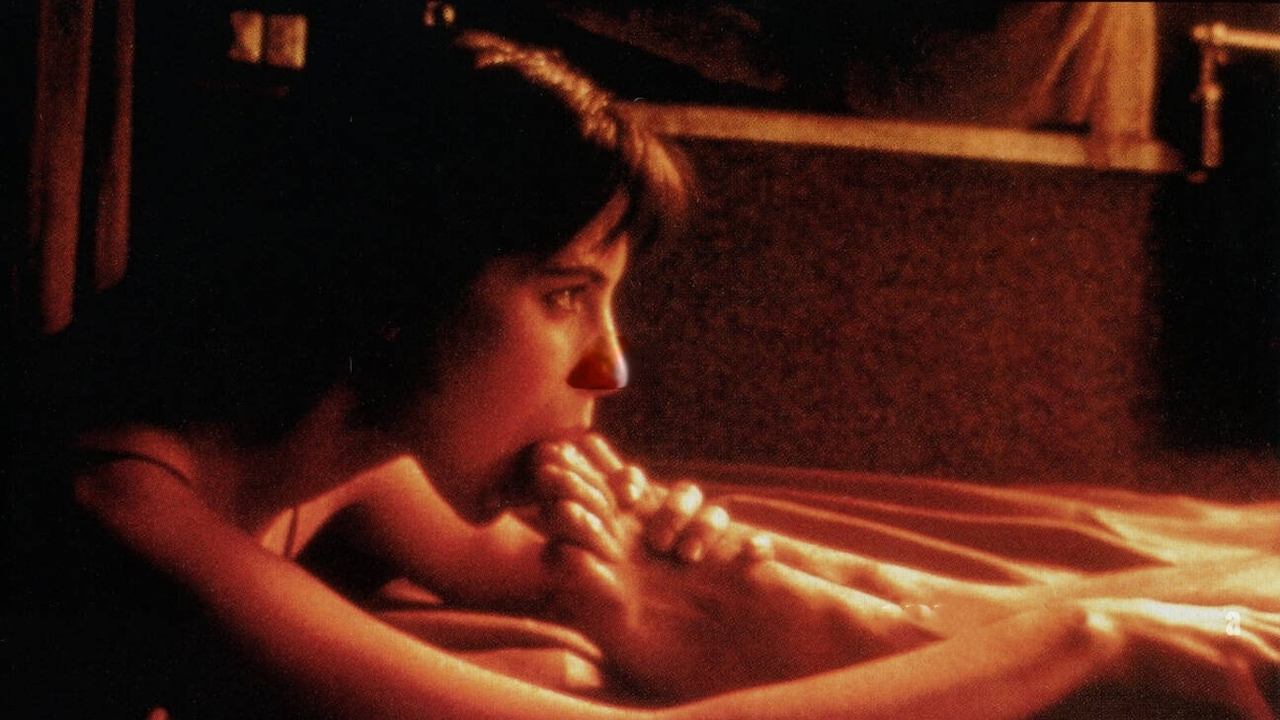
The film filters its peculiar world entirely through the eyes of Tete (Biel Durán), a nine-year-old Catalan boy feeling utterly displaced. His baby brother has arrived, monopolizing their mother's attention and, more pointedly, her breasts. This primal envy sparks an obsession: Tete wants a breast of his own, a source of comfort and connection in a world suddenly tilted off-axis. He literally asks the moon for one. There's a disarming innocence to Tete's quest, even as it orbits around burgeoning, confusing desires. Biel Durán delivers a remarkably natural performance, capturing that specific childhood intensity where the mundane feels epic and desires are absolute, untainted by adult complexities. We see the world as Tete does – slightly magical, deeply symbolic, and centered on this singular, consuming need.
Luna's Surreal Palette
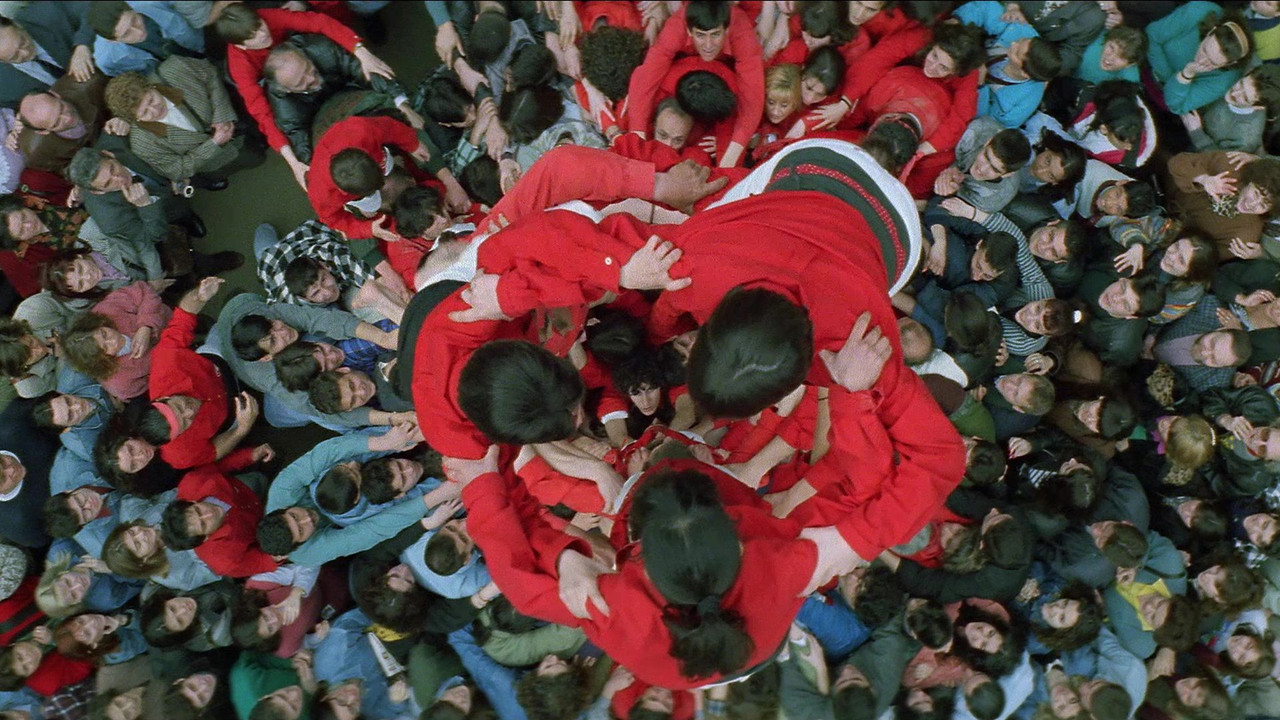
This isn't just a quirky story; it's pure Bigas Luna. Anyone familiar with his striking Jamón Jamón (1992), which launched Javier Bardem and Penélope Cruz internationally just two years prior, will recognize the fingerprints. Luna crafts a visual language steeped in Spanish identity, symbolism, and a frank, almost earthy sensuality. The landscapes of Catalonia feel both real and dreamlike. The moon isn't just a celestial body; it's a confidante, a magical entity potentially capable of granting wishes. Breasts are elevated beyond the purely physical, becoming symbols of nurture, desire, and life itself. Luna walks a tightrope here, exploring childhood fixation and burgeoning sexuality with a poetic, sometimes bizarre, touch that feels uniquely European. It's the kind of filmmaking that rarely aims for broad appeal, instead offering a personal, idiosyncratic vision. It's worth noting that this unique approach earned Luna and co-writer Cuca Canals the Golden Osella for Best Screenplay at the Venice Film Festival – a testament to its strangely compelling script.
An Unlikely Love Triangle (Square?)
Tete's lunar wish seems partially answered with the arrival of Estrellita (Mathilda May), a captivating French dancer performing with a travelling show. She embodies the object of desire, not just for Tete, but for others too. Mathilda May, perhaps best known to genre fans from Lifeforce (1985), brings a necessary warmth and enigmatic quality to Estrellita; she's attainable yet distant, understanding yet mysterious. Tete finds himself in competition with Miguel (Miguel Poveda, a renowned flamenco singer in real life, adding a layer of authenticity), whose passionate songs woo Estrellita, and, most bizarrely, her older partner Maurice (Gérard Darmon).


And Maurice... well, Maurice is unforgettable. Played with surprising charm by the versatile Gérard Darmon (seen in French hits like Betty Blue (1986)), he's a professional flatulist, performing as "Le Pétomane." Yes, you read that right. It’s a direct, acknowledged homage by Luna to Joseph Pujol, the real-life French performer who captivated Moulin Rouge audiences in the late 19th century with his extraordinary intestinal control. It's a baffling, almost comical element that somehow fits perfectly within Luna's surreal tapestry – another layer of primal human function woven into this tale of desire and performance. Darmon plays him not just for laughs, but with a certain weary dignity.
Retro Reflections and Finding the Oddities
Watching The Tit & the Moon now evokes a specific kind of nostalgia – not just for the 90s, but for the sheer variety available on VHS. Tucked between the action blockbusters and family comedies were these strange imports, films operating on entirely different wavelengths. Discovering something like this felt like unearthing a secret. Could a film with this premise, this blend of childlike wonder and adult themes, this embrace of the downright weird (a flatulence artist!), even get made, let alone find distribution so readily today? It makes you appreciate that era of physical media, where curation wasn't solely driven by algorithms, and serendipitous discovery was part of the magic. I distinctly remember seeing the box for this one tucked away in the 'Foreign Films' section, the title alone sparking immense curiosity. It wasn't a film you easily forgot, even if you weren't entirely sure what to make of it.
Luna reportedly faced challenges directing a child actor within such a thematically charged narrative, requiring sensitivity and careful framing to maintain the film's delicate balance between innocence and burgeoning sensuality. Shot on location in the Tarragona region of Catalonia, the film beautifully captures the specific light and atmosphere of the area, making the setting itself a character.
Rating & Final Thoughts

The Tit & the Moon is undeniably an acquired taste. Its surrealism, deliberate pacing, and unconventional subject matter won't resonate with everyone. Yet, for its willingness to explore complex themes through a unique, poetic lens, its strong central performance from Biel Durán, and its sheer Bigas Luna audacity, it remains a fascinating piece of 90s European cinema. It’s a film that trusts its audience to engage with symbolism and ambiguity, offering a richer experience for those willing to meet it halfway.
Rating: 7/10
This score reflects the film's artistic merit, its memorable performances, and its status as a truly unique cinematic artifact from the VHS era. It's docked points primarily because its deliberate oddity and specific cultural flavour might limit its broad appeal, making it more of a cult curiosity than a universal classic. It perfectly embodies the strange treasures you could stumble upon during a trip to the video store – proof that sometimes, the weirdest journeys are the most rewarding. What lingers most isn't shock value, but a strange, melancholic poetry about growing up and the mysterious power of desire.