It arrives not with the fanfare of a blockbuster trailer cut, nor the easy comfort of a returning favourite rewound to the good parts. Instead, Jean-Luc Godard's 1993 piece, Je vous salue, Sarajevo (often translated, perhaps imperfectly, as Hail, Sarajevo), lands like a shard of glass in the eye. Clocking in at barely two minutes, it wasn't the kind of tape you'd grab for a Friday night movie marathon, but encountering it, perhaps tucked away on a compilation or aired late at night, felt like a jolt – a sudden, sobering confrontation amidst the usual flickering images of the era.
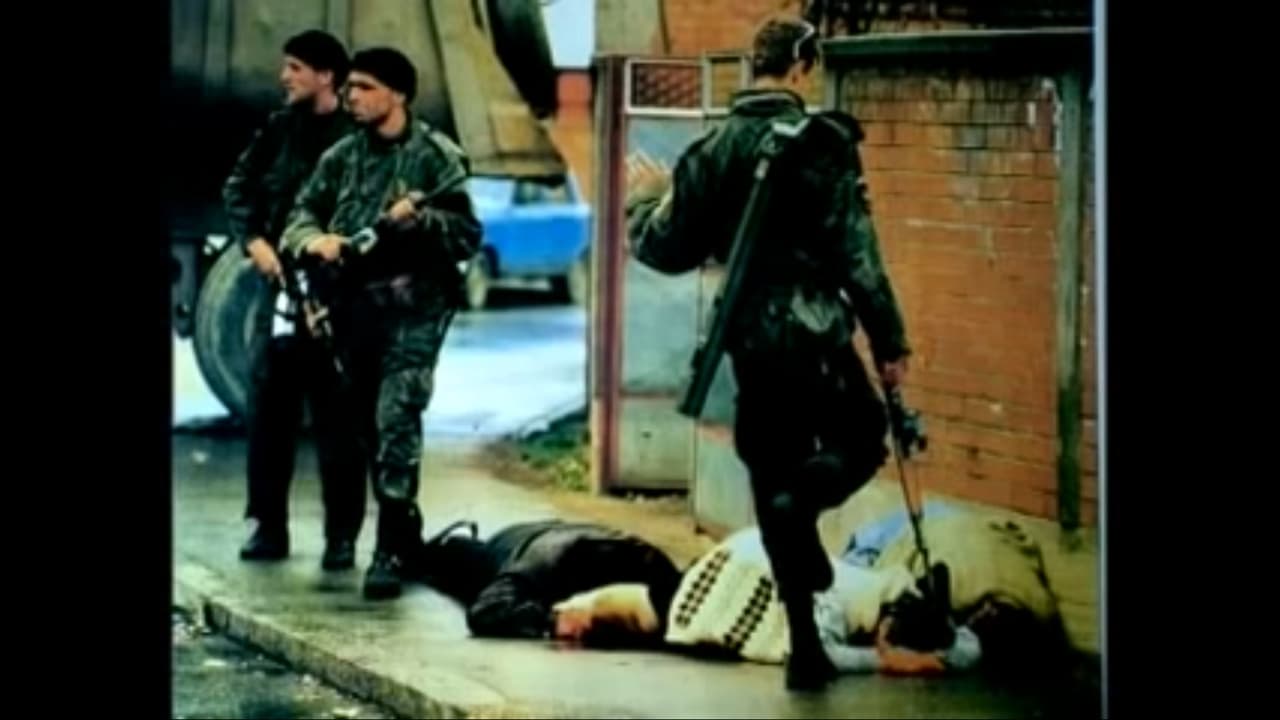
A Moment Frozen, Magnified
What Godard, a filmmaker never known for coddling his audience (think Breathless or Pierrot le Fou, but distilled to pure, confrontational essence), presents here isn't a narrative in the conventional sense. It’s an essay, a meditation, a visual and verbal interrogation built around a single, harrowing photograph. The image, taken by photojournalist Ron Haviv in Bijeljina during the Bosnian War, depicts a Serbian soldier kicking a dying or dead Bosniak woman. It’s a snapshot of utter brutality, the kind of image that lodges itself in your memory whether you want it to or not.
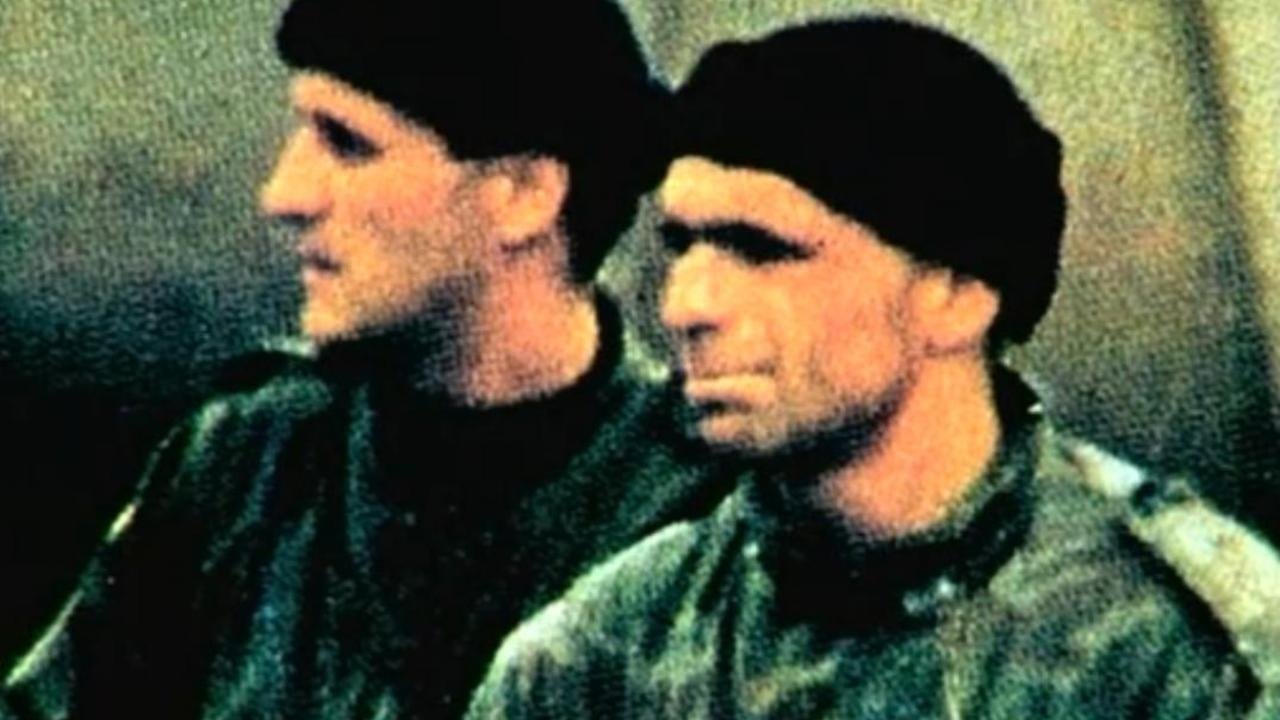
Godard doesn't just show us the picture. He dissects it, lingers on it, overlays it with his signature fragmented text and a questioning, almost detached narration. He forces us to look, truly look, at what unfolds within the frame. He juxtaposes the violence with philosophical musings on culture, resistance, rules, and exceptions. The effect is jarring, intentionally so. It denies the easy consumption of wartime imagery, demanding we consider the act of looking itself, the ethics of representation, and the chasm between art and the raw, unmediated horror of reality.
The Weight of Two Minutes
In an era where feature-length films dominated the rental shelves, the sheer brevity of Je vous salue, Sarajevo was itself a statement. How much horror, how much meaning, could be packed into such a fleeting duration? Godard seems to argue: more than enough. He uses the constraints not as a limitation, but as a tool for intensification. There's no room for backstory, character development, or narrative resolution – only the stark image and the director's relentless probing.
Finding detailed "behind-the-scenes" trivia for such a minimalist piece is less about on-set anecdotes and more about understanding its context. The film was made swiftly, a direct response to the ongoing conflict and Haviv's photograph which had gained international attention. It wasn't conceived for commercial release in the typical sense but circulated in art-house circuits and festivals, eventually finding its way onto video compilations dedicated to Godard's later, more experimental work. Its inclusion on VHS felt almost like smuggled contraband – a stark dose of reality slipped between the escapism. It served as a reminder, even on grainy tape viewed on a CRT screen, of the world outside the multiplex.
Beyond Entertainment
This isn't a film you "enjoy." It’s a piece you confront, absorb, and are likely troubled by. There are no performances to praise in the traditional sense, only the devastating performance of reality captured by Haviv's lens and Godard's intellectual framing. The "direction" is pure Godard: montage, text on screen, philosophical voiceover, challenging the very language of cinema. It asks profound questions: What is the responsibility of the image-maker, and the image-viewer, in the face of atrocity? How does art grapple with the unspeakable? Can beauty (the formal composition of the photograph, Godard's careful editing) coexist with such ugliness?
It stands as a potent example of Godard's late-career shift towards video essays, using the medium not just to tell stories but to think visually, to deconstruct and analyze. For those of us exploring the corners of the video store beyond the new releases, finding something like Je vous salue, Sarajevo was a bracing, if unsettling, experience. It was a stark counterpoint to the often-sanitized violence of mainstream 80s and 90s action films, a direct look into the abyss.
Rating Explained: 8/10
Assigning a numerical rating to a work like this feels almost crass, but within the context of its artistic goals and impact, Je vous salue, Sarajevo is undeniably powerful and masterfully constructed. It achieves precisely what Godard seemingly intended: to provoke, to question, and to force a confrontation with a difficult reality through the focused lens of cinematic language. It loses points only in its inherent inaccessibility and its deliberate refusal to offer any form of catharsis or traditional cinematic satisfaction – which is, of course, entirely the point. It’s not entertainment; it’s a two-minute scar on the conscience.
It lingers not as a story, but as a question mark branded onto the act of seeing. What do we do with images like these, once we've encountered them on that flickering screen?