There’s a certain kind of quiet grit that defines some of the most memorable characters from 90s cinema, figures etched not by explosions or superpowers, but by sheer, unyielding determination. Frances Lacey, the heart and soul of 1993’s A Home of Our Own, is undoubtedly one of them. Watching her, embodied with ferocious tenderness by Kathy Bates, navigate the harsh realities of poverty and single motherhood doesn’t just tell a story; it forces us to consider what truly constitutes a home, and the lengths one woman will go to build one, however ramshackle, for her children.
A Mother's Fierce Resolve
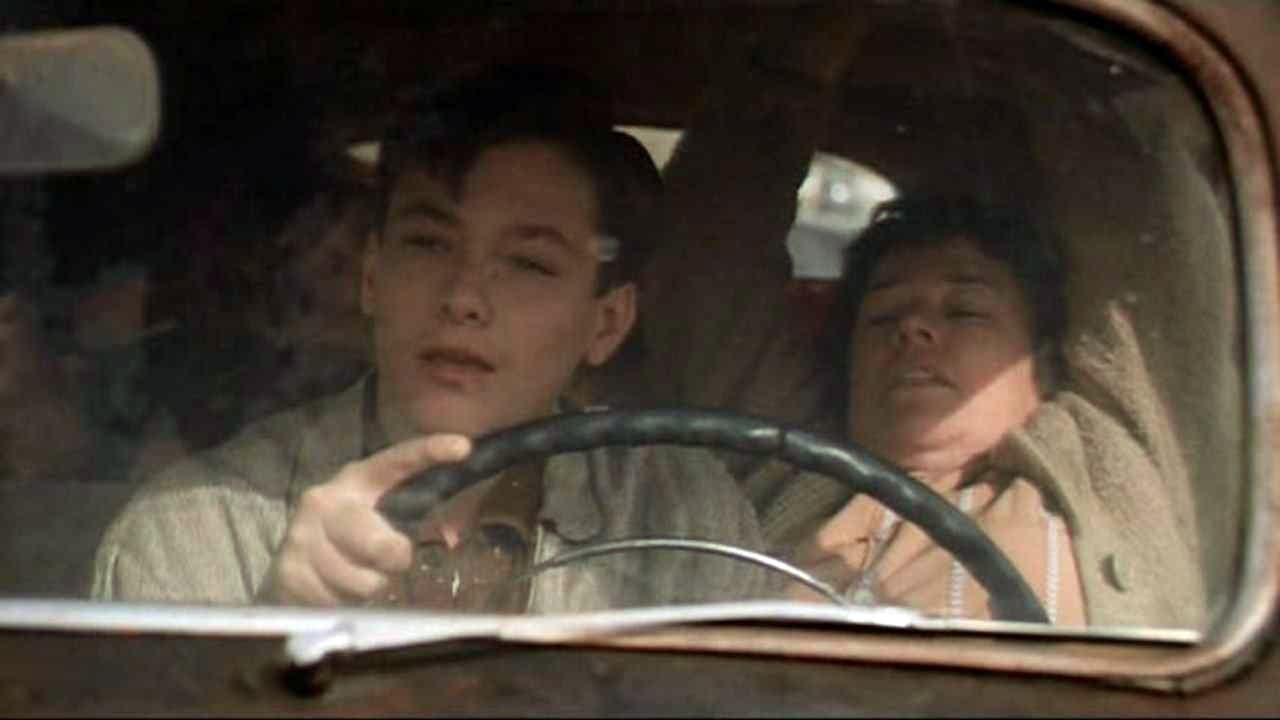
The film opens with Frances, working a dead-end factory job in Los Angeles, reaching her breaking point. In a moment of righteous fury mixed with desperation, she packs her six children into their beat-up car and heads east, anywhere but there. They land, almost by chance, in rural Idaho, where Frances spots a half-finished, dilapidated wooden frame near a potato processing plant. With barely a cent to her name, she sees not a ruin, but a foundation. This becomes the central struggle: transforming this shell into a livable space, piece by painstaking piece, fueled by scavenging, bartering, and Frances’s unwavering, often stubborn, will.
It's a narrative that could easily slip into sentimentality, but director Tony Bill (who, interestingly, started as an actor and producer, even winning an Oscar for producing The Sting (1973)) keeps a steady hand, grounding the film in a lived-in realism. The poverty isn't romanticized; it's depicted as a constant, grinding presence – the lack of food, the inadequate clothing, the social judgment. Yet, the focus remains squarely on the family's resilience and Frances's complex character.
Kathy Bates: A Force of Nature
Let's be clear: Kathy Bates is this film. Fresh off her Oscar win for Misery (1990), she pours every ounce of her talent into Frances Lacey. It’s a performance devoid of vanity, raw and deeply authentic. Bates captures Frances’s fierce love for her children, her sharp tongue often masking vulnerability, and her sometimes-infuriating pride that prevents her from accepting help easily. She’s flawed, makes questionable decisions born of desperation, but her core motivation – securing a safe place for her kids – is never in doubt. You see the exhaustion in her eyes, the set of her jaw when facing down adversity, the rare moments of hopeful smiles. It's a masterclass in portraying strength forged in hardship.
This role feels particularly poignant when you learn that the film is semi-autobiographical, based on the childhood experiences of screenwriter Patrick Sheane Duncan (who also penned Mr. Holland's Opus (1995)). Knowing that these events have roots in reality adds another layer of weight to the narrative and perhaps explains the authenticity that Bates so powerfully conveys. She isn't just playing a part; she's channeling the spirit of a real woman who fought against overwhelming odds.
Through a Son's Eyes
The story is narrated by Frances’s eldest son, Shayne, played by Edward Furlong. Riding the wave of his breakout role in Terminator 2: Judgment Day (1991), Furlong provides the film's grounding perspective. He's the observer, capturing the turbulent mix of embarrassment, admiration, frustration, and love that defines his relationship with his formidable mother. His narration adds a reflective quality, looking back on these formative, difficult years with a sense of understanding gained over time. While Bates is the powerhouse, Furlong's quieter performance as the sensitive, watchful son is crucial; he’s our window into this unconventional family's world. The younger actors, including Clarissa Lassig as Lynn, also contribute effectively, creating a believable dynamic of siblings navigating their challenging circumstances together.
Building More Than Walls
A Home of Our Own isn't just about constructing a physical house; it’s about building dignity, self-respect, and a sense of belonging against the odds. The dilapidated structure becomes a potent symbol – imperfect, exposed, requiring constant effort, much like the family itself. The film doesn't shy away from the difficulties; Frances secures work at the local potato plant and later a bowling alley, but money remains perpetually scarce. There are moments of genuine warmth and humor, often stemming from the children's interactions or Frances’s blunt dealings with the outside world (like her interactions with Mr. Munimura, the kind Japanese-American nursery owner who becomes an unlikely ally).
Filmed on location in Utah, the cinematography captures the stark beauty and isolation of the landscape, contrasting the vast, often unforgiving environment with the tight-knit intimacy of the Lacey family huddled together in their unfinished home. Made on a modest budget of around $12 million, it achieved respectable box office returns (around $20 million), finding its audience among those who appreciated its earnest, character-driven storytelling – a type of mid-budget drama that feels increasingly rare today. It might not have the explosive impact of other early 90s hits, but its quiet power resonates. I remember finding the VHS cover at the local rental store, intrigued by Bates's determined face, and being drawn into this story that felt refreshingly honest compared to slicker Hollywood fare.
Lasting Impressions
Does the film feel a little dated now? Perhaps in its straightforward, earnest approach. It lacks the cynicism or irony prevalent in much contemporary storytelling. But that sincerity is also its strength. It’s a film with a huge heart, anchored by a truly towering performance. It reminds us of the simple, profound power of resilience and the complex, often messy, reality of familial love in the face of adversity. What lingers most is the image of Frances Lacey – imperfect, indomitable, a mother lion fighting for her cubs, demanding not pity, but respect.
---
Rating: 7.5/10
Justification: While perhaps lacking major narrative surprises and occasionally leaning into predictable beats, A Home of Our Own earns its stripes through sheer authenticity and the undeniable power of Kathy Bates's central performance. Edward Furlong provides solid support, and the film effectively captures the grit and determination required to build a life from scratch. It's a heartfelt, grounded family drama that resonates because of its basis in reality and its refusal to shy away from the hardships of poverty, ultimately offering a quietly moving portrait of resilience.
Final Thought: In an era often saturated with spectacle, there's something deeply satisfying about revisiting a film like this – a sturdy, well-built story about the foundations, both literal and figurative, that truly make a home. It's a reminder that sometimes the most powerful dramas are the ones closest to the ground.