Alright, fellow tapeheads, dim the lights, maybe adjust the tracking just a hair, and let’s dig into a title that practically screams “late-night video store discovery.” We’re talking about 1992’s magnificent slice of twin-muscle mayhem, Double Trouble. If you haunted the Action/Adventure aisle back in the day, chances are you remember the cover – two impossibly ripped dudes looking ready to punch a hole through reality itself.
### Twice the Pecs, Twice the Problems
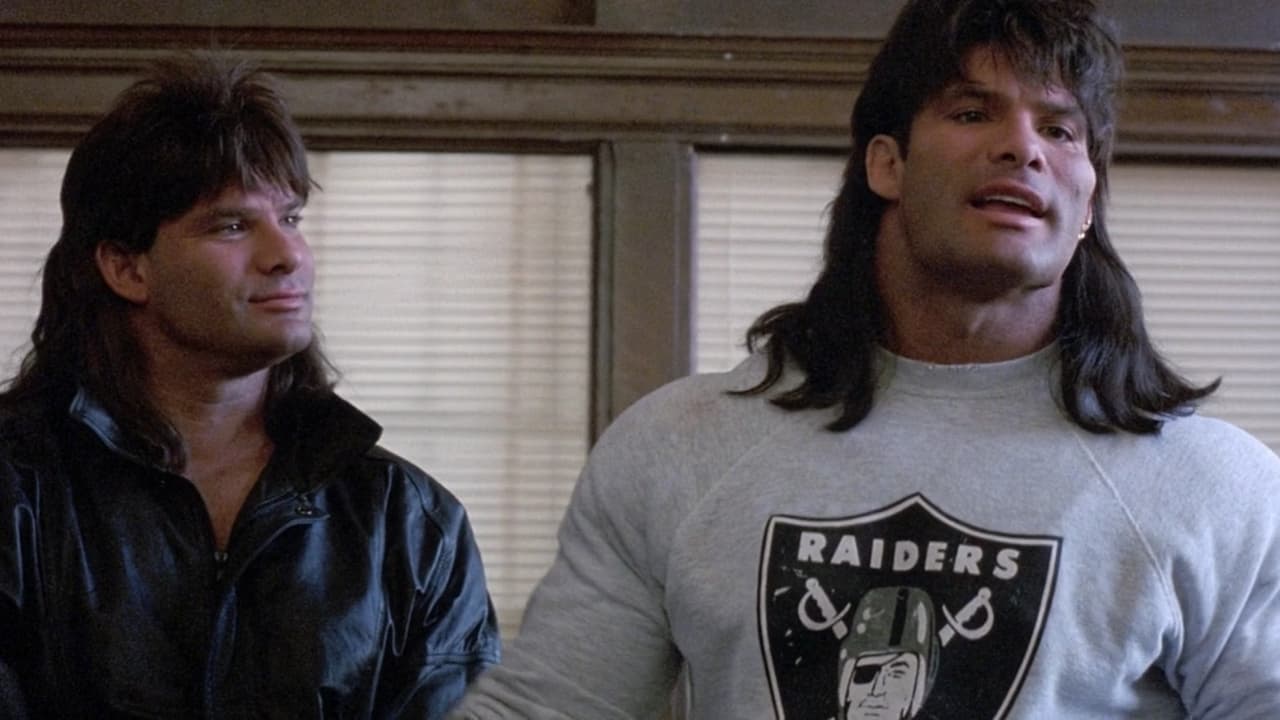
Picture this: you’ve got Peter Jade (Peter Paul), a straight-laced, by-the-book LAPD detective. Then you’ve got his estranged twin brother, David Jade (David Paul), a charismatic cat burglar with a penchant for high-stakes heists and questionable fashion choices. Separated by lifestyle but united by genetics and an almost gravitational pull towards trouble, these two find themselves reluctantly forced together to take down a ruthless diamond smuggling ring led by the perpetually sneering Philip Chamberlain, played with delightful, almost weary professionalism by the legendary Roddy McDowall. Yes, that Roddy McDowall, bringing a touch of class (or perhaps just bewildered amusement) to the proceedings, as he often did in his later genre film appearances.
The plot itself is pure 90s action template: mismatched partners, smuggled goods, sneering villains, and a damsel (or two) occasionally in distress. But let’s be honest, you didn’t rent Double Trouble for intricate plotting worthy of Michael Mann. You rented it for the spectacle of the Paul brothers, the real-life bodybuilding twins known collectively as “The Barbarian Brothers” after their infamous 1987 sword-and-sorcery outing, The Barbarians. And spectacle is exactly what you get.
### Mountains of Muscle Meet Low-Budget Mayhem
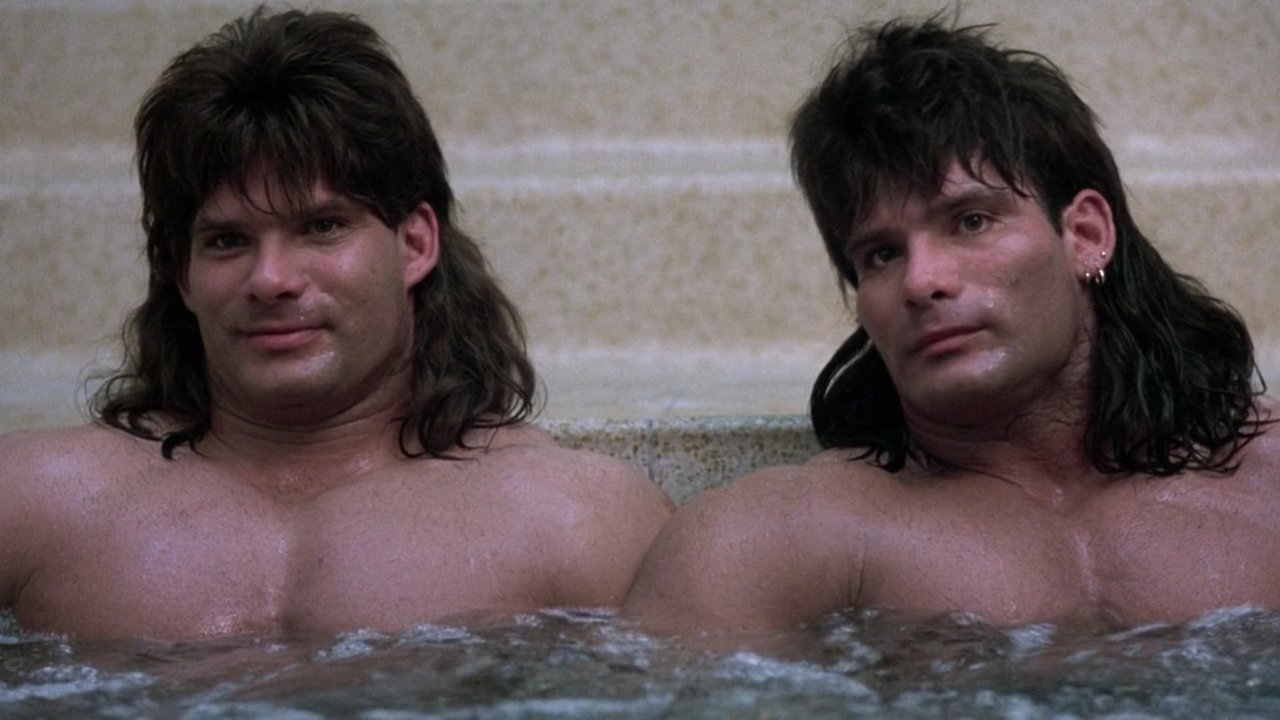
Director John Paragon, a name many might recognize as Jambi the Genie from Pee-wee's Playhouse (no, seriously!), steers this chaotic ship with a certain… let’s call it functional energy. You can almost feel the constraints of the budget, but Paragon leans into the absurdity. He knows his leads aren’t Olivier and Brando; they’re walking, flexing special effects. Their line delivery might occasionally sound like they’re reading cue cards taped to the other brother’s bicep, but their sheer physical presence is undeniable. They fill the 4:3 frame in a way few actors could, muscles bulging through every ill-fitting shirt or cop uniform.
The Paul brothers had carved out a niche playing lovable, slightly dim-witted lugs, and Double Trouble continues that tradition, albeit with Peter playing the (slightly) more serious role. Their interactions range from genuinely amusing fraternal bickering to moments of baffling dialogue that feel almost improvised, perhaps born from the minds of the film's four credited writers (Charles Gale, Gene Quintano, Jeffrey Kerns, and Paragon himself). It's a script seemingly stitched together from other, better buddy-cop movies, but powered by twin engines of raw testosterone. A fascinating bit of trivia: the film even doubles down on the twin gimmick by casting actual twins Steve and Bill Collison as some of the henchmen!
### That Tangible Tactile Action
Now, let's talk action. This is where Double Trouble delivers exactly what the VHS box promised, albeit in that distinctly pre-CG style we cherish here at VHS Heaven. Remember when explosions looked like actual gasoline fireballs, maybe kicking up some dirt and plywood debris? That’s the flavour here. Punches land with meaty thwacks (likely enhanced by some enthusiastic foley work), and bodies go flying through windows or over car hoods with a satisfying lack of digital wire removal.
The stunt work feels grounded, sometimes dangerously so. You see real people taking falls, real cars crunching metal (though likely not too many, given the budget). There's a car chase sequence that, while not exactly Bullitt (1968), has that frantic, slightly out-of-control energy that practical effects often provided. It feels less choreographed and more like controlled chaos. Was it the most sophisticated action of 1992? Absolutely not. But did it feel real in that tangible, gritty way that modern, pixel-perfect sequences sometimes lack? You bet. You could almost smell the cordite and exhaust fumes through the slightly fuzzy CRT screen. Compared to today's slick, often weightless action, there's a certain clumsy charm and undeniable impact to watching the Paul brothers toss bad guys around like sacks of protein powder.
### A Relic Worth Remembering?
Double Trouble wasn't exactly a critical darling, nor did it set the box office ablaze (likely finding its true home, like so many others, on video store shelves). Its appeal lies firmly in its unpretentious nature. It knows what it is: a vehicle for its larger-than-life stars, packed with enough fights, chases, and cheesy one-liners to fill 90 minutes. The supporting cast, including McDowall and David Carradine's brother Keith Carradine in a smaller role, add a bit more flavour, but the movie lives and dies by the flexing biceps of its leads.
Watching it now evokes that specific feeling of discovering a slightly goofy, action-packed B-movie late on a Friday night. The dialogue is clunky, the plot predictable, the acting often wooden, but it possesses an earnestness and energy that’s hard to dislike. It’s a product of its time, undeniably dated in its fashion and tone, but brimming with the kind of practical stunt work and sheer physical absurdity that defined so much of the VHS action era. I distinctly remember grabbing this one off the shelf purely based on the cover and the promise of twin destruction.
Rating: 5/10
Justification: It's objectively not a "good" film by conventional standards – the script is weak, and the acting from the leads is stiff. However, for fans of cheesy 90s action, the Paul brothers' unique screen presence, the nostalgic practical effects, and the unintentional comedy provide genuine entertainment value. It delivers exactly the kind of low-budget, high-muscle silliness promised by its premise, making it a fun watch if you're in the right mood for some retro B-movie charm.
Final Thought: Double Trouble is pure, unadulterated VHS-era cheese, best enjoyed with low expectations and maybe a buddy – the kind of charmingly clunky action flick where the biggest special effects were the leads themselves.