Star Trek VI: The Undiscovered Country
There's a chill that permeates Star Trek VI: The Undiscovered Country, a frostiness that goes beyond the icy wastes of the Klingon prison moon Rura Penthe. It’s the chill of an old war thawing, the discomfort of confronting deeply ingrained prejudices, and the undeniable melancholy of farewell. Released in 1991, as the real-world Berlin Wall had recently crumbled, this film felt less like escapist sci-fi and more like a mirror reflecting our own uncertain geopolitical shifts, wrapped in the comforting, familiar blanket of the Starship Enterprise. It asks a question that still resonates: when the enemy you've defined yourself against suddenly extends an olive branch, who are you?
Returning to the Helm
After the creative and critical misfire of Star Trek V: The Final Frontier (1989), Paramount wisely sought a steady hand to guide the original crew to their final cinematic adventure. Enter Nicholas Meyer, the director who had revitalized the franchise nearly a decade earlier with the universally acclaimed Star Trek II: The Wrath of Khan (1982). Meyer, alongside screenwriter Denny Martin Flinn (working from a story conceived with Leonard Nimoy), brought back the sharp dialogue, thematic depth, and naval flavour that characterized Khan. There's a palpable sense of purpose here, a determination to give these iconic characters the send-off they deserved. Meyer wasn't afraid to portray a Starfleet, and indeed a Captain Kirk, grappling with bigotry and fear of the unknown – a direction that famously caused friction with Trek creator Gene Roddenberry, who envisioned a more utopian future. Roddenberry sadly passed away shortly before the film’s release, making Star Trek VI not just an elegy for the original crew's adventures, but also a final, complex counterpoint to his original vision.
A Cold War Space Mystery
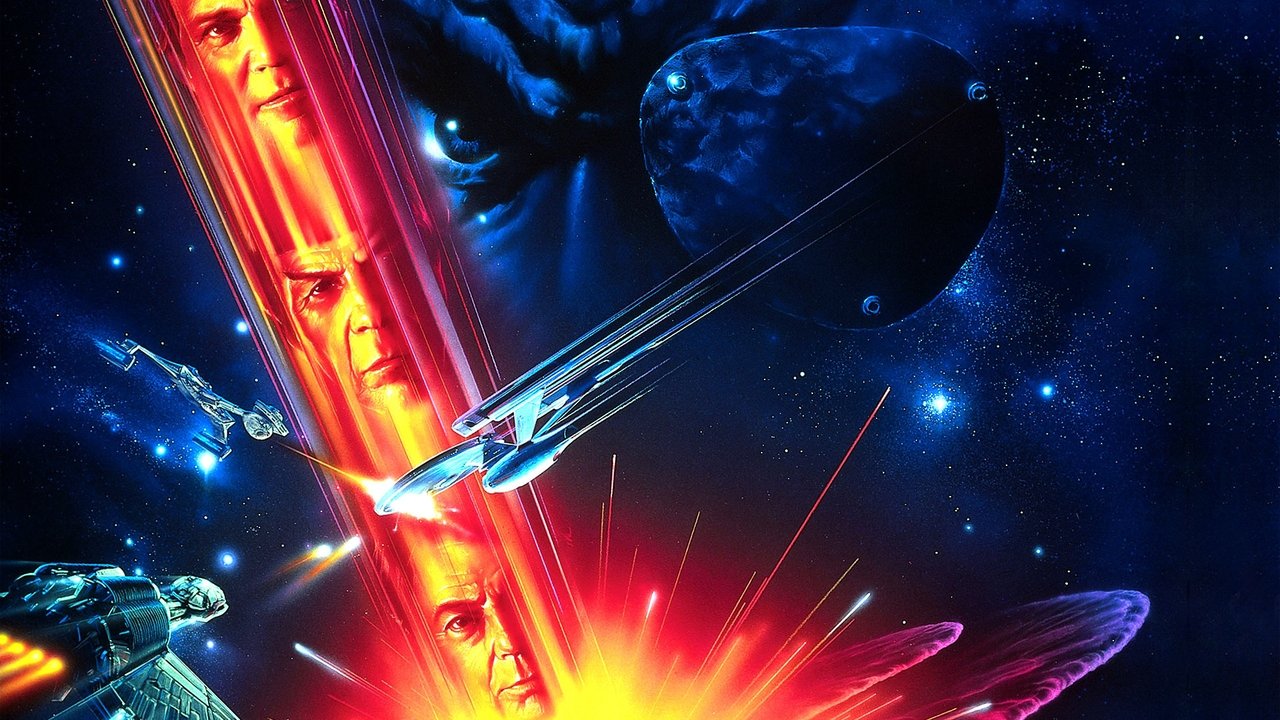
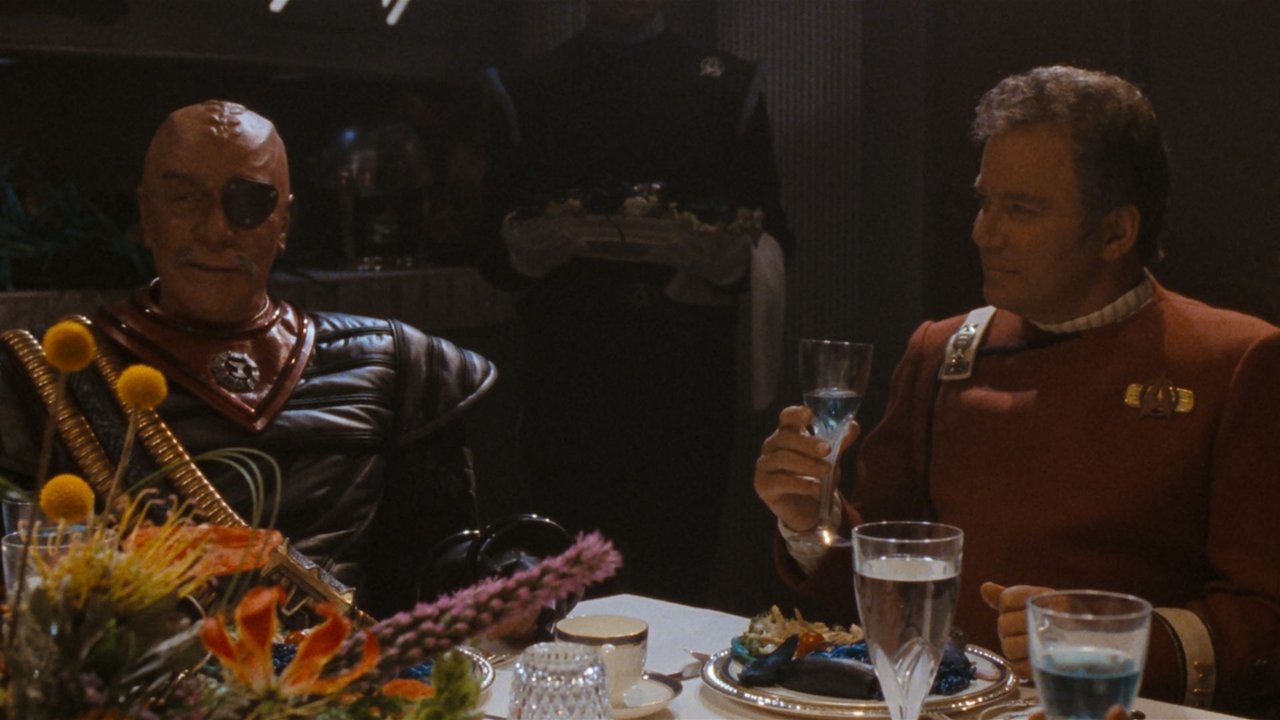
The plot ignites with shocking speed: the catastrophic explosion of the Klingon moon Praxis forces the Klingon Empire towards peace talks with the Federation, their long-time adversary. Chancellor Gorkon, the Klingon architect of this détente, is assassinated aboard his ship after beaming aboard the Enterprise for dinner, and Kirk and McCoy are framed for the murder. What unfolds is less a traditional Trek exploration yarn and more a taut political thriller, a whodunit layered with conspiracy and paranoia. Who sabotaged the peace process? The investigation, spearheaded by Spock, has genuine stakes, forcing our heroes to confront enemies both external and internal. Meyer masterfully uses claustrophobic framing and tense pacing, particularly in the scenes aboard the Klingon Bird-of-Prey, evoking the feel of submarine warfare – a stylistic echo of his work on Khan. The mystery keeps you guessing, playing on established character dynamics and introducing compelling new figures.
Shakespeare and Starlight
The performances are uniformly strong, imbued with the weight of decades playing these roles. William Shatner delivers one of his most nuanced portrayals of Kirk. This isn't just the brash adventurer; it's a man haunted by the past (specifically, the death of his son at Klingon hands in Star Trek III) and forced to confront his own deep-seated prejudice. His line, "Let them die," referring to the Klingons after the Praxis explosion, is chilling because it feels earned, a raw expression of lingering hatred he must overcome. Leonard Nimoy, also serving as executive producer, embodies Spock's logic and determination, driving the investigation with quiet intensity. And DeForest Kelley as McCoy remains the irreplaceable heart and conscience of the trio, his exasperated humanism the perfect foil to Kirk's angst and Spock's logic.
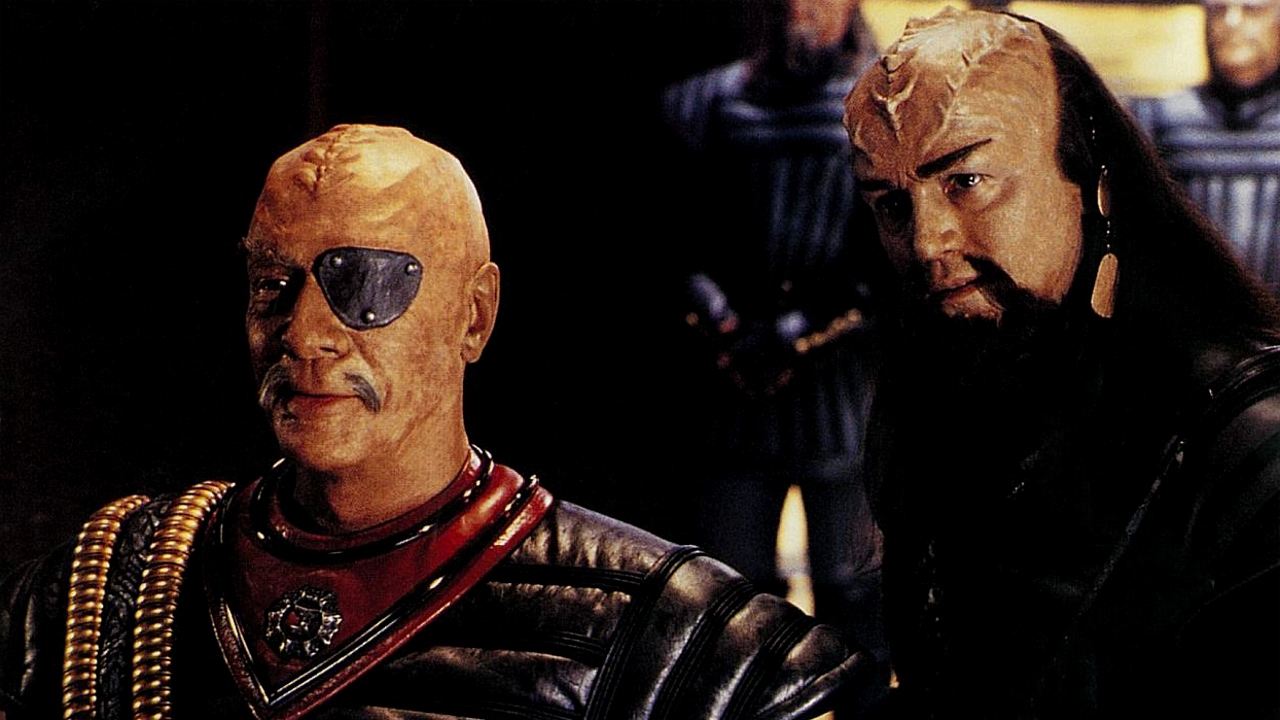
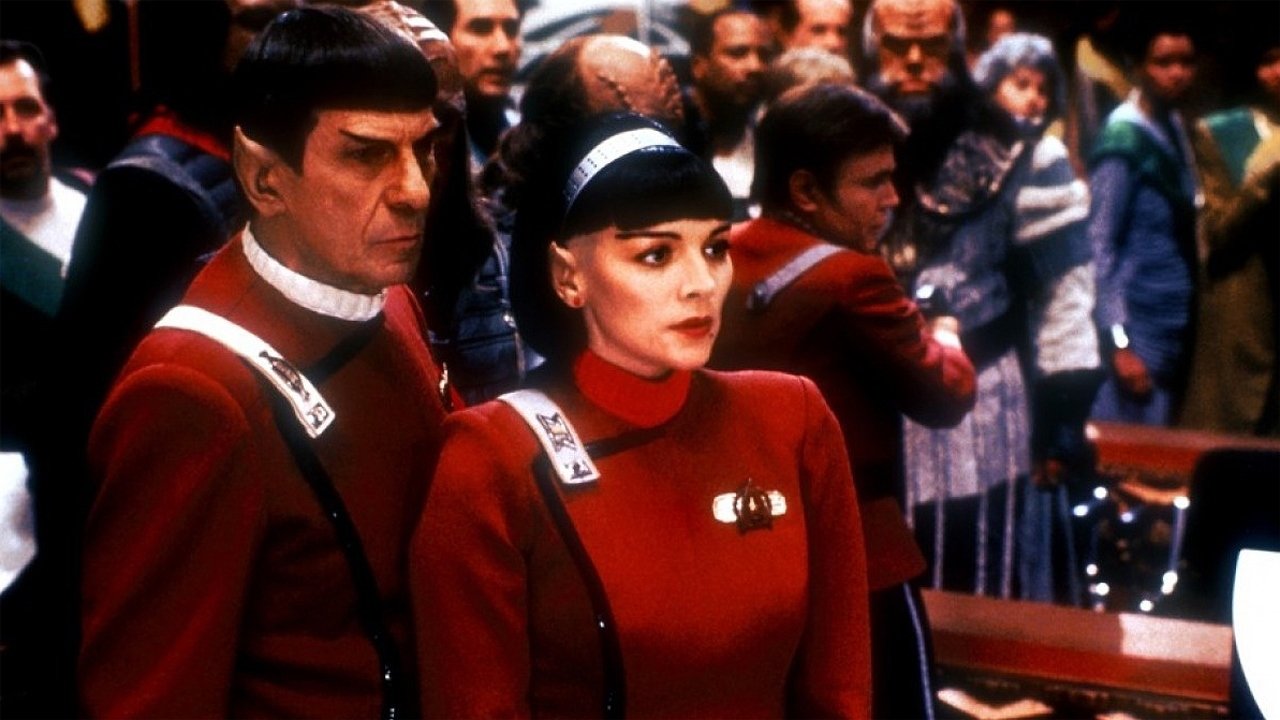
The supporting cast shines. Christopher Plummer as General Chang is simply magnificent. Chewing scenery with delightful, Shakespeare-quoting villainy ("Cry havoc, and let slip the dogs of war!"), he creates an antagonist who is both formidable and undeniably charismatic. His insistence on quoting the Bard, even in Klingon ("taH pagh taHbe'"), adds a unique, theatrical flair. Trivia buffs might recall Meyer specifically wanted Plummer for the role, seeking an actor who could match Shatner's stage presence. Then there’s Kim Cattrall as the Vulcan protégé, Lieutenant Valeris. Cattrall brings a cool intelligence and subtle ambition to the role. Interestingly, the character was originally conceived as Saavik (played by Kirstie Alley in Khan and Robin Curtis later), but concerns over Alley's salary demands, and perhaps a desire for a fresh face, led to the creation of Valeris. Cattrall herself reportedly contributed significantly to Valeris's look, including suggesting the distinctive Vulcan hairstyle.
Retro Effects and Enduring Themes
Made for around $30 million, Star Trek VI showcases a fascinating blend of practical effects, model work, and burgeoning CGI. The zero-gravity assassination sequence, with its floating globules of distinctive pink Klingon blood, remains a standout visual. Achieving this effect practically involved wirework for the actors and crew, combined with clever camera angles and K-Y Jelly blobs filmed floating in water tanks and optically composited into the scene – a testament to the ingenuity of pre-digital effects artists. While some effects might show their age compared to modern blockbusters, they possess that tangible quality we remember from the VHS era, a handcrafted feel that’s often missing today. The film went on to gross nearly $97 million worldwide, proving a successful final voyage.
Beyond the spectacle, it’s the film’s thematic core that ensures its longevity. The exploration of prejudice, the fear of change ("the undiscovered country" being the future, as Hamlet mused), and the difficulty of letting go of old hatreds feel remarkably prescient. Doesn't Kirk's struggle to trust the Klingons echo the suspicion and fear that often accompany any major societal shift? The conspiracy within both Starfleet and the Klingon Empire, driven by those who benefit from perpetual war, is a potent commentary that transcends its Cold War origins. It serves as a reminder that the greatest obstacles to peace often lie within ourselves and our institutions.
Rating: 9/10
Star Trek VI: The Undiscovered Country is a triumph. It's a smart, thrilling, and deeply satisfying conclusion to the cinematic adventures of the original Enterprise crew. Nicholas Meyer's assured direction, a sharp script laden with political intrigue and Shakespearean flair, strong performances across the board (especially from Shatner and the scene-stealing Plummer), and resonant themes elevate it beyond simple fan service. It successfully navigated the tricky task of providing closure while delivering a compelling standalone story, justifying its place as one of the very best Star Trek films.
Watching it again on tape (or, let's be honest, streaming it while fondly remembering the tape) feels like revisiting old friends for one last, significant mission. It carries the weight of history, both fictional and real, leaving you with a bittersweet sense of an ending, but also with the hopeful, enduring message that even the oldest adversaries can find common ground in charting the future. "Second star to the right, and straight on 'til morning," indeed.