The screen flickers to life, not with the crisp digital perfection of today, but with the soft hum and slight tracking fuzz of worn magnetic tape. And then, the assault begins. Not just on the senses, but on the very notion of self. "What if this is a dream?" Doug Quaid asks, his face a mask of sweat and confusion. But in Paul Verhoeven's blistering 1990 sci-fi mind-bender Total Recall, the waking world might be the more terrifying nightmare. Forget gentle nostalgia; this is a film that grabs you by the synapses and refuses to let go, leaving you questioning every shadow long after the VCR clicks off.
Welcome to Rekall Inc.
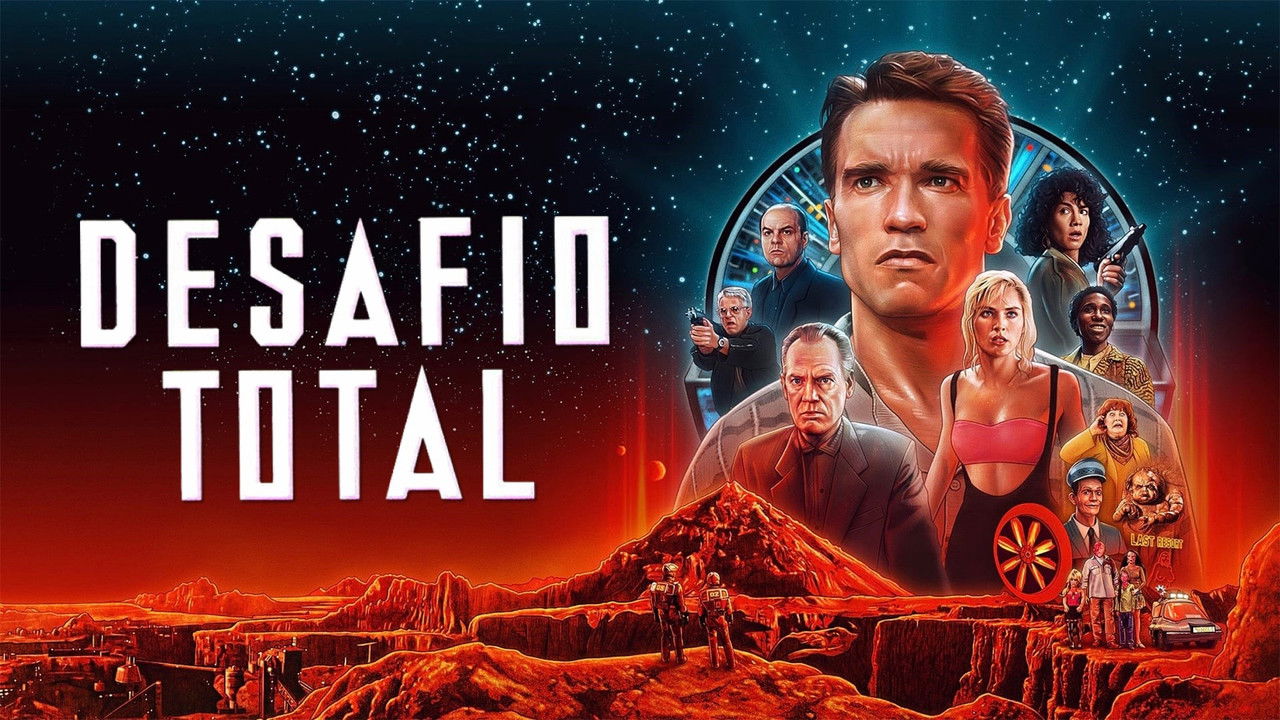
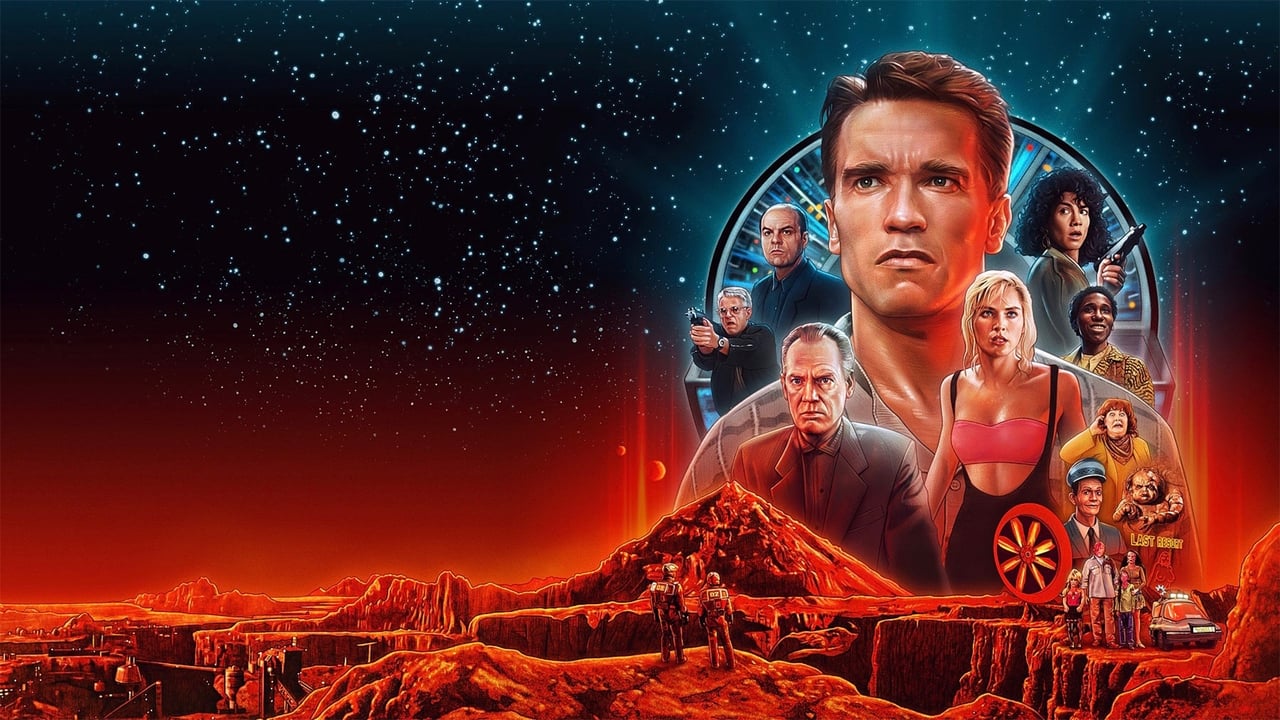
Based, albeit loosely, on Philip K. Dick's typically paranoid short story "We Can Remember It for You Wholesale," Total Recall plunges us into a future both grimy and gleaming. Earth is a densely packed metropolis, while Mars is a colonized, corporate-controlled hellscape simmering with rebellion. Construction worker Douglas Quaid (Arnold Schwarzenegger, fresh off hits like Predator (1987) and flexing more than just muscle here) dreams of the Red Planet, a yearning so deep he visits Rekall, a company implanting memory vacations. He opts for the "Secret Agent on Mars" package, but something goes catastrophically wrong. Or does it? The procedure seemingly triggers suppressed memories, revealing Quaid might actually be a secret agent named Hauser, entangled in Martian espionage involving the tyrannical Vilos Cohaagen (Ronny Cox, perfectly channeling corporate evil after playing a similar type in Verhoeven's RoboCop (1987)) and the mysterious freedom fighter Kuato.
A Brutal Ballet of Blood and Identity
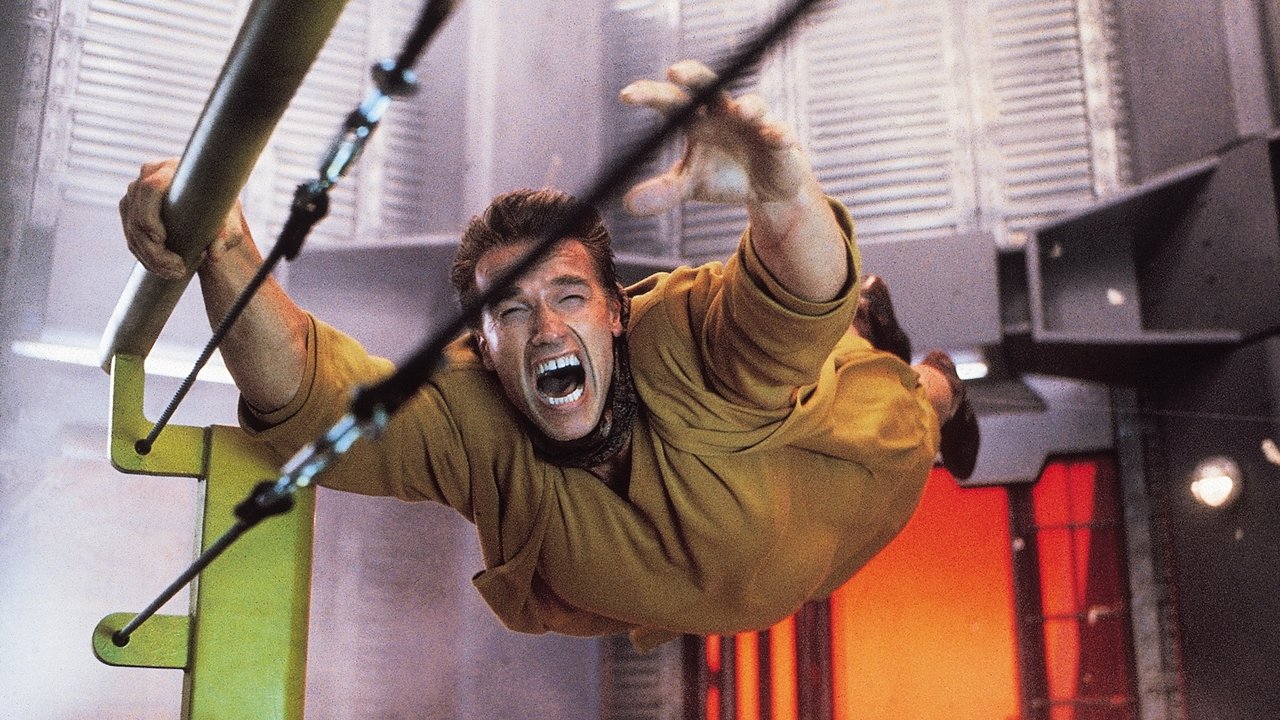
Verhoeven, never one for subtlety, orchestrates the ensuing chaos with characteristic gusto. The film is a relentless barrage of bone-crunching violence, imaginative gore, and breakneck chases. Remember the sheer visceral shock of seeing this for the first time? The human shields, the explosive decompression, the drill sequence – it was extreme, even by the standards of the era. Verhoeven fought hard against the MPAA, trimming seconds here and there to avoid the dreaded X rating, yet the film still feels ferociously R-rated. But crucially, the violence isn't just gratuitous; it underscores the desperation of Quaid's situation and the ruthlessness of the forces manipulating him. It's a brutal ballet where every bullet hit feels impactful, a stark contrast to the weightless action choreography common today.
The narrative genius lies in its ambiguity. Is Quaid experiencing the Rekall implant gone wild, a psychic manifestation of his chosen fantasy? Or is he truly Hauser, his mundane life the actual implanted memory? Verhoeven masterfully plants clues for both interpretations. The blue Martian sky at the end – mentioned by a Rekall technician as part of the package – feels almost too perfect. Yet the sheer specificity and physical reality of Quaid's ordeal argue otherwise. This central question elevates Total Recall beyond mere action fare; it becomes a genuinely unsettling exploration of identity. Who are you if your memories can be bought, sold, or erased? Doesn't that core anxiety still resonate today, perhaps even more so?
Mars Brought to Life (The Hard Way)

Visually, Total Recall remains a staggering achievement, a testament to the power of practical effects wizardry before CGI dominance. Rob Bottin, the maestro behind the grotesque transformations in The Thing (1982), delivers some of his most iconic work here. The bulging eyes from Martian decompression, the unforgettable three-breasted prostitute (a brief appearance that became instantly iconic), the disturbingly organic Kuato fused to George's belly – these weren't pixels, they were latex, animatronics, and pure, nightmarish artistry. Bottin reportedly worked himself to exhaustion, pushing the boundaries of makeup effects.
The film's production design creates a tangible future-shock world. The Martian colony, filmed primarily amidst the unique architecture of Mexico City (including the Glorieta de Insurgentes subway station and the futuristic-looking Colegio Militar), feels simultaneously alien and oppressively real. The miniatures used for the vast Martian landscapes and machinery possess a weight and detail that still impress. And who could forget the Johnny Cab, the chatty, slightly creepy automated taxi? It’s a perfect slice of darkly comedic future tech. This wasn't a cheap movie – its $65 million budget was astronomical for 1990, making it one of the most expensive films ever made at the time – but every dollar feels like it's up there on the screen, funding Verhoeven's singular, unfiltered vision.
Retro Fun Facts: The Long Road to Mars
Getting Total Recall made was an epic journey itself, spanning nearly two decades. Producers Ronald Shusett and Dan O'Bannon (of Alien fame) bought the rights to Dick's story in the 70s. Directors like David Cronenberg came and went, with Cronenberg envisioning a much darker, more psychological film closer to the original story (reportedly wanting William Hurt as Quaid). It was Schwarzenegger, eager for a sci-fi hit after The Terminator (1984), who championed the project at Carolco Pictures and pushed for Verhoeven to direct, seeing a kindred spirit in the director's unflinching style. Arnold's involvement reshaped the project into the action-heavy blockbuster we know. Sharon Stone, in a role that significantly boosted her profile before Basic Instinct (1992), plays Quaid's seemingly loving wife Lori with a chilling duplicity, while Rachel Ticotin brings fiery conviction to the role of Melina, Quaid's Martian contact (or fantasy?).
Get Your Ass to Mars (Again?)
Total Recall isn't just an action movie; it's a paranoid thriller wrapped in sci-fi spectacle, laced with Verhoeven's signature satirical bite targeting corporate greed and media manipulation. It’s loud, excessive, often gruesome, but also intelligent and thought-provoking. Schwarzenegger delivers one of his most engaged performances, selling both the superhuman feats and the everyman confusion. Jerry Goldsmith's score pulses with tension and heroic sweep, perfectly complementing the on-screen mayhem. While a remake surfaced in 2012, it lacked the original's visceral punch, practical charm, and crucial ambiguity, proving that some lightning refuses to be bottled twice.
Does it hold up? Absolutely. The practical effects possess a tangible quality that often surpasses modern CGI, and the core themes of identity and manufactured reality remain potent. It’s a film that perfectly encapsulates the ambitious, sometimes gloriously excessive, spirit of late 80s/early 90s blockbuster filmmaking. It came in a clamshell case that promised explosive action and mind-bending twists, and boy, did it deliver.
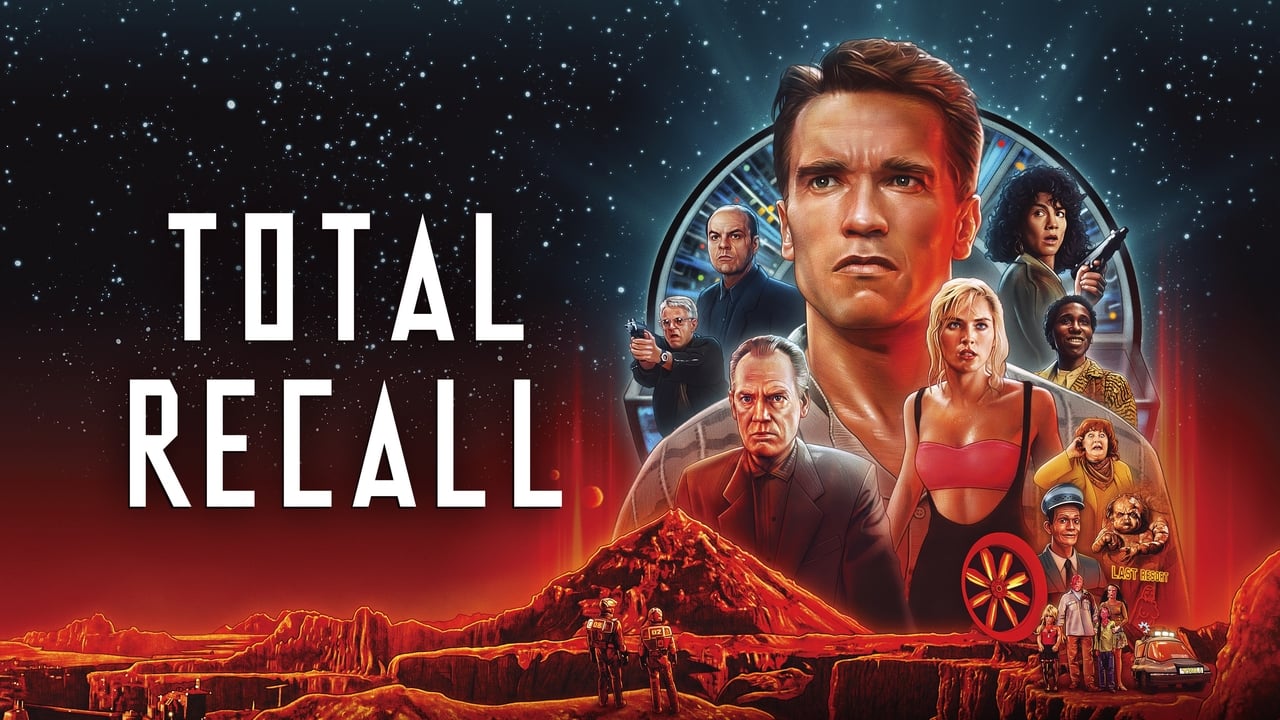
VHS Heaven Rating: 9/10
Justification: Total Recall earns its high score for its relentless energy, groundbreaking practical effects, iconic performances (especially Arnold nailing the action/confusion balance), Verhoeven's audacious direction, and its genuinely clever, still-debated central premise. It perfectly blends high-concept sci-fi with visceral action and retains a raw power that hasn't diminished. Minor deductions for some dated elements or moments where the excess borders on camp, but its overall impact and craft are undeniable.*
Final Thought: More than just a trip to Mars, Total Recall was a trip into our own heads, leaving us with the exhilarating, unsettling feeling that maybe, just maybe, we aren't who we think we are. And wasn't that the most thrilling ride of all back in the VHS glow?