Alright, fellow travelers of the magnetic tape highway, let's rewind to a time when the future felt both excitingly close and charmingly clunky. Remember that bittersweet feeling when the original Knight Rider series powered down in '86? The airwaves just weren't the same without that iconic Cylon-esque scanner sweeping across the screen. Then, five years later, NBC dangled a tantalizing prospect: a return trip in a brand new machine. Knight Rider 2000 wasn't just a movie title; it was a destination, a televised event promising a high-tech reunion. Did it live up to the hype? Let's pop this tape in and find out.
Welcome to the Year 2000... Through 1991 Eyes
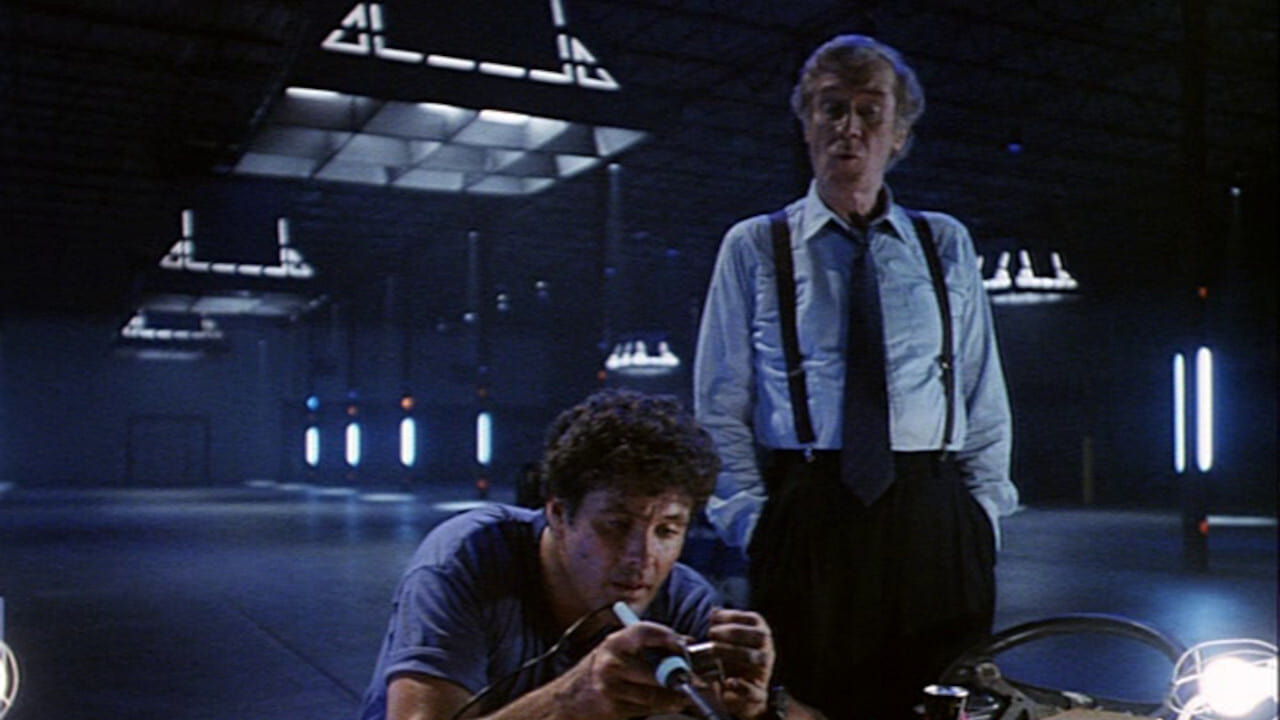
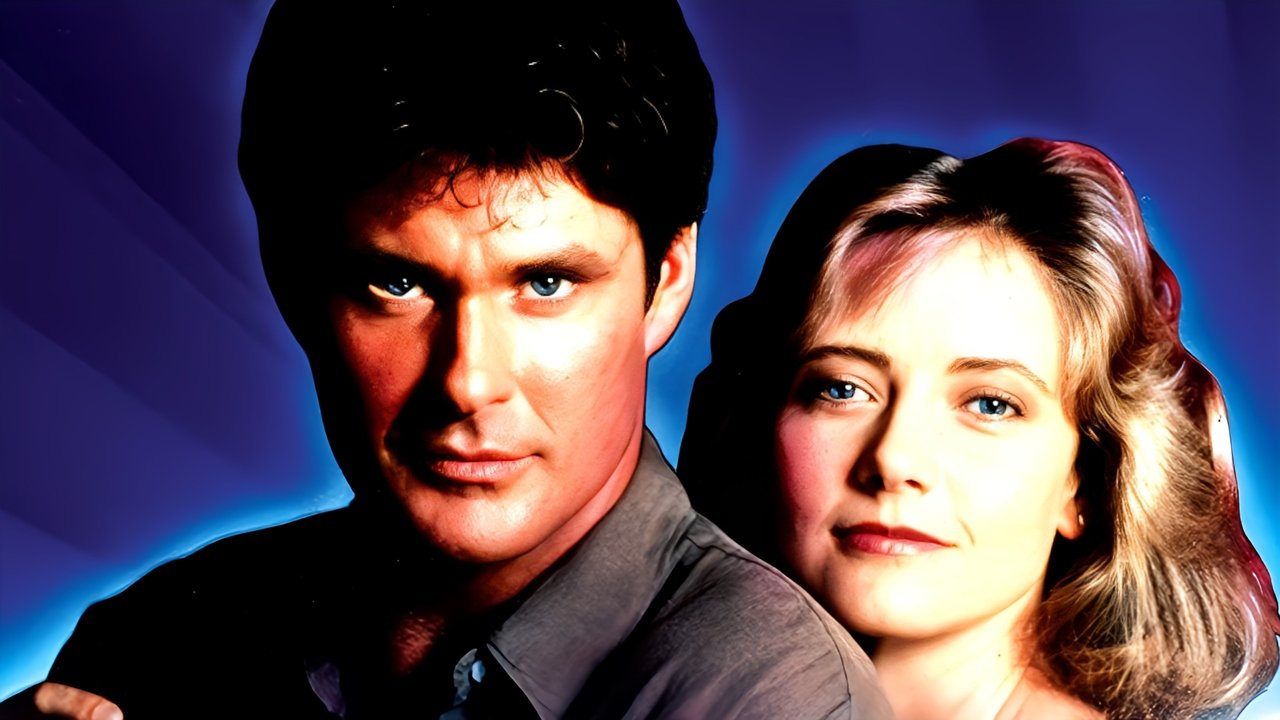
The film drops us into a vision of the millennium shaped by early '90s anxieties and aspirations. Handguns are history (a rather optimistic take!), replaced by less-lethal ultrasonic stun guns. Convicted felons? They're chilling out in cryogenic suspension instead of traditional prisons. It's a future simultaneously ahead of its time and amusingly off the mark. Into this brave new world steps Michael Knight (David Hasselhoff, looking every bit the rugged, retired adventurer), coaxed back into action by his dear friend and mentor, Devon Miles (Edward Mulhare, effortlessly embodying that familiar comforting authority). The plot involves rogue cops, stolen weapons technology, and the potential assassination of the mayor – standard fare, perhaps, but the real draw was seeing Michael back in the Foundation for Law and Government's orbit. It’s clear Hasselhoff relished slipping back into the leather jacket, bringing that signature charisma. This TV movie was, in fact, a pilot, a calculated gamble by Universal and original series creator Glen A. Larson to reignite the franchise for a new decade. They were banking hard on our collective fondness for that talking car.
But the million-dollar question (or perhaps, given the budget, the hundred-thousand-dollar question) was: what about KITT? Prepare yourselves, purists. The original Knight Industries Two Thousand, our beloved Pontiac Trans Am, is tragically dismantled early on. Taking its place is the Knight Industries Four Thousand, or KIFT – a sleek, lipstick-red machine housed in the body of a heavily customized 1991 Dodge Stealth. Retro Fun Fact: The KIFT car's design was actually based heavily on the stunning Pontiac Banshee IV concept car from 1988, making it look genuinely futuristic for the time. Initially, KIFT's AI is cold, logical, and frankly, a bit of a downgrade from the witty personality William Daniels imbued in the original. (Spoiler Alert!) Thankfully, KITT's core programming eventually finds its way into the new chassis, restoring some familiar banter. Michael is partnered with Officer Shawn McCormick (Susan Norman), whose brain patterns inadvertently get tangled with KIFT's AI, leading to a rather unique human-machine connection. KIFT boasts holographic displays and even amphibious modes, but it often feels like it's trying a bit too hard to impress, lacking the effortless cool of its predecessor.
Turbo Boosting on a TV Budget
Directed by TV movie veteran Alan J. Levi (who had helmed episodes of shows like Miami Vice and Lois & Clark), Knight Rider 2000 carries the distinct feel of late 80s/early 90s television production. While there are chases and confrontations, they don't quite possess the raw, metal-bending energy we remember from the original series' best moments. Remember KITT smashing through concrete barriers or executing those incredible Turbo Boosts? That visceral, practical stunt work feels noticeably toned down here, likely a casualty of budget and network standards. KIFT’s capabilities often lean more on flashing dashboard lights and superimposed graphics than on tangible, high-impact action. Still, there's a certain charm in seeing the Banshee-inspired car gliding through vaguely "futuristic" cityscapes (often achieved with minimal set dressing). It’s a testament to the era's practical filmmaking – that car existed, it drove, and its custom modifications were real, tangible things, not just pixels generated later. It’s a snapshot of sci-fi trying to envision tomorrow using the tools of yesterday.
A Farewell Lap and Lingering Legacy
One of the film's more poignant threads involves the fate of Devon Miles. His storyline provides genuine emotional weight and serves as a respectful, fitting send-off for the character and for the wonderful Edward Mulhare, whose presence was so integral to the original show's warmth. His dignified performance remains a highlight. Sadly, Knight Rider 2000, despite the fan anticipation (I vividly recall the buzz surrounding its premiere night!), didn't manage to capture lightning in a bottle a second time. The hoped-for series revival never materialized. What remains is a fascinating curiosity – a time capsule reflecting the transition between the action sensibilities of the 80s and the burgeoning digital age of the 90s. It’s an earnest, if slightly flawed, attempt to update a beloved icon.
Final Scan
Knight Rider 2000 isn't the high-octane masterpiece some might have hoped for back in 1991. Its depiction of the future is a delightful slice of retro-futurism, the action feels distinctly made-for-TV, and KIFT, while visually striking, never quite fills KITT's tire tracks (at least initially). But watching it now, perhaps on a slightly worn-out tape or a convenient streaming service, taps into a powerful vein of nostalgia. It's the joy of seeing Hasselhoff don the jacket again, hearing Mulhare's calming voice, and appreciating the genuine effort to keep the Knight Rider legend alive. It’s a worthy shelf-mate for fans, even if it’s more of a Sunday drive than a Turbo Boost.
Rating: 6/10 - This score acknowledges its role as a nostalgic treat for fans, featuring welcome returns and an intriguing (if dated) vision of the future. However, the TV-movie constraints, a less charismatic initial KIFT, and a fairly standard plot keep it from reaching the classic status of the original series or standing shoulder-to-shoulder with bigger-budgeted sci-fi action films of the era.
Final Comment: It aimed for the future but landed squarely in 1991 – a perfectly watchable, occasionally charming, but ultimately non-essential epilogue on the VHS shelf of Knight Rider history.