Okay, fellow tape-heads, dim the lights, maybe adjust the tracking just a bit in your mind's eye. Tonight, we're digging out a real curiosity, a flickering transmission from a parallel universe before the Marvel Cinematic Universe reshaped everything. Picture it: 1998. The X-Men movie is still two years away, Spider-Man is tangled in rights issues, and suddenly, beaming onto your CRT via the Fox network, comes Nick Fury: Agent of S.H.I.E.L.D. starring... David Hasselhoff?! Yes, you read that right. The Hoff himself, trading KITT and the beaches of Malibu for an eyepatch, a cigar, and command of the world's premier espionage agency. Strap in, this one's a trip.
### Before Coulson, There Was The Hoff
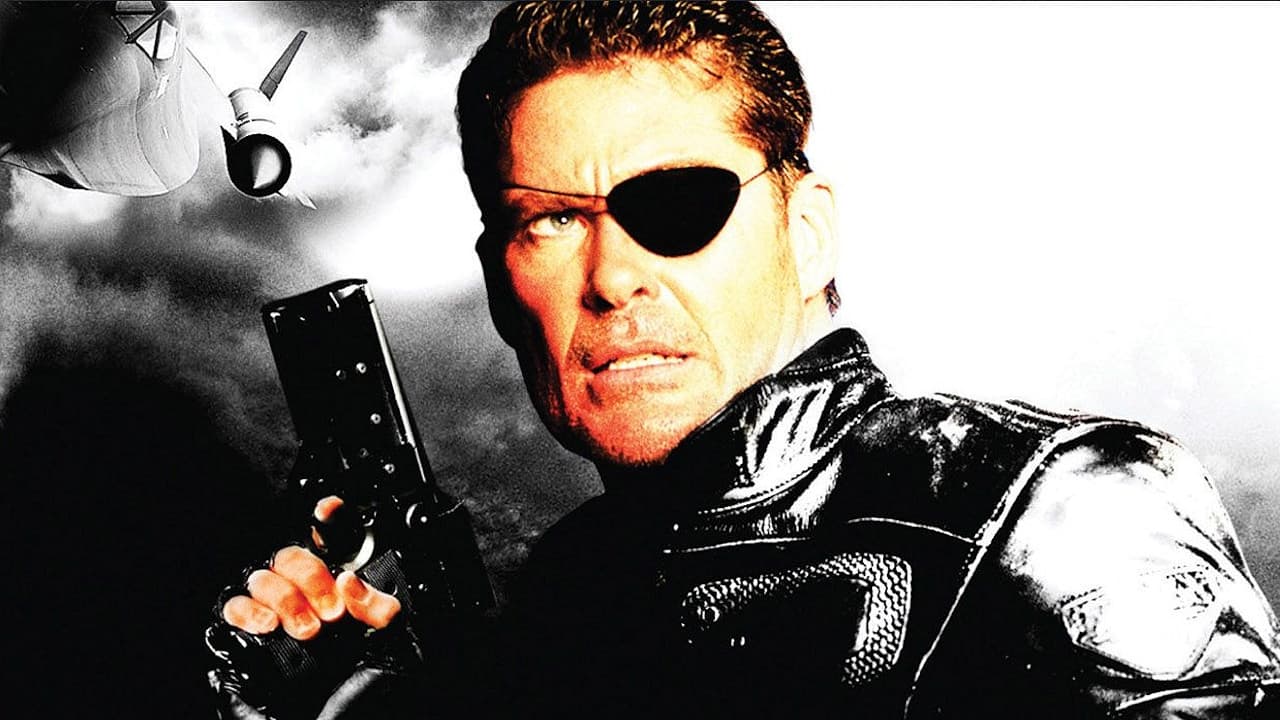
Let's be honest, the sheer existence of this TV movie is its primary draw today. Seeing the star of Knight Rider and Baywatch embodying Marvel's super-spy is a concept so wonderfully, unashamedly late-90s it almost feels like a dare. And you know what? David Hasselhoff leans into it. Forget the cool, calculating Samuel L. Jackson portrayal we know now; this is Fury by way of grizzled 80s action heroes. He’s gruff, perpetually chomping on a stogie (a habit so pronounced it feels like a contractual obligation), and delivers lines like "Your biological clock is ticking!" to the villainess with the kind of straight-faced intensity only The Hoff could muster. It's fascinating to note that, in some ways, his look – the grey temples, the cigar – was arguably closer to the original 1960s Steranko-era Fury comics than the Ultimate Marvel version that later inspired the MCU look. Hasselhoff, already a global TV icon, reportedly embraced the role, seeing genuine franchise potential here.
The plot itself is pure pulp: Colonel Nick Fury is pulled out of retirement (where he's apparently been chilling in an abandoned mine shaft in the Yukon – because of course he has) to stop the neo-nazi terrorist group HYDRA. Led by the venomous Baron von Strucker's progeny, Andrea von Strucker, aka Viper (Sandra Hess, having a blast vamping it up), HYDRA has stolen Fury Sr.'s cryogenically frozen body (don't ask) and plans to unleash the deadly "Death's Head" virus (hidden within said frozen body) on Manhattan unless S.H.I.E.L.D. pays a hefty ransom. It’s standard save-the-world stuff, elevated (or perhaps weighted?) by its earnest commitment to comic book logic.
### S.H.I.E.L.D. on a TV Budget
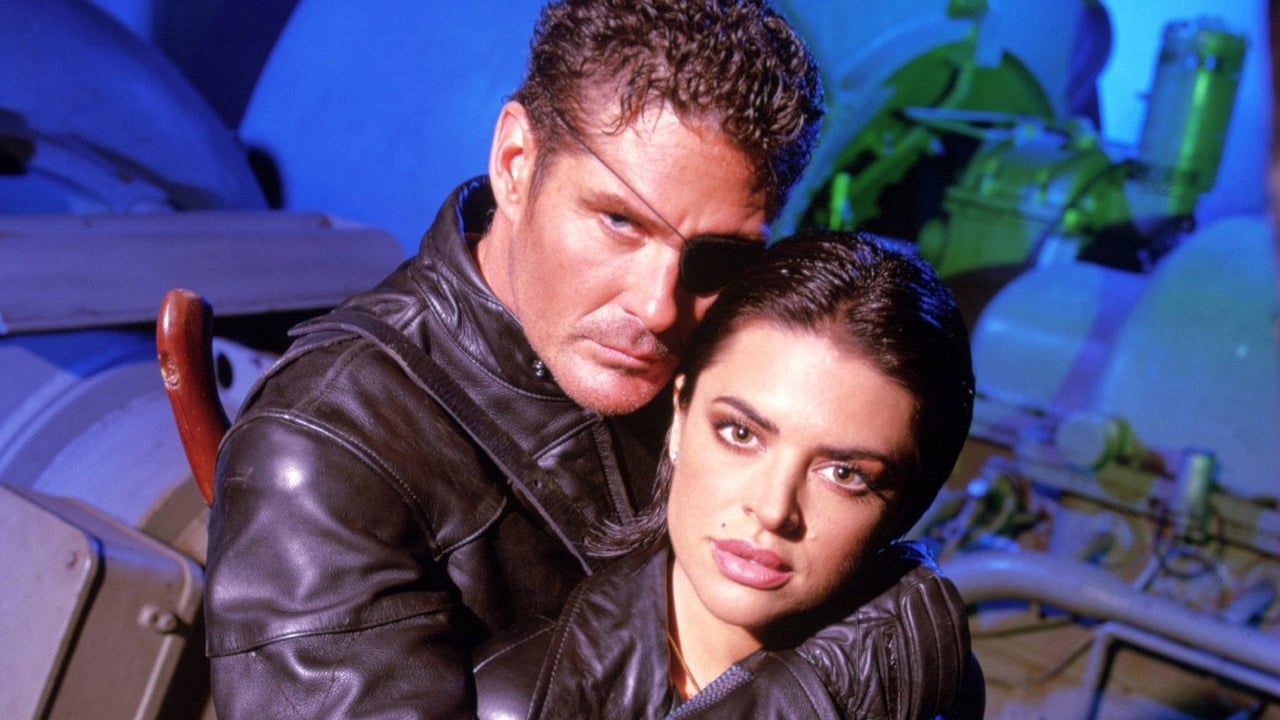
Directed by TV veteran Rod Hardy (who helmed episodes of everything from The X-Files to Battlestar Galactica), the film has that distinct made-for-TV aesthetic of the era. Shot primarily in Vancouver, Canada (standing in for various global locales and the S.H.I.E.L.D. Helicarrier command deck), you can almost feel the budget constraints in the frame. The Helicarrier itself? Less majestic sky-fortress, more functional (and slightly cramped) office complex that happens to fly, rendered with CGI that was ambitious for television then but looks charmingly quaint now.
But where Nick Fury really shows its 90s TV action roots is in the practical stuff. Remember when explosions felt a bit more… fiery? When squibs packed a visual punch? This movie delivers that. The gunfights have a tangible weight, the stunt performers are clearly putting themselves out there, and there's a refreshing lack of digital cleanup. It’s not exactly Die Hard (1988), but the action beats have that slightly rough-around-the-edges, grounded-in-reality feel that defined so much action filmmaking before the CGI floodgates opened. Sure, some sequences might feel a bit clunky by today's slick standards, but there's an undeniable, almost comforting, texture to it all.
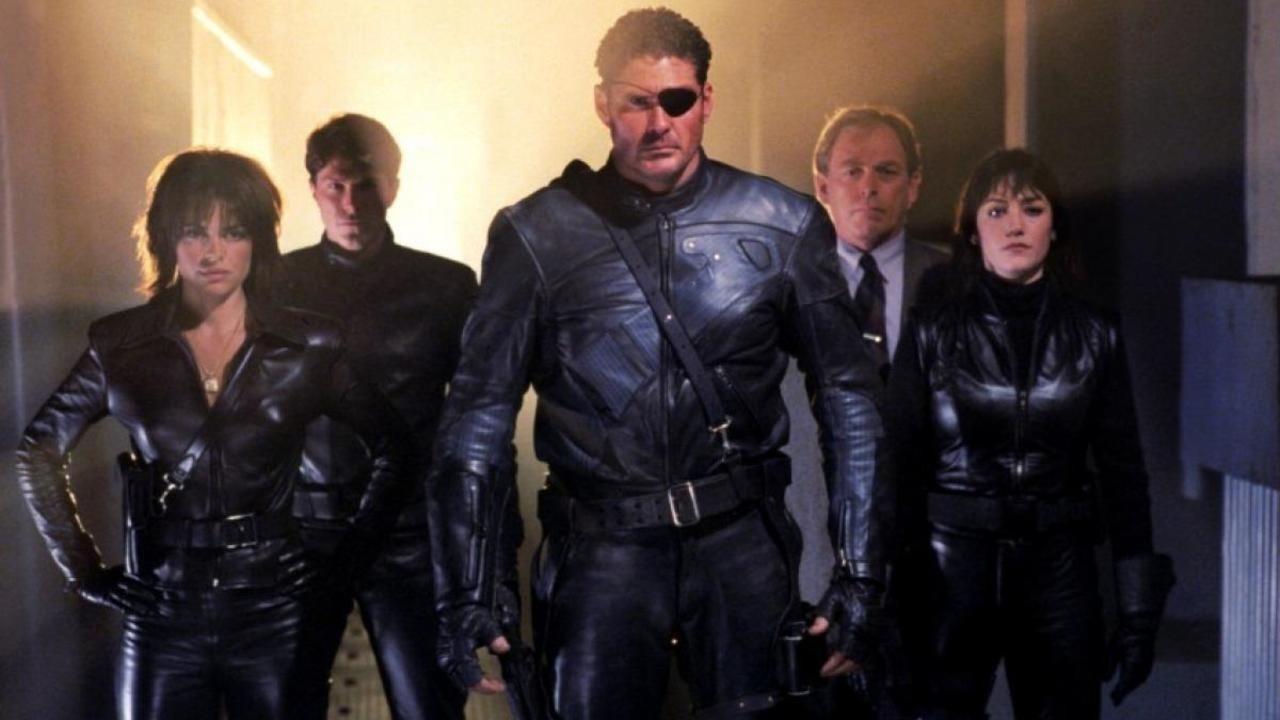
Supporting Hoff are Lisa Rinna as Contessa Valentina "Val" Allegra de Fontaine, Fury's former flame and capable agent, and Neil Roberts as Alexander Goodwin Pierce (yes, that Pierce, though a vastly different interpretation). Rinna brings a certain soap-opera intensity that fits the slightly heightened reality, while the overall S.H.I.E.L.D. team feels like a workplace ensemble drama occasionally interrupted by laser fire and HYDRA assassins.
### A Pilot Grounded Before Takeoff
Here's a key piece of trivia: Nick Fury: Agent of S.H.I.E.L.D. was actually produced as a backdoor pilot, intended to launch a full TV series if it performed well. That explains the slightly open-ended feel and the effort to establish a supporting cast and world. Obviously, the series never materialized, leaving this movie as a standalone oddity. It’s also an early writing credit for David S. Goyer, a name now synonymous with superhero cinema, having penned Blade (which hit theaters the same year, 1998!) and later contributing to Christopher Nolan's Dark Knight trilogy and Man of Steel (2013). Seeing his early take on the Marvel universe through this particular lens is fascinating, hinting at the genre-shaping work to come, even amidst the TV movie limitations. Another fun fact for the true believers: Stan Lee himself reportedly filmed a cameo as a judge, but sadly, it ended up on the cutting room floor.
So, how does it hold up? Viewed purely as a superhero film, it's undeniably dated, occasionally silly, and operates on a scale leagues below what audiences expect today. But viewed through the nostalgic lens of "VHS Heaven"? It's a blast. It’s a time capsule of pre-MCU Marvel adaptations, a showcase for peak Hoff, and a reminder of a different era of action filmmaking. It’s earnest in its execution, even when the dialogue gets clunky or the plot stretches credulity. You can tell they were trying to make something cool within the confines they had.
***
VHS Heaven Rating: 5/10
Justification: The rating reflects its status as a fascinating, often unintentionally hilarious, piece of Marvel history. Hasselhoff is committed (if perhaps miscast by modern standards), the 90s TV movie action has a certain nostalgic charm, and the sheer novelty factor earns it points. However, the limited budget, sometimes wooden acting from the supporting cast, dated effects, and clunky script keep it firmly in the realm of "curiosity" rather than "classic." It's definitely not good in the conventional sense, but it's undeniably watchable and historically significant for Marvel fans.
Final Thought: Before the Avengers assembled on the big screen, The Hoff held the line on late-night Fox. It’s a relic, for sure, but pop this imaginary tape in for a reminder of just how far Marvel has come, and for a uniquely ‘90s dose of low-budget, high-concept, cigar-chomping superheroics. Sometimes, you just had to rent the tape with the wildest cover art.