### Ghosts on the Magnetic Tape: Revisiting Lars von Trier's Medea (1989)
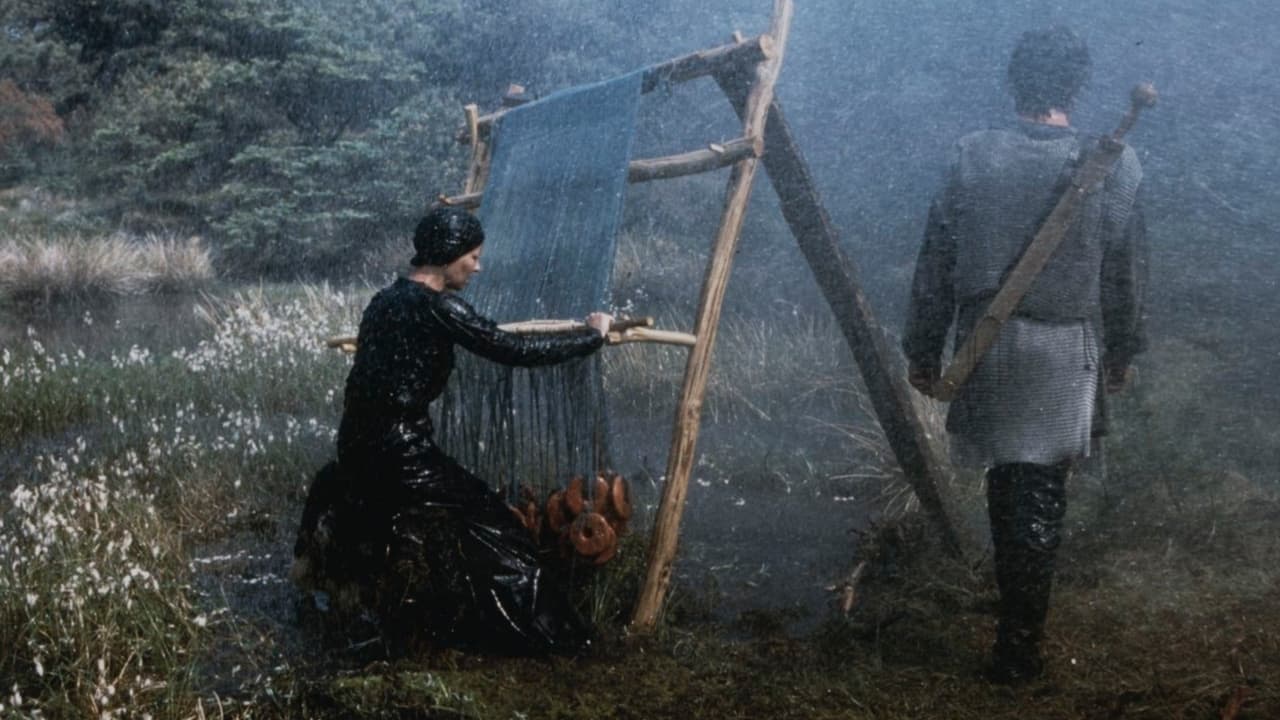
Some films feel less like narratives and more like transmissions dredged from a collective subconscious, flickering into life with the static hiss of old television signals. Lars von Trier's 1989 adaptation of Medea is one such transmission – a raw, elemental, and often unsettling piece of 80s European cinema that feels leagues away from the neon glow and synthesizer scores often associated with the era. Watching it again now evokes less the familiar comfort of a well-worn VHS favourite and more the strange fascination of stumbling upon something powerful and untamed late one night, a stark reminder of the darker currents flowing beneath the surface of popular culture.
A Master's Unseen Vision
Perhaps the most intriguing aspect of this Medea is its origin story, a fascinating piece of behind-the-scenes trivia that elevates it beyond mere curiosity. The screenplay wasn't initially von Trier's own; it was adapted from an unproduced script penned decades earlier by none other than the legendary Danish master of cinema, Carl Theodor Dreyer (the genius behind The Passion of Joan of Arc (1928) and Ordet (1955)), co-written with Preben Thomsen. Dreyer passed away in 1968, leaving this stark vision unrealized. Hearing this, one approaches the film differently. You start looking for Dreyer's ghost in the machine – his penchant for austere compositions, his focus on suffering and spiritual crisis. Von Trier, never one to shy away from difficult material or bold experimentation, takes this potent inheritance and filters it through his own nascent, provocative lens. It feels less like a direct homage and more like a séance, attempting to conjure Dreyer's spirit within the technological and stylistic constraints of late 80s television production.
Windswept Visions, Video Static Dreams
Made for Danish television, Medea bears the distinct imprint of its medium and era, yet von Trier transforms potential limitations into a unique aesthetic. Forget glossy cinematography; this is a world rendered in desaturated, almost muddy colours, shot primarily on video with techniques that now feel like deliberate artifacts of their time. Think hazy filters, stark superimpositions that layer faces onto windswept landscapes, slow motion that emphasizes ritualistic movement, and moments where the image seems to deliberately degrade. The Danish coastal locations are bleak, beautiful, and utterly indifferent to the human tragedy unfolding upon them. Wind howls, waves crash – nature itself feels like a character, ancient and unforgiving. Doesn't this rawness, born partly from necessity (television budgets rarely matched cinematic ones), ultimately serve Euripides' brutal story more effectively than polished perfection might? It lends the myth an unnerving immediacy, a sense of witnessing something primal and disturbed.
The Unravelling Heart
At its core, of course, is the devastating story of Medea, the powerful sorceress abandoned by her husband Jason for a politically advantageous marriage to Glauce, the daughter of King Creon. What follows is a spiral of incandescent rage, grief, and ultimately, horrific vengeance. Kirsten Olesen embodies Medea not just as a scorned woman, but as a force of nature pushed past its breaking point. Her performance is central and terrifyingly committed; there's a chilling intensity in her eyes, a weight of ancient knowledge and unbearable pain. We see the calculating fury build, the terrible resolve harden. Is her final, infamous act understandable within the logic of her absolute devastation, even as it remains unthinkable? The film forces us to confront the darkest corners of betrayal and the monstrous potential lurking within profound love turned toxic.
Kier, Creon, and the Weight of Myth
Opposite Olesen is the ever-distinctive Udo Kier as Jason. Kier, already a cult figure known for his work with Warhol, Fassbinder, and countless European genre films, brings his unique, slightly detached intensity to the role. His Jason is less a heroic figure and more a pragmatic, perhaps fatally arrogant man blind to the elemental power he has trifled with. Henning Jensen as Creon provides the necessary counterpoint – the voice of political expediency and patriarchal order, ultimately powerless against Medea's wrath. The performances feel deliberately stylized, fitting the film's overall anti-naturalistic approach, serving the mythic scale rather than aiming for kitchen-sink realism.
Von Trier's Early Provocations
Watching Medea today, you can clearly see the seeds of the director Lars von Trier would become. His fascination with suffering female protagonists, his willingness to push visual boundaries, his confrontational approach to storytelling – it's all present, albeit in a less polished, more experimental form than in later works like Breaking the Waves (1996) or Dancer in the Dark (2000). This film feels stylistically linked to his early 'Europa Trilogy' (The Element of Crime (1984), Epidemic (1987), Europa (1991)) in its visual experimentation and bleak worldview. Knowing it was made for TV adds another layer; it feels like a deliberate smuggling of avant-garde sensibilities into a mainstream medium.
A Rare Find, Not Your Usual Rental
Let's be honest, this wasn't likely gathering dust on the shelves next to Top Gun at your local Blockbuster. Medea was, and remains, a more challenging proposition – the kind of film you might have caught by chance on a niche cable channel or sought out if your cinematic tastes leaned towards the arthouse even back in the VHS days. Its power lies not in easy nostalgia, but in its stark, uncompromising vision and its unique place in film history, bridging the legacy of a past master with the emergence of a future provocateur. It’s a reminder that the 80s video landscape held more than just blockbusters; it contained strange, difficult beauty too, if you knew where to look.
Rating: 7.5/10
This score reflects the film's undeniable artistic ambition, its historical significance via the Dreyer connection, and the raw power of its central performance and atmosphere. It's a challenging, sometimes visually abrasive work, clearly made under constraints, which keeps it from reaching higher. However, its experimental nature and successful conjuring of mythic dread make it a compelling, if difficult, watch. It's not for everyone, but for enthusiasts of Lars von Trier, Carl Theodor Dreyer, or challenging 80s European cinema, it remains a fascinating and potent discovery.