The flickering gaslight barely cuts through the London fog, illuminating cobbled streets slick with something more than rain. It’s a familiar scene, perhaps, drawn from countless Victorian nightmares. But watch closer. There’s a dissonance here, a garish pulse beneath the period detail, like a punk rock anthem bleeding through the walls of a dusty museum. This is the world of Edge of Sanity (1989), a film that takes Robert Louis Stevenson’s polite parlor horror and drags it screaming into the back alleys of exploitation cinema, with none other than Anthony Perkins leading the descent.
A Familiar Face, A Different Monster
Seeing Perkins step into the dual role of Dr. Henry Jekyll and Mr. Edward Hyde feels almost inevitable, doesn't it? Decades after Psycho (1960) etched Norman Bates into cinematic infamy, Perkins brought that same haunted intensity, that unnerving stillness hinting at coiled violence, to another fractured psyche. Yet, this isn't merely Norman in a top hat. Edge of Sanity reimagines the transformation not through a carefully measured serum, but through an accidental overdose of ether... which Jekyll later refines, apparently creating a potent, smokable substance akin to crack cocaine. Yes, you read that correctly. This bizarre narrative choice immediately signals the film's intention: to shock, to provoke, and perhaps to simply revel in its own strange, anachronistic sleaze under the guidance of French director Gérard Kikoïne, a filmmaker more known for his work in erotic thrillers and horror bordering on the outright bizarre.
Nightmares in Technicolor
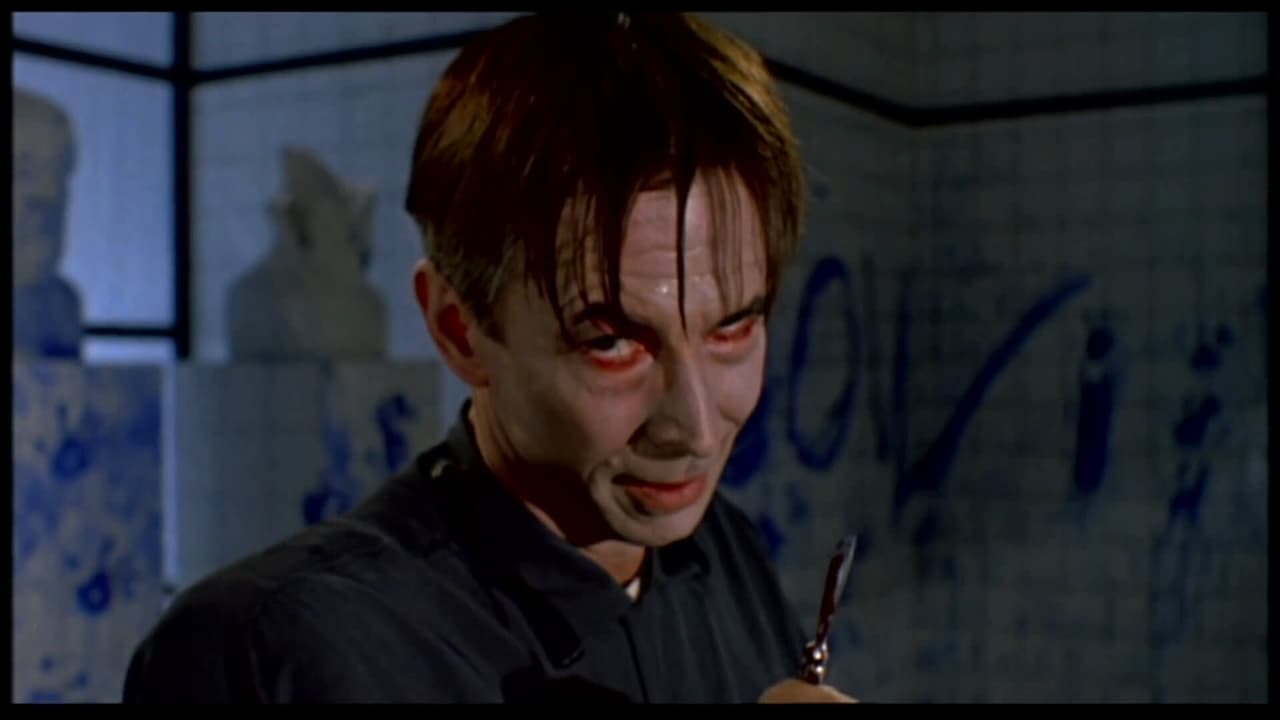
Forget subtle transformations. When Hyde emerges, he’s less a physically distinct entity and more Jekyll unbound – primal, vicious, and prowling the fog-choked streets (actually the atmospheric, low-cost environs of Budapest doubling for London) for victims, seemingly merging the Hyde persona with Jack the Ripper folklore. Perkins throws himself into the Hyde persona with a leering, almost theatrical menace that’s captivating, even if the script sometimes feels determined to push boundaries purely for effect. It's a performance that carries the film, a chilling reminder of his singular talent for portraying profound psychological disturbance. It’s also tinged with a certain melancholy, knowing this was one of his last significant roles before his untimely passing in 1992.
What truly sets Edge of Sanity apart, for better or worse, is its visual style. Kikoïne paints Victorian London with a palette that feels ripped from a fever dream. Deep shadows clash with lurid splashes of color – reds and blues dominate interiors that feel more like decadent, surrealist nightclubs than respectable townhouses. There are moments of genuine visual flair here, sequences drenched in fog and neon-like hues that feel almost like a Giallo film misplaced in time. The production design walks a knife edge between period authenticity and deliberate, jarring anachronism. Does that ornate laboratory really need strobe lighting effects during a transformation? Probably not, but it certainly contributes to the film’s unique, disorienting atmosphere. This wasn't high-budget horror; shot for a modest sum, you can almost feel the creative team leaning into the weirdness, embracing the inherent clash of styles born perhaps from both artistic choice and financial necessity.
A Dose of Discomfort
The film doesn't shy away from the grimier aspects implied by its premise. The violence is often brutal and explicit for its time, and the sexuality is overt, bordering on lurid. Hyde's nocturnal activities are depicted with a raw, unsettling energy that leaves little to the imagination. This focus on shock value definitely alienated mainstream critics upon release – it was largely dismissed as trashy or nonsensical – but it’s also precisely what cemented its cult status among fans of cinematic oddities found lurking on the bottom shelves of video rental stores. I distinctly remember the provocative VHS cover art promising something transgressive, and the film delivered, albeit in a way few might have expected. Did the twist involving Hyde's identity genuinely shock you back then, or did the film's overall strangeness numb you to conventional plot mechanics?
The supporting cast, including Glynis Barber as Jekyll's concerned wife and Sarah Maur Thorp as a potential victim who catches Hyde's eye, do their best amidst the stylized chaos. But this is Perkins's show, a final, flamboyant exploration of the darkness within, albeit filtered through a uniquely bizarre, late-80s lens. The score itself mirrors the film's dichotomy, blending traditional orchestral cues with jarring electronic pulses that further enhance the feeling of temporal and tonal dislocation.
Legacy of Lunacy
Edge of Sanity is hardly a masterpiece. Its script is uneven, its tone wildly inconsistent, and its blend of Victorian horror with 80s excess can feel baffling. Yet, it’s undeniably memorable. It’s a film that commits fully to its strange vision, powered by a fearless central performance and a visual aesthetic that sticks in the mind long after the tape hiss fades. It’s the kind of discovery that made exploring the stranger corners of the video store so rewarding – a film that might be flawed, but is never, ever boring. It exists outside of easy categorization, a lurid footnote in the Jekyll and Hyde adaptations and a fascinating, unsettling coda to Anthony Perkins's iconic career.
Rating: 6/10
Justification: While narratively messy and tonally all over the place, Edge of Sanity earns points for its sheer audacity, its unforgettable visual style, and a committed, chilling lead performance from Anthony Perkins. It's a fascinating failure in some respects, but its unique brand of surrealist sleaze and Perkins's haunting presence make it a must-see for adventurous connoisseurs of 80s cult curiosities.
Final Thought: It may not be the most refined interpretation of Stevenson's work, but Edge of Sanity remains a potent, grimy dose of psycho-sexual horror that perfectly captures the anything-goes weirdness lurking on VHS tapes in the dead of night.