The static crackles, the picture rolls for just a second, and then the darkness settles in. Some films from the VHS era feel like they were born for that late-night slot, watched on a flickering CRT screen when the world outside is quiet and the shadows in the room seem just a little too deep. Wes Craven's 1989 Shocker is absolutely one of those films – a jolt of raw, chaotic energy that tries to recapture lightning in a bottle, leaving behind a peculiar, often unsettling, buzz.

A Killer Current Unleashed
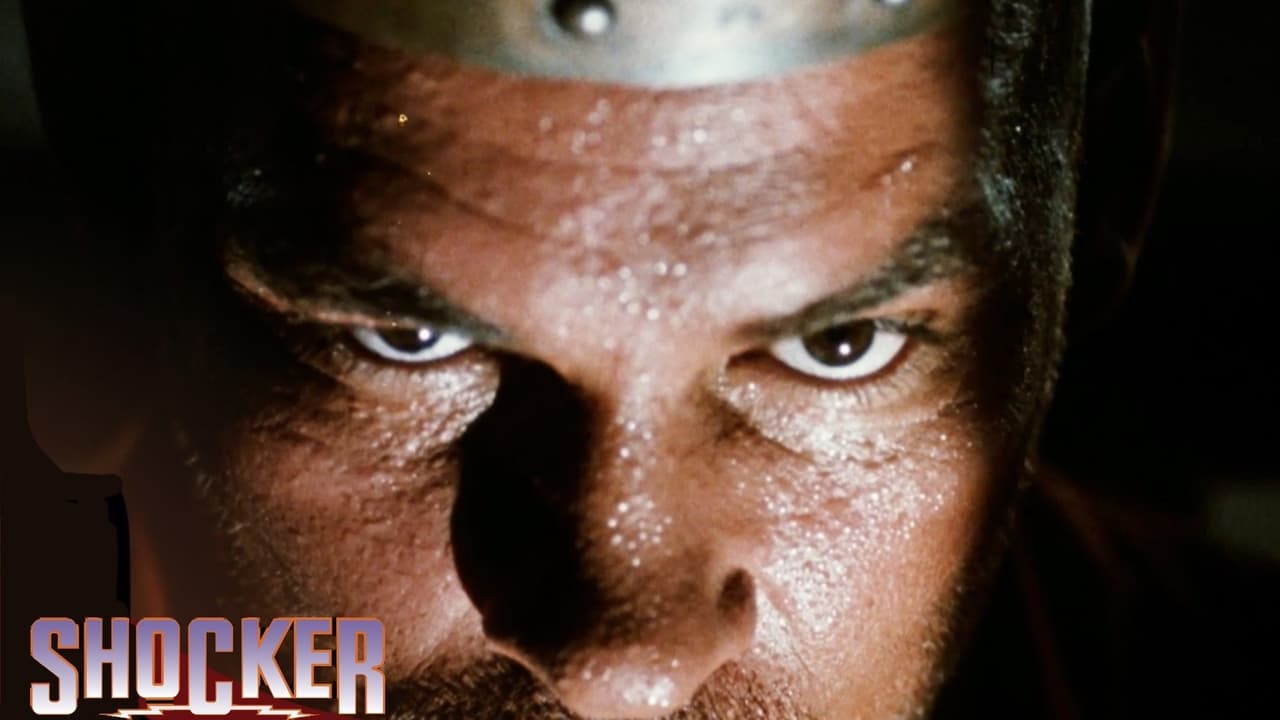
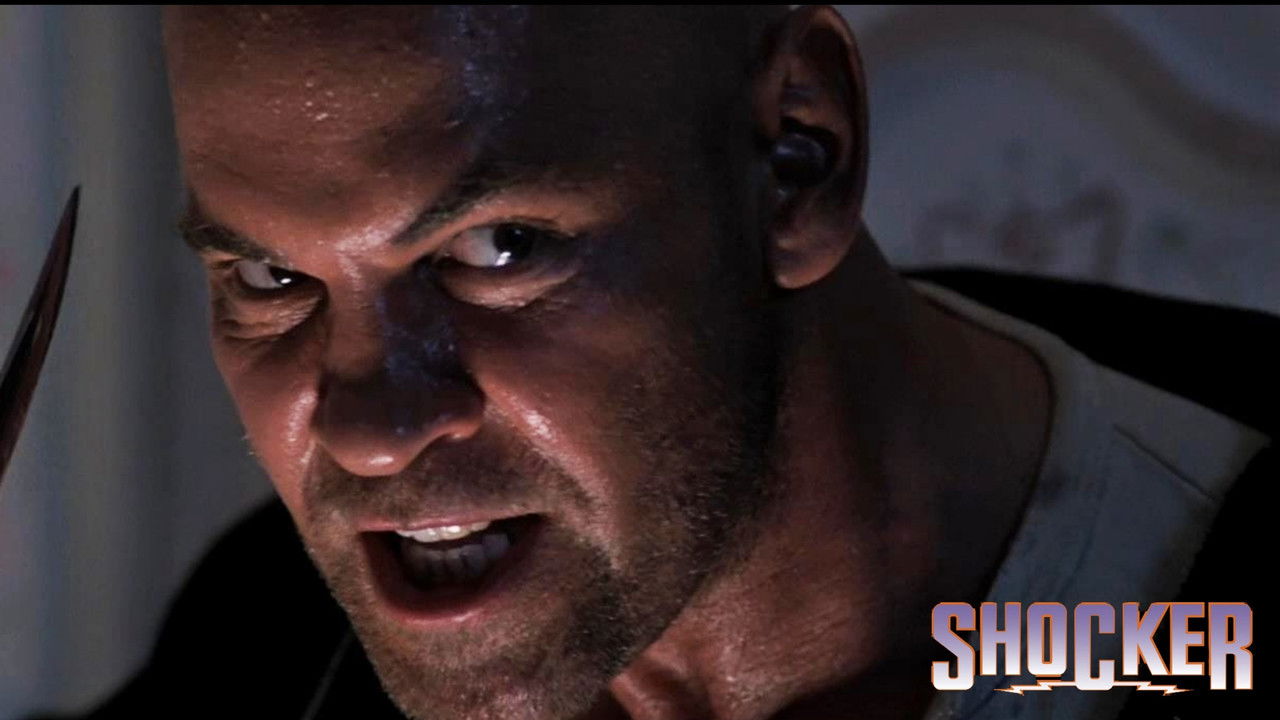
Forget subtlety. Shocker throws you straight into the path of Horace Pinker, a television repairman turned utterly psychotic serial killer whose reign of terror grips a suburban town. Played with genuinely menacing, scenery-chewing gusto by Mitch Pileggi (years before he’d be chasing aliens as Skinner in The X-Files), Pinker isn't just evil; he's a force of pure, unpredictable malevolence. His introductory scenes are brutal, establishing a threat that feels disturbingly grounded before the film takes its high-voltage turn. Craven, who also penned the script, doesn't shy away from the grim reality of Pinker's crimes, setting a grim tone early on.
The story centers on Jonathan Parker (Peter Berg, bringing an earnest likeability that anchors the madness), a college football star whose adopted family falls victim to Pinker. Through disturbing, psychic dream connections – a clear echo of Craven’s work on A Nightmare on Elm Street just five years prior – Jonathan helps Lieutenant Don Parker (Michael Murphy, lending his dependable gravitas) finally apprehend the killer. But the electric chair, meant to be the end, is only the beginning.
No Body, No Problem
Here's where Shocker earns its title and its cult status. Pinker, having made a Faustian bargain (of sorts, it’s vaguely defined demonic power via a TV aerial!), survives his execution by becoming pure electrical energy. He can possess anyone, jumping from body to body with a touch, turning innocent bystanders into temporary conduits for his murderous rage. It's a concept ripe with paranoid potential, and Craven mines it for some effectively tense sequences. Remember the sheer unease of watching someone you trust suddenly flicker with Pinker’s malevolent grin? That unsettling feeling lingers.
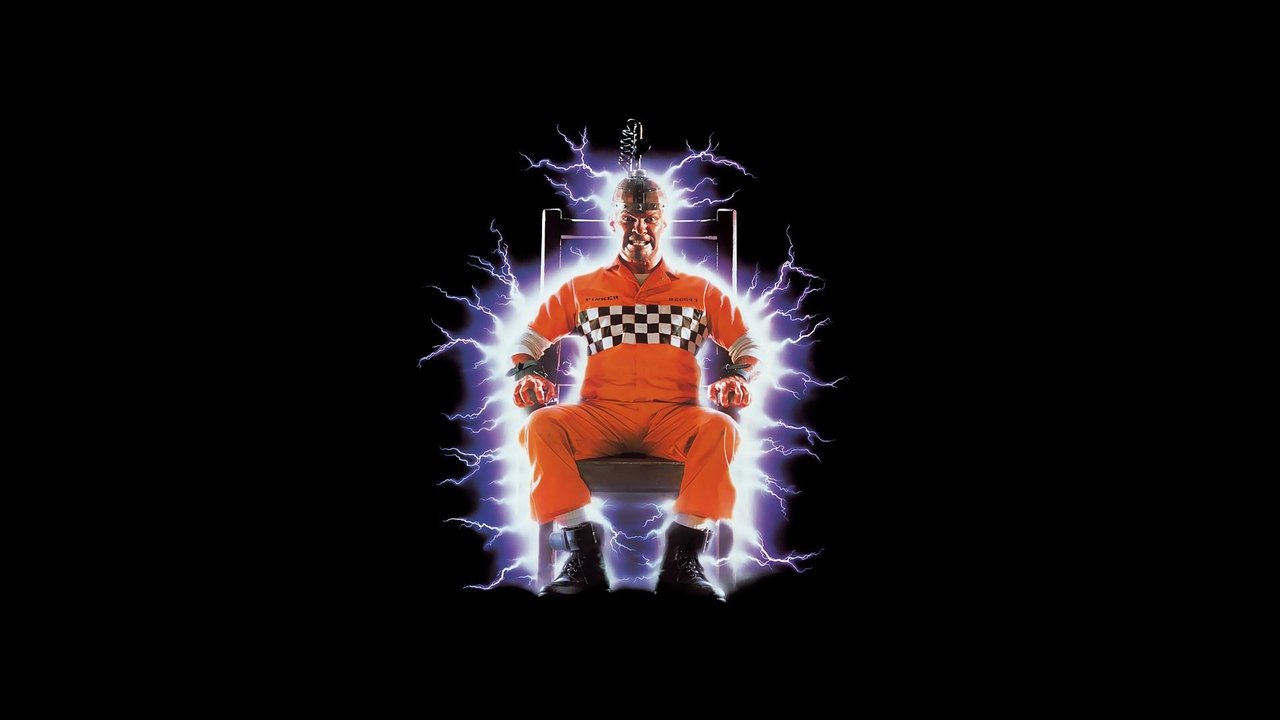
This body-hopping mechanic leads to some of the film's most memorable, if occasionally chaotic, set pieces. Pinker inhabiting a little girl is genuinely creepy, and his relentless pursuit of Jonathan creates a palpable sense of inescapable dread. The practical effects used to depict the energy transfers and possessions, while definitely products of their time, have that tangible, almost uncomfortable quality that CGI often lacks. You feel the crackle and spark.
Craven's High-Voltage Ambition
It's impossible to discuss Shocker without acknowledging Wes Craven's shadow looming large. Fresh off the phenomenal success of Freddy Krueger, the pressure was undoubtedly on to create another iconic horror villain and franchise. Pinker, with his electrical powers and snarling catchphrases ("Let's take a ride in my Volts-wagen!"), was clearly intended as the next big thing. However, Shocker feels distinctly different from Nightmare – less focused on dream logic and surrealism (though it has its moments) and more plugged into a frantic, almost punk-rock energy. This energy is amplified by a killer heavy metal soundtrack featuring the likes of Megadeth (covering Alice Cooper's "No More Mr. Nice Guy"), Bonfire, and The Dudes of Wrath (a supergroup including Paul Stanley of KISS and Desmond Child). That soundtrack screams late 80s.
This ambition, however, sometimes trips over itself. The film’s tone can be uneven, veering from genuinely grim horror to almost slapstick action, particularly in the later stages. Behind the scenes, Craven famously battled the MPAA, reportedly submitting the film numerous times to secure an R-rating instead of an X due to its violence. One has to wonder how much those forced cuts contributed to the sometimes jarring shifts and slightly incoherent plotting, especially concerning Pinker's powers and mythology. While budgeted at a lean $5 million, it pulled in around $16.6 million – a modest success, but nowhere near the cultural phenomenon needed to launch the intended sequels.
Surfing the Channels of Madness
The film's climax is pure, unadulterated late-80s insanity: a protracted battle where Jonathan and Pinker literally fight through television channels. It’s a sequence that is simultaneously ambitious, technically complex for its time, utterly bizarre, and undeniably memorable. Seeing Pinker pop up in war footage, news reports, and old black-and-white movies is surreal and highlights the film's central theme of media saturation and television's pervasive influence – a classic Craven touch. Does it entirely work? Debatable. Is it unforgettable? Absolutely. It’s a sequence that could only have come from this specific era of filmmaking, embracing the weird with open arms.
Final Static Discharge
Shocker isn't Wes Craven's most polished or coherent work. It lacks the tight focus of A Nightmare on Elm Street or the smart deconstruction of Scream. Yet, there's an undeniable, almost infectious energy to it. Mitch Pileggi delivers a truly ferocious performance as Pinker, creating a villain who, while perhaps not as iconic as Freddy, is genuinely intimidating and unsettling. The central concept remains creepy, and the practical effects and that bonkers TV climax stick in the mind long after the tape clicks off. It’s messy, it’s loud, it’s uneven, but damn if it isn’t a fascinating snapshot of late-80s horror ambition.

Rating: 6/10
Justification: The score reflects the film's undeniable energy, Pileggi's standout performance, and some genuinely memorable, unsettling concepts and sequences (especially the body-hopping and the TV climax). However, it's held back by an uneven tone, a somewhat messy plot likely impacted by MPAA cuts, and the fact that it never quite lives up to the potential of its premise or its Nightmare pedigree. It's a solid, sometimes inspired, but ultimately flawed cult favorite.
Final Thought: For all its faults, Shocker remains a potent jolt from the VHS era – a frantic, bizarre, and often genuinely unnerving ride that tried to plug into the zeitgeist but ended up creating its own strange frequency. It may not have spawned the franchise Craven hoped for, but Horace Pinker definitely left his static-charged mark on the landscape of 80s horror oddities.