That low, electronic thrum starts, doesn't it? Tangerine Dream's signature pulse, weaving through the opening credits like a warning signal broadcast from some shadowy government facility. It immediately transports you back – not just to 1984, but to a specific kind of unease. Firestarter isn't just a movie; it's a flickering memory from the corner of the video store, promising psychic powers, desperate chases, and the chilling spectacle of uncontrollable rage made manifest. It taps into that primal fear of hidden potential turned destructive, and the cold, calculating forces that would exploit it.
### The Flicker of Dread
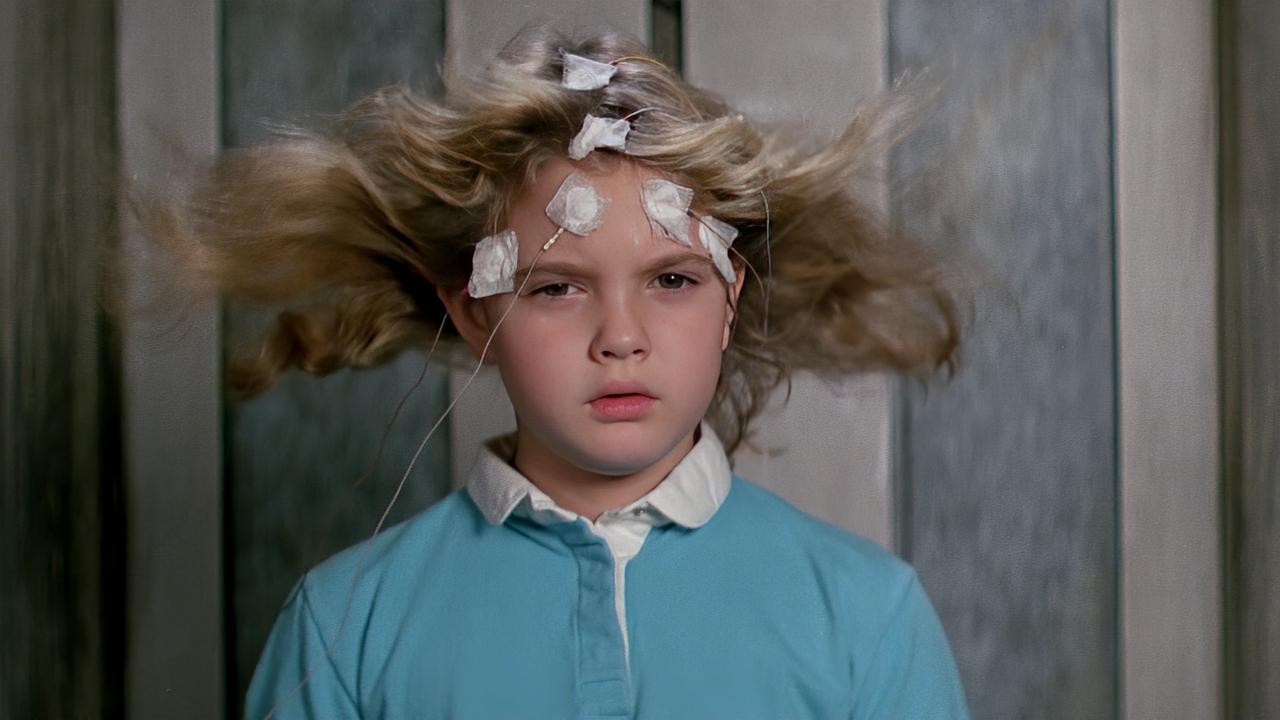
Based on the novel by the master himself, Stephen King, Firestarter plunges us into the desperate flight of Andy McGee (David Keith) and his young daughter, Charlie (Drew Barrymore). They aren't just running; they're being relentlessly hunted by "The Shop," a clandestine government agency responsible for the experiments that gave Andy psychic suggestion abilities ("the push") and Charlie her terrifying pyrokinesis. The premise itself is pure Reagan-era paranoia fuel – the faceless, unaccountable power structure preying on the innocent. Director Mark L. Lester (who would later give us the explosive joys of Commando) steps into shoes originally meant for John Carpenter (who departed after the undeserved box office chill of The Thing), and crafts a film that, while perhaps lacking Carpenter’s signature dread, delivers a potent mix of chase thriller and explosive sci-fi horror.
### A Child's Unholy Power
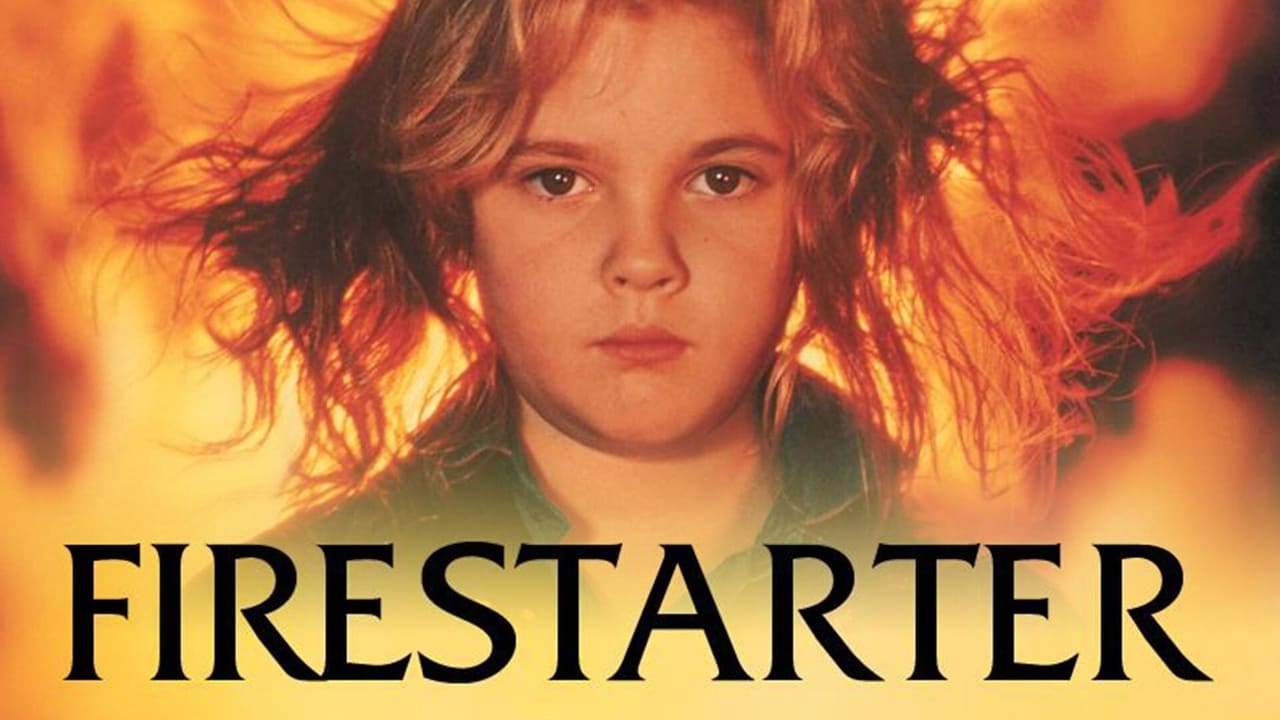
At the heart of the film, radiating both vulnerability and immense threat, is Drew Barrymore. Fresh off her star-making turn in E.T. the Extra-Terrestrial (1982), her casting here was inspired. She embodies Charlie’s innocence, making the moments when her power flares – eyes narrowed, hair whipping in an unseen wind – genuinely unsettling. You believe her fear, her confusion, and the terrifying potential simmering just beneath the surface. David Keith provides a solid anchor as the protective, increasingly desperate father, his own powers waning as he tries to shield his daughter. Their bond feels real, adding weight to the escalating danger.
But let's talk about the chilling counterpoint: George C. Scott as John Rainbird. Forget any notion of subtle menace; Scott delivers a performance of theatrical, almost gleeful villainy. His Rainbird, a conflicted yet ruthless Shop operative with a missing eye and a disturbing fascination with Charlie, is pure nightmare fuel. Stephen King reportedly envisioned Burt Reynolds for the role, a fascinating "what if," but Scott makes it entirely his own, bringing a Shakespearean gravitas to the inherent creepiness. His scenes attempting to manipulate Charlie are among the film's most effective, layering psychological tension onto the supernatural threat. We also get reliable turns from Martin Sheen as the cold Shop director Captain Hollister and Art Carney and Louise Fletcher as the kindly couple who offer fleeting sanctuary.
### Igniting the Screen (Literally)

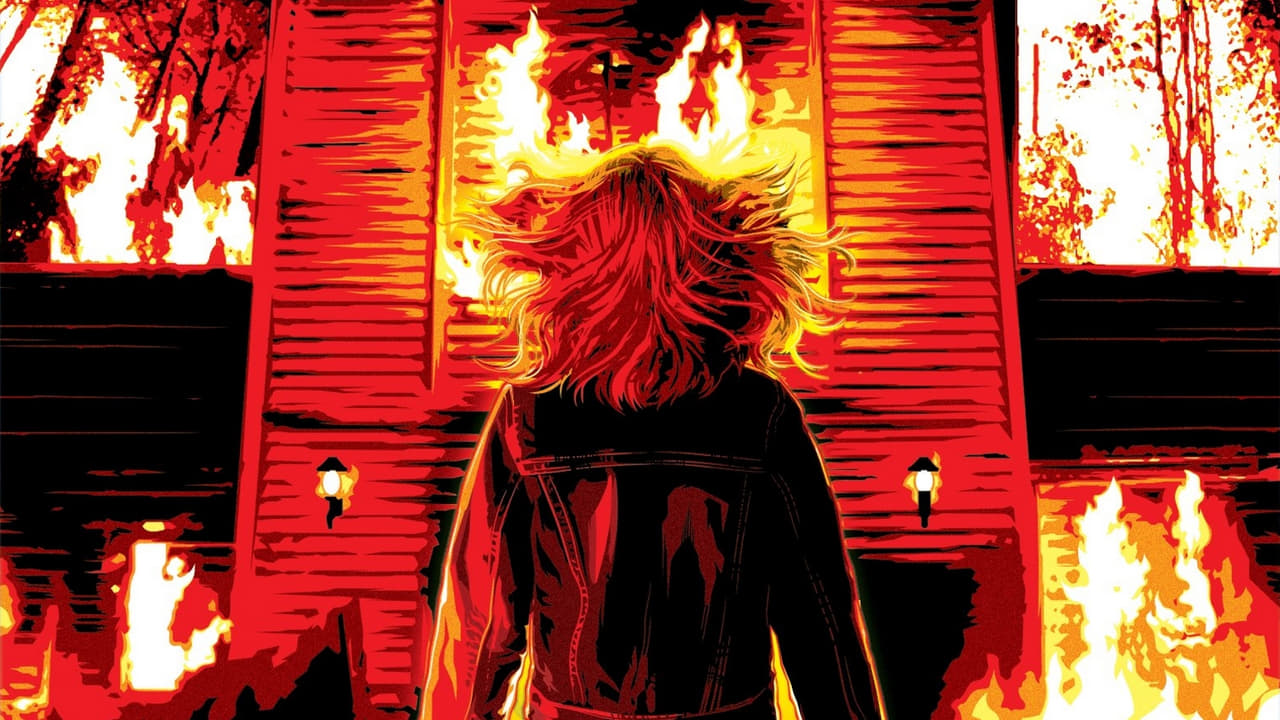
Where Firestarter truly cemented its place in VHS memory is its commitment to practical fire effects. In an era before CGI rendered flames commonplace and often weightless, the pyrotechnics here feel dangerous. Stunt coordinator Terry Leonard and his team orchestrated sequences of astonishing scale, particularly in the film's explosive climax. You feel the heat coming off the screen. Remember watching those fireballs erupt on your old CRT? There was a tangible sense of awe and terror. This dedication to practical spectacle wasn't cheap or easy; the film carried a respectable $12 million budget (around $35 million today), much of which visibly went up in smoke. While its $17 million box office wasn't a runaway smash, it found its loyal audience on home video, precisely because it delivered those fiery moments with such conviction. These weren't just effects; they were events.
### Echoes in the Ashes
While Stephen King wasn't reportedly thrilled with this adaptation (a common sentiment from the author regarding many 80s interpretations of his work), Firestarter holds a distinct place in the King cinematic universe. It lacks the psychological depth of The Shining (1980) or the raw adolescent horror of Carrie (1976), settling into a more straightforward thriller structure punctuated by pyrotechnic set pieces. The pacing can sometimes feel uneven, caught between the road movie elements and the Shop's machinations. Stanley Mann's screenplay simplifies some of the novel's complexities, focusing squarely on the chase and Charlie's escalating power. Yet, Tangerine Dream’s haunting score elevates the material significantly, adding layers of atmospheric dread and electronic melancholy that linger long after the credits roll. It’s one of the truly iconic soundtracks of the era, perfectly complementing the film's paranoid, high-tech (for the time) vibe. Filmed largely on location in North Carolina, the visuals capture a sense of rural isolation juxtaposed against the sterile threat of The Shop’s facilities.
The film spawned a largely forgotten TV miniseries (Firestarter: Rekindled, 2002) and a recent 2022 remake, but for many, the 1984 version remains the definitive screen portrayal. It’s a product of its time, certainly, but one that still resonates with its core concept and memorable central performance.
***

VHS Heaven Rating: 7/10
Justification: Firestarter earns its 7 primarily through the strength of its core concept, Drew Barrymore's compelling central performance, George C. Scott's chilling villain, the unforgettable Tangerine Dream score, and its genuinely impressive practical fire effects that were a benchmark for the era. It successfully taps into Cold War paranoia and the fear of unchecked power. However, it's held back slightly by somewhat uneven pacing and a script that streamlines King's novel, occasionally sacrificing depth for spectacle. It doesn't quite reach the heights of the very best King adaptations, but its fiery set pieces and atmospheric score make it a standout 80s sci-fi thriller that absolutely burned its image into the minds of VHS renters.
Final Thought: Even decades later, the image of little Charlie McGee, pushed too far, unleashing hellfire remains potent. It’s a quintessential piece of 80s Stephen King cinema – maybe not perfect, but undeniably iconic and packing a nostalgic, fiery punch. Doesn't that final, explosive sequence still feel satisfyingly intense?