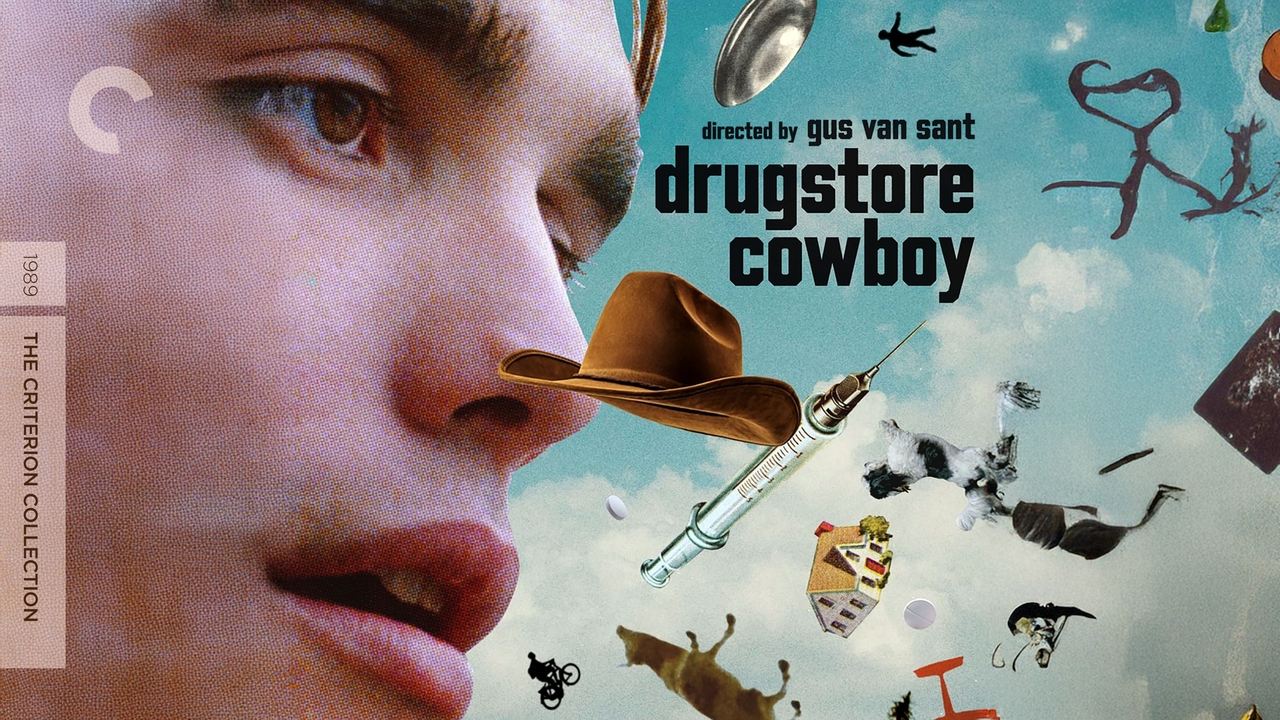
There's a peculiar kind of quiet that settles over you after watching Drugstore Cowboy. It’s not the silence of shock or awe, necessarily, but something more contemplative, tinged with the grey skies and damp streets of its early 70s Portland setting. Released in 1989, Gus Van Sant’s film felt like a breath of something different then, something starker and more truthful than much of what crowded the multiplexes or video store shelves. It presented a portrait of addiction devoid of hysterics or easy moralizing, instead offering an unsettlingly pragmatic look inside the lives of those caught in its cycle.

Life Measured in Milligrams
The film follows Bob Hughes (Matt Dillon) and his makeshift family – wife Dianne (Kelly Lynch) and protegés Rick (James LeGros) and Nadine (Heather Graham) – as they drift across the Pacific Northwest, sustaining their nomadic existence and drug habits by robbing pharmacies. What immediately strikes you, revisiting it now on a format perhaps not far removed from the well-worn VHS tapes it graced back in the day, is the film’s detached, almost anthropological tone. Van Sant, working from an unpublished autobiographical novel by James Fogle (who was himself incarcerated for much of his life for similar crimes), doesn't judge his characters; he simply observes them. Their rituals, their planning, their desperate highs and inevitable lows are presented matter-of-factly. It's a perspective that felt radical then and retains its power now.
The Pragmatic Addict
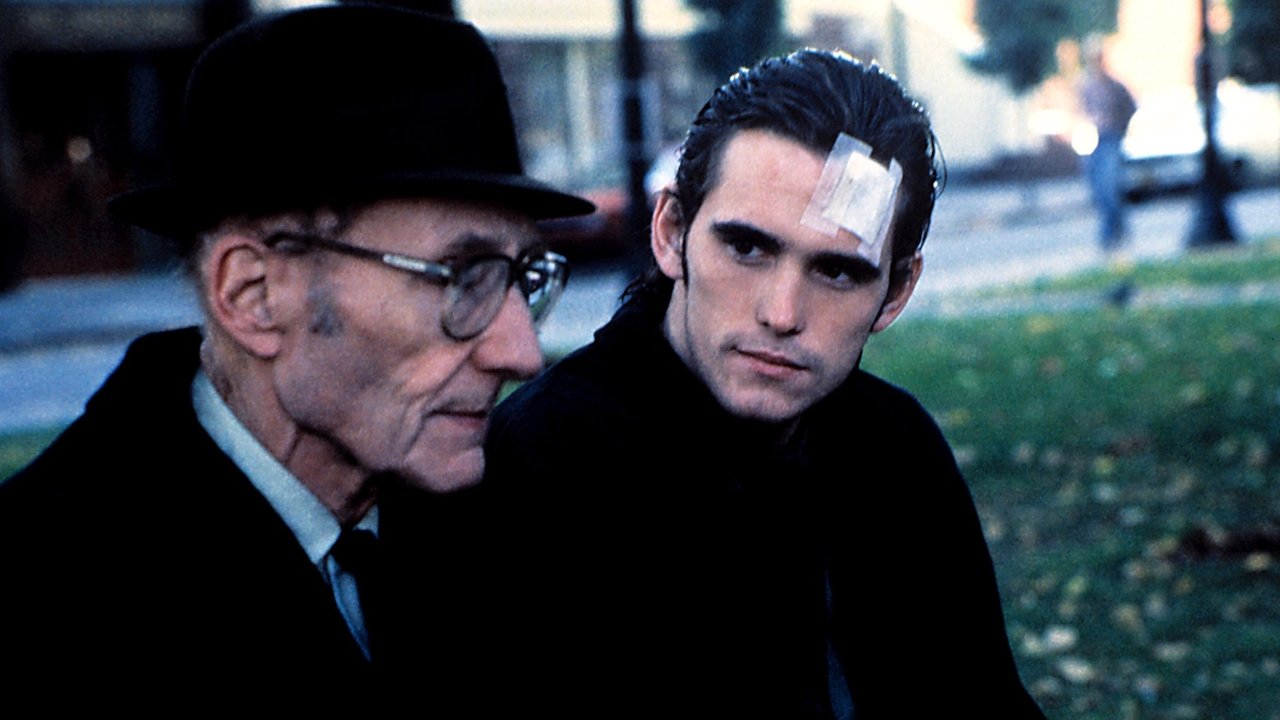
At the center of it all is Matt Dillon's career-redefining performance as Bob. Shedding the last vestiges of his 80s heartthrob image, Dillon embodies Bob with a weary intelligence and a surprising vulnerability beneath the streetwise exterior. Bob isn’t a raving lunatic or a tragic victim in the conventional sense. He’s practical, meticulous (in his own way), and fiercely superstitious. His detailed explanations of hexes – never look at hats on a bed, never mention dogs – provide some of the film's darkest humor, but they also reveal a desperate need for control in a life spiraling utterly out of control. Dillon makes Bob’s skewed logic feel authentic; you understand why he believes these things, even as you see the self-destruction they mask. It’s a performance built on subtle shifts in expression and posture, conveying years of accumulated weariness and desperate hope. I recall renting this from Blockbuster back in the early 90s, expecting perhaps a more conventional crime flick, and being completely arrested by Dillon's portrayal – it felt miles away from The Outsiders (1983) or Rumble Fish (1983).
A Crew Adrift
The supporting cast orbits Bob perfectly. Kelly Lynch brings a tough, bruised sensuality to Dianne, Bob's partner in crime and addiction. Her loyalty is fierce, yet you sense the simmering desperation beneath her cool facade. James LeGros captures Rick's eager-to-please incompetence, while a very young Heather Graham embodies Nadine's tragic naivete, a casualty waiting to happen in this dangerous world. Their dynamic feels lived-in, the bonds forged through shared need and desperation palpable, even as the inevitable cracks begin to show.

Portland Rain and Bleak Beauty
Gus Van Sant, who would later give us films like Good Will Hunting (1997) and Milk (2008), establishes his signature style here. The film has a distinctive mood – damp, overcast, punctuated by the washed-out colours of the early 70s setting. Van Sant uses long takes and a patient camera, allowing scenes to unfold naturally, immersing the viewer in the crew's routines and the specific atmosphere of their world. The choice to set it in 1971, using period details without being overly showy, adds another layer of detachment, viewing this specific subculture almost as a historical artifact. Filming on location in Portland lent an undeniable authenticity; you could almost smell the damp pavement and stale cigarette smoke. It's a far cry from the glossy image often associated with 80s cinema.
Whispers from the Counterculture
One of the film’s most memorable – and, frankly, coolest – elements is the brief but significant cameo by Beat generation icon William S. Burroughs as Tom the Priest, an older, defrocked addict whom Bob encounters. Burroughs, whose own novel Junky chronicled addiction with unflinching honesty decades earlier, brings an immediate, almost spectral authority to his scenes. Apparently, Van Sant simply called Burroughs up and asked him to be in the film, sending him the script (based on Fogle's work, which resonated with Burroughs' own experiences). His presence feels like a benediction from a previous generation of outsiders, linking Bob's struggles to a longer lineage of American counterculture figures existing on the fringes. It’s a piece of trivia that deepens the film’s texture immeasurably. Another fascinating tidbit is the film's modest $2.5 million budget, which, despite its challenging subject matter, yielded critical acclaim (including awards at Cannes) and became a significant indie success, proving there was an audience hungry for more complex, nuanced stories.
The Lingering Shadow
Drugstore Cowboy doesn't offer easy answers or a neat resolution. It portrays the difficulties of breaking free from addiction's grip, the magnetic pull of the life, and the arbitrary nature of fate (or hexes, depending on your perspective). Does Bob truly escape, or merely trade one set of dependencies for another? The film leaves you pondering the nature of choice, responsibility, and the strange rationalizations we construct to survive. It remains a powerful, unsettling piece of American independent cinema, a snapshot of a specific time and place that feels remarkably timeless in its exploration of human frailty.

Rating: 9/10
This score reflects the film's raw honesty, Matt Dillon's transformative lead performance, Gus Van Sant's confident and unique directorial vision, and its unflinching portrayal of a difficult subject. It avoids sensationalism, finding a bleak beauty and dark humor in the lives of its characters, anchored by that unforgettable sense of place and time.
It’s a film that sticks with you, like the damp chill of a Portland morning, long after the tape has clicked off in the VCR. What truly lingers is the quiet understanding it fosters, forcing a confrontation not just with addiction, but with the complex, often contradictory ways we all try to navigate a world that feels increasingly out of our control.