There's a certain kind of chill that Claude Chabrol perfected, isn't there? It’s not the jump-scare shock of slasher flicks that crowded video store shelves back in the day, but something far more insidious. It's the unease that creeps in slowly, settling in the pit of your stomach as you watch seemingly ordinary, often affluent, people reveal the profound darkness lurking just beneath their polished surfaces. His 1987 thriller, Masques (Masks), is a prime example, a film that wraps its icy critique of bourgeois hypocrisy in the guise of a captivating mystery. Finding this on VHS felt like unearthing a sophisticated, slightly dangerous secret amidst the more bombastic fare.
Beneath the Smile
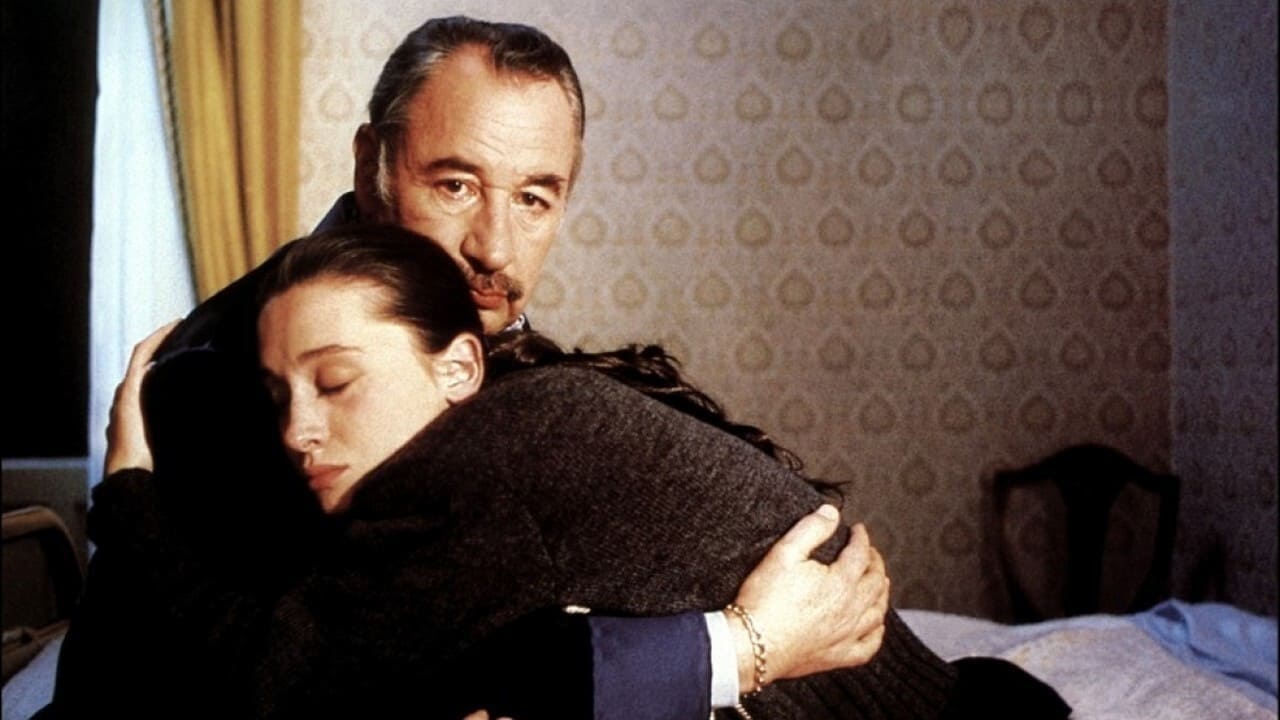
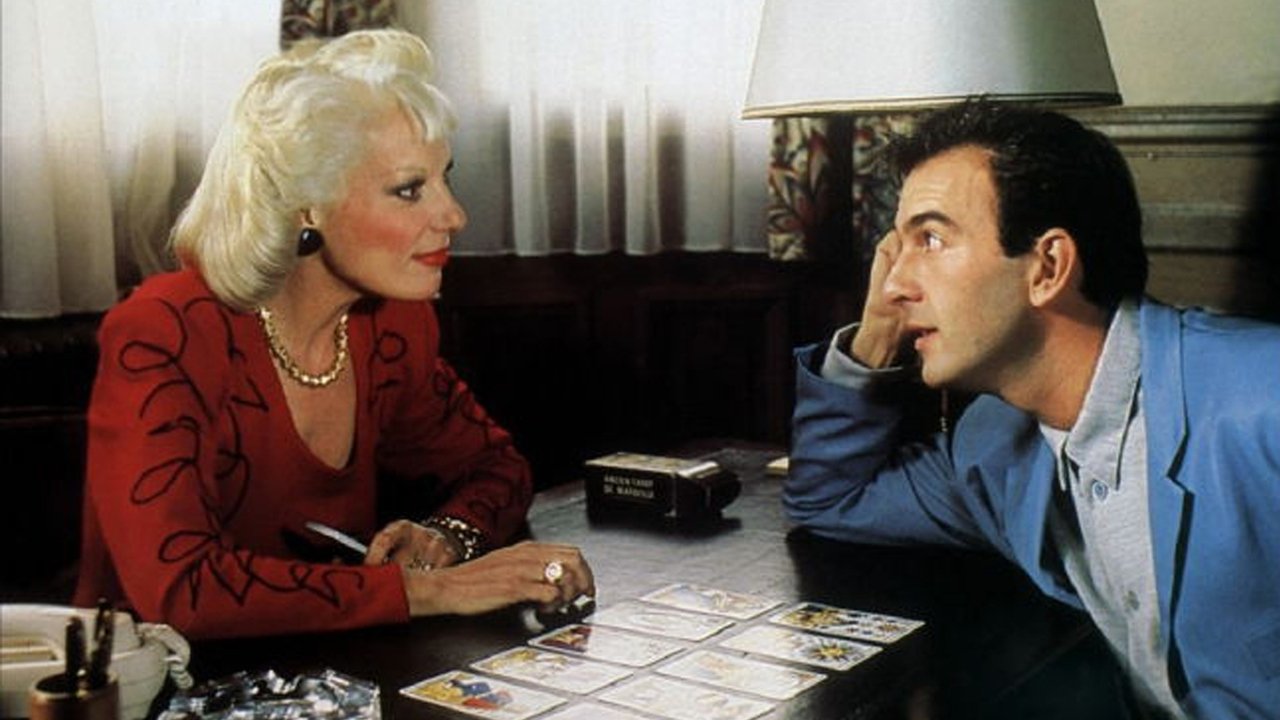
The premise lures you in with deceptive simplicity. Roland Wolf (Robin Renucci) is a young, eager journalist writing a biography of the beloved television personality Christian Legagneur (Philippe Noiret), a man whose avuncular charm and game shows have made him a national treasure. Invited to Legagneur’s lavish country estate to conduct interviews, Wolf has a hidden agenda: he suspects the jovial host is involved in the disappearance of his goddaughter, Madeleine. What follows is a meticulously crafted game of cat and mouse, played out not with car chases, but with veiled words, watchful eyes, and the stifling etiquette of the French upper class.
It’s Philippe Noiret’s performance that truly anchors the film, and it’s nothing short of masterful. Known for roles radiating warmth and integrity (think Cinema Paradiso, released just a year later in 1988), Noiret weaponizes that inherent likability here. His Legagneur is all expansive gestures, hearty laughs, and performative generosity. He hosts elaborate birthday celebrations (complete with bizarre, costumed rituals), dispenses folksy wisdom, and presents an image of pure benevolence. Yet, behind the twinkling eyes, Chabrol and Noiret hint at something hollow, something calculating. It’s a performance built on the terrifying gap between the public mask and the private void, and it deservedly won Noiret the César Award for Best Actor. Watching him, you feel Wolf’s own creeping dread – how do you accuse Santa Claus himself of monstrous deeds?
The Chabrol Touch
As ever with Claude Chabrol, a key figure of the French New Wave who carved a niche as the Gallic Hitchcock (though with his own distinct flavour), the direction is patient, observant, almost forensic. He lets the tension build through atmosphere and interaction rather than overt action. The opulent yet isolating setting of the country house becomes a character itself, its pristine surfaces reflecting the curated facades of its inhabitants. Chabrol uses long takes and subtle camera movements to trap us within these spaces alongside Wolf, forcing us to scrutinize every gesture, every carefully chosen word. There's a deliberate rhythm here, a slow burn that demands attention, rewarding the viewer who sinks into its unsettling cadence. This wasn't a film you’d put on for background noise; it commanded your focus, drawing you deeper into its web.
Unmasking the Truth

Robin Renucci provides a solid counterpoint as the determined journalist, his youthful earnestness gradually hardening into suspicion and fear as he navigates the complex social dynamics of the household. Anne Brochet, in an early role, is also effective as Catherine, Legagneur’s other niece, whose apparent fragility masks her own secrets and motivations. The screenplay, co-written by Chabrol and his frequent collaborator Odile Barski, is less concerned with shocking twists (though there are revelations) than with the psychological toll of deception and the pervasive rot beneath glittering appearances. It’s a film fascinated by performance – not just Legagneur’s public persona, but the roles everyone plays within this closed, privileged world.
One fascinating tidbit is how Masques represented something of a return to critical favour for Chabrol after a patchier period in the early 80s. It felt like he was back on familiar, fertile ground, dissecting the moral compromises and hidden cruelties of the comfortable classes with renewed vigour. The film’s success, particularly Noiret’s award, helped solidify this comeback. Seeing it on a slightly fuzzy VHS tape, perhaps rented from the 'Foreign Films' section that always felt a bit more grown-up, somehow enhanced its themes – the imperfect image mirroring the imperfect reality beneath the surface.
Lingering Shadows
Does the film feel dated? Perhaps its pacing might test the patience of viewers raised on rapid-fire editing. But its core concerns – the masks people wear, the seductive nature of celebrity, the darkness that can fester behind wealth and charm – remain disturbingly relevant. What lingers most after the credits roll isn't necessarily the plot resolution, but the chilling effectiveness of Noiret’s portrayal and Chabrol’s dissection of a world where smiles hide secrets and kindness can be the most terrifying mask of all. It asks us, unsettlingly, how well we truly know anyone, especially those who seem the most open and friendly.
Rating: 8/10
This score reflects a masterclass in suspenseful character study and atmospheric direction. Philippe Noiret delivers an iconic performance that brilliantly subverts his typical screen persona, and Claude Chabrol confirms his status as a maestro of psychological tension. While its deliberate pace might not suit all tastes today, Masques is a potent, intelligent thriller that burrows under your skin. It’s a stark reminder, perfectly preserved on those magnetic tapes, that the most frightening monsters often wear the most welcoming faces.