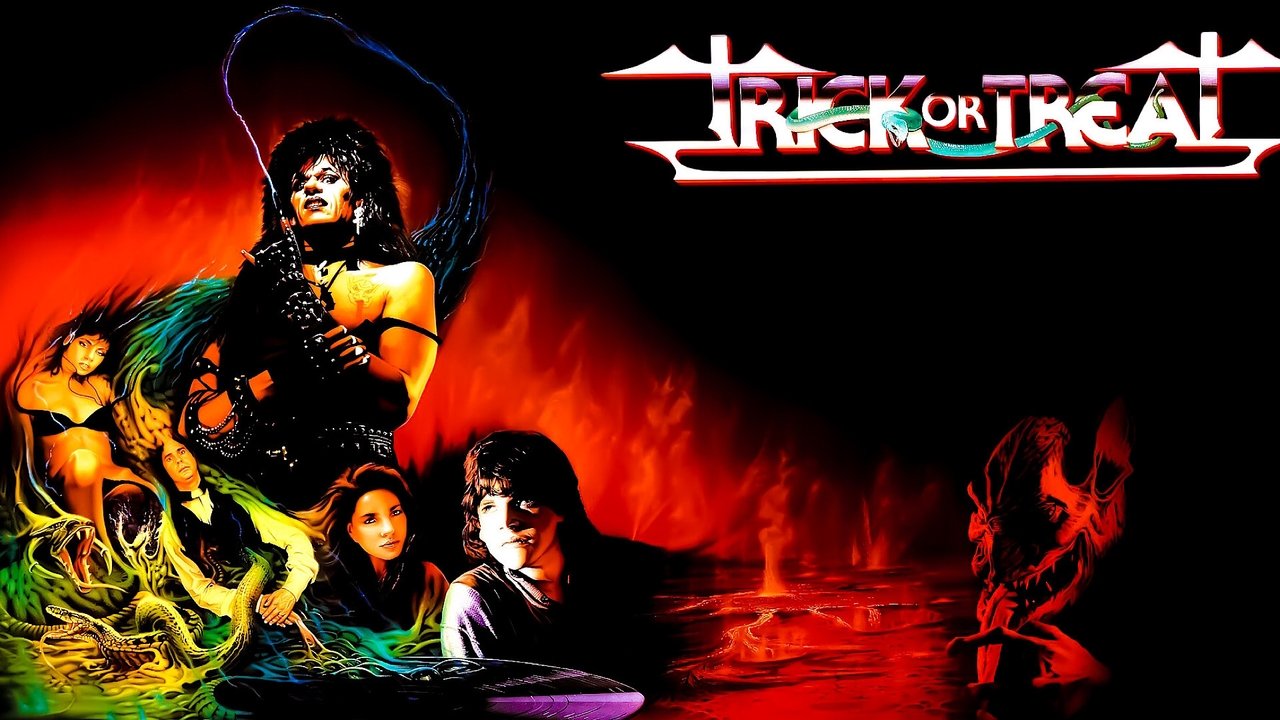
Okay, headbangers and horror hounds, gather ‘round the flickering glow of the metaphorical CRT. Remember that glorious feeling? Scanning the horror aisle at the local video store, past the familiar slashers and creature features, and stumbling upon that cover: a demonic hand clutching a guitar neck, lightning crackling, promising something loud, angry, and probably forbidden by concerned parents everywhere. That, my friends, was the siren call of 1986’s Trick or Treat, a flick that cranked the volume knob on horror way past eleven. Forget subtle chills; this was a full-on Marshall stack assault of demonic rock fury.
### Meet the Ragman
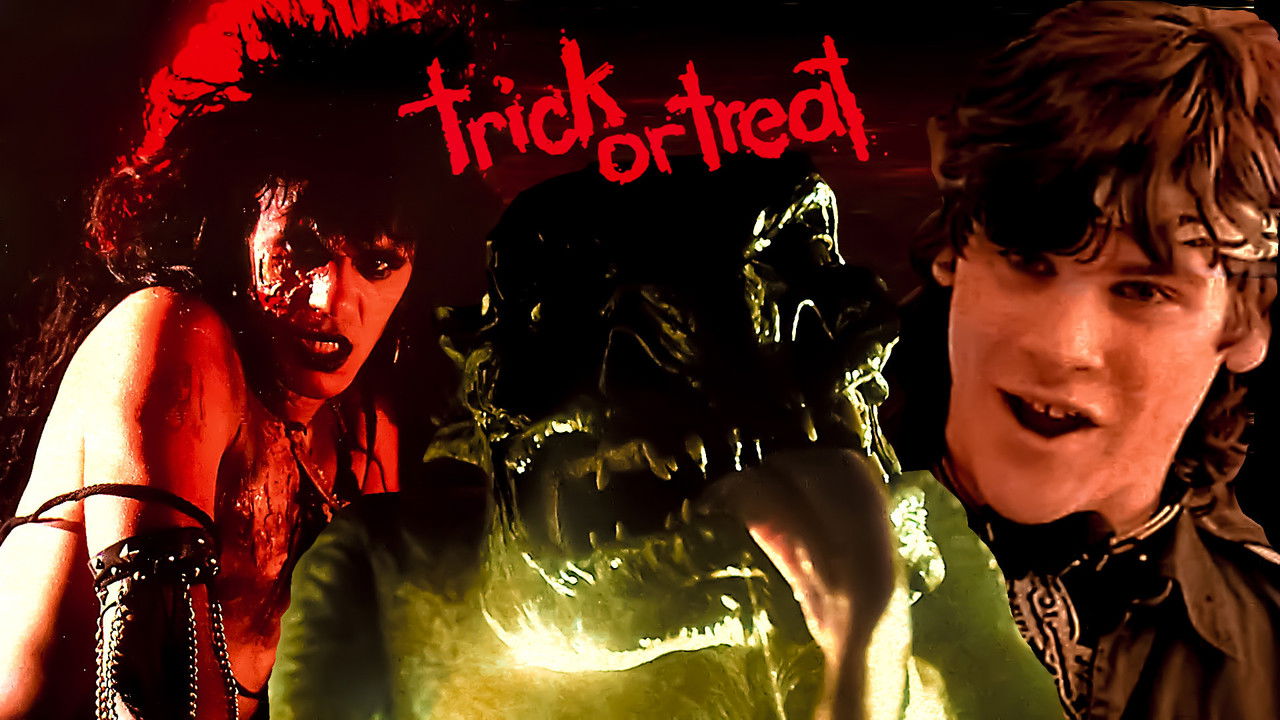
Our guide through this high-decibel nightmare is Eddie Weinbauer, played with surprising angst by Marc Price, forever known to millions as the lovably nerdy Skippy from Family Ties. Casting Price here was a stroke of genius, instantly grounding the film's outlandish premise. Eddie, nicknamed "Ragman" by the jocks who make his high school life a living hell, is the quintessential 80s metalhead outcast. His bedroom walls are plastered with posters, his sanctuary is his music, and his god is Sammi Curr – a controversial, stadium-rock icon who meets a fiery end in a hotel room just as the film kicks off. Eddie is devastated, writing mournful letters to his hero that feel painfully real to anyone who ever found solace in a band.
The plot kicks into high gear when Eddie visits his favourite radio DJ, "Nuke" – played with sleazy charm by none other than Gene Simmons of KISS fame (a fun bit of stunt casting that totally works). Nuke gifts Eddie the only known copy of Sammi Curr's final, unreleased album, Songs in the Key of Death. Of course, being an 80s horror movie steeped in the era's paranoia about hidden messages in rock music (remember the PMRC hearings?), playing the record backwards isn't just a gimmick; it's an invocation.
### Let There Be Rock (and Revenge)
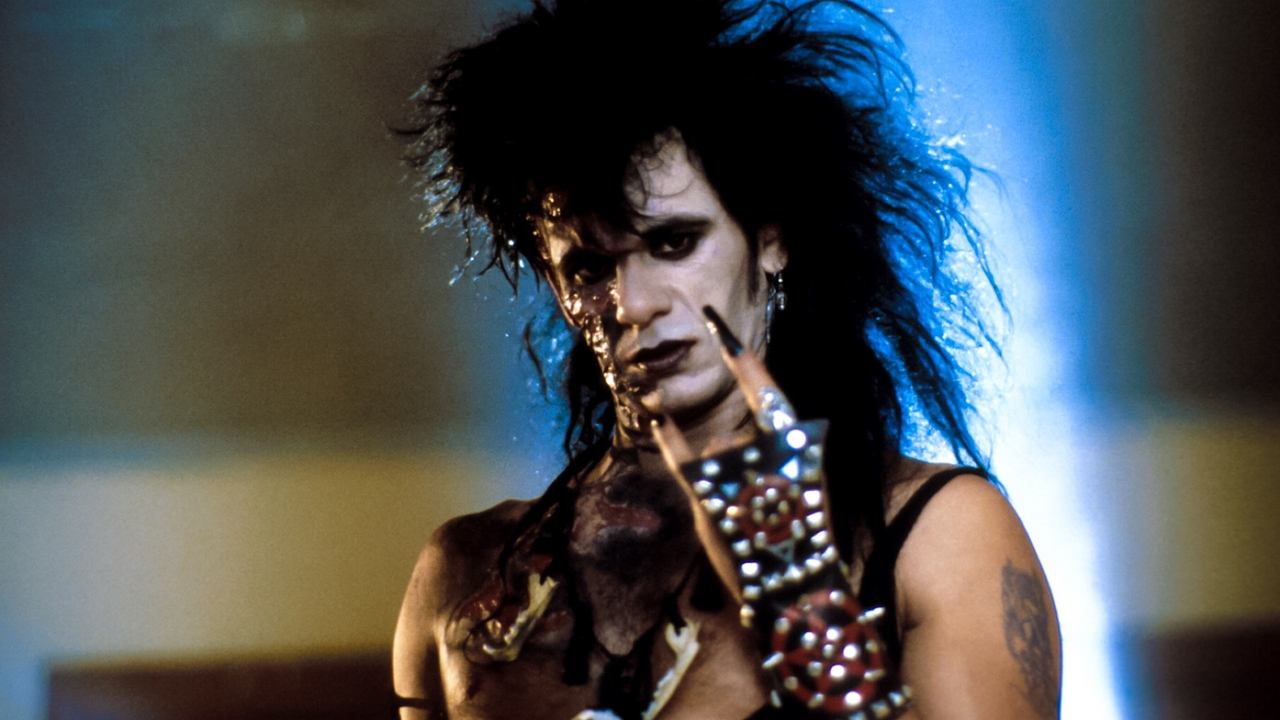
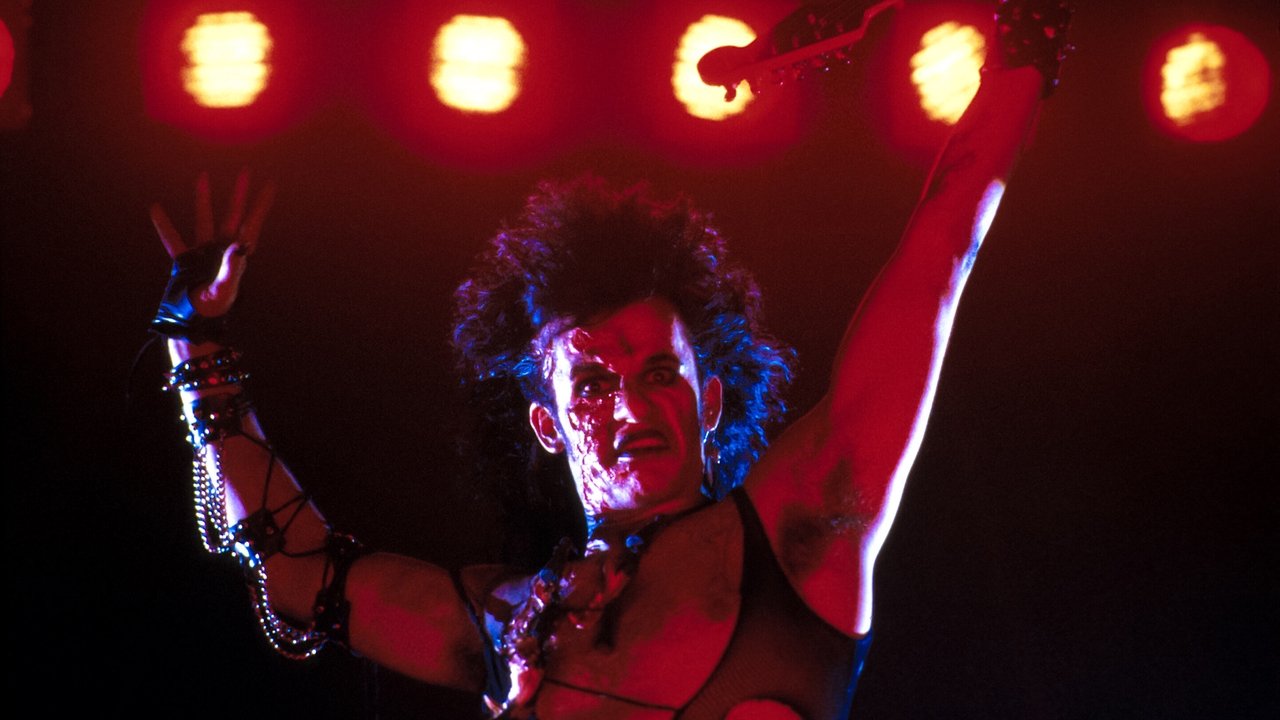
This is where Trick or Treat truly plugs in and rips. The backward messages don't just contain satanic ramblings; they contain Sammi Curr himself. Tony Fields, a performer primarily known for his dancing on Solid Gold (a wild piece of trivia!), absolutely shreds as the resurrected rocker. Fields, who sadly passed away far too young, brings an electrifying, almost serpentine energy to Curr. He’s initially a spectral avenger, helping Eddie get back at his bullies through increasingly dangerous supernatural "pranks." Fields’ physicality makes Curr feel genuinely menacing, less a ghost and more a crackling conduit of pure rock-and-roll malice. It’s a performance that deserved more recognition.
The film leans heavily into the wish-fulfillment fantasy before twisting it into a nightmare. Eddie initially revels in Curr's power, but soon realizes unleashing a demonic metal god has consequences, especially when Curr decides he likes the land of the living and has bigger plans than just tormenting high school bullies. The escalating chaos feels perfectly tuned to the anxieties of the time – the fear that the music kids loved really was dangerous. And who better to lampoon that fear than Ozzy Osbourne, appearing in a hilarious cameo as a televangelist railing against the evils of heavy metal? Talk about meta-casting!
### Practical Magic and Metal Mayhem
Let's talk about how Sammi Curr comes alive, because this is pure VHS Heaven territory. Directed by Charles Martin Smith – yes, the actor from American Graffiti (1973) and Never Cry Wolf (1983), making a surprising but competent pivot to horror directing – the film revels in good old-fashioned practical effects. When Curr manipulates electricity, it feels tangible – sparks fly, lights explode, and energy arcs in ways that might look a bit raw now but felt incredibly potent back then. Remember how Curr could manifest through stereos and even tape decks? The sequences where he forms out of audio feedback or electrical surges are pure 80s optical printing wizardry, gooey and glorious. Compare that to today's smooth CGI – there's a certain grimy, unpredictable energy to these effects that just hits different.
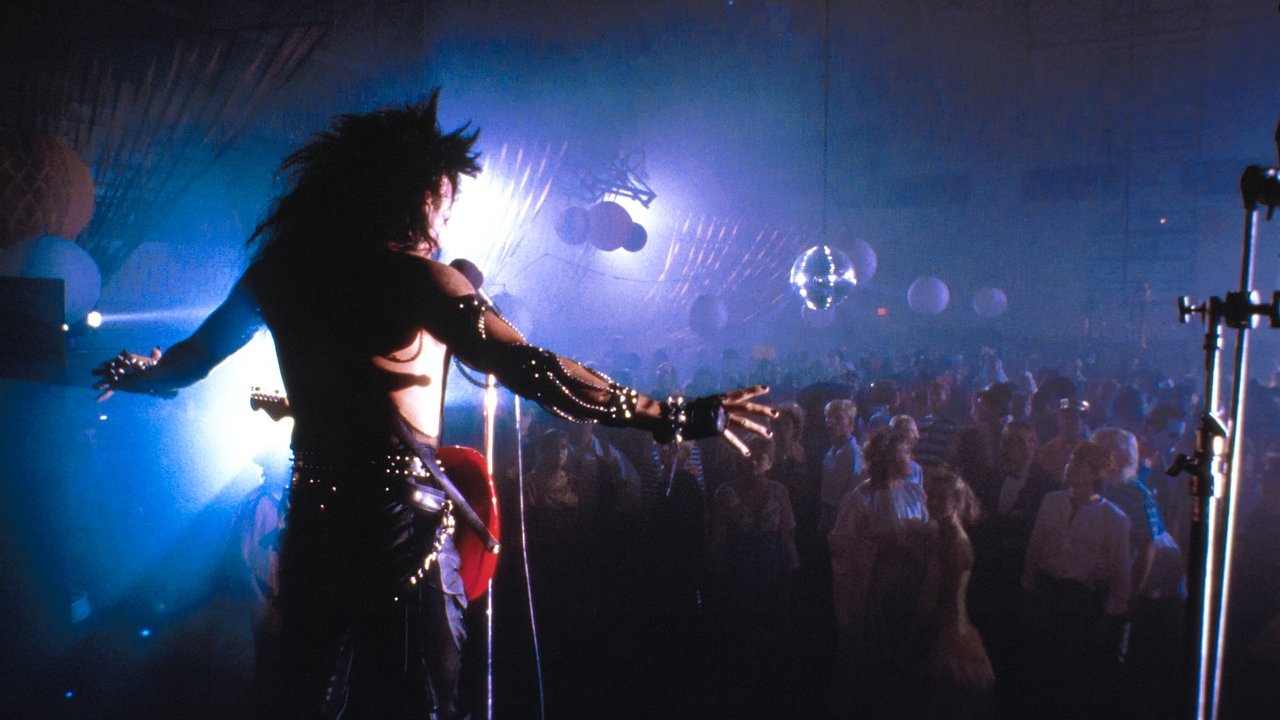
The makeup for Curr’s more demonic forms and the pyrotechnics during the climactic high school Halloween dance sequence are textbook examples of the era’s tactile horror craft. Real fire, real (controlled) explosions, and performers interacting with physical effects lend a weight and danger that’s often missing today. Was that final concert showdown utterly bonkers? Absolutely. But wasn't it also kind of awesome in its sheer audacity?
The driving force behind it all, naturally, is the music. The score by horror maestro Christopher Young (Hellraiser, Drag Me to Hell) adds the requisite spooky atmosphere, but the film belongs to the fictional Sammi Curr songs, provided by the real-life band Fastway, featuring guitarist "Fast" Eddie Clarke (formerly of Motörhead) and vocalist Dave King (later of Flogging Molly). The soundtrack absolutely rocks, capturing that specific flavour of mid-80s hard rock/metal perfectly. It’s not just background noise; it’s the film’s demonic heartbeat.
### Legacy on Tape
Trick or Treat wasn't a massive blockbuster. It likely found its dedicated following, as many of us did, through video rentals and late-night cable airings. Critics at the time were probably divided, likely dismissing it as cheesy exploitation capitalizing on metal mania. Yet, it’s endured as a cult classic precisely because it leans into its premise with such infectious energy. It’s a time capsule of 80s metal culture, high school anxieties, and the delicious absurdity of the satanic panic era, all wrapped up in a surprisingly effective horror package. The original title was reportedly just "Ragman," which feels a bit less punchy – "Trick or Treat" captures the Halloween spirit and the dangerous game Eddie plays.
It’s a film made with evident affection for both horror and heavy metal, managing to be both a celebration and a cautionary tale (albeit a wildly exaggerated one). Marc Price sells the troubled teen angst, Tony Fields delivers an iconic metal villain, and the cameos add layers of knowing fun.
Rating: 7.5/10
Justification: While undeniably cheesy in parts and steeped in 80s tropes, Trick or Treat delivers exactly what it promises: a loud, fun, effects-driven horror flick powered by a killer soundtrack and memorable performances. It overcomes its limitations with sheer energy and a genuine understanding of its chosen genres. The practical effects hold up surprisingly well in their own charmingly retro way, and Fields’ Sammi Curr is a genuinely cool villain. It loses a few points for some predictable plot beats and occasionally awkward dialogue, but gains them back for pure headbanging entertainment value.
Final Word: Crack open a cold one, turn down the lights (but keep the volume UP), and let Sammi Curr remind you why horror and heavy metal were such a potent, devilishly fun combination back in the glorious days of magnetic tape. This one still shreds.