Alright, fellow tape-heads, let’s dig deep into the crate for a moment. Remember that glorious feeling? Scanning the racks at Blockbuster or the local mom-and-pop video store, the fluorescent lights buzzing overhead, looking for something… different. Maybe something with a title so ludicrous you just had to know more. If that sounds familiar, then you might just recall stumbling upon the brightly coloured box for 1992’s Killer Tomatoes Eat France! – a title that promised exactly what it delivered, with zero apologies and a hefty side of Gallic absurdity.

### Sacré Bleu! They're Back!
Following hot on the heels (or should that be rolling vines?) of Return of the Killer Tomatoes (1988) and Killer Tomatoes Strike Back! (1991), this fourth installment in the saga of sentient, sinister fruits felt like the logical, if increasingly bizarre, next step. The team behind the mayhem – director John De Bello and writers Costa Dillon and J. Stephen Peace (who, fun fact, also played Lt. Finletter in the original!) – clearly decided that if the joke was still running, they might as well take it on a European vacation. And what a vacation it is. This isn't high art, folks; this is pure, unadulterated B-movie silliness cranked up to eleven, designed for late-night viewing with questionable snacks.
The flimsy plot, such as it is, sees the nefarious Professor Mortimer Gangreen (the always welcome John Astin, reprising his role with relish) escaping prison yet again. This time, his evil scheme involves turning France into his new tomato-based empire, starting from his secret lair beneath a Parisian castle. Why France? Why not! Standing in his way, sort of, is returning hero Chad Finletter (Marc Price, forever Skippy from Family Ties to many of us, leaning into the goofy charm) and Marie, a beautiful Frenchwoman played by none other than Angela Visser, who was Miss Universe 1989! Yes, you read that right. The casting itself feels like part of the meta-joke. Another fun bit of casting involves Olympic swimming champion Steve Lundquist playing Gangreen's hulking, dim-witted assistant, Igor – a role requiring more deadpan reactions than swimming strokes.
### Low Budget, High Concept (Sort Of)
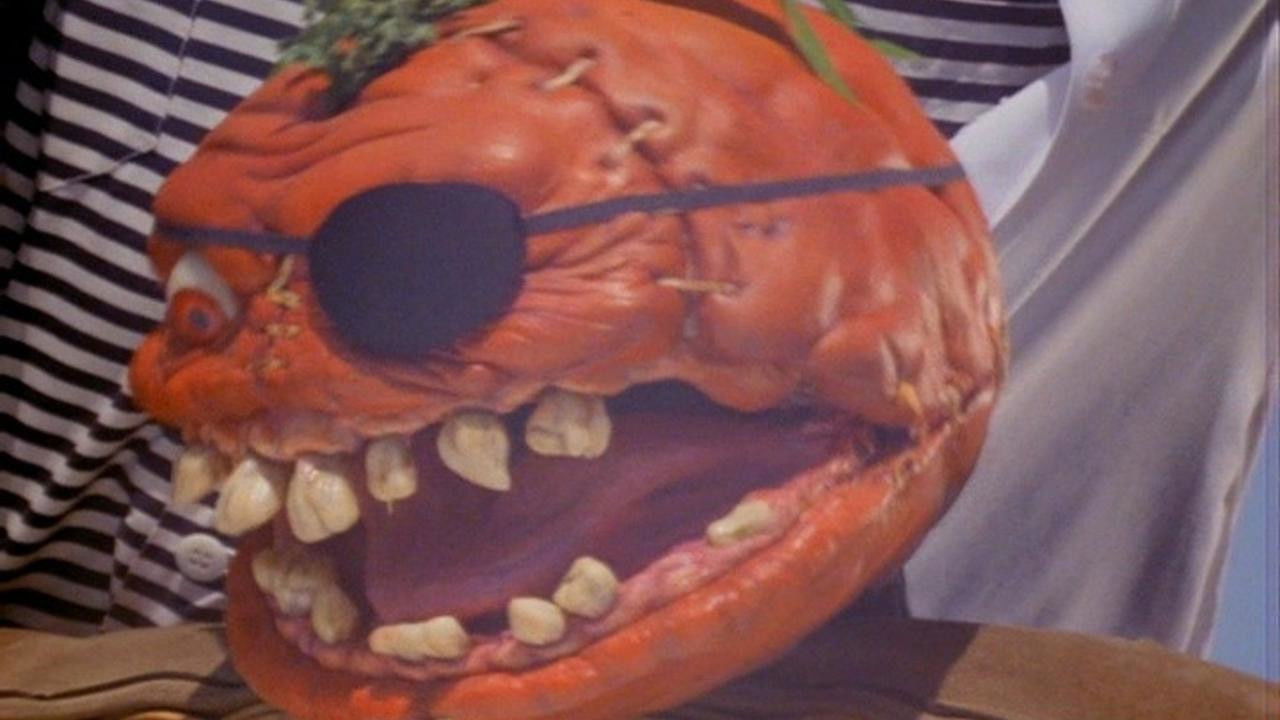
Let's talk about the "action" and "effects," VHS Heaven style. Forget high-octane car chases or meticulously choreographed fights. The thrills here are of a distinctly different flavour. The 'killer tomatoes' themselves are gloriously low-tech – bouncing rubber balls, hand puppets with googly eyes, and the occasional stop-motion monstrosity. There's a certain charm to the sheer audacity of it all. Remember those scenes where someone gets 'attacked' by a tomato that’s clearly just being tossed into frame? That’s the magic! It’s the kind of practical effect that relies entirely on your willingness to play along, a stark contrast to today's seamless (and sometimes soulless) CGI.
One standout element is the film's relentless parodying, primarily setting its sights on Casablanca. There’s a whole subplot involving an underground resistance, coded messages, and a nightclub owner trying to remain neutral, all filtered through the Killer Tomatoes lens of utter ridiculousness. They even have a character named Zou Zou, who looks suspiciously like a certain guitarist from a Texas blues-rock band. The commitment to the bit, however thin the material, is admirable. It’s clear De Bello and his crew knew exactly what kind of movie they were making. Despite the French setting promised by the title, much of the film gives off a distinctly Southern California vibe, a testament to the budget likely not stretching to extensive location shooting in actual Paris. The illusion is part of the fun.

### More Gags Than Gore
Unlike the surprisingly effective horror-comedy of the original Attack of the Killer Tomatoes (1978), this entry leans almost entirely into spoof and slapstick. The jokes fly thick and fast – some land, some splat harmlessly against the wall like an overripe Roma. The film is stuffed with visual gags, puns, running jokes (like the constant breaking of the fourth wall, a hallmark carried over from Return), and cultural stereotypes played for maximum silliness. It’s the kind of movie where a character might genuinely try to disguise himself using only a lampshade. Did critics savage it back in the day? Absolutely. Did it find its audience on VHS and late-night cable among those who appreciated its specific brand of low-budget lunacy? You bet it did. It was never destined for theatrical glory; this was pure direct-to-video fodder, designed for a specific, acquired taste.
I distinctly remember renting this one, probably on a two-for-one deal, expecting nothing more than a cheap laugh. And that's precisely what it delivered. It's not scary, it's rarely clever in a traditional sense, but it possesses a certain infectious energy born from its own self-awareness. Watching John Astin chew the scenery as Gangreen, or Marc Price bumble his way through danger, feels like catching up with old, weird friends.
VHS Heaven Rating: 4/10
Justification: Let's be honest, Killer Tomatoes Eat France! is objectively not a "good" film in the traditional sense. The plot is nonsensical, the effects are intentionally cheap, and the humour is often groan-worthy. However, for fans of the series, dedicated B-movie aficionados, or anyone who appreciates ambitious, self-aware silliness made on a shoestring, it offers undeniable charm. The 4 rating reflects its limited appeal but acknowledges the commitment to the gag, the fun performances from Astin and Price, and its status as a perfect example of late-night, straight-to-video weirdness from the early 90s. It fully understands what it is.
Final Thought: While the killer tomatoes might have tried to conquer France, this flick firmly conquered a dusty corner of the video store shelf – a goofy, harmless, and utterly bizarre footnote in the annals of killer fruit cinema, best enjoyed with lowered expectations and a sense of humour as broad as Gangreen's evil grin. Vive la tomate!