Okay, rewind your minds with me. Picture this: fluorescent lights buzzing overhead, the faint smell of plastic cases and popcorn mingling in the air, aisles upon aisles of potential weekend adventures lining the walls of the local video store. You’re scanning the Horror section, maybe looking for something different, something… weird. And then you see it. That distinctive House cover art – maybe the one with the decaying hand ringing the doorbell, or the skull-faced creature looming. You take a gamble, slide the hefty VHS cassette across the counter, and head home, unaware you’ve just rented one of the most delightfully bizarre genre mashups the 80s ever coughed up.

House (1985) isn't just a haunted house movie; it's a rollercoaster ride through horror, comedy, and surprisingly poignant character drama, all crammed into one creaky, unpredictable structure. It arrived courtesy of director Steve Miner, a man who already knew a thing or two about scaring audiences after helming Friday the 13th Part 2 (1981) and Part III (1982), and producer Sean S. Cunningham (the original Friday the 13th maestro). But House throws a curveball. It dares to ask: what if the monsters under the bed were just as likely to make you jump as they were to make you chuckle nervously?
### Welcome to Cobb's Corner of Crazy
We follow Roger Cobb, played with a perfect blend of frazzled determination and weariness by William Katt (yes, Ralph Hinkley himself from The Greatest American Hero!). Cobb's a horror novelist suffering from writer's block, haunted by his experiences in the Vietnam War, and reeling from the disappearance of his young son, Jimmy. Following his eccentric aunt's suicide, he inherits her imposing, isolated house – the very place where Jimmy vanished. Hoping the solitude will help him pen his Vietnam memoir (and maybe find some answers), he moves in. Big mistake. Or maybe… the best mistake for us viewers?

The house, you see, isn't just dusty; it's a portal. A gateway to bizarre dimensions, repressed memories, and some truly memorable creature features. This isn't your subtle, creaking-floorboards haunting. This is full-on, monster-in-the-closet, flying-garden-tools, demon-ex-wife territory.
### Practical Magic and Monster Mashups
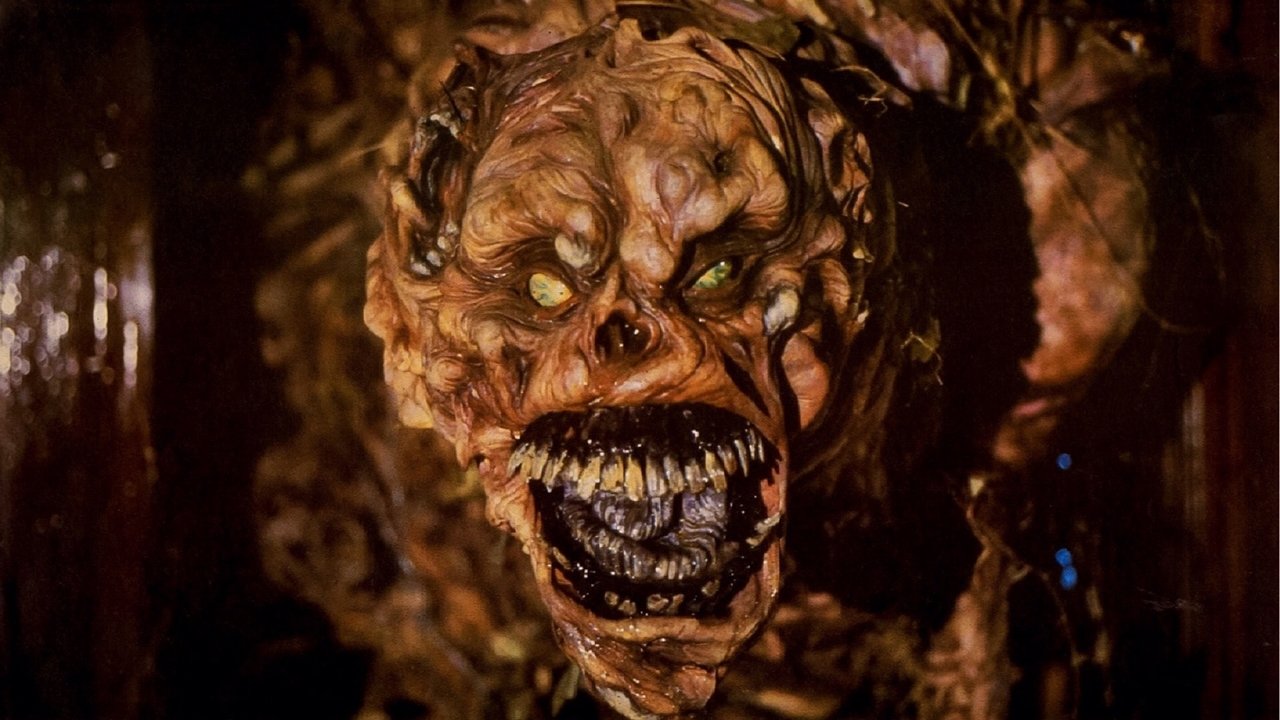
What makes House such a quintessential VHS-era gem is its absolute commitment to practical effects. Forget slick CGI; this is the era of latex, puppetry, and good old-fashioned movie magic. Remember that hideous, warthog-like creature that bursts from the closet? Or the reanimated corpse of Cobb's platoon buddy, Big Ben? These weren't pixels; they were tangible creations, brought to life by talented effects artists working wonders on a relatively modest $3 million budget. Retro Fun Fact: That striking "War Demon" creature, the skeletal remnant of Big Ben, was actually played by none other than Richard Moll (Bull from Night Court). He reportedly endured absolute misery inside the heavy, sweltering suit during filming – a testament to the physical demands placed on performers in the name of practical monstrosities back then.
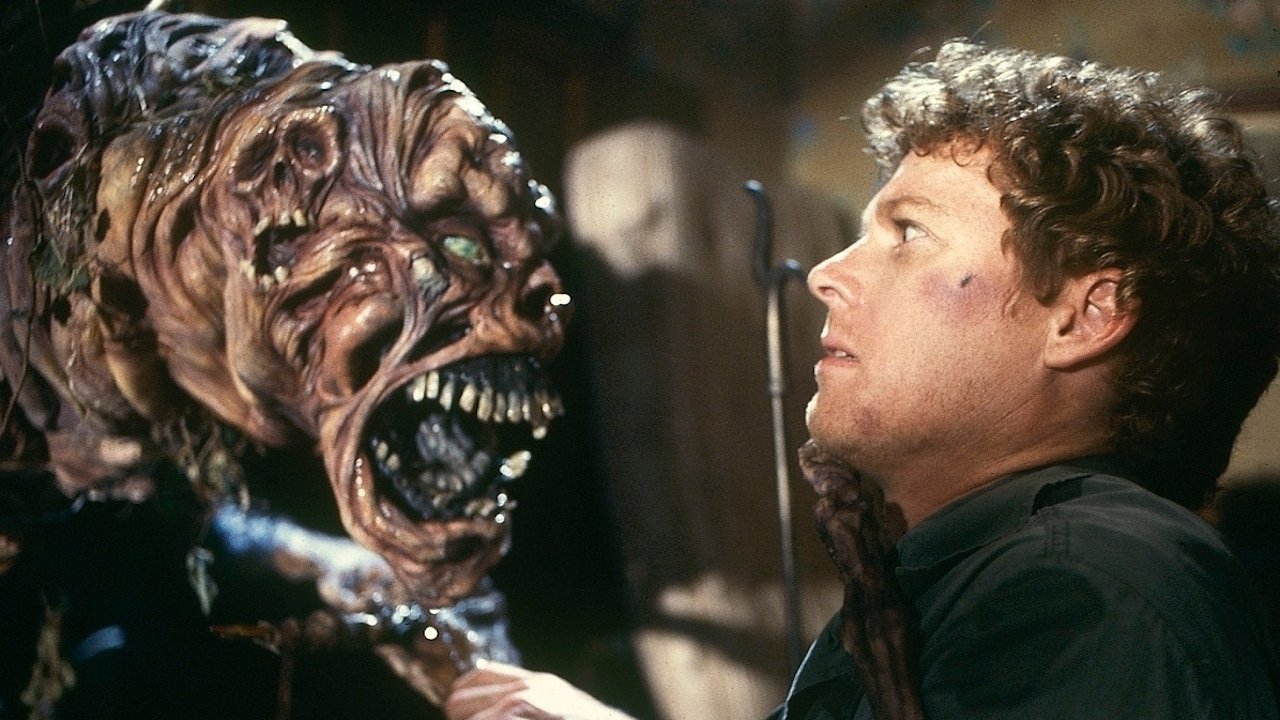
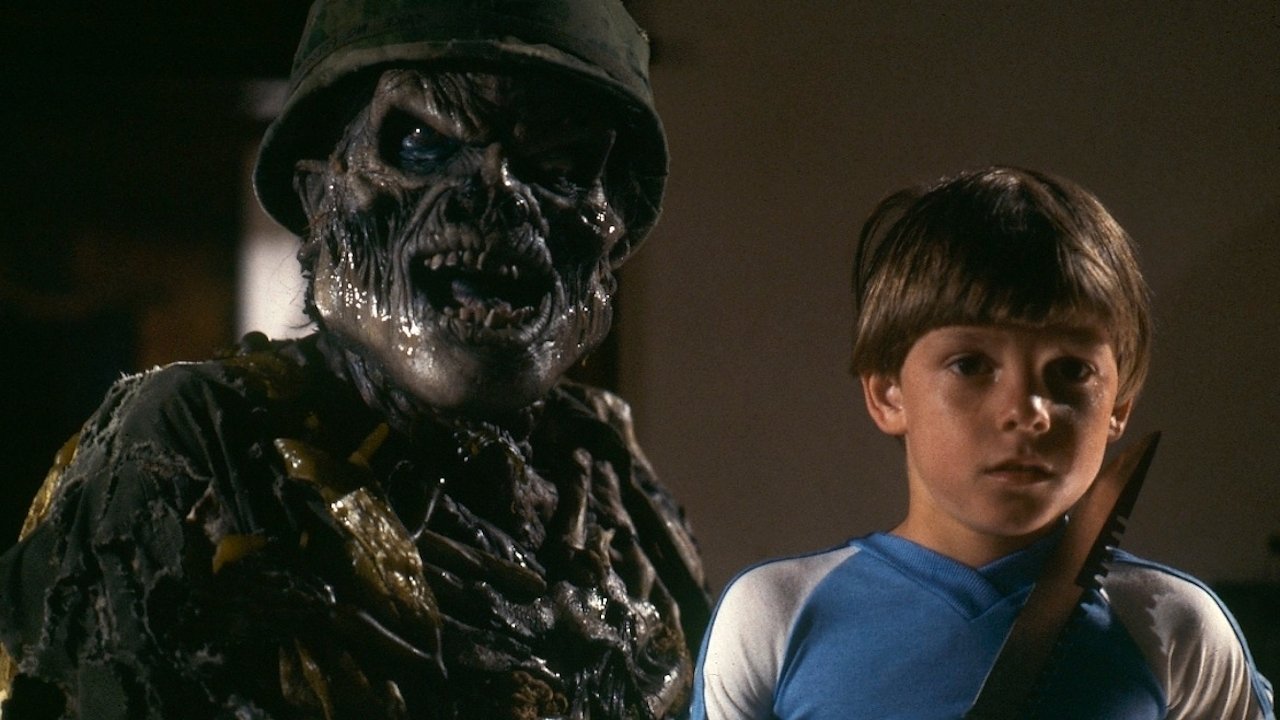
The film walks a tightrope between genuine scares and outright absurdity. One minute, Cobb is battling a grotesque closet monster with a shotgun; the next, he's wrestling with a mounted marlin that’s suddenly come to life. Director Miner deftly handles these tonal shifts, leveraging his horror chops to make the jump scares effective while leaning into the inherent goofiness of the situations. Retro Fun Fact: The original story concept by Fred Dekker (who would gift us Night of the Creeps and The Monster Squad) was apparently much darker. It was screenwriter Ethan Wiley (who later directed the even goofier House II: The Second Story) who injected much of the humor that gives the film its unique flavor.
### More Than Just Monsters
Amidst the creature chaos, House actually tries to grapple with some heavier themes, primarily Cobb's PTSD from Vietnam. The monstrous manifestations often tie directly back to his trauma, particularly the relentless pursuit by the spectral Big Ben. It’s handled with the subtlety of, well, an 80s horror-comedy, but it adds an unexpected layer of depth. William Katt sells Cobb's desperation and slow descent into believing the unbelievable, making him a relatable anchor in the escalating madness.
And who could forget George Wendt (Cheers) as Harold, the portly, perpetually curious neighbor? He pops up at the most inopportune moments, offering unwanted advice and bewildered commentary, serving as the perfect comic foil to Cobb's increasingly unhinged reality. His presence reinforces the film’s comedic side, ensuring things never get too grim.
### A Cult Classic Built on VHS Tape
House wasn't exactly a critical darling upon release, but it found its audience where it truly mattered back then: the video store. It was a word-of-mouth hit, the kind of tape you’d recommend to friends with a knowing grin, promising them something wild and unpredictable. Its box office return ($22 million against that $3 million budget) proved there was an appetite for its quirky blend, spawning three sequels of varying quality. It perfectly captured that mid-80s moment where horror filmmakers felt emboldened to experiment, blend genres, and throw just about anything at the screen to see what stuck. Sometimes it was silly, sometimes it was genuinely creepy, but it was rarely boring.
Rating: 7/10
Why this score? House earns a solid 7 for its sheer entertainment value, memorable practical creature effects that ooze 80s charm, and its successful (if sometimes awkward) tightrope walk between horror and comedy. William Katt is a likeable lead, and the supporting cast adds flavor. It’s undeniably dated in places, and the tonal shifts can be jarring, but its imaginative spirit and cult status make it a fun, nostalgic trip. It perfectly encapsulates the kind of weird, wonderful discovery that made browsing the video store aisles so exciting.
Final Thought: Like the spooky residence it’s named after, House is a bit ramshackle and could use some modern renovations, but its bizarre architecture and monstrous inhabitants offer a frightfully fun piece of 80s genre real estate that’s still worth visiting – especially if you remember when creatures felt wonderfully, terrifyingly real because they were real… props. Ding dong, the nostalgia's calling!