It starts, as these things often did back then, with a summons. An official piece of paper, a request to appear, no reason given. For Ilija Čvorović, a Belgrade resident still nursing ideological wounds from a youthful indiscretion involving Stalin decades earlier, this is enough. Enough to reignite a dormant ember of fear and suspicion into a raging inferno of paranoia. And just like that, Dušan Kovačević and Božidar Nikolić’s 1984 masterpiece, Balkan Spy (Balkanski špijun), pulls us into a world both absurdly funny and chillingly familiar. This wasn't typically found nestled between the action flicks and teen comedies at my local video store, but discovering gems like this, often tucked away in the "Foreign Films" section, was part of the magic of VHS hunting – a portal to entirely different cinematic worlds.
The Seeds of Suspicion
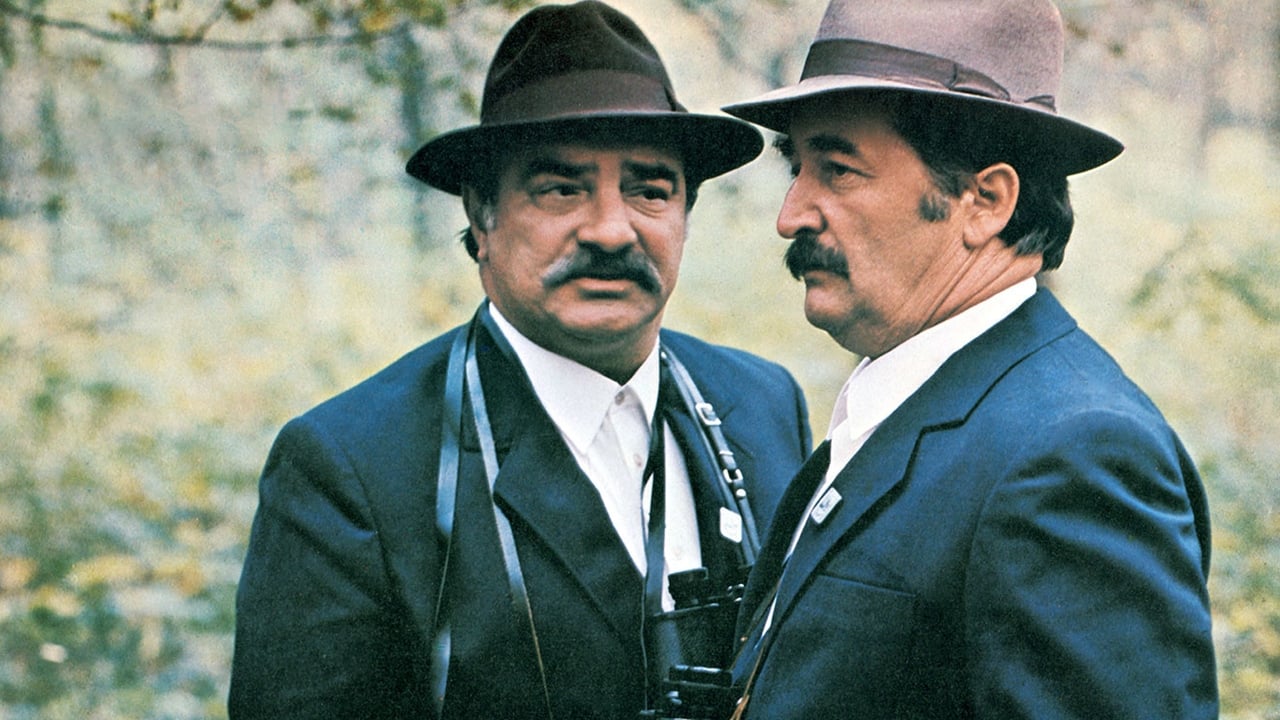
The premise is deceptively simple. Ilija (Danilo 'Bata' Stojković) returns from his inexplicable police interview convinced that his subtenant, Petar Jakovljević (Bora Todorović), a tailor who spent years working in Paris, is a dangerous spy, an imperialist agent working to undermine Yugoslavia. What begins as anxious observation quickly escalates into a full-blown, comically inept counter-intelligence operation run from Ilija's own apartment, drawing in his long-suffering wife Danica (Mira Banjac) and eventually, his cynical twin brother Đura (also played brilliantly by Bora Todorović).
What makes Balkan Spy resonate so deeply, decades after its release, isn't just the humor – though there's plenty of it, dark and cutting – but the unnerving accuracy with which it portrays the insidious nature of paranoia. Ilija isn't presented merely as a fool, but as a tragic figure, a man so thoroughly conditioned by the political anxieties of his time (post-Tito Yugoslavia was a place where suspicion could easily fester) that he sees enemies in every shadow. His past "mistake" – a brief allegiance to Stalinism during the Tito-Stalin split – has left him perpetually needing to prove his loyalty, to be more vigilant than the state itself. It’s a chilling thought: what happens when the state outsources its suspicion to the citizenry?
An Actor Possessed
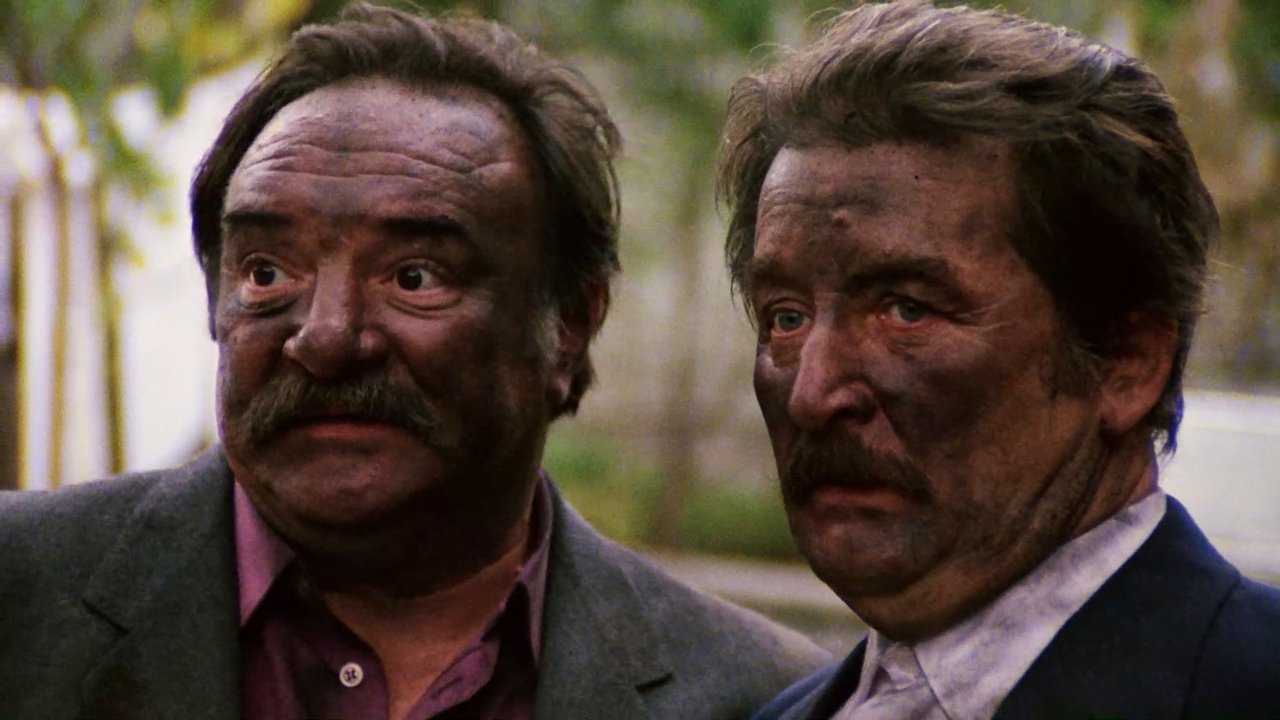
At the heart of the film's enduring power is the monumental performance by Danilo 'Bata' Stojković. Reprising the role he originated in Dušan Kovačević's wildly successful stage play of the same name, Stojković doesn't just play Ilija; he inhabits him. It’s a masterclass in physical comedy and psychological disintegration. Watch his eyes darting nervously, his body coiled with misplaced conviction, the way his voice shifts from conspiratorial whispers to righteous fury. He perfectly captures the absurdity of Ilija's homemade spy gadgets and stakeouts, but crucially, he never lets us forget the genuine fear and misplaced patriotism driving him. It's a performance etched into the cultural memory of the former Yugoslavia, a testament to Stojković's legendary status. He makes Ilija pitiable, terrifying, and tragically funny, all at once.
Kovačević, one of the region's most celebrated playwrights and screenwriters (known for penning classics like Who's Singin' Over There? (1980) and later, Underground (1995)), brings his signature blend of sharp satire and human insight. The dialogue crackles with wit and subtext, exposing the absurdities of bureaucracy and the mental gymnastics required to survive in a surveillance-conscious society. Co-director Božidar Nikolić, an acclaimed cinematographer, ensures the film has a grounded, almost claustrophobic feel, trapping us within Ilija’s increasingly narrow worldview. The collaboration reportedly saw Kovačević focus intensely on the actors and dialogue, leveraging his intimate knowledge of the play, while Nikolić handled the visual composition – a partnership that yielded seamless, potent results.
Mirrors to Madness
The supporting cast provides essential counterpoints. Mira Banjac as Danica is the weary, pragmatic heart of the film. She’s initially dragged into Ilija's crusade through marital loyalty, her exasperation slowly curdling into a shared delusion born of desperation and love. It's a subtly powerful performance highlighting the collateral damage of paranoia. And Bora Todorović pulls off a remarkable feat, playing both the bewildered (or is he?) tenant Petar and Ilija's twin brother Đura. Đura represents a different kind of societal adaptation – cynical, opportunistic, willing to exploit his brother's madness for personal gain, yet still bound by familial ties. The contrast between the two brothers encapsulates different responses to the pressures of the system.
It’s fascinating how Balkan Spy, while deeply rooted in the specific political climate of 80s Yugoslavia, transcends its setting. The film asks universal questions about fear, conformity, and the ease with which ordinary people can turn on each other when suspicion is sanctioned, or even encouraged. How thin is the line between vigilance and vigilantism? What does unwavering belief, even in a delusion, do to a person?
Beyond the Iron Curtain
For Western audiences discovering this film decades later, perhaps on a well-worn imported tape or a streaming service's hidden corner, Balkan Spy offers more than just laughs. It's a vital piece of cinematic history, a darkly comedic commentary that speaks volumes about the psychological pressures of living under certain political systems. The film was a cultural phenomenon in Yugoslavia, its lines becoming instantly quotable, its characters entering the national lexicon. It wasn't just entertainment; it was a reflection, albeit a distorted one, of reality. Finding reliable budget or box office numbers for Yugoslav films of this era is tricky, but its immense popularity and enduring legacy confirm its impact far exceeded mere commercial success. It struck a chord, a deeply resonant, uncomfortable chord.
Rating: 9/10
This rating reflects the film's brilliance as a sharp political satire, its cultural significance, Kovačević's masterful writing, and above all, Danilo 'Bata' Stojković's iconic, towering performance. It blends dark comedy and tragedy with astonishing skill. While some nuances might be richer with historical context, the core themes of paranoia and its corrosive effects are powerfully universal. It might not have been a staple at every Blockbuster, but Balkan Spy is a Yugoslav classic that deserves a place on any serious retro film fan's watchlist.
It leaves you pondering not just the absurdity on screen, but the ease with which fear can distort perception, turning neighbours into spies and everyday life into a battlefield of the mind. A chillingly funny reminder that the most dangerous prisons are sometimes the ones we build ourselves.