Okay, let's slide another well-loved tape into the VCR of our minds. Remember the sound it made? That satisfying clunk? Today, we're revisiting a film that, much like some of the corridors it depicts, feels a bit rough around the edges but contains a core of undeniable truth: Arthur Hiller's 1984 dramedy, Teachers. It wasn't always the easiest watch, even back then, holding up a mirror that felt less funhouse and more depressingly accurate.
### Welcome to JFK High: Order Optional
The film throws us headfirst into the barely controlled chaos of John F. Kennedy High School, an inner-city institution crumbling under the weight of neglect, bureaucracy, and profound student apathy. The immediate catalyst for the narrative isn't a homecoming game or prom night drama, but something far more indicative of systemic failure: a lawsuit filed because the school graduated an illiterate student. Right away, Teachers signals it’s not aiming for the warm fuzzies of some other school-set films of the era. It’s got grit under its fingernails, and maybe a little graffiti on its soul.
This central conflict immediately raises questions that linger long after the credits roll: Who is truly responsible when the system fails a child? The overworked teachers? The out-of-touch administration? Society itself? It’s a dilemma that felt potent in '84 and, let’s be honest, hasn't exactly faded away.
### The Burned-Out Idealist and the Gathering Storm
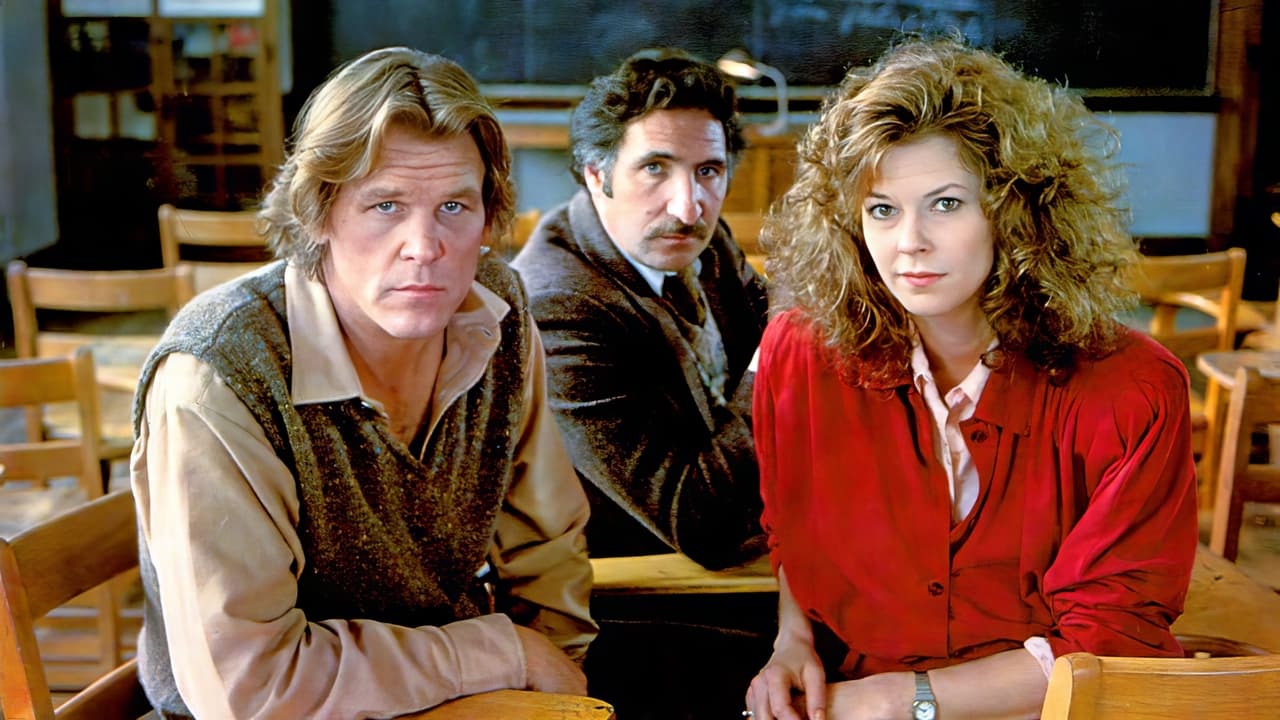
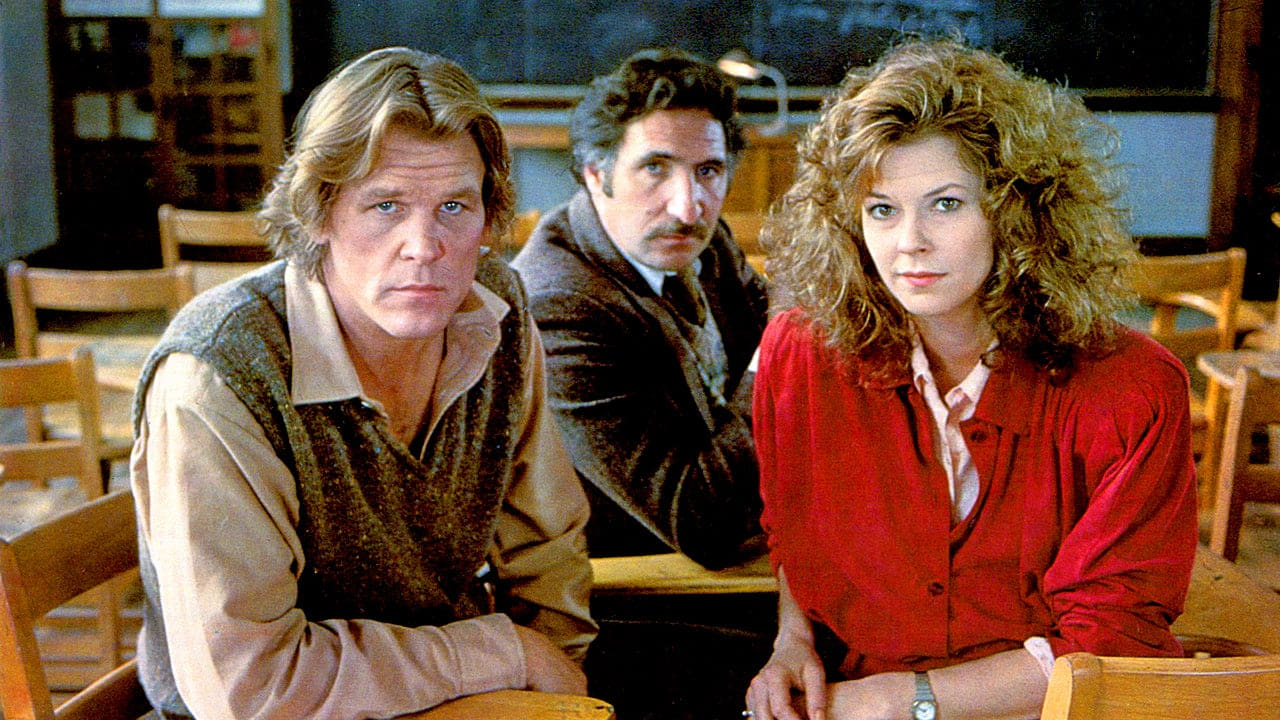
At the heart of this maelstrom stands Alex Jurel, played with a compelling weariness by Nick Nolte. Jurel is the embodiment of teacher burnout – cynical, occasionally drunk, seemingly detached. Yet, beneath the rumpled exterior, Nolte masterfully reveals flickers of the passionate educator Jurel once was, and perhaps still could be. His connection with certain students, particularly the troubled Eddie Pilikian (Ralph Macchio, fresh off The Karate Kid (1984)), feels genuine, born not of textbook methods but of shared humanity and perhaps a recognition of mutual struggle. It’s a performance that avoids easy caricature, capturing the complex reality of trying to make a difference when you feel like you’re shouting into the void. I recall watching Nolte back then and feeling that exhaustion radiate off the screen – it felt authentic, a far cry from the often-sanitized portrayals of educators.
Circling the wagons, or perhaps lighting the fires, is JoBeth Williams as Lisa Hammond, the lawyer representing the illiterate former student. Initially positioned as an antagonist determined to expose the school's failings, her character arc allows the audience to see JFK High through fresh, albeit increasingly troubled, eyes. Her interactions with Jurel crackle with ideological tension and a grudging respect. Adding another layer of weary pragmatism is Judd Hirsch as Vice Principal Roger Rubell, a man trying desperately to keep the ship afloat, even if it means patching holes with duct tape and wishful thinking. His exasperation feels painfully real.
### More Than Just Hallway Antics
What makes Teachers stick, beyond the strong central performances, is its unflinching (for its time) look at the institutional barriers. We see the absurdity of bureaucracy personified by characters like Richard Mulligan's Herbert Gower, whose grasp on reality seems tenuous at best. We witness the range of teaching approaches, from genuine dedication to utter indifference. It tackles thorny issues like resource scarcity, psychological tolls on staff, and the difficulty of reaching students facing immense personal challenges.
Director Arthur Hiller, a versatile filmmaker whose credits ranged from the romantic weepie Love Story (1970) to the action-comedy Silver Streak (1976), navigates the film's tricky tone with a steady hand. He allows the dark humor to land – often stemming from the sheer absurdity of the situations – without completely undermining the dramatic weight. Filming largely at the former Central High School in Columbus, Ohio, certainly lent an air of authenticity; you could practically smell the chalk dust and desperation. Apparently, the film stirred quite a bit of controversy among educators upon release – some felt seen, others felt unfairly caricatured. That kind of reaction often suggests a film has struck a nerve.
### Behind the Blackboard: Retro Insights
Digging through the old filing cabinets reveals a few interesting nuggets about Teachers. The screenplay, penned by W.R. McKinney, reportedly underwent significant revisions to achieve its final balance of satire and drama. And that soundtrack! It’s pure, unadulterated 80s rock energy, featuring tracks from .38 Special ("Teacher Teacher"), ZZ Top, Freddie Mercury, and Joe Cocker. It perfectly underscores the film's often chaotic, rebellious spirit. While not a box office smash ($27.8 million gross against a $10 million budget – roughly $81 million adjusted for inflation today), it found a solid life on VHS, becoming one of those rentals passed between friends with a knowing nod: "You gotta see this one."
### Lasting Lessons?
Does Teachers feel dated? In some ways, inevitably. The fashion, the music, the specific cultural references firmly plant it in the mid-80s. Yet, its core themes – the struggle for meaningful education in under-resourced environments, the dedication and despair of those on the front lines, the systemic issues that hinder progress – feel remarkably prescient. It doesn't offer easy answers, preferring to present a messy, complicated reality. It lacks the iconic status of The Breakfast Club (1985) or the edgy cool of Fast Times at Ridgemont High (1982), but it offers a different, arguably more sobering perspective on the American high school experience.
Rating: 7/10
Teachers earns its score through strong performances, particularly from Nolte, and its willingness to tackle uncomfortable truths about the education system with a blend of dark humor and genuine pathos. It’s a film that feels grounded, even in its more exaggerated moments, capturing a specific kind of institutional weariness that remains relevant. It might not be the cheeriest trip back to school, but it’s a thoughtful, compelling one that reminds us that sometimes the most important lessons happen outside the curriculum. It leaves you wondering not just about the fate of JFK High, but about the countless schools and educators still fighting similar battles today.