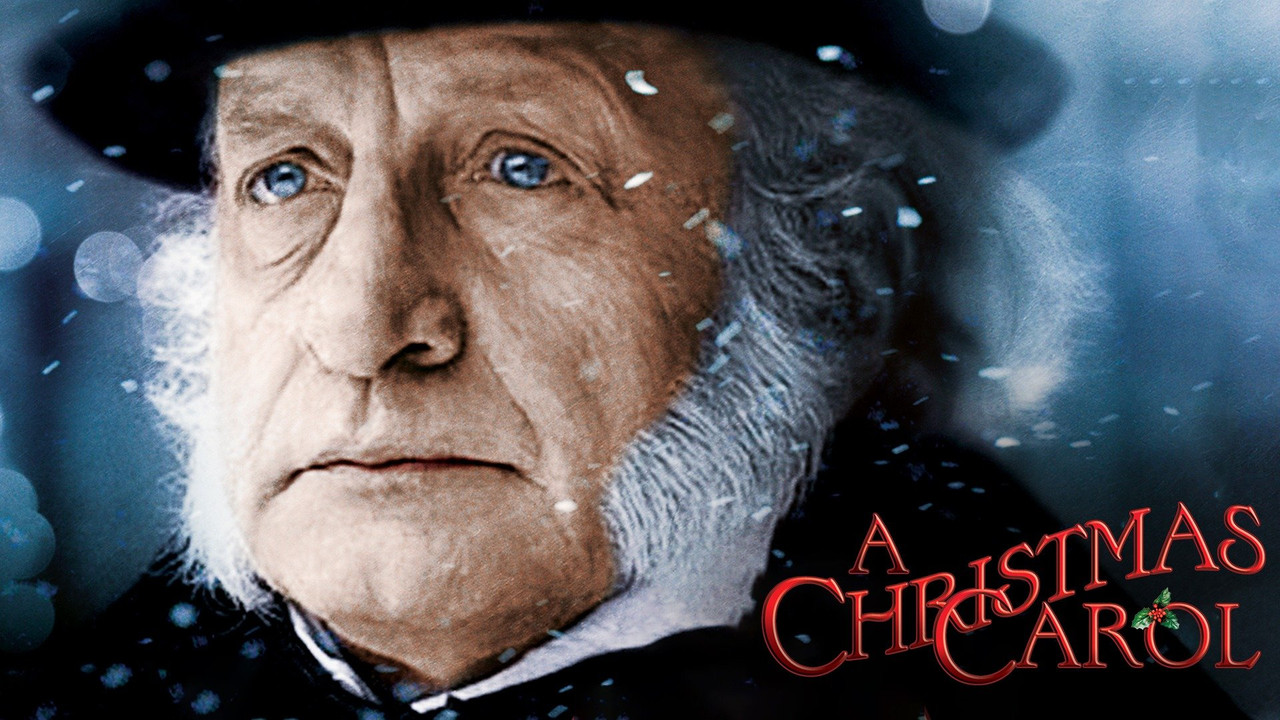
Some performances don’t just inhabit a role; they seem forged from the very essence of the character, drawn up from the source material like water from a deep, cold well. George C. Scott’s portrayal of Ebenezer Scrooge in the 1984 television adaptation of A Christmas Carol is precisely that – a performance of such gravitas and chilling conviction that it anchors this version firmly in the top tier, perhaps even at the very summit, of the countless retellings of Dickens’s timeless story. Even now, remembering the heft of the VHS tape, often recorded off a festive TV broadcast, brings back the unique weight this particular version carried.
Beyond the Humbug
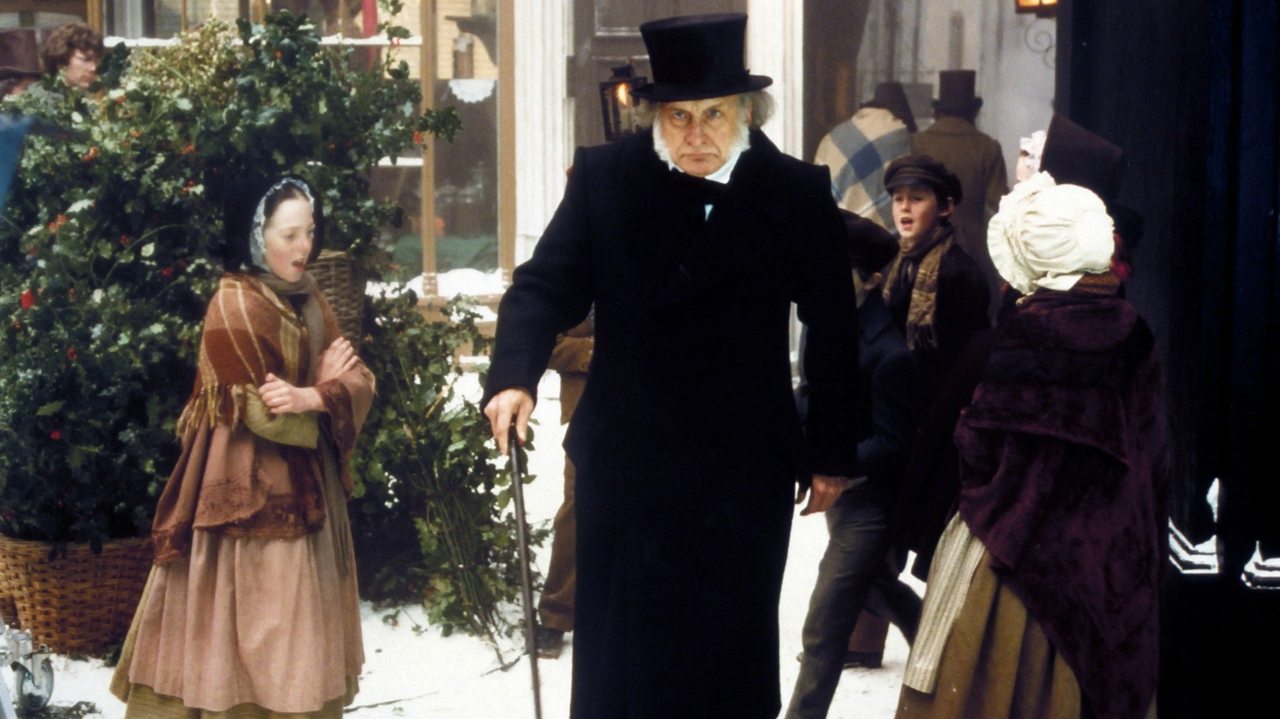
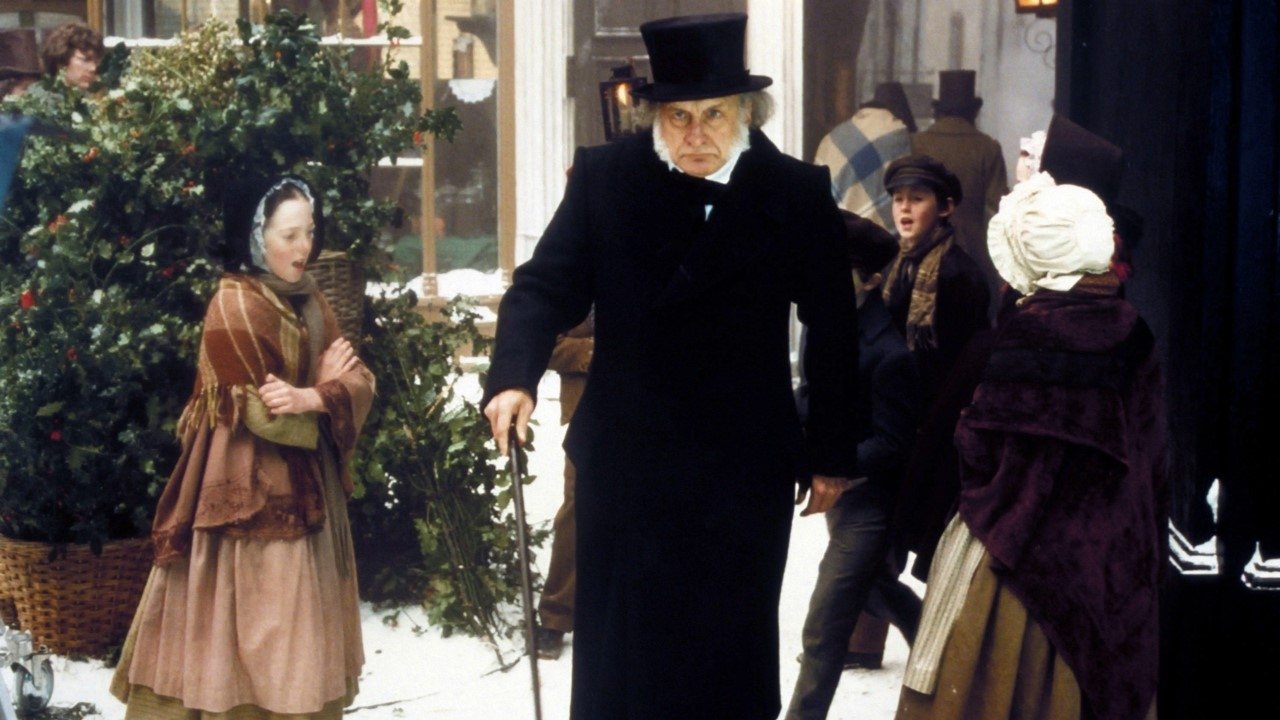
Directed by Clive Donner – who, interestingly, had worked as an editor on the celebrated 1951 Alastair Sim version (Scrooge) decades earlier – this isn't a saccharine Christmas card. From the opening frames, Donner establishes a palpable sense of place and mood. This is Victorian London draped in perpetual twilight, choked with fog, soot, and the grim realities of poverty that Dickens so fiercely illuminated. The production design feels authentic, lived-in, and often oppressive, mirroring Scrooge’s own soul. It’s a world away from some of the more brightly lit interpretations, grounding the supernatural elements that follow in a tangible, often harsh reality. It’s fascinating to note that much of the film was shot on location in Shrewsbury, Shropshire, England, its historic buildings lending an unparalleled authenticity that belies its made-for-television origins. The production reportedly utilized over 1,000 locals as extras, adding to the bustling, period-accurate street scenes.
A Scrooge Forged in Granite
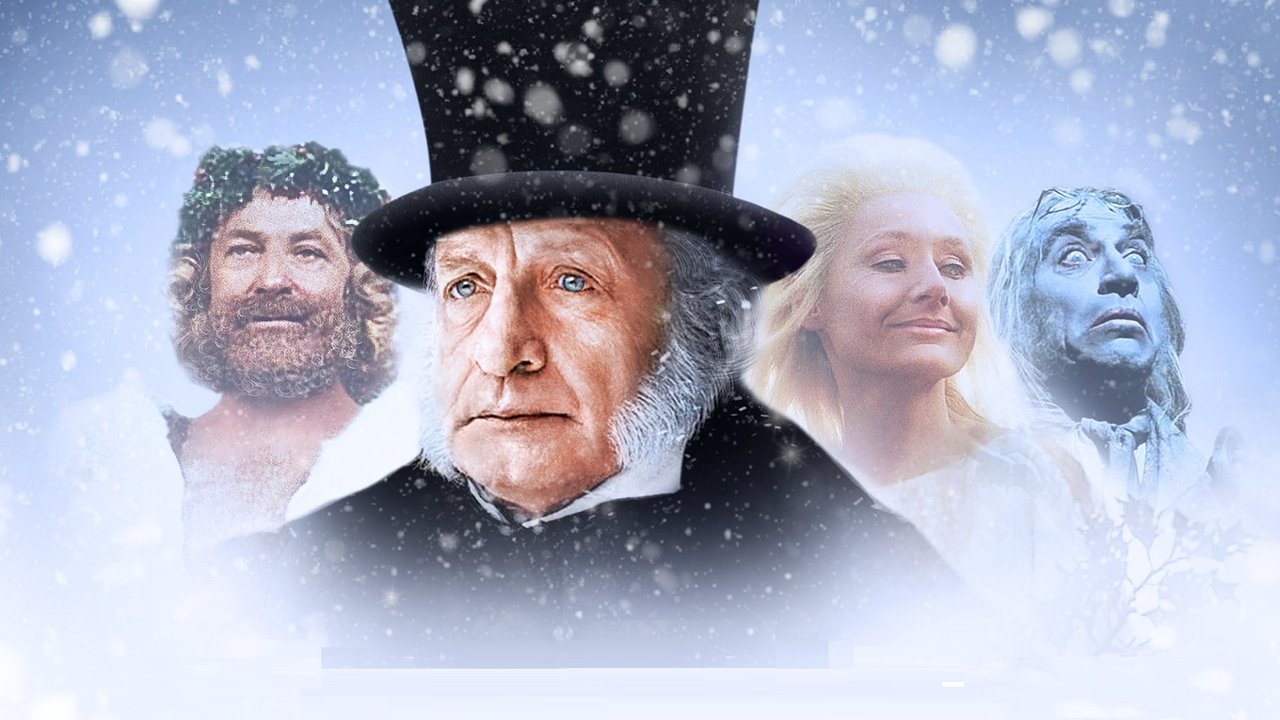
At the heart of it all is George C. Scott. Known for intense, powerful roles like Patton (1970) and his unforgettable turn in Dr. Strangelove (1964), Scott brings a formidable presence to Scrooge. This isn't a caricature of miserliness; it's a portrait of a man hollowed out by loss and curdled by bitterness. His Scrooge possesses a simmering, barely contained anger, a weariness that seems etched into his bones. There's a dangerous edge to him in the early scenes; his “Bah, humbug!” isn't just dismissive, it feels like a potential threat. You believe utterly in his capacity for cruelty, which makes his eventual thawing all the more profound and genuinely moving. Scott reportedly approached the role with immense seriousness, viewing Scrooge not merely as a miser but as a deeply damaged individual. His performance earned him an Emmy nomination, a testament to its power even within the confines of a television production competing against theatrical releases in audience memory.
Spirits of Truth and Shadow
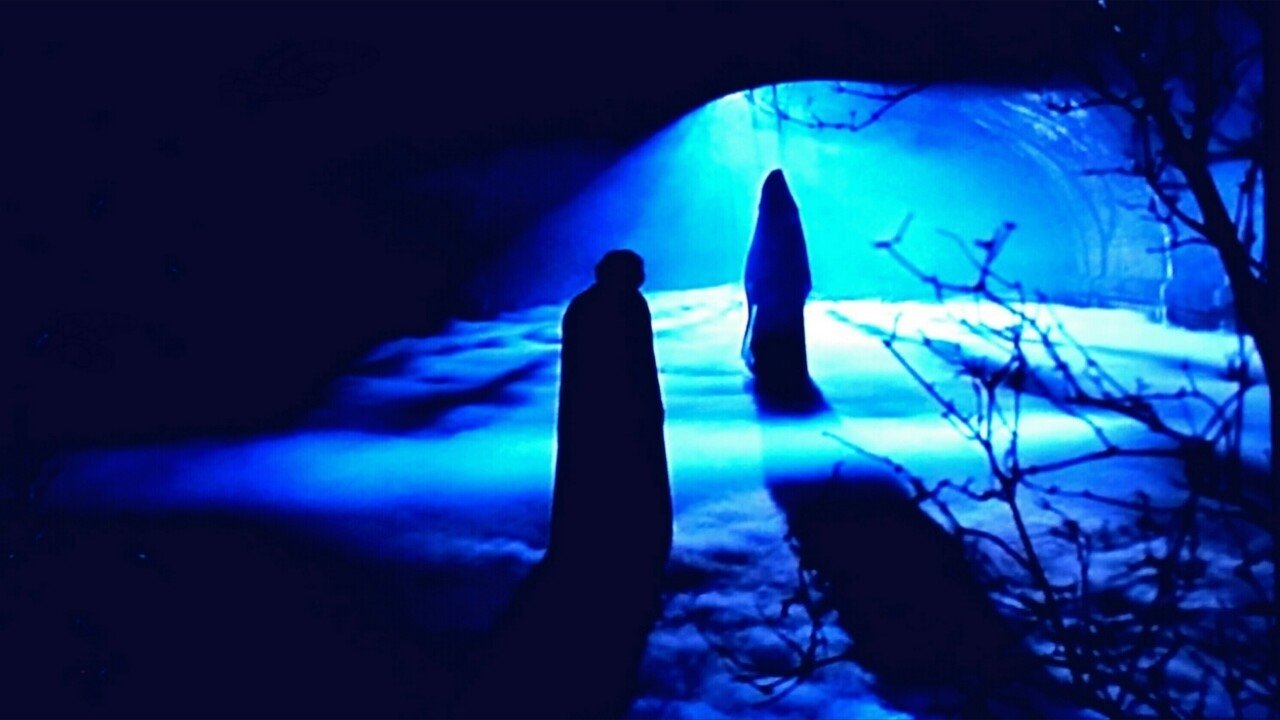
The spectral visitors are handled with impressive skill, balancing otherworldly presence with thematic weight. Frank Finlay delivers a truly haunting performance as Jacob Marley, weighed down not just by chains but by an eternity of regret. His appearance is genuinely unsettling, aided by practical effects and sound design that still resonate. Then there's Angela Pleasence (daughter of the legendary Donald Pleasence) as the Ghost of Christmas Past; ethereal and unsettlingly calm, her measured delivery adds a chilling quality to Scrooge's journey into his memories. The Ghost of Christmas Present (Edward Woodward, beloved star of The Equalizer TV series) brings the necessary boom and bonhomie, but even he carries an undercurrent of warning. Perhaps most memorable is the Ghost of Christmas Yet to Come – a silent, imposing figure rendered with terrifying simplicity, relying on shadow and implication rather than overt effects. It’s a masterclass in creating dread through atmosphere rather than spectacle.
Faithful Heart, Enduring Spirit
While adhering closely to Dickens's narrative, Roger O. Hirson's teleplay finds moments to deepen the characterizations. The portrayal of Scrooge's lost love, Belle, and the context of his descent into avarice feel particularly well-handled, adding layers to Scott's portrayal of regret. This adaptation understands that the story’s power lies not just in the ghosts, but in the stark social commentary and the potential for redemption even in the most hardened heart. Does Scrooge's transformation feel earned? Absolutely. Scott charts the journey from icy misanthropy to desperate vulnerability and finally to giddy, childlike joy with remarkable precision. That final scene, where he struggles to even remember how to laugh, feels incredibly authentic.
Watching it now, years after those initial viewings on a bulky CRT television, the film holds up remarkably well. Its production values might seem modest compared to modern blockbusters, but its emotional core remains undimmed. The deliberate pacing allows the story and performances to breathe, drawing you into Scrooge's world and his spiritual crisis. It doesn't rush towards the sentimentality; it earns it, step by painstaking step.
Rating and Final Reflection
This version of A Christmas Carol stands as a high watermark for adaptations of classic literature, especially within the realm of television filmmaking. Scott's monumental performance, combined with Donner's atmospheric direction and a deep respect for the source material, creates something truly special. It captures the chilling dread, the biting social critique, and the ultimate, soaring hope of Dickens's masterpiece.
Rating: 9.5/10
It's a near-perfect rendition, its power undiminished by time. For many of us who grew up with it, George C. Scott simply is Ebenezer Scrooge, the definitive face of a transformation that continues to resonate every holiday season, reminding us that it's never too late to reconnect with our shared humanity. This isn't just a Christmas movie; it's a potent piece of drama that just happens to be set on December 25th.