It’s a strange thing, the weight a film can carry. Not just the weight of its story or themes, but the weight of its very existence. Some movies arrive with fanfare, products of massive studio machinery. Others emerge against impossible odds, smuggled into the light like contraband truths. Yılmaz Güney's 1982 masterpiece, Yol (The Road), belongs firmly in that second category, a film born from imprisonment, directed by proxy, and echoing with the defiant spirit of its creator. Finding a film like this on a dusty VHS shelf back in the day felt like unearthing a secret history, a raw, unflinching look at a world far removed from the usual Hollywood fare.
Instructions from Cell Block Five
The story behind Yol is almost as compelling as the narrative itself. Yılmaz Güney, a hugely popular actor-turned-director and political activist in Turkey, was serving a sentence for the alleged murder of a judge (a charge many believe was politically motivated). From his prison cell, he meticulously wrote the screenplay and detailed instructions for Yol. His former assistant, Şerif Gören, took on the daunting task of directing on the ground, adhering strictly to Güney's vision. Güney later escaped prison, smuggled the negatives out of Turkey, and completed the editing himself in Switzerland. Just think about that: coordinating a complex, multi-narrative film through intermediaries, unable to see the rushes or guide the actors directly on set. It’s a testament to incredible willpower and a shared artistic commitment. This wasn't just filmmaking; it was an act of profound resistance.
A Week's Leave, A Lifetime's Burden
Yol follows five prisoners granted a week's leave to visit their families. Their journeys home, however, are anything but simple reunions. Each path diverges, leading them back into the complex web of Kurdish culture, strict patriarchal traditions, political turmoil, and the crushing weight of personal history under the watchful eye of the Turkish military state following the 1980 coup. Seyit Ali (Tarık Akan, a major star in Turkey delivering a career-defining performance here) discovers his wife's infidelity has brought shame upon the family, forcing him into a harrowing traditional obligation. Mehmet Salih (Halil Ergün) finds himself implicated in a crime committed by his brother-in-law during a robbery, making his return fraught with peril. Ömer (Necmettin Çobanoğlu) heads back to his border village, caught amidst Kurdish resistance fighters and Turkish soldiers, dreaming only of crossing the border to freedom. Yusuf (Tuncay Akça) tragically loses his leave pass. And Mevlüt (Hikmet Çelik) faces his fiancée's hesitant family.
Their brief taste of freedom only underscores the myriad ways they remain imprisoned – by law, by tradition, by societal expectations, and by the past. The title, Yol, meaning "The Road" or "The Way," becomes deeply ironic. These men are on the road, but their paths seem predetermined, constricted by forces far larger than themselves.
Unflinching Realism, Unforgettable Faces
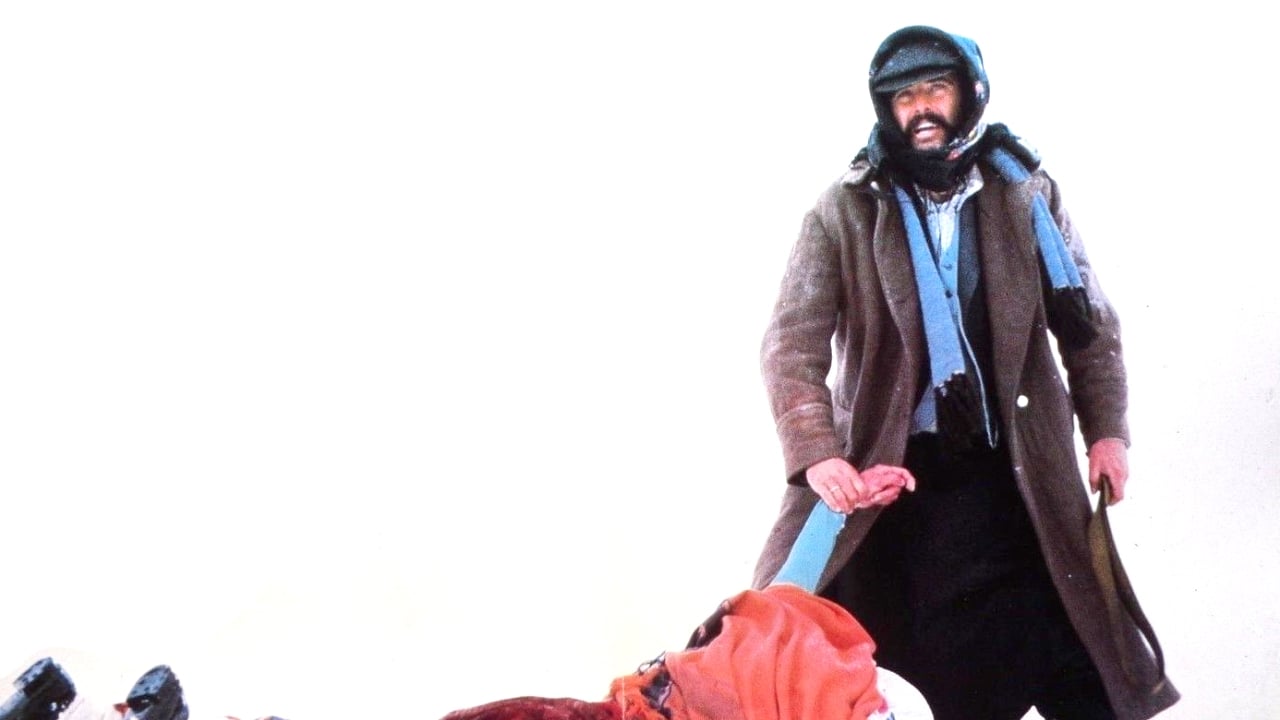
What strikes you immediately about Yol is its stark, almost documentary-like realism. Gören, following Güney’s lead, captures the harsh beauty and unforgiving nature of the Anatolian landscape, which becomes almost another character – vast, indifferent, and often treacherous. There’s little stylistic flourish; the camera observes, patiently, allowing the weight of the situations and the actors' lived-in performances to carry the emotional load.
And what performances they are. Tarık Akan as Seyit Ali is devastating. His face, etched with exhaustion and a dawning horror at his predicament, conveys a universe of internal conflict without needing excessive dialogue. You see the struggle between duty, love, and survival warring within him. Şerif Sezer as Zînê, Seyit Ali’s wife, delivers an equally powerful, largely silent performance, embodying the tragic consequences faced by women within this deeply patriarchal system. The entire ensemble feels authentic, drawn from the very world the film depicts. Their faces linger long after the credits roll – faces marked by hardship, yes, but also by resilience and a flicker of humanity refusing to be extinguished.
A Controversial Masterpiece
It’s no surprise that Yol was banned in Turkey for nearly two decades. Its critical portrayal of the Turkish state’s treatment of the Kurdish minority, its depiction of the military presence, and its unflinching look at oppressive social customs made it incredibly controversial. Yet, its power was undeniable internationally. It went on to win the prestigious Palme d'Or at the 1982 Cannes Film Festival (sharing the prize with Costa-Gavras's Missing), a stunning victory that brought international attention to Turkish cinema and Güney’s plight. For many Western audiences discovering it on VHS, perhaps tucked away in the "World Cinema" section, Yol was a revelation – challenging, heartbreaking, and politically charged in a way few mainstream films dared to be. The slightly grainy, imperfect quality of VHS somehow felt appropriate for Yol's raw, unvarnished aesthetic; it wasn't slick, it was real.
The film isn't an easy watch. It's bleak, often brutal, and tackles disturbing themes head-on. There are moments of profound sadness and injustice. But it's also a film of immense courage and importance. It asks difficult questions about the nature of freedom, the chains of tradition, and the human cost of political conflict. Doesn't the struggle for individual dignity against systemic oppression resonate just as strongly today?
Rating: 9/10
Yol earns this high rating not just for its artistic merit – the powerful performances, the stark realism, the haunting score – but for its incredible backstory and its enduring significance. It’s a film made under impossible conditions that speaks volumes about the power of cinema as a tool for social commentary and resistance. Its flaws, perhaps a somewhat episodic structure owing to the multiple storylines, are minor compared to its overwhelming impact.
Yol is more than just a movie; it's a historical document, a political statement, and a deeply moving human drama. It’s one of those films that, once seen, especially perhaps unexpectedly on a worn-out VHS tape, stays with you, a potent reminder of cinema's capacity to confront uncomfortable truths and give voice to the voiceless. It leaves you contemplating the long, often arduous road towards freedom, in all its forms.