Okay, rewind your minds. Picture this: it’s Friday night, the VCR hums reassuringly, and you’ve just slotted in a tape promising the ultimate rapid deployment strike force. The artwork screams futuristic action, maybe a little cheesy, but undeniably cool. That tape, friends, was likely 1982’s glorious oddity, MegaForce. Slipping it into the machine felt like unlocking a secret cache of laser beams, rocket-firing motorcycles, and questionable spandex. And honestly? Sometimes, that’s exactly what VHS Heaven was all about.

Directed by the legendary stuntman-turned-director Hal Needham – the mad genius who gave us the vehicular chaos of Smokey and the Bandit (1977) and The Cannonball Run (1981) – MegaForce wasn’t just another action flick. It was an earnest, almost painfully optimistic vision of near-future peacekeeping, delivered with the subtlety of a dune buggy firing a barrage of rockets. And who better to lead this elite international team than Commander Ace Hunter, played with beaming, blonde-haired sincerity by Barry Bostwick (The Rocky Horror Picture Show, 1975)? Forget gritty anti-heroes; Ace Hunter felt like he genuinely believed in truth, justice, and the MegaForce way, even while rocking a gold lamé jumpsuit.
### Deeds, Not Words... And Lots of Gadgets
The plot is pure 80s simplicity: the peaceful (and fictional) Republic of Sardun is threatened by the aggressive neighbouring nation of Gamibia, led by the perpetually sneering Guerera (Henry Silva). Enter MegaForce, a privately funded, high-tech mercenary group operating from a hidden desert base, ready to intervene where governments won't. They're summoned by the determined Major Zara (Persis Khambatta, bringing stoic beauty fresh off Star Trek: The Motion Picture, 1979) and her colleague General Byrne-White (Edward Mulhare, familiar to many as Devon Miles from Knight Rider). What follows is less about complex geopolitics and more about showcasing the real stars: the hardware.
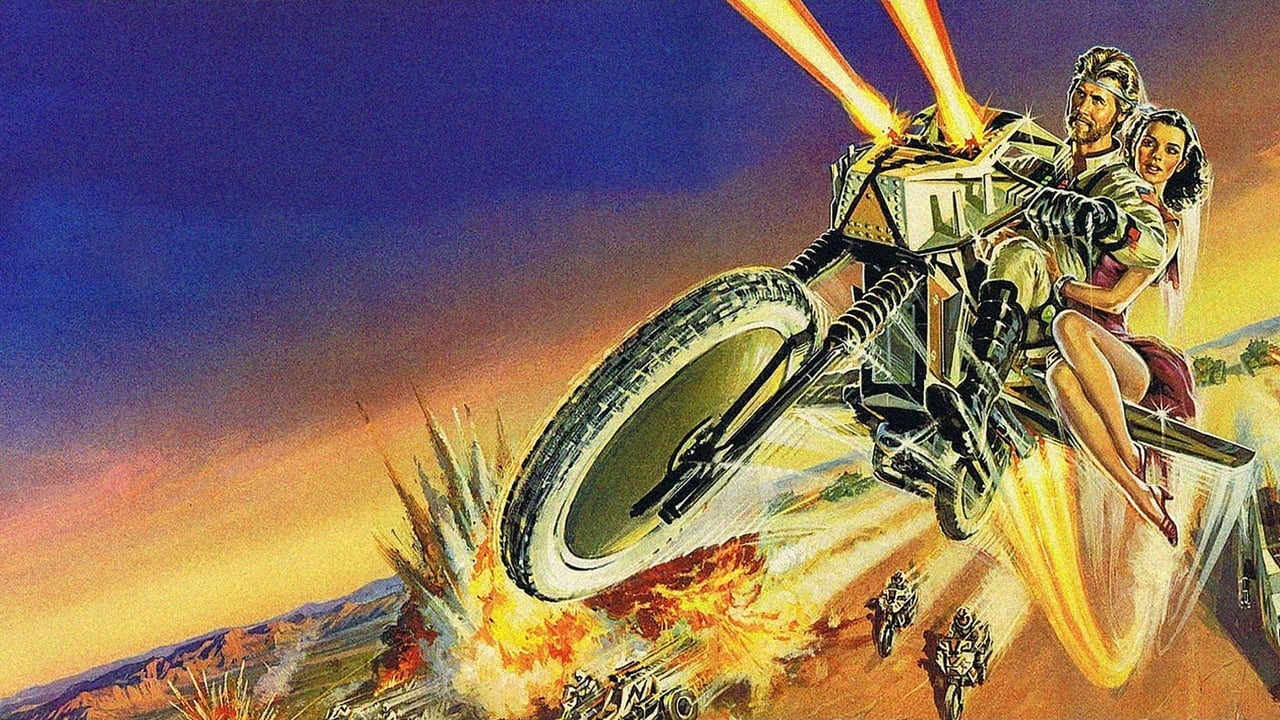
And oh, the hardware! Needham, a master of practical vehicle mayhem, clearly poured his heart (and a hefty chunk of the reported $20 million budget – a significant sum back then that sadly didn't translate to box office gold) into the film's custom-built arsenal. The MegaDestriers (motorcycles bristling with weapons), the versatile Tac-Com dune buggies, and the lumbering MegaCruiser transport were tangible, functional machines thundering across the Nevada desert locations near Las Vegas. You could feel the weight and power of these things in a way that sleek CGI vehicles often lack today. Seeing them kick up real dust, perform actual jumps (sometimes landing a bit rough!), carried a visceral thrill. It wasn't seamless, but it felt real.
### Flying High on Introvision and Ambition
Now, we have to talk about the effects. MegaForce was a major showcase for a system called Introvision. This complex front-projection technique aimed to blend live actors with miniature sets and matte paintings directly in-camera, avoiding the blue-screen fringing common at the time. It was ambitious, cutting-edge tech, and responsible for some of the film's most distinctive (and occasionally awkward) visuals, like the team seemingly walking through vast underground hangars or interacting with holographic maps. While the seams sometimes showed, you have to admire the sheer audacity of attempting such complex practical compositing on this scale back in the early 80s. It gives the film a unique visual texture, a kind of hyper-real diorama effect unlike anything else.
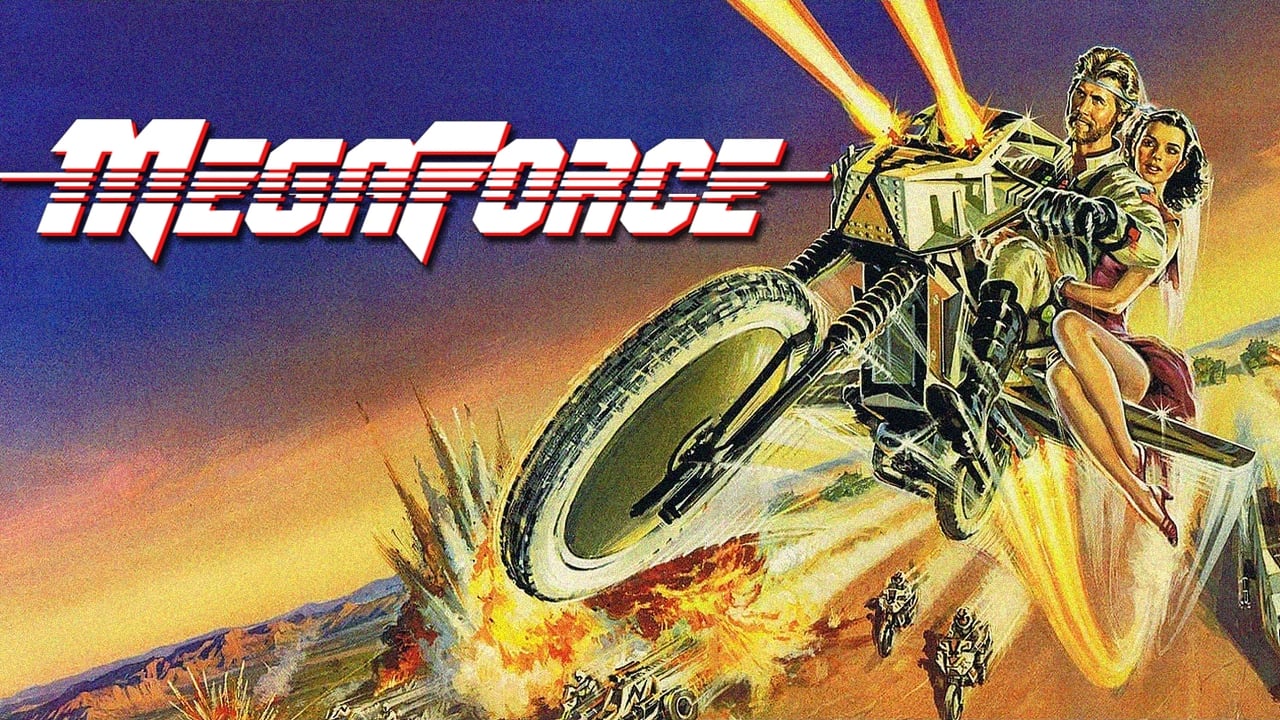
And then there’s that scene. Yes, the flying motorcycle. Ace Hunter, needing to catch the escaping MegaCruiser transport plane, deploys wings on his bike and literally flies through the air. It’s achieved through a combination of wirework, clever camera angles, and that Introvision tech again. Is it convincing by today's standards? Not remotely. Was it utterly mind-blowing seeing it on a fuzzy CRT back in the day? Absolutely. It perfectly encapsulates the film's spirit: aim for the spectacular, even if you don't quite stick the landing. Remember how real those missile trails looked fired from the bikes, though? Pure practical pyrotechnic joy!
### A Cult Following Forged in Optimism (and Spandex)
Let's be honest, MegaForce wasn't exactly a critical darling. It snagged multiple Razzie nominations, and the earnest dialogue ("The good guys always win... even in the eighties!") can induce affectionate cringes. The team dynamic, featuring Michael Beck (The Warriors, 1979) as the roguish Dallas, feels more like a friendly club than a hardened military unit. Yet, that’s part of its enduring charm. In an era increasingly leaning towards gritty realism, MegaForce was defiantly bright, colourful, and hopeful. It believed in its own B-movie spectacle with unwavering conviction.
The film's failure at the box office sadly scuttled plans for a sequel (reportedly titled MegaForce 2: Deeds Not Words), but its legacy lives on in the hearts of those who discovered its unique blend of high-tech fantasy and hands-on stunt work on VHS. Jerrold Immel's synth-heavy score perfectly dates the proceedings, adding another layer of nostalgic warmth. It’s a time capsule of early 80s action filmmaking, where practical effects reigned supreme, heroes wore their hearts (and occasionally questionable fashion choices) on their sleeves, and the idea of a flying motorcycle seemed like the coolest thing imaginable.
VHS Heaven Rating: 6/10
Justification: While the plot is thin, the dialogue often clunky, and some effects haven't aged gracefully, MegaForce earns points for its sheer ambition, incredible practical stunt work (especially the vehicles), pioneering use of Introvision, and its unshakeable, almost innocent 80s optimism. It's undeniably cheesy, but it's our cheese, served up with real explosions and genuine enthusiasm by a master stuntman.
Final Thought: Forget subtlety; MegaForce was all about loud, proud, practical spectacle – a movie that truly lived by its tagline: "Deeds Not Words," even if some of those deeds involved launching a motorbike into the stratosphere. It might look dated, but its heart-on-its-sleeve action still provides a unique kind of retro thrill ride.