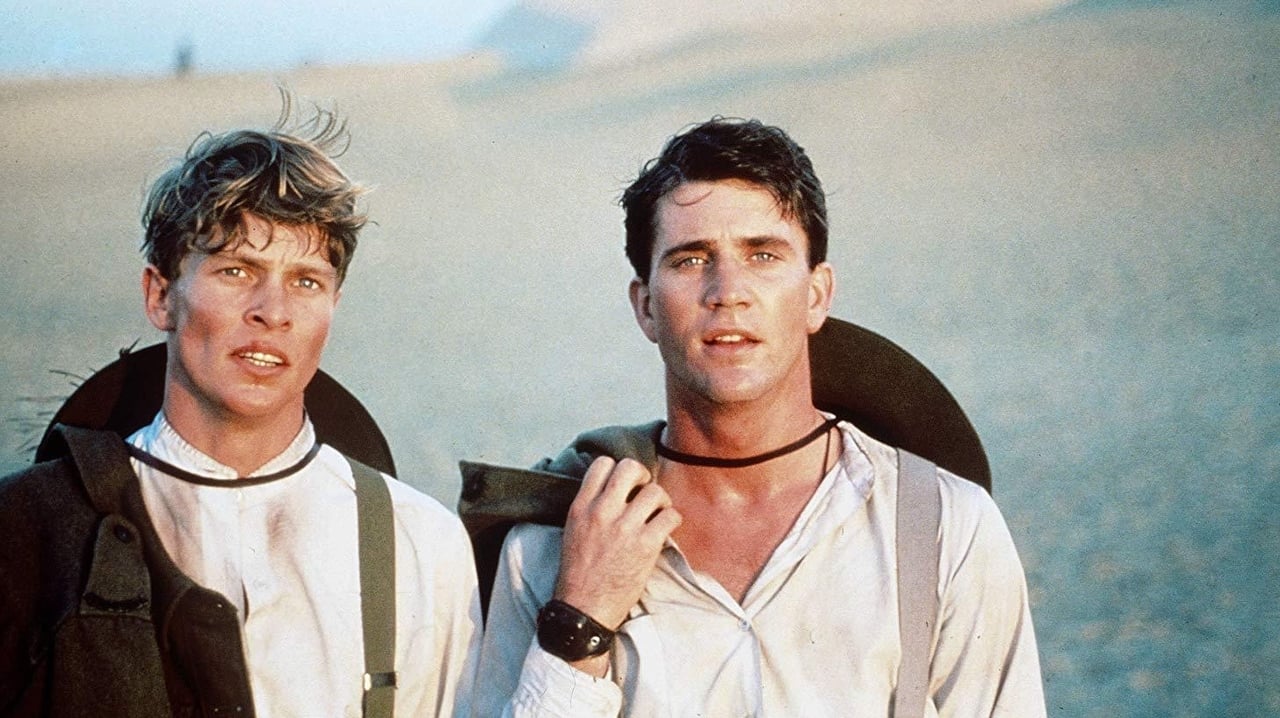
It doesn't begin with the roar of cannons or the chaos of battle. Instead, Gallipoli lingers first in the memory as sun-baked earth, the boundless blue sky of Western Australia, and the sheer, unadulterated speed of youth. We see Archy Hamilton (Mel Gibson), a sprinter of almost preternatural grace, running barefoot across the landscape. It's an image of freedom, potential, and fierce determination – a stark, almost cruel counterpoint to where his journey, and that of his friend Frank Dunne (Mark Lee), will ultimately lead. How does a film about one of history's most tragic military blunders manage to feel so alive, so vibrant, before plunging us into the abyss?
A Sunburnt Friendship Forged Before the Storm
Directed by Peter Weir just a few years after his haunting Picnic at Hanging Rock (1975) and before he'd conquer Hollywood with films like Witness (1985), Gallipoli isn't primarily a combat film. It's a story about friendship, about the intoxicating pull of adventure for young men who barely understand the world beyond their doorstep, and about the devastating loss of innocence. Weir, working from a sensitive script by David Williamson, takes his time. We spend nearly the first hour immersed in the lives of Archy, the idealistic farm boy, and Frank, the cynical city drifter. Their initial rivalry melts into a genuine bond, forged through shared races, train journeys across the vast continent, and a burgeoning sense of national duty – or perhaps, more accurately, a desire not to miss out on the great adventure unfolding overseas. This deliberate pacing is crucial; it invests us deeply in these characters, making their eventual fate all the more gut-wrenching.
The performances are simply remarkable for their naturalism. This was a star-making turn for Mel Gibson, radiating charisma and a naive conviction that feels utterly authentic. You see the raw talent that would propel him forward, but here it's tempered with a vulnerability that's incredibly affecting. Opposite him, Mark Lee, though less known internationally, is equally compelling. His Frank is watchful, wary, his loyalty hard-won but fiercely held. Their chemistry is the heart of the film, portraying that uniquely Australian concept of 'mateship' without cliché or sentimentality. It feels earned, real. Even smaller roles, like Bill Kerr as Frank's grizzled Uncle Jack, resonate with lived-in truth.
From Golden Plains to Dusty Trenches
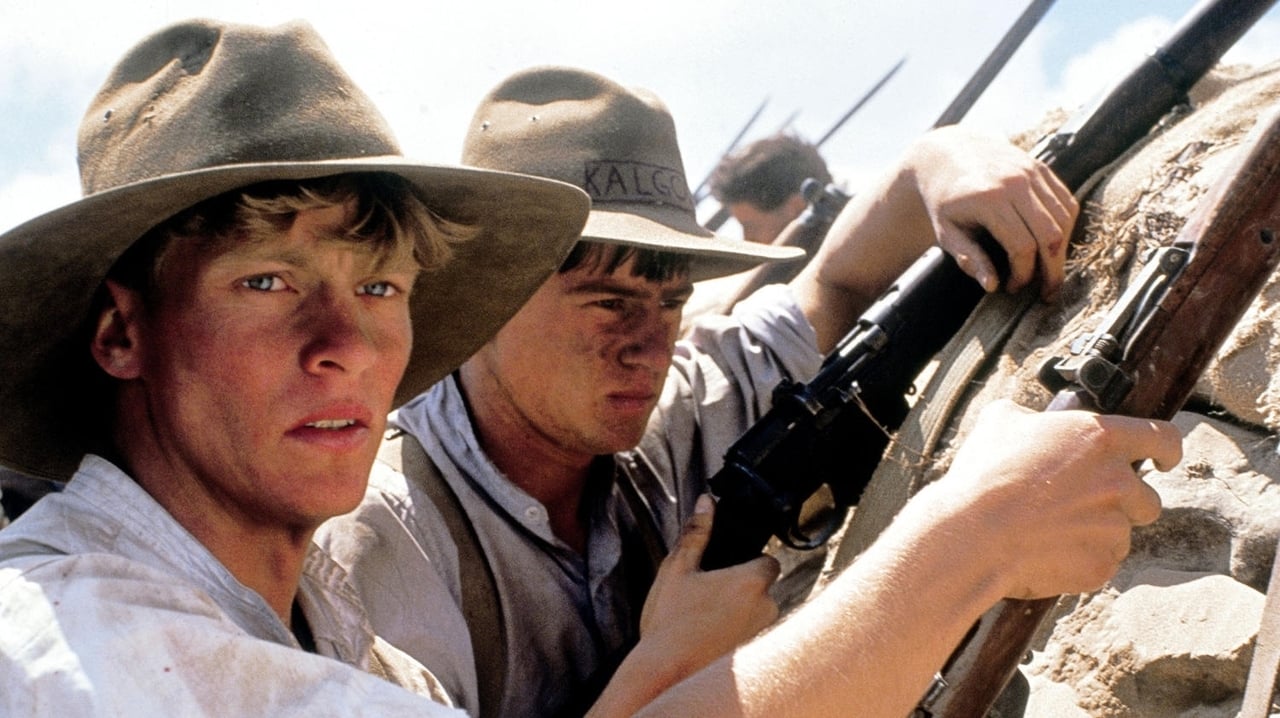
The visual shift in the film is palpable. Cinematographer Russell Boyd paints the Australian scenes with warm, golden light, emphasizing space and freedom. When the setting moves to Egypt, and finally to the Turkish peninsula, the palette becomes desaturated, dusty, claustrophobic. Weir masterfully uses the landscape not just as a backdrop, but as a reflection of the characters' shrinking horizons. The bustling markets of Cairo offer a brief, exotic interlude, but the shadow of the Dardanelles looms large.
One fascinating piece of trivia often overlooked is the sheer logistical challenge of recreating Gallipoli... in South Australia. For various reasons, filming on the actual peninsula wasn't feasible. The production team meticulously reconstructed the trenches and battlefields along the coastline near Coffin Bay. Knowing this adds another layer to appreciating the film's evocative atmosphere – it’s a testament to Weir’s vision and his team’s craft that they captured the oppressive sense of place so convincingly, thousands of miles away.
Sound and Silence: The Unspoken Tragedy
What truly elevates Gallipoli is Weir's understanding of sound and, perhaps more importantly, silence. The score is used sparingly but with devastating effect. The soaring synths of Jean-Michel Jarre's "Oxygène" during the training sequences in Egypt create an almost dreamlike, ethereal quality, highlighting the boys' detachment from the impending reality. Later, the use of Albinoni's Adagio in G Minor becomes almost unbearably poignant. But it's often the quiet moments that hit hardest: the nervous anticipation in the trenches, the strained whispers, the sudden, jarring eruptions of gunfire.
It wasn't an easy film to get made, either. Despite Weir's growing reputation, securing funding for a historical drama with a then-lesser-known Mel Gibson was a hurdle. Ultimately, a combination of the Australian Film Commission and the newly formed Associated R&R Films (backed by Robert Stigwood and Rupert Murdoch) provided the necessary A$2.8 million budget – a significant sum for Australian cinema in 1981. Its subsequent success, both domestically and critically abroad, was a major validation. It resonated deeply in Australia, helping to solidify the Anzac legend in the popular imagination, portraying the soldiers not merely as heroes, but as ordinary young men caught in an extraordinary, terrible situation.
The Weight of the Final Moments
Spoiler Alert! The film culminates in the infamous charge at The Nek, a suicidal assault ordered despite clear signs of its futility. Weir doesn't flinch from the horror, but he focuses it through the lens of individual experience. Frank's desperate race against time to deliver a message to halt the attack, intercut with Archy preparing for the inevitable whistle, is agonizing. The final freeze-frame on Archy, mid-stride, as the bullets hit… it’s one of the most iconic and haunting endings in cinema. It refuses catharsis, leaving the viewer stunned by the senseless waste. It asks, implicitly: For what? What does this sacrifice truly achieve?
While generally lauded for its depiction of the soldiers' experience, the film does take some minor liberties with the precise historical sequencing of the Battle of the Nek for dramatic impact. Yet, it captures the spirit of the event – the bravery, the confusion, the catastrophic failure of command – with profound accuracy. It's a film less concerned with military strategy than with the human cost of those strategies.
Rating Justification: 9/10
Gallipoli earns a 9 out of 10. It's a near-perfect blend of intimate character study and harrowing historical drama. The performances by Gibson and Lee are exceptional in their authenticity, Peter Weir's direction is masterful in its control of tone and atmosphere, and the cinematography beautifully contrasts the two worlds. The film's deliberate pacing allows for deep emotional investment, making the inevitable tragedy truly devastating. Its thoughtful exploration of mateship, lost innocence, and the futility of war resonates powerfully. It avoids jingoistic flag-waving, instead offering a deeply humanistic and critical perspective. The only slight deduction might be for those viewers expecting a conventional war film; its focus is firmly on the journey to the battle, making the impact all the greater when it arrives.
Gallipoli remains more than just a film; it's a piece of cultural memory, especially for Australians, but its themes are universal. Watching it again after all these years, perhaps on a slightly worn tape that carries its own history, the silence after that final frame feels heavier than ever. It leaves you contemplating not just the specific tragedy of 1915, but the enduring question of why youth continues to be sacrificed on the altars of flawed ideals and distant commands.