Stepping into the world of Mike Leigh's Topsy-Turvy feels less like watching a film and more like gently pushing open a heavy velvet curtain onto the bustling, gaslit stage of Victorian London's Savoy Theatre. Released in 1999, right at the cusp of a new millennium, it felt like a glorious anomaly – a meticulously crafted, deliberately paced character study dropped amidst the accelerating rush of late-90s cinema. There’s no frantic action, no easy narrative shortcuts; instead, Leigh invites us to simply inhabit the world of W.S. Gilbert and Arthur Sullivan, the celebrated but creatively stifled operetta duo, during a period of profound professional and personal crisis.
The Weight of Success
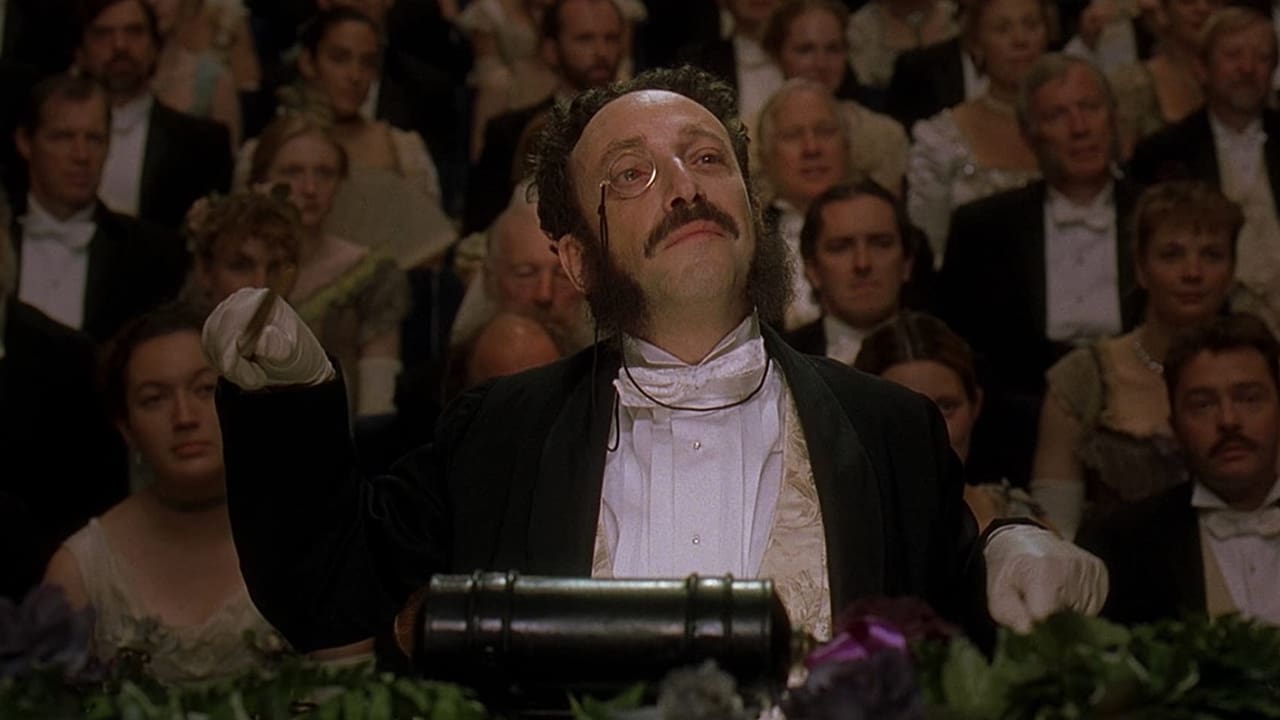
The film finds the legendary partnership (Jim Broadbent as the librettist Gilbert, Allan Corduner as the composer Sullivan) floundering after the lukewarm reception of their 1884 opera, Princess Ida. Sullivan, yearning for recognition as a serious composer, is weary of Gilbert's "topsy-turvydom" plots and predictable structures. Gilbert, prickly, pedantic, and seemingly impervious to criticism, insists on his formulas. Their artistic engine has seized up. What Leigh captures so brilliantly isn't just the biographical facts, but the palpable atmosphere of this impasse – the polite but strained drawing-room conversations, the simmering resentments, the quiet desperation masked by Victorian propriety. It’s a portrait of creative friction that feels remarkably, sometimes uncomfortably, real.
A World Recreated
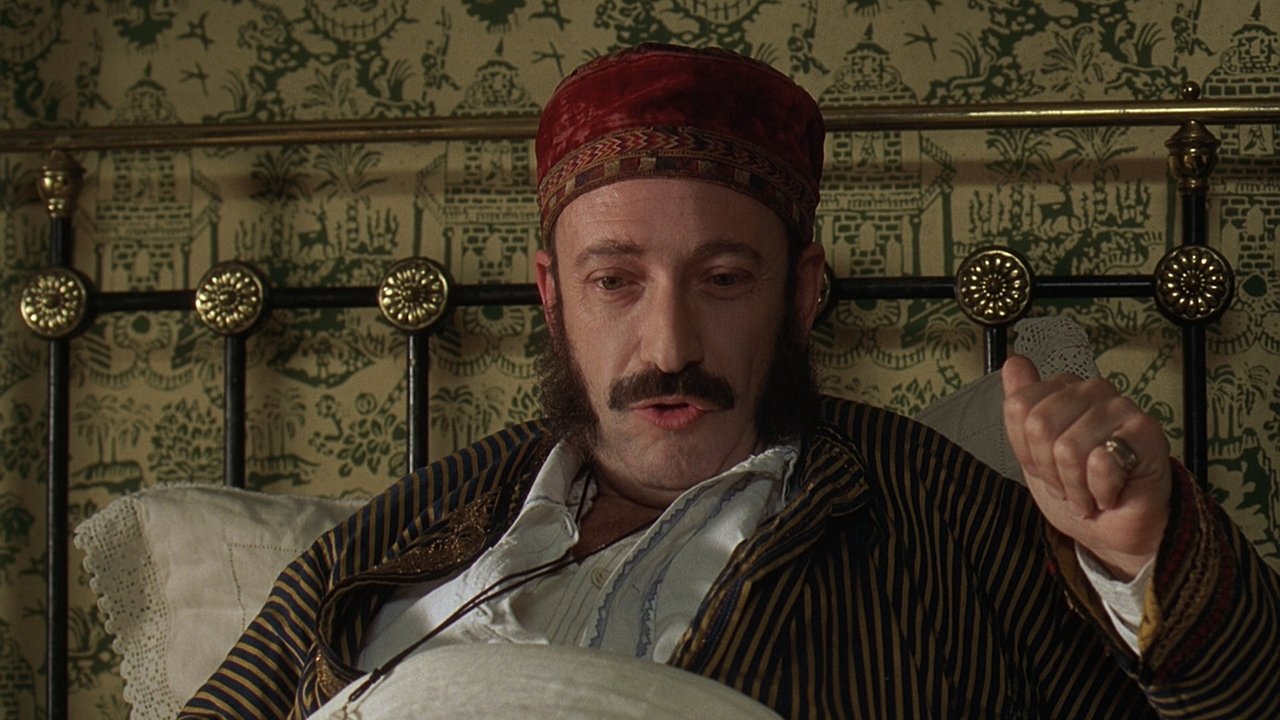
Leigh, known for his contemporary social realism developed through extensive improvisation with actors (think Secrets & Lies (1996) or Naked (1993)), applies his signature method to the past with astonishing results. This isn't a stuffy, reverential period piece. The dialogue crackles with wit and personality, feeling lived-in rather than recited. The level of detail is staggering – from the precise mechanics of backstage theatre craft (the gas lighting, the rigging, the rehearsals) to the social nuances of the era. Lindy Hemming’s Oscar-winning costumes and Christine Blundell’s Oscar-winning makeup aren't just window dressing; they are integral to character and context. Leigh famously immersed his cast in the period, requiring them to learn the relevant skills – Corduner learned to conduct, and many of the actors portraying the singers performed their parts live during filming, adding a layer of vibrant authenticity often missing in musical biopics. You feel the draft in the rehearsal rooms, smell the greasepaint, sense the anxieties and ambitions of the entire company.
Masters of Their Craft: Gilbert & Sullivan Embodied
At the heart of it all are the towering performances from Jim Broadbent and Allan Corduner. Broadbent is W.S. Gilbert – physically imposing yet socially awkward, his sharp intellect often weaponized, hiding vulnerability beneath layers of fastidious routine and controlled indignation. It’s a performance of immense subtlety, revealing the man behind the public martinet. I recall seeing Broadbent, often known for more eccentric or overtly comedic roles before this (like in Brazil (1985) or alongside Rowan Atkinson), inhabit Gilbert with such grounded, complex humanity; it felt like a revelation.
Equally compelling is Corduner as Arthur Sullivan. He captures the composer's charm, his social ease contrasting sharply with Gilbert's stiffness, but also his deep-seated artistic frustrations and melancholy, exacerbated by chronic illness and perhaps a touch of hedonism (glimpses of his visits to a Parisian brothel add a layer of complexity often smoothed over in simpler biographies). The chemistry between the two leads is electric, perfectly conveying the difficult, almost adversarial respect that bound these two geniuses together. Supporting turns, particularly Timothy Spall as the principal actor Richard Temple and Lesley Manville as Gilbert's patient wife Lucy, are uniformly excellent, fleshing out the world with believable human detail – a hallmark of Leigh's ensemble work.
The Birth of The Mikado
The narrative pivot comes with Gilbert's unexpected inspiration from a Japanese cultural exhibition in Knightsbridge. This spark ignites the creation of The Mikado, the opera that would revitalize their partnership and become one of their most enduring successes. Leigh doesn't just show the 'Eureka!' moment; he delves into the meticulous, often messy process of creation – the script revisions, the casting squabbles, the rehearsals where Gilbert imposes his notoriously precise stage direction, the arguments over Sullivan’s score. One fascinating tidbit is how Leigh meticulously recreated specific staging and choreography based on original prompt books and historical accounts of the first production of The Mikado. It's a love letter to the sheer hard work and collaborative chaos inherent in theatre-making. Does the deliberate, detailed focus on process sometimes test patience? Perhaps for some viewers accustomed to faster narratives. But for those willing to immerse themselves, the reward is a profound understanding of artistic endeavor.
Beyond the Footlights
Topsy-Turvy isn't merely about the making of an opera. It’s a profound exploration of creativity itself – its demands, its frustrations, its unexpected joys. It touches on the nature of collaboration, the burden of public expectation, the personal sacrifices artists make, and even glimpses the social hypocrisies and hidden lives beneath the veneer of Victorian respectability. What does it mean to be commercially successful yet artistically unfulfilled? How does personal life bleed into professional creation? These are questions Leigh subtly poses, allowing the audience space for reflection rather than providing easy answers. Seeing this film back when VHS was still king, perhaps renting it from a discerning corner of the video store, felt like uncovering a hidden treasure – a rich, dense, and deeply rewarding experience far removed from the usual multiplex fare.
Rating: 9/10
This score reflects the film's masterful execution, its astonishing commitment to authenticity, and the powerhouse performances from Broadbent and Corduner. Leigh’s direction is assured, the craft is impeccable, and the screenplay offers layers of thematic depth. It loses perhaps a single point only for its considerable length (160 minutes), which, while justified by the detail, might feel daunting to some. Ultimately, Topsy-Turvy is a triumph – a unique and immersive journey into a specific historical moment and a timeless exploration of the artistic spirit. It’s a film that lingers, inviting you back into its meticulously rendered world long after the credits roll, leaving you with a newfound appreciation for both the artists it portrays and the art of filmmaking itself.