Detective Conan: Captured in Her Eyes
A single gunshot shatters the night, not just claiming a life, but erasing the memory of the only witness. That witness is Ran Mouri, and the image fractured in her mind holds the key to stopping a killer targeting Tokyo's police force. Detective Conan: Captured in Her Eyes (2000) might have hit screens just as the new millennium dawned, technically pushing past our usual 80s/90s stomping grounds, but its arrival coincided with that fascinating transition period where anime features were becoming more accessible treasures, found perhaps on a late-run VHS or an early, coveted DVD release from a specialty shop. And this one delivers a potent blend of procedural tension and surprisingly raw emotional stakes that lingers.
Amnesia in the Crosshairs
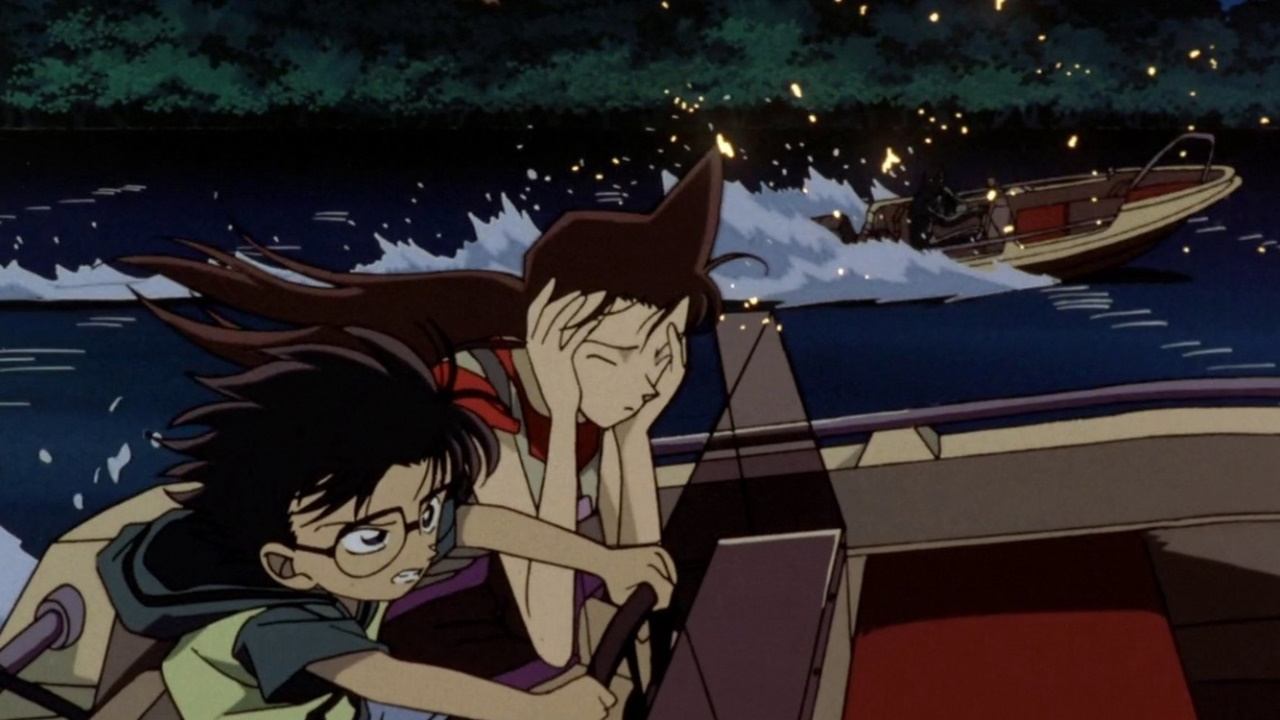
The premise itself feels ripped from a classic Hitchcockian thriller, transplanted into the vibrant, sharp-lined world of Gosho Aoyama's enduring creation. When Ran (Wakana Yamazaki) witnesses the attempted murder of Detective Sato and is subsequently traumatized into amnesia – forgetting everyone, even childhood friend Shinichi (and thus, Conan himself) – the film finds its chilling core. It's not just a whodunit; it's a desperate race against time. Conan (Minami Takayama, forever capturing that brilliant mind in a child's body) must unravel the conspiracy behind a series of attacks on police officers while simultaneously protecting Ran, who unknowingly holds the face of the killer locked away in her fractured psyche. The killer, knowing she's the only loose end, won't stop until she's silenced permanently. Doesn't that immediate vulnerability placed upon such a central, capable character instantly raise the stakes?
Director Kenji Kodama, a veteran hand from the TV series, understands precisely how to leverage the established relationships for maximum impact. The usual slapstick involving Kogoro Mouri (Akira Kamiya providing his iconic bluster) takes a backseat to genuine concern. The Detective Boys provide moments of levity, but the film’s heart lies in Conan's quiet desperation – solving the crime becomes intrinsically linked to restoring Ran's world, and perhaps reminding her of the bond she can no longer recall. This focus on the Ran/Shinichi dynamic, explored through the filter of Conan’s secret, gives Captured in Her Eyes an emotional weight that elevates it beyond a standard case-of-the-week. It was the fourth theatrical outing for Conan, and this installment truly felt like it was playing for keeps with its central relationship drama.
Tropical Land and Shadowy Threats
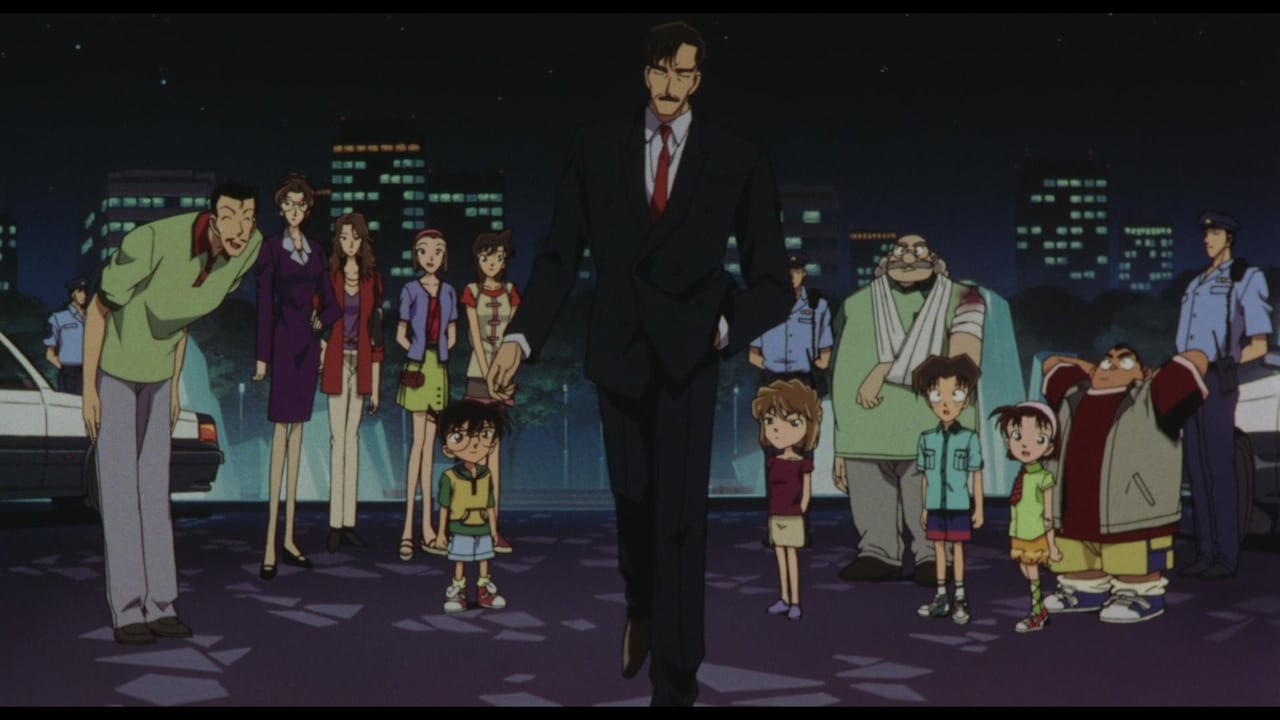
The animation, characteristic of its time, blends traditional cel techniques with emerging digital touches. While perhaps lacking the sheer fluidity of later productions, there's a crispness and clarity to the character designs and backgrounds that holds up well. The climactic sequence set within the familiar environs of Tropical Land (the amusement park frequently seen in the series) is particularly effective. What should be a place of joy becomes a hunting ground, the cheerful facades contrasting sharply with the deadly pursuit. The score, too, plays a crucial role, shifting from the series' familiar jaunty investigation themes to more ominous, suspenseful cues that underscore the ever-present danger Ran is in.
Finding specific, granular "behind-the-scenes" tales for these earlier anime films can be tougher than digging up anecdotes from a Hollywood set. However, it's worth noting the context: the Detective Conan films were already becoming major annual events in Japan, pulling in significant box office revenue (this one reportedly grossed over ¥2.5 billion). The pressure to deliver a compelling mystery and satisfying character moments was immense. Writer Kazunari Kouchi crafts a plot that cleverly weaves departmental politics, past grievances, and a cold-blooded killer into a tight narrative, making the eventual reveal feel earned, even if seasoned mystery buffs might spot some clues along the way. The focus on the police force itself as victims added a layer of procedural grit often reserved for live-action dramas.
More Than Just a Case File
What makes Captured in Her Eyes resonate, even decades later, is its skillful balancing act. It functions perfectly well as a standalone mystery – you don't need encyclopedic knowledge of the hundreds of Detective Conan episodes to follow the core plot. Yet, for long-time fans, the emotional payoff is significantly amplified. Watching Conan navigate his feelings, unable to reveal his true identity to a Ran who doesn't even recognize him, adds layers of poignant drama. The film explores themes of memory, identity, and the fierce protectiveness born of deep affection, all wrapped within a genuinely tense thriller framework. Did the final confrontation, relying on Ran's subconscious reflexes, feel both a little convenient and deeply satisfying? It’s that mix of heightened reality and emotional truth that often defines the best Conan adventures.
This film captures that specific early 2000s anime feature feel – ambitious storytelling, leveraging a beloved cast, produced with cinematic scope often exceeding the television counterpart. It represents a step up in maturity for the film series, proving it could handle darker themes and deeper character exploration effectively.
Rating: 8/10
This score reflects a tightly plotted and engaging mystery elevated by a compelling, emotionally resonant central conflict. The animation serves the story well, the pacing keeps the tension high, and the focus on Ran's vulnerability provides significant dramatic weight. While perhaps not the most complex mystery in Conan's long history, its execution and emotional core make it a standout entry, especially for fans invested in the core relationships. Detective Conan: Captured in Her Eyes is a prime example of how the franchise successfully translated its enduring appeal to the big screen, delivering suspense and heart in equal measure – a case file definitely worth reopening.