It begins not with gunfire, but with a song on the radio – a coded signal slipping through the airwaves in the dead of night. That signal, "Grândola, Vila Morena," sparked the Carnation Revolution in Portugal on April 25th, 1974, a coup d’état that ended nearly half a century of dictatorship with remarkably little bloodshed. Maria de Medeiros' 2000 film, Capitães de Abril (or April Captains as it’s known internationally), doesn't just recount this pivotal event; it plunges us into the heart of its uncertainty, idealism, and palpable tension, viewed intimately through the eyes of the young officers who dared to change their nation's course.
The Weight of a Carnation
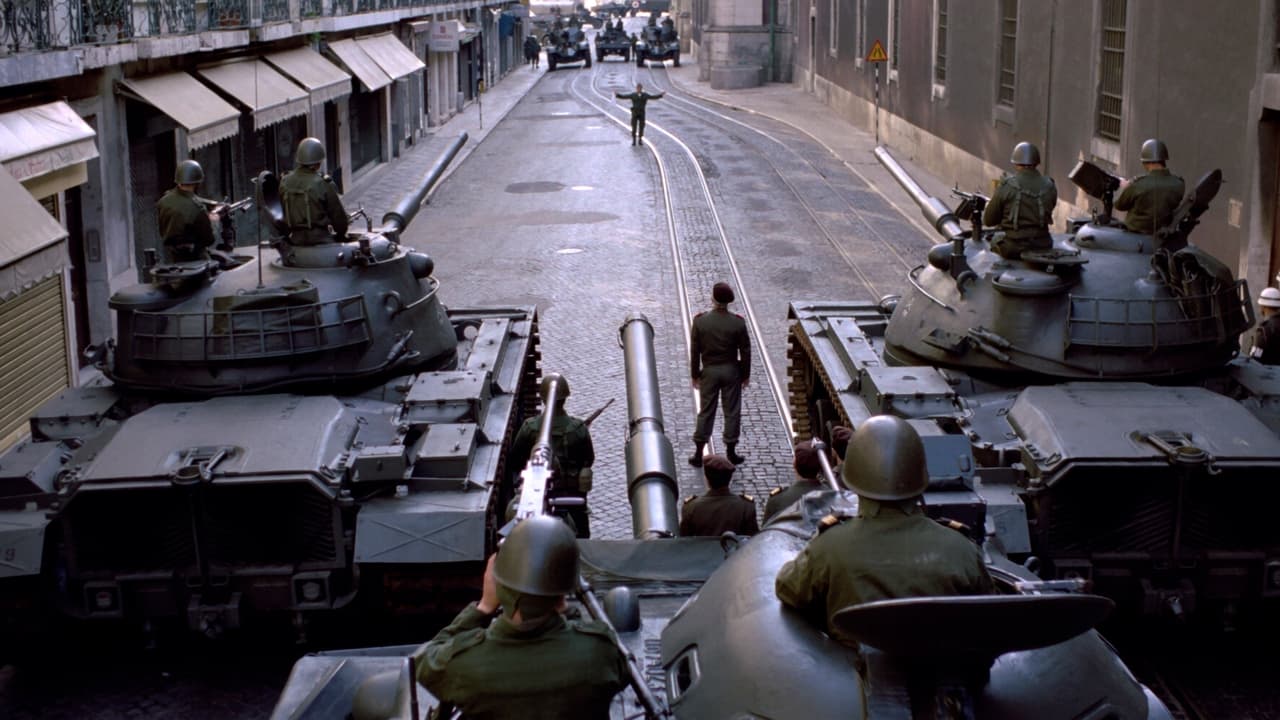
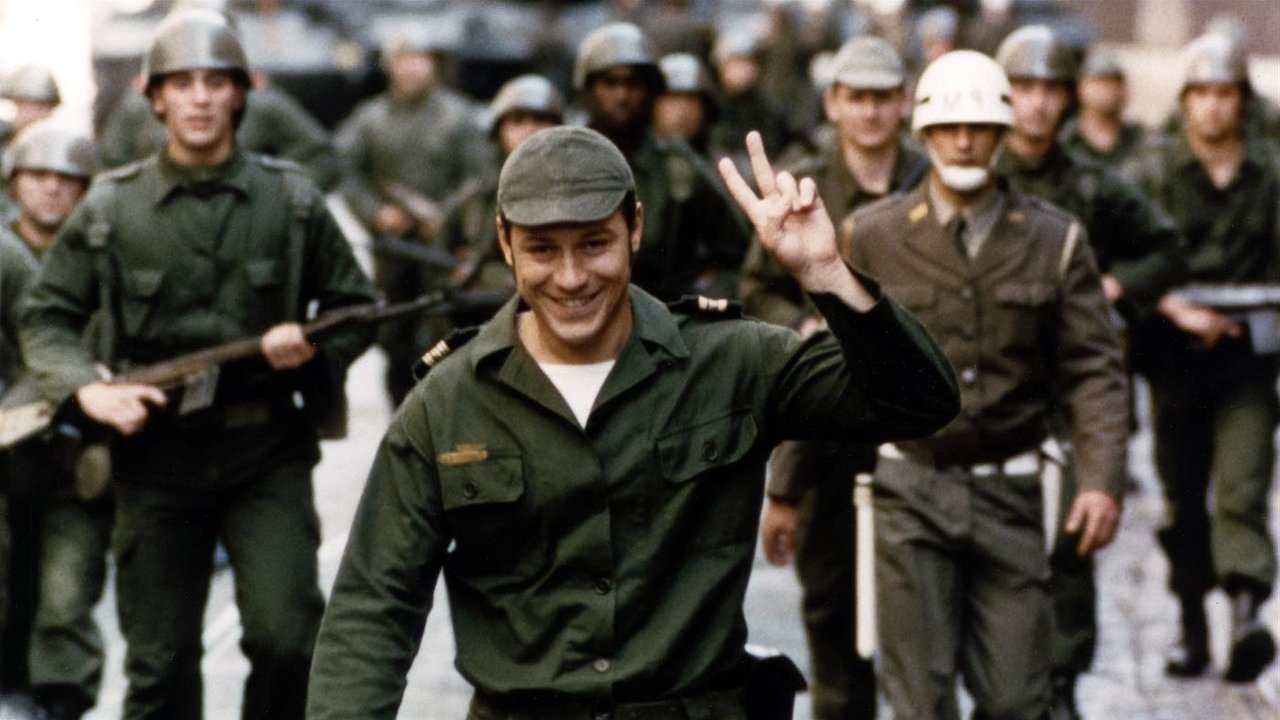
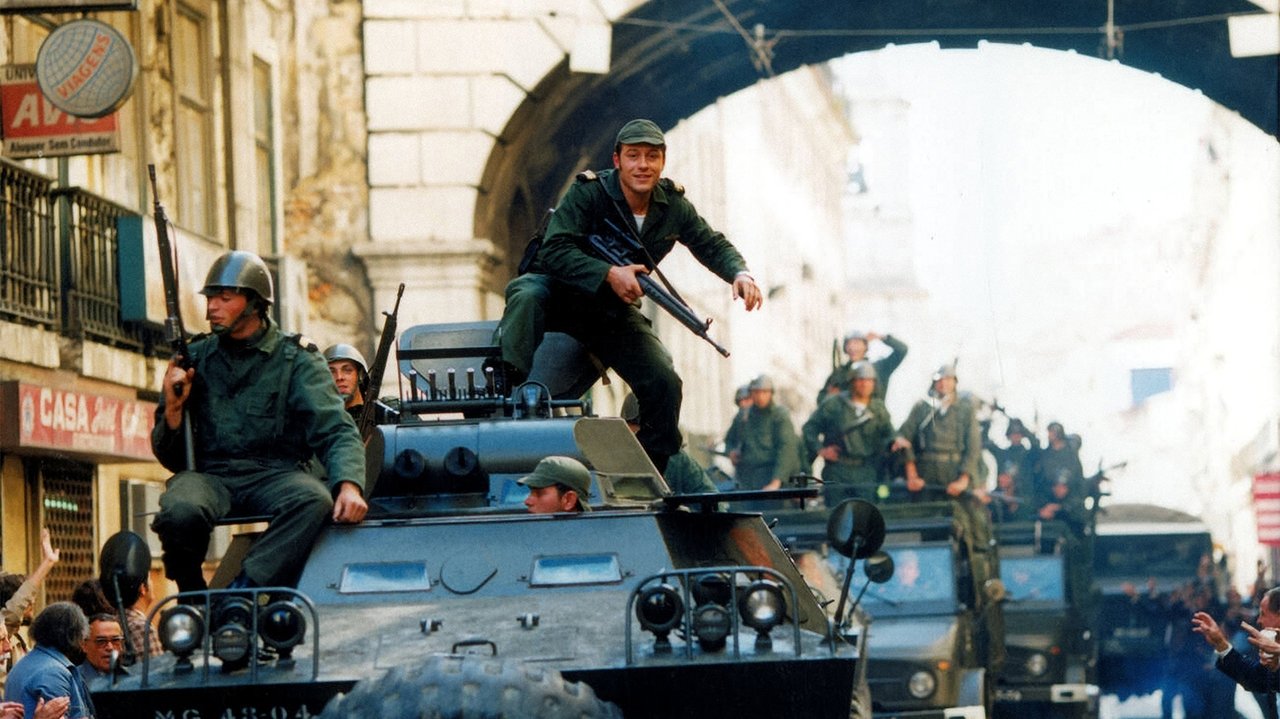
What strikes you most profoundly about April Captains isn't grand spectacle, but its determined focus on the human scale of revolution. We're not given distant generals moving pins on a map. Instead, we follow Captain Salgueiro Maia (Stefano Accorsi) and his comrades, men barely out of their youth, wrestling with the immense gravity of their actions. Accorsi delivers a wonderfully nuanced performance, portraying Maia not as a Rambo-esque hero, but as a thoughtful, deeply principled soldier burdened by the potential cost of failure, yet driven by an unshakeable belief in a democratic future. His quiet determination, the way he carries the hopes and fears of his men, feels utterly authentic.
The film excels in capturing the confusion and hesitant energy of those crucial hours. There are moments of surprising improvisation, near-disasters averted by sheer luck or quick thinking, and the constant, nerve-wracking awareness that everything could unravel into violence at any second. De Medeiros, directing from a script she co-wrote with Ève Deboise, crafts an atmosphere thick with anticipation. Remember those moments in history where the future hangs precariously in the balance? April Captains lives in that space, forcing us to consider the courage it takes to act when the outcome is utterly unknown.
A Director's Personal Lens
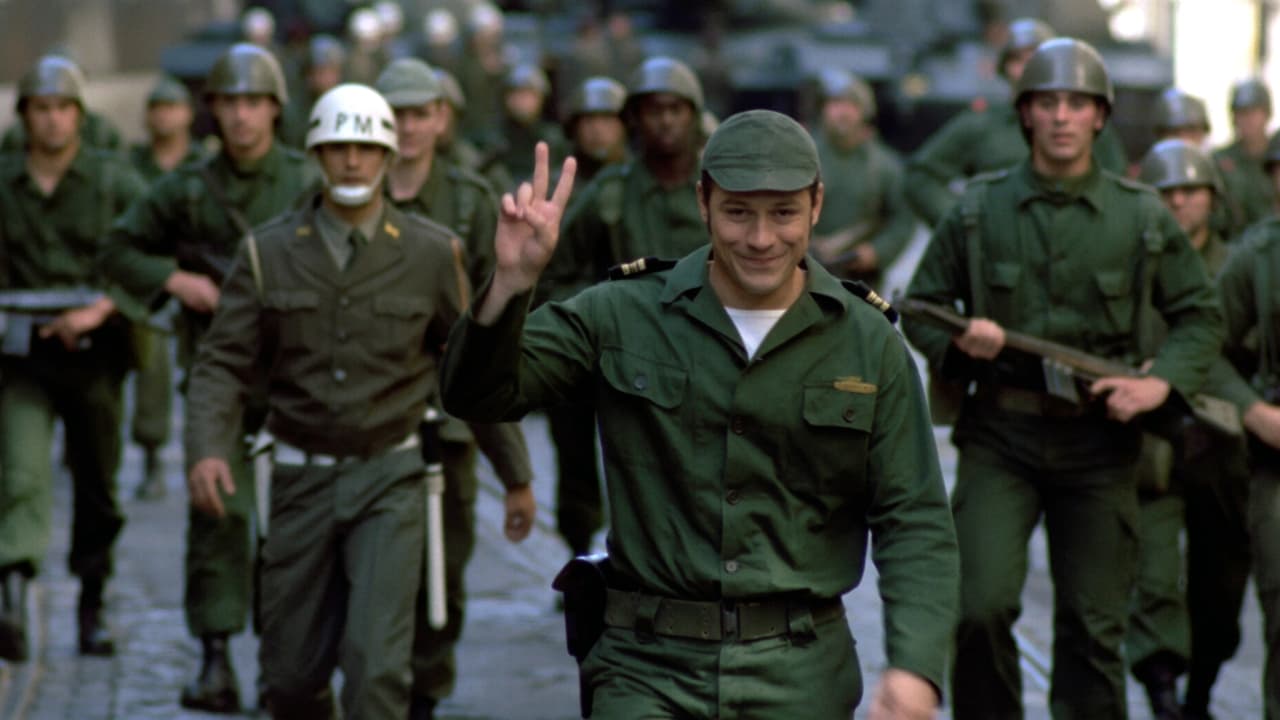
It's impossible to discuss April Captains without acknowledging Maria de Medeiros' unique position. Not only does she direct and co-write, but she also takes on the significant role of Antónia, a university lecturer and wife of one of the key officers, embodying the civilian perspective caught up in the whirlwind. Furthermore, de Medeiros' own father was a prominent journalist who opposed the dictatorship and was directly involved in the events following the revolution. This personal connection infuses the film with a palpable sense of lived experience and deep respect for the subject matter. It wasn't just history for her; it was family history, national memory brought to life.
This personal stake perhaps explains the film’s remarkable lack of jingoism or overt triumphalism. It’s a clear-eyed look at a complex moment, celebrating the idealism while never shying away from the risks and the fear. The film was Portugal's official submission for the Best Foreign Language Film at the 73rd Academy Awards, a testament to its national significance, though it ultimately wasn't nominated. Interestingly, securing funding was a challenge, requiring a co-production involving Portugal, Spain, Italy, and France – a reflection, perhaps, of the pan-European interest in this unique story of peaceful transition. Filming took place on the actual locations in Lisbon where the events unfolded, adding another layer of potent authenticity. You can almost feel the ghosts of 1974 in the cobblestone streets and plazas.
Faces in the Crowd, Rifles in Bloom
Alongside Accorsi, the ensemble cast effectively portrays the mix of personalities swept up in the coup. Joaquim de Almeida (familiar from Hollywood fare like Clear and Present Danger (1994) and Desperado (1995)) brings a grounded pragmatism as Major Gervásio, a foil to Maia's more overt idealism. The interactions between the soldiers, the moments of doubt, camaraderie, and unexpected humor, paint a portrait of ordinary men thrust into extraordinary circumstances. The film wisely avoids demonizing the opposing forces entirely, depicting many soldiers loyal to the regime as equally confused and reluctant to engage in fratricide.
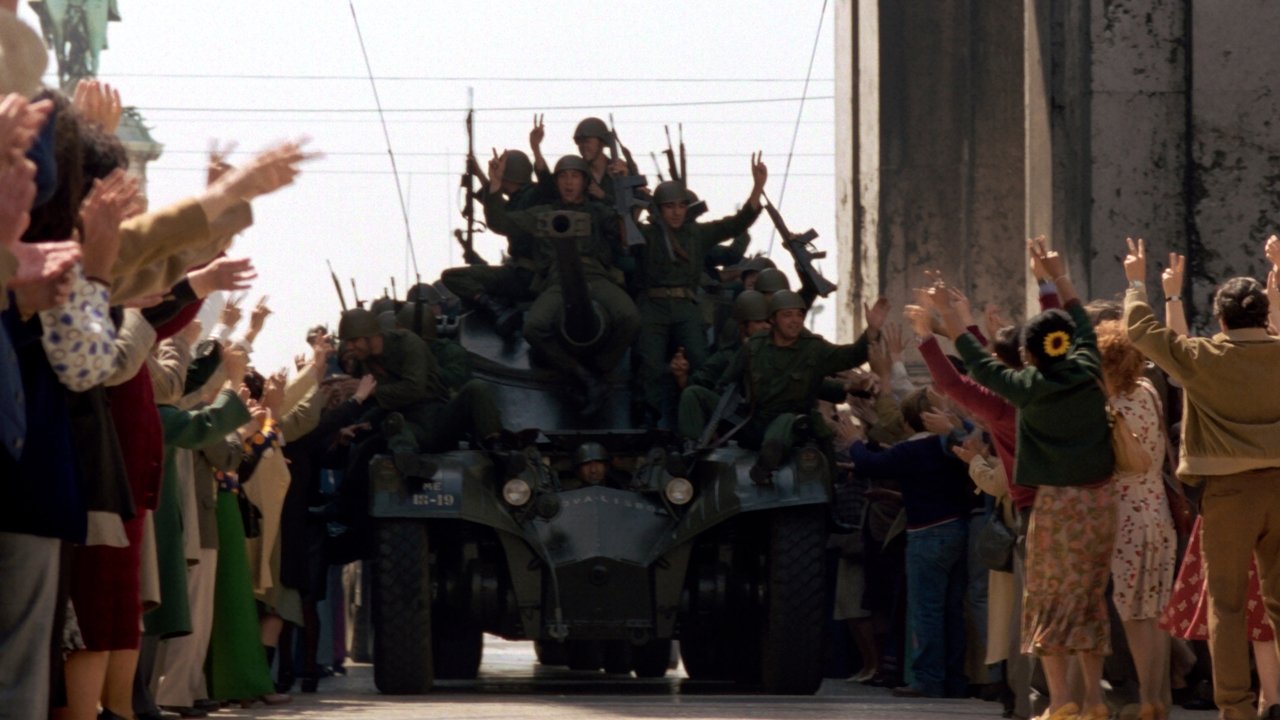
The iconic imagery of the revolution – civilians stuffing carnations into the barrels of soldiers' rifles – is handled with grace, becoming a symbol not just of peace, but of a population embracing the possibility of change offered by the military itself. It’s a potent visual metaphor, beautifully realized without feeling heavy-handed. Doesn't this image encapsulate the unique hope of that moment – the potential for transformation without widespread destruction?
Legacy on Screen
April Captains might have arrived just as the VHS era was fading into the DVD dawn, meaning it perhaps didn’t lodge itself into the collective consciousness quite like the blockbusters of the 80s and 90s. Yet, discovering it feels like uncovering a treasure – a mature, intelligent, and deeply felt historical drama that trusts its audience. It's the kind of film that might have sat quietly on the 'World Cinema' shelf at the local video store, waiting for a curious viewer to take a chance. It lacks the high-octane thrills of many retro favorites, but it offers something richer: a compelling human story set against the backdrop of a truly remarkable historical event.
The film doesn't provide easy answers about the complexities that followed the revolution, but it masterfully captures the spirit of that single, transformative day. It reminds us that history is made not just by grand pronouncements, but by the cumulative weight of individual choices, acts of courage, and the shared yearning for freedom.
Rating: 8/10
April Captains earns its high marks for its authentic performances, particularly Stefano Accorsi's portrayal of Maia, Maria de Medeiros' sensitive direction rooted in personal connection, and its ability to convey the tense, uncertain atmosphere of the Carnation Revolution with palpable immediacy. It's a film that eschews spectacle for intimacy, offering a thoughtful and moving portrait of idealism in action.
It leaves you pondering the fragility of democracy and the quiet bravery required to reshape a nation, not with bullets, but with belief and strategically placed flowers.